Why Doesn’t God Reveal Himself to Me?

Have you prayed, and God didn’t respond?


I have heard many people say that they would believe in God if God revealed Himself to them in clear, undeniable ways. Richard Dawkins, the New Atheist, said that God would have to write a direct message in the sky before he would believe (and then, he added, he would still assume that he was hallucinating or something else before believing it).

Young children tend to believe in God innately. This is true whether children are raised in religious homes or non-religious ones and in countries that are predominantly religious and in countries that are not. Even atheist sociologists have observed this phenomenon that some people have called “universal design intuition.” (See Universal Design Intuition & Darwin’s Blind Spot)

Since the Enlightenment, the general assumption in scientific and academic circles is that children outgrow naïve faith and civilizations do too as they advance in knowledge and sophistication. Thus, the modern assumption is that we outgrow faith in God as people and societies mature.

There is some truth to that assumption as we can see anecdotally (maybe in your own life or in the lives of people you know) and from the history of Western Civilization, with evidence of declining religious belief. Still, 81% of people in the United States in 2022 believed in God (or a higher power) (as reported in a Gallup poll), and the number increased to 82% in 2023 (according to a Pew Research poll).

We have all heard about the “Great Dechurching” – the 40 million Americans who used to go to church, but no longer do. We have also heard about “the rise of the nones“, the increase in the number of Americans who are atheist, agnostic or religiously unaffiliated, which increased precipitously from 16% in 2007 to 30% by 2022!

The nones include people of every age, but the highest percentage of nones are Gen Z and millennials. These age groups have largely grown up not going to church, yet, Bible sales surged in 2024 by 22% (after years of declining sales), and that surge is attributable to first time purchasers among Gen Z and Millennials. (See Bible boom: Why are people buying so many Bibles?; and US Bible Sales Jump 22% in 2024, Driven by First-Time Buyers and New Versions: Circana BookScan)

The hint of a spiritual renewal in the West isn’t limited to young Americans. Justin Brierley has reported on and written a book about the Surprising Rebirth of Belief in God in the UK. (See The Surprising Rebirth of Belief in God: Why New Atheism Grew Old and Secular Thinkers Are Considering Christianity Again) Agnositics and atheists, at least in the UK, are rethinking their positions on Christianity in noticeable numbers.

While Brierley’s thesis is largely based on anecdotal evidence, the volume of his anecdotal evidence is impressive. He has been hosting dialogues between atheists and Christians regularly since the mid-2000’s, and his data comes from a combination of atheists who have recently cozied up to the idea of God and religion and former atheists who unabashedly believe in God now.

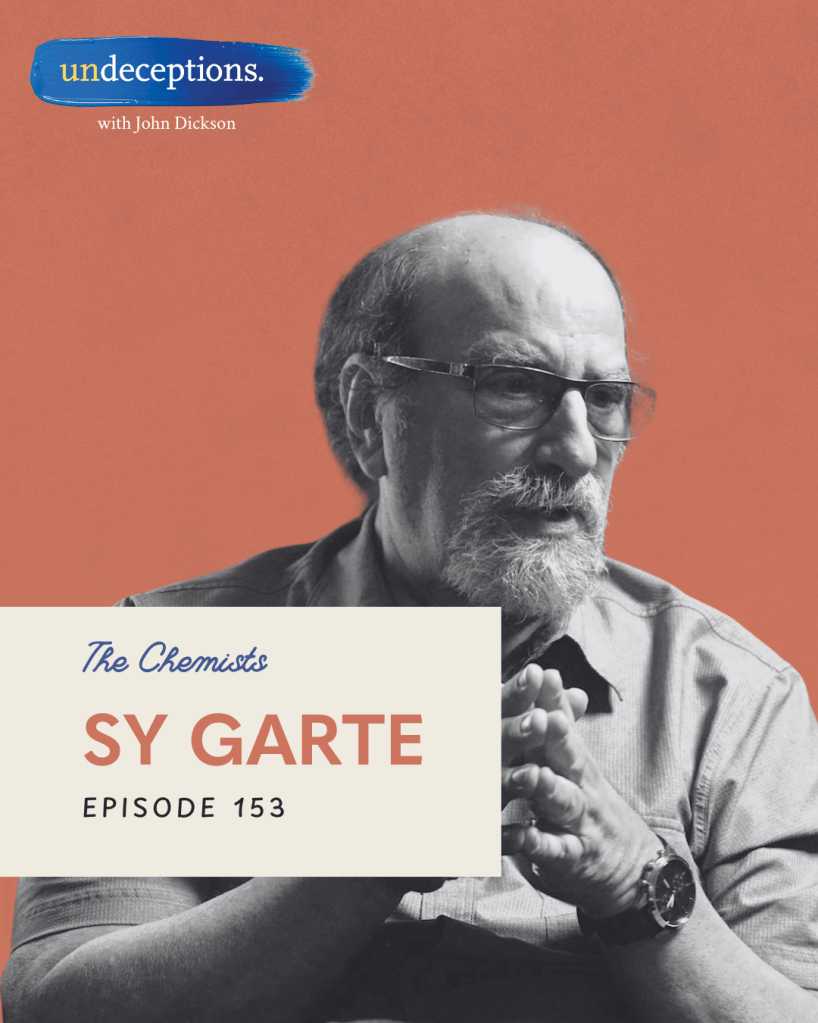
My writing today is inspired by one such former atheist, a bio-chemist with a robust career in science, who became a believer in his middle age. Sy Garte wrote a book about his journey from atheism to faith, The Works of His Hands: A Scientist’s Journey from Atheism to Faith, in which he explains how a combination of science and his experience led him to believe.

The science opened his mind to the possibility of God. His study of religions, philosophy, and theology led him to an intellectual acknowledgement of the likelihood of God, but his experience and willingness to embrace it brought him in the door to faith in God.


In a recent interview with John Dickson on the Undeceptions podcast, Sy Garte provides some advice to listeners who believe science holds all the answers to reality and truth by insisting that nothing in science contradicts the Bible.


If you read his whole story, he explains how science suggested the possibility of God to him, but he also emphasizes the importance of experience in belief. His acknowledgement of the role of experience, I think, is important, and it is underappreciated.

Skeptics and believers, alike, discount experience. A skeptic might chalk experience up to fantasy, a desire to believe, a disconnection with reality, or similar thinking. A believer might question the experiences of people who arrive at unorthodox beliefs based on their experiences.

Clearly, experience must be tempered by facts, science, and sound reasoning, but Sy Garte maintains that experience is good evidence, nevertheless, primarily for the one who has the experience. In doing so, he acknowledges the objection by the person who hasn’t had such an experience, and his response to the person who hasn’t had an experience with God is what I want to focus on today.

Continue reading “Why Doesn’t God Reveal Himself to Me?”

Of Powers and Principalities and Following Christ in the Midst of the Fray

The post-Christian right and post-Christian left battle for our allegiance


I have listened to all 30 episodes of Season 1 of the podcast, The Surprising Rebirth of Belief in God, by Justin Brierley. I have listened to dozens of podcasts, and I think this is one among the best, most well-produced podcasts I have found. The first episode of Season 2 inspires my writing today.


In this episode, Justin Brierley poses the question, “Whether the seeming rebirth of belief in God is right wing?” A return to Christian values seems to coincide with a resurgence in conservative politics, but, let’s look closer.


Is Christianity right wing? The African American church would beg to differ. Does Christianity have a right wing and a left wing? Or is Christianity another bird entirely?

At about the 45 minute mark in the podcast, Glen Scrivener identifies three strains of culture in the current western world. One strain is “blasting off into progressive liberalism.” Another strain is “snapping back to the worship of the strong”, a return to the world of Nietzsche. A third strain involves the “surprising rebirth of belief in God”, as Brierley puts it, where a trickle my become a flood, and Christian revival happens.

Scrivener is hopeful that the signs of Christian renewal in the west foreshadow revival, but he observes that these different strains of culture are moving forward at the same time, albeit in conflict with each other. They each have a trajectory that will continue into the future, and, “It will be a mess,” says Scrivener.

He believes Christian revival will happen, but he believes that progressive liberalism will also continue on its trajectory, divorcing itself more completely than it already has from nature and the Christian story. He believes that a devolution into what he calls “the default nature of the flesh” will continue as well, where might makes right.

Indeed, these things are happening now. Will they continue on the same trajectory into the future? Time will tell, but I think he is right: that there is a “post-Christian right” and a “post-Christian left” that are presently locked in a battle for the minds of the people of the western world.

I would add that the world, generally, is and will continue to be the devil’s playground until Jesus returns. At least, that is what the Bible says (millennium variations aside).

Continue reading “Of Powers and Principalities and Following Christ in the Midst of the Fray”

Faith, Hope, and Love in These Times

These times are exciting and scary for people

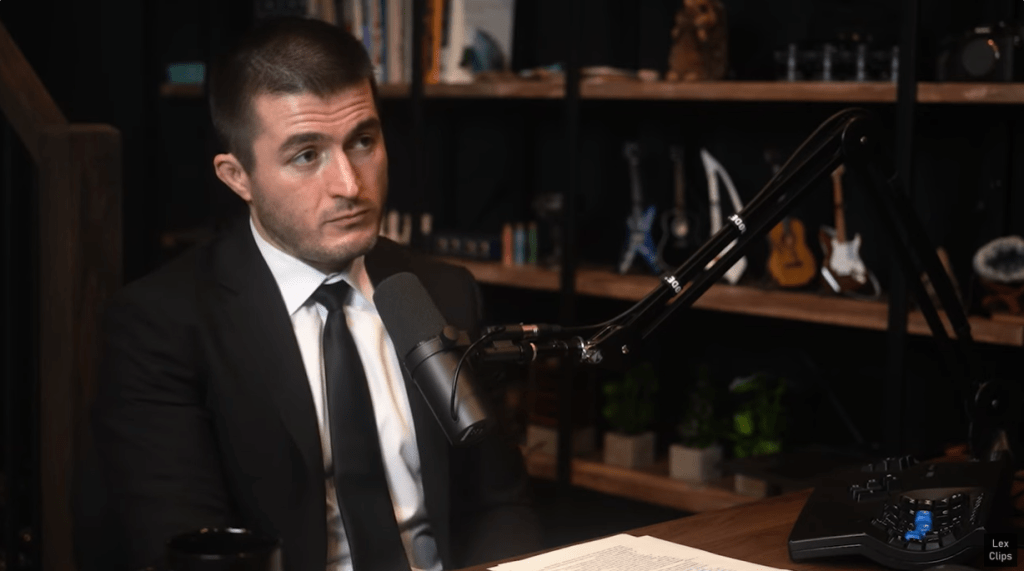
Elon Musk: 100 million people with Neuralink implants in the future | Lex Fridman Podcast

My writing today comes from my quiet time when I read the Bible in the morning. I have been sensing the importance of hope in recent days (or weeks) in the light of the troubling times we live in. It’s easy, even as a Christian, to lose hope in these times. I do.

Just a week ago, I had a conversation with my 31-year old about a great leap in technology being pioneered by Microsoft that could increase technological advancement exponentially. (See Microsoft’s NEW Quantum Chip is Mind Blowing!) Glenn Beck speculates, “If they can put that one chip in your phone, it would make your phone as powerful as the best supercomputer with a server farm the size of the planet earth.”


Or conversation focused on his wife’s concern (and mine) that such a technological advancement may exceed our ability to do good with it. Imagine people having that power at their fingertips….

Six months ago, Elon Musk discussed the distinct possibility of fitting 100 million people with Neuralink implants in the future. This device implanted in the brain would allow “superhuman abilities”. It would replace cell phones. We would essentially have computers in our brains.


Musk somewhat presciently said, “The problem will be figuring out what we want….” A person who wants to cause harm could cause greater harm exponentially faster and exponentially more devastating than can be done now with our merely human brains, like going from muskets to a nuclear capabilities.

Lex Friedman commented, with maybe greater prescience, “I think it’s exciting and scary for people because … it changes the human experience in ways that are very hard to imagine.” Interestingly, Musk agreed, “We would be something different.”

This uncertainty suggests we should be cautious with technology that may fundamentally change the human brain. The specter of the availability to change the human brain to make us different in ways we can’t even predict raises similar ethical questions as the ability to clone humans.

Not only should we be circumspect and careful with these things; we need to be cautious about trusting such powerful technology to people with varying worldviews. Do we want a materialist driven people who believe there is no God, nor objective morality, nor any no purpose in life other than what we want it to be to be in control of such technology. What about an Islamic world? Or a Trump and Musk world that is driven by the almighty dollar?

Pick your suspect worldview. I wonder, “Can we handle it?” And, “Are we playing God?” And, “What unintended consequences might we trigger?”

As I write these things, I can hear another voice in my head nagging me to reconsider my cautionary approach. “Wouldn’t it be great to control your world with your mind?!” Imagine how a Neuralink might empower and improve the life of a quadriplegic. It could be used for so much good!

In reality, such technology is likely to be used both for good and to be abused. That is the pattern of humanity. Whether it might be used more for the good than abused is something no one can predict, though it may depend on how slowly, cautiously, and circumspectly we roll it out.

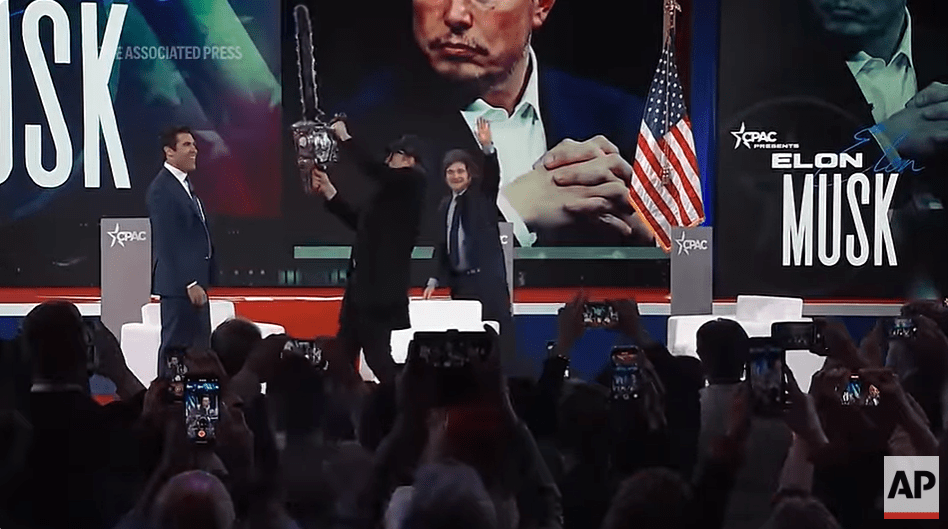
On that score, consider what Elon Musk is doing with the power Trump has given him in the federal government. He has wielded that power with glee like a chain saw massacre. He even boasted about it:

This is the same man who wants to put his technology in your brain.

I might be tempted to think that I am being overly cautious, but recent developments highlight the concerns. Elon Musk has been invited into the inner workings of our government by Donald Trump. He has been given unprecedented access to personal and private information of all people who live in the US. Together they have been freezing funds, firing people, and shutting down programs at an unprecedented rate.

I have likened what they are doing to a corporate Board of Directors for a hospital identifying inefficiencies and wasteful spending and taking a wrecking ball to the hospital with the patients, doctors, and nurses still in it. In weeks, they have have attempted to freeze the expenditure of billions of dollars already committed to operating programs in this country and around the world, and they are gutting and shutting down those programs.

The rashness and imprudence of doing what they are doing is almost unimaginable, and they are doing it because they have the power to do it. Right now, there is no check or balance in the way. They are moving faster than the other branches of government can respond.

We don’t know, yet, what the fallout will be. We are seeing only anecdotal results right now – jobs lost, summary deportations, 50 year contracts terminated with veteran agencies, etc. – in less than two months. Trump and Musk have enthusiastically wielded the power they now have with no apparent thought or care to the lives they have disrupted and the people they have hurt in the name of efficiency because they can.

We have a tendency to run further and faster with technology than our ethical bandwidth can keep up. The industrial revolution led to abuses like child labor and competition among nations that presaged the two great World Wars. Those technological advances made those wars more deadly than ever before – with tanks, guns, planes, toxins, and bombs (conventional and nuclear) – that were more devastating than the weaponry available in prior wars.

The kinds of technological advances Microsoft and Musk are exploring could lead to unimaginable abuses of power. That power will be exponentially greater than what we have now, and it could easily trigger the end of human civilization in the wrong hands.

The technology that fueled the World Wars is nothing like what we have now. The nuclear technology that ended WWII and advancements in technology that exist today could easily end human life on earth in the time it takes to push a button.

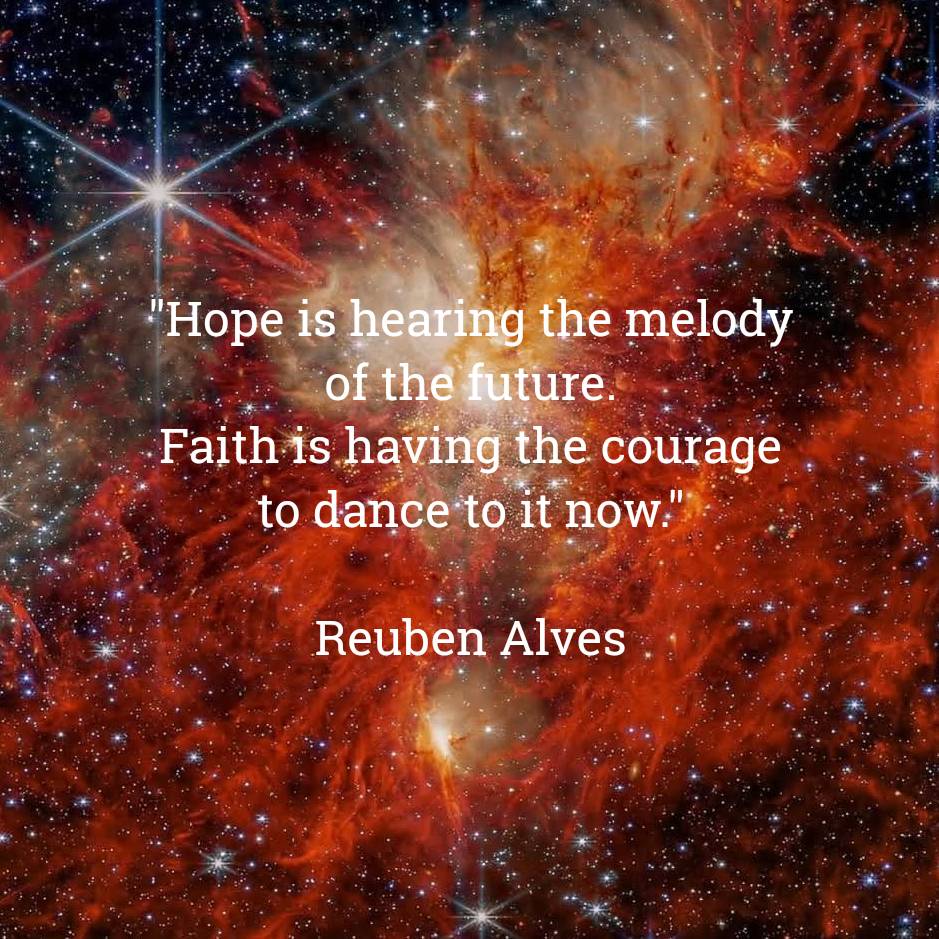
In that context, I read my daily Bible reading plan to today that included a quotation from Brazilian theologian, Reuben Alves, that I have included here. So, I turn now to hope, fueled by faith, and informed by love.


Continue reading “Faith, Hope, and Love in These Times”

God Doesn’t Leave Us Where We Are

God has plans for you.


I wrote some time ago on the subject that God meets us where we are. That blog article has been among the most read articles on this site since I wrote it. It was heartfelt, part of my own journey of discovery, and I think it resonates with the longing and angst that seems always resident in the human heart. Certainly always in mine.

God stands at the door to our hearts knocking. He doesn’t break the door down, and He won’t continue to knock if we ignore Him. He doesn’t overpower us, and He doesn’t seek to compel us against our will.

Yet, He desires us so much that He left His glory behind to become one of us, to enter into our human, historical space, and to offer Himself up for us – to redeem us – and provide a way for us to connect with Him. He took on human form, and He offered Himself up in a human body to demonstrate His love for us. Amazing!

No one can say that God is not invested in our redemption and in our good. No one can show more love or commitment to another person than to lay down his own life for another, and God did that for us.

Yet, He is unwilling to violate our will to coerce us into relationship with Him or to require us to submit to Him – even if it is for our good. He desires a loving relationship with us. He loves us like a parent loves a child because He “gave birth” to us (knitting us together in our mothers’ wombs (Psalm 139)). His love is unwavering even if we ignore Him and go our own way.

Thus, God meets us where we are. We can go nowhere that God is not present and able to meet us – when we are ready to meet Him.

Where can I go from your Spirit?
    Where can I flee from your presence?
If I go up to the heavens, you are there;
    if I make my bed in the depths, you are there.

psalm 139:7-8

God meets us where we are when we are ready and willing to meet Him. He was always there, but we are not always ready or willing. When we get to that “place”, though, God is ever ready to meet us.

Know, however, that “meeting” the God who is always there is not an end; it is just a beginning. It is the beginning of a relationship with your creator. It is just the beginning of God’s good intentions for you.

“‘For I know the plans I have for you,’ declares the Lord, ‘plans to prosper you and not to harm you, plans to give you hope and a future. Then you will call on me and come and pray to me, and I will listen to you. You will seek me and find me when you seek me with all your heart. I will be found by you,’ declares the Lord….”

Jeremiah 29:11-14a

God’s intentions for you are good – to prosper you and not to arm you. We have trouble sometimes trusting God’s goodness, but this is the essence of faith: for “whoever comes to him must believe that he exists and that he rewards those who diligently search for him.” (Hebrews 11:6) His promise for us is so good it is beyond our ability even to imagine! (1 Corinthians 2:9)


Yet, Jesus warns us to count the cost. (Luke 14:28) Why? What cost?

These are important questions that we should ask. There is a catch – a cost – that we need to be aware of: God may meet us where we are, but He doesn’t intend to leave us there.


Continue reading “God Doesn’t Leave Us Where We Are”

Christmas: The Triumph of the Almighty God Is Not Exactly As We Might Have Imagined It

The hope we reflect on in wonderment at this time of year

The words of the ancient prophet, Isaiah, are spoken often this time of year:

“For to us a child is born, to us a son is given, and the government will be on his shoulders. And he will be called Wonderful Counselor, Mighty God, Everlasting Father, Prince of Peace. Of the greatness of his government and peace there will be no end. He will reign on David’s throne and over his kingdom, establishing and upholding it with justice and righteousness from that time on and forever. The zeal of the Lord Almighty will accomplish this.”

Isaiah 9:6-7 NIV

These words were spoken many centuries before one, Jesus of Nazareth, was born in Bethlehem while his parents were in town for a census. This passage is full of triumph: “Mighty God”, an “Everlasting Father”, and “Prince of Peace”. “The government will be on his shoulders,” and he will “reign on David’s throne” – the “Lord Almighty!”

These words foretell of a mighty, conquering, benevolent God. (Benevolent after the conquering bit, of course). Human beings have always venerated and celebrated strength, and what could be more compelling to us than a conquering king (provided he is benevolent also!)

This is the way people view God and the world. This view of God inspired the crusades. It inspired many kings and nobleman through the ages like Stephen I, Szent István király. Born in 975, Stephen took the throne on December 25, 1000, and he became the last “grand prince of the Hungarians”, and he is the first King of Hungary.


I took the photos I have reproduced here when I was visiting my daughter in Hungary this time of year 6 years ago. The prominence of Steven and other kings in Hungarian lore is evident in the statuary around Budapest and in the stately basilica named after him that lies near the Danube in the center of the City.


Stephen succeeded his father as a grand prince of the Hungarians, but he had to fight for the throne against his own extended family. He fought many wars against surrounding tribes and chieftains, including his own uncle. He “converted his uncle’s ‘country to the Christian faith by force’ after its conquest,” and he “encouraged” the spread of Christianity “by meting out severe punishments for ignoring Christian customs.” (See Wikipedia)

Many modern minded people with sensibilities trained over the last generation likely squirm (or fume) over stories like Stephen’s, as children are taught in grammar school to recoil at the “imperialism” of our Western/Christian forebears. The so-called “Christian nationalists” among us likely count Stephen a hero of the faith.

Indeed, Hungarians today proudly celebrate Saint Stephen as a national hero, but this celebration seems more focused on nationalistic pride than the spread of Christian faith – if faith can be commandeered by force. Stephen is hailed for unifying the tribal regions around him under his kingship, giving birth to the nation of Hungary.

That the nation was unified under a Christian flag seems to be more of a national identity than a statement of faith. While I was visiting, I observed that Hungarians did not appear, as a whole, to be a people of devout faith.

A 2017 poll reveals that Hungarians, indeed, are not very religious. While about 76% of Hungarians self-identified as “Christian”, only about 8% of Hungarians attended church services on a weekly basis, “placing Hungary among the countries with the lowest church attendance in Europe” (according to my very cursory research using Chat GPT).

While the notion of a king conquering in the name of Christ may be a source of national pride for some, it makes other people feel uneasy. It makes me uneasy.

We celebrate at Christmastime the triumphal prophecies foretold by Isaiah of the Lord Almighty taking the government on his shoulders with zeal and reigning on David’s throne. Yet, this imagery contrasts with the images of the story of the birth of Jesus, born of a humble virgin in a lowly manger because they had no influence to make room for themselves anywhere else.

As this story goes, God incarnate was born in poverty, on the edge of the Roman empire, in the humblest of circumstances, to parents who were not even married. God came into the world as an infant, weak and vulnerable.

God is human form became a refugee when his parents fled to Egypt to avoid King Herod’s decree to kill the male babies in the region of Galilee. They returned after Herod’s death but moved to the more remote and neglected area of Nazareth where Jesus grew up in almost total anonymity apart from the small community of people who knew him.

These realities stand in stark contrast to the conquering and reigning king imagery of Isaiah and the images of kingly might we celebrate in people like Saint Stephen. We consider these paradoxical images this Christmas day, December 25, 2024, as we recall the birth of our Savior and Lord, Jesus, and what it all means for us.

Continue reading “Christmas: The Triumph of the Almighty God Is Not Exactly As We Might Have Imagined It”