How the “God of the Old Testament” vs. God of the New Testament Idea Might Inform Our Politics

We should have the same mindset as Jesus in doing politics.


In the short YouTube segment, Are There Two Different Gods in the Old and New Testaments? (Part Two), Gareth Black does a good job describing why God appears differently in the Old Testament than in the New Testament. There is one God, but He relates differently to people.

I have explored this dichotomy before, but I don’t want to focus on it here, other than to set the stage for what I really want to lay out. The difference in the way God related to people at different times might just become a guide for Christians doing politics.

First, we know the orthodox view: that the God of the Old Testament is the same God revealed in the New Testament through Jesus. While, heretics abound, this is the accepted view. Still, it sometimes seems like a tough pill to swallow.

God in the Old Testament focuses on commandments. He seems full of judgment and anger. The Ten Commandments God gave Moses became legion with all the ceremonial laws, food laws, cleansing laws, and dozens of other laws people were commanded to follow.

In the New Testament, it may seem like Jesus paid “lip service” to the laws (saying he didn’t come to abolish the Law), because he simplified them into just two commandments: love God and love your neighbor. Easy, right?

At the same time, Jesus seemed to turn up the heat. In the same discourse in which he said he didn’t come to abolish the law, he told his audience the following:

  • It’s not enough to refrain from murdering people; harboring disdain in your heart is like committing murder;
  • It’s not enough to refrain from committing adultery; lusting after a person in your heart is like committing adultery.

He said more than that, but you get the point. So, it’s as simple as loving God and neighbor. At the same time, it’s as difficult as controlling what is in your heart!
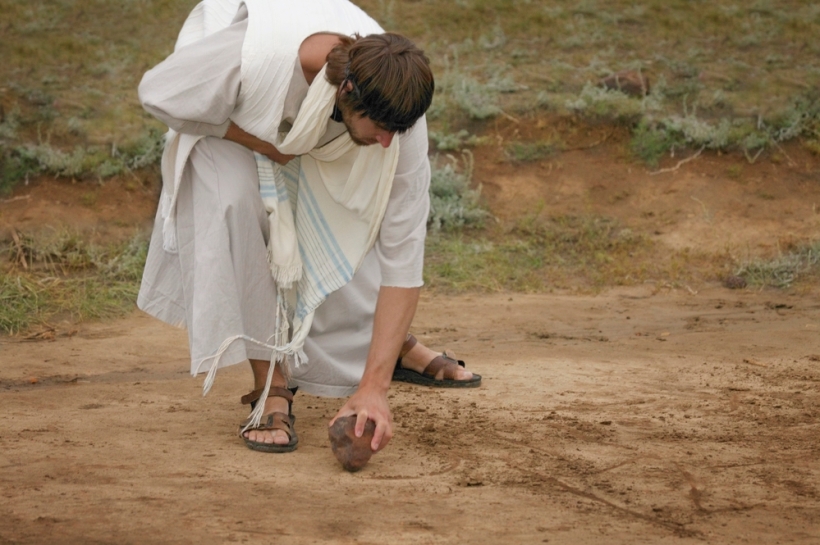
To say that Jesus went easier on people is to ignore these things that he said. At the same time, Jesus confronted the men who wanted to stone the woman caught in adultery and saved her. He said he didn’t condemn her (though he also told her, “Go and sin no more.”)


What in the world is going on? If it seems difficult to sort out what is going on here, join the club.

Black offers one explanation in the video. He says God relates to people differently at different times, just as a parent relates differently to their children at different times. Parents tend to be strict with little children, imposing lots of rules about bedtimes, eating, watching TV, playing video games, doing homework and doing chores and so on.

That relationship can get contentious at times, especially as children get older and become more difficult. After children move out of the house, though, the relationship changes. It’s not that parents think the rules were bad; rather the children become adults, and become responsible for setting their own rules.

The analogy isn’t exactly the same with God, but similar. Paul says the Law was given to us as a guardian (tutor, schoolmaster, instructor, etc.). (Galatians 3:24) The Law was given to teach us something, to lay a certain foundation of understanding. The idea that Paul probably had in mind was a stern, taskmaster, training the children up with discipline.

The taskmaster’s relationship to the children is different than a parent’s relationship. A tutor only trains the children for a time when they are young. The instructor’s job is to make sure the children learn their lessons, and that is the only focus.


A parent is always a parent and never ceases to be a parent who loves and wants the best for the children. A taskmaster doesn’t love the children like a parent does.

But, it’s more complicated than that, and this is the key. The prophet Jeremiah talked about it in the context of a new covenant this way:

“I will put my law within them, and I will write it on their hearts. And I will be their God, and they shall be my people.” (Jer. 31:33)

This is God’s ultimate goal: that we would be receptive, willing and able to receive God’s law in us, written on our hearts.

God isn’t looking for law followers, but for children who desire to be like their father. He wants us to internalize His values and be like Him – not because we must, but because we want to!

Until Christ came, men were under the Law, but Christ came to earth in the form of a human and fulfilled the Law. He died to take the penalty for our transgression; he rose from the dead to demonstrate his authority and power over death; and he ascended to heaven, leaving the Holy Spirit as a guide and comforter for us.

The Holy Spirit is how God now writes his Law in us, on our hearts. The Law is set aside, now, with its commands and regulations. (Eph. 2:15) God is looking for people willing to receive is Spirit and internalize His character in themselves as His children.

But what does this have to do with politics?

Continue reading “How the “God of the Old Testament” vs. God of the New Testament Idea Might Inform Our Politics”

What Does It Mean to Be Known By God

What does it mean that the Lord knows the way of the righteous?

“Therefore the wicked will not stand in the judgment, nor sinners in the congregation of the righteous; for the Lord knows the way of the righteous, but the way of the wicked will perish.” Psalm 1:5‭-‬6 ESV

What does this mean? The Lord knows the way of the righteous. Doesn’t God know everything? Doesn’t God know the way of the wicked also?

God sees everything, and He knows everything. God numbered the stars. (Ps. 147:4) God doesn’t just number the stars; He knows each star by its own name! (Is. 40:26) He can count every hair on every person’s head. (Luke 12:7)

God knows our thoughts, our paths and our ways, and He even knows the words we speak before we say them. (Ps. 139:2-4) Why does Psalm 1 say God knows the way of the righteous (and not the wicked also)?

He certainly knows the way of the wicked. Nothing is hidden from God. (Luke 8:17 & Heb. 4:13) The statement that God knows the way of the righteous doesn’t necessarily mean that He doesn’t know the way of the unrighteous. I think He certainly does.

This passage is not talking about bare knowledge. Clearly God is all knowing. This is not a statement contrary to the omniscience of God. God must know the way of the wicked to judge them, which this verse says He will do.

This statement is about a different kind of knowing. It is a statement of familiarity and identification. God is familiar with and identifies with the righteous because the righteous have adopted God’s ways. God knows them in the sense that he knows his own ways. 

It is a statement of intimacy. God is intimate with the righteous. The righteous turn to God in good times and bad. They have opened themselves to God, and God knows them as someone knows a confidant.

It is a statement of connection. God connects with the righteous. The righteous are aligned with God in their ways. Thus, God knows them. Jesus prayed that we would be one with him as he is one with the Father. (John 17:20-23) God establishes connection with the righteous.

What connection does this knowledge have with judgment, perishing, or eternal life? (Which is the focus of the majority of this passage ) God’s knowing is somehow tied into the judgment, the wicked perishing, and implicitly the righteous not being judged and not perishing.

God is eternal. He always is, always was, and always will be. If we are aligned with God, connected with God, we partake with God in his eternal life through Christ. This was the good news (Gospel) that Jesus preached.

Abraham was counted righteous by the grace of God because of his faith (trust and commitment to God). Through Abraham’s seed came Jesus, his seed, who blessed all the nations of the earth.

In Jesus was God incarnate, emptying Himself of His glory and privilege (Phil. 2:5-7) to “connect with” us on our level. In Jesus, God demonstrated His love and character for us to see and connect with. (1 Jn. 1:2)

That blessing God promised to Abraham is the right to be called sons of God (Jn.1:12), to be born again (Jn. 1:13 & Jn. 3:3-8), to die with Christ and to live eternally in him in connection with the Father. (Rom. 6:6-8)

I think of Paul’s great words, “Now I know in part; then I shall know fully, even as I am fully known.” (1 Cor. 13:12) These are words of intimacy and personal connection. “Then we shall see face to face.” (Id.) This was God’s desire and his plan all along that we might have personal intimate connection with him and He with us.

God not only desires to “know” us – to have intimate connection with us; He desires to be known by us!

God the Father can seem distant and unapproachable. but He became one of us to connect with us and invite us to connect with Him in the form of Jesus. Jesus, in turn, leaves us the Holy Spirit, who is God who remains with us in intimate form who connect with us, and provides a way for us to connect with Him.

The Spirit is God’s guarantee that he will give us the inheritance he promised…. (Eph. 1:14)

[He] has given us the Holy Spirit in our hearts as the guarantee of all that he has in store for us. (2 Cor. 1:22)

The Spirit himself bears witness with our spirit that we are children of God…. (Rom. 8:16)

Breakfast in America: A Litmus Test for the Church?

We can forget that we are ambassadors for Christ everywhere we go, in everything we do, and to each and every person that we meet

I was listening to an interview of Kevin Finch. He is the nephew of the well-known pastor, author and thinker, Eugene Peterson. Kevin comes from a long line of pastors going back generations, and he is the founder of a ministry to people in the food industry called The Big Table.

The food industry may seem like a strange idea to target for a ministry, but Kevin’s eloquent explanation of his call to this ministry, and hearing the clear voice of God in it makes sense. The website provides some further insight.

The restaurant and hospitality sector of the workforce is the largest sector of the American workforce, doubling any other industry. It is also growing faster than any other segment of the workforce. The Big Table website describes it as a “catch basin” for “all of the most vulnerable demographics” – single parents, at-risk teens, immigrants, ex-felons trying to turn their lives around, etc. It is a filed ripe unto harvest.

Perhaps, one reason for the vulnerable demographic is that anyone willing to work can get a job in the restaurant and hospitality world. It is often the first place people look for entry level jobs and the last place people look when all else fails.

“[P]ut so many at-risk individuals together under one roof and it is not surprising that this industry has the highest rates of people struggling with alcohol and drug addiction, massive amounts of divorce and broken relationships, redline stress levels, job instability, rapid turnover, and almost no safety net.”

Restaurant and hospitality workers get paid (often not very much) for serving others with smiles on their faces, while a large portion of them suffer in their own lives more than the average person. The website reports the following:

  • Forty three percent (43%) of workers in the restaurant and hospitality industry fall below the “survival” line – DOUBLE the rate of any other working population;
  • Workers in the restaurant and hospitality industry struggle with drug and alcohol addiction more than any other working group; and
  • Benefits, like health insurance, vacations, sick time, etc. are largely not available for workers in the restaurant and hospitality industry.

In my own experience, I see that workers in the restaurant and hospitality industry are often exploited. They don’t get paid overtime. Bosses often schedule them part-time to avoid overtime pay. They don’t have to be paid even minimum wages, so they most rely on tips. They sometimes get paid “under the table”, and that usually means they get paid even less.

Restaurant workers are very likely to need multiple jobs to make ends meet. Working conditions can be extremely stressful in a hot kitchen or full restaurant, under the pressure of demanding bosses, expectant and often ungrateful patrons, and ever changing conditions. The lowest paid workers are often the first target of angry customers and critical bosses.

I was as a busboy in a popular restaurant in high school. Some of these factors I have experienced firsthand or through friends and family in the hospitality industry. I also worked retail, which includes some of the same pressures to perform with a smile under the hot light of customer interrogation and store bottom lines.

As a young bus boy, I noticed (and can still see in my mind) that every seasoned waitress, Maître d’, cook, and kitchen worker smoked like chimneys. The stress of performing in that pressure cooker environment showed in the worry worn faces of those veterans on which smiles often lost their battle with the struggle of simply getting through the night.

So, what does any of this have to do with the Church in America? In the course of the interview, Kevin Finch said something that made my ears perk up. That is the point is the point of this article, but a little background is necessary to set the stage.

Continue reading “Breakfast in America: A Litmus Test for the Church?”

A Story Demonstrating How God Works to Reveal Himself to People

The evidence for God is more often a string of improbable circumstances happening in the context of a message that is delivered with intimate, personal meaning.

As I have been reading through the New Testament, on my way through the Bible chronologically from start to finish, I have come to the Book of Acts. I wrote most recently about the prominence and importance of testimonial evidence for Christ. I continue to be struck by the key importance of this eyewitness testimony and the highly relational way in which God reveals Himself to people in Acts – and continues to reveal Himself to people today .

Jesus, of course, attracted people who gathered to him, joined him and followed him. Literally, they lived with him, ate with him, traveled with him, and followed him where he went. Thus, they became witnesses to everything he said and did.

As I continue reading in Acts, I have come today to the story of Peter, the apostle, and Cornelius, the Roman Centurion who lived in Caesarea. I wrote about this story not long ago, in Reflection on the Unity for which Jesus Prayed: Peter & Cornelius, but today I see a different twist that runs with the theme of eyewitnesses and God revealing Himself to people.

Continue reading “A Story Demonstrating How God Works to Reveal Himself to People”

Postscript to the Sons of Issachar Who Understood the Times

We receive the Holy Spirit, not so that we will know the times, but so that we can be effective as His witnesses!

I wrote a piece on the Sons of Issachar recently. They are referenced in 1 Chronicles 12:32. The Sons of Issachar were 200 “chiefs” of the descendants of Issachar, one of the sons of Jacob. These men joined David with a multitude from the other tribes of Israel when David was hiding in the wilderness from the murderous rage of King Saul.

Saul was Israel’s first king. He was the king the people demanded. He was the king God gave them, despite the fact that His people were rejecting God as their king in the process of demanding a human king, like the other nations.

Saul got caught up in his own power and position. Saul began to lose touch with reality as he stopped obeying God and became paranoid of losing a grip on the power God gave him. He became jealous of David. and suspected David was out to get him. Though David could not have been more loyal, King Saul sought to kill David to eliminate his perceived threat.

Indeed, God was about to reject Saul as king because Saul ceased to listen to and follow God’s instruction given through the prophet, Samuel. God had chosen David to succeed Saul, because David was a man after God’s own heart.

David, for his part, loved and honored Saul because God had made him king. David had multiple opportunities to kill Saul, but he refused to do it, leaving Saul’s fate (and his own fate) completely in God’s hands.

Still, men from every tribe of Israel began to gather where David was hiding, including men from Saul’s own tribe (Benjamin). The Benjamites were some of the first men to join David. The 200 chiefs of the Sons of Issachar joined David later. Scripture says of them, specifically, that they were men “who understood the times and knew what Israel should do.”

That phrase has been invoked by people who style themselves modern prophets who support the presidency of Donald Trump. They claim, of course, that they are men who understand the times. They claim to know what Christian in the United States should do, particularly in regard to support Donald Trump.

I don’t dismiss what they say out of hand. God has spoken at various times through people considered to be prophets. One of the hallmarks of “the last days” is prophecy, visions, and dreams. Peter announced the last days were starting when he stood up on the Day of Pentecost and quoted the prophet, Joel:

And in the last days it shall be, God declares,
that I will pour out my Spirit on all flesh,
and your sons and your daughters shall prophesy,
    and your young men shall see visions,
    and your old men shall dream dreams;
even on my male servants and female servants
    in those days I will pour out my Spirit, and they shall prophesy.

Acts 2:17-18 (quoting Joel 2:28-32)

Some people believe that these displays of God’s power and authority were only for a dispensation in time long enough for the Holy Spirit to lead the disciples into truth and preserve it in what we now call the New Testament. I don’t see evidence of that in the New Testament itself. I think we should expect God to work through people today through prophecy, visions, and dreams, and I believe He does.

We, in the west, are not very open to God working in that way. We have staked out our position on the embankment of reason, logic, and “sound doctrine”. We are quite uncomfortable with the “messiness” of experiential phenomena like prophecy, visions, and dreams.

Yet, outside our western sanctuaries and cloistered halls of learning, these phenomena are regular experiences of Christian life. People who have done short-term or long-term missions often encounter these phenomena in places where people are not presumptively skeptical of what God can do.

Visions and dreams are ubiquitous in the stories of recent Muslims coming to faith in Christ. I once spoke with a Muslim woman who described for me a vision of Jesus coming to her in the midst of a near death experience she lived through. She described a subsequent “waking vision” of Jesus gaining her attention in the nick of time to save her son from being hit by a bus. She became a believer in Jesus because of these visions, though no one preached a word to her.

Her supernatural visions, though, didn’t lead her to a place of sound understanding of God and His word. They caused her to believe in God and Jesus, but she gravitated toward extremes in biblical understanding. This is just an anecdote, but I think there is a lesson to take away from it.

It would be a mistake to dismiss out of hand the prophecies, visions, and dreams that people claim to have today, but we also need to be careful. Paul admonished the Thessalonians, “Do not despise prophecies…!” (1 Thess. 5:20) But he added an important qualifier:

“…. test everything; hold fast what is good.”

1 Thess. 5:21

Continue reading “Postscript to the Sons of Issachar Who Understood the Times”