Myth, Seasons, and the Resurrection of Jesus

Should the claim that Christianity is similar to prior, pagan mythology concern us?

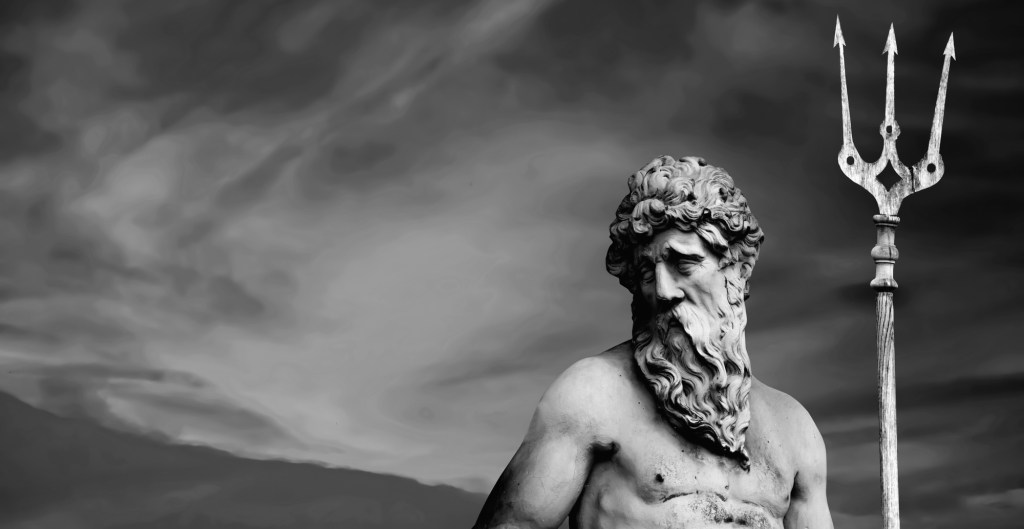
The god of the sea and oceans Neptune (Poseidon).

Popular trends arise in culturally contingent ways, and those trends often dominate the public mind for a season. Thus, the idea that Christianity borrowed from prior pagan mythology gained notoriety with the rise of New Atheism. The Zeitgeist: The Movie (2007) is a poster child for this popular trend in thinking.

The Zeitgeist movie forces the narrative, ignoring glaring dissimilarities, and manufacturing similarities that don’t really exist. It ignores (or isn’t familiar with) the relevant academic scholarship, but it has been watched well over one million times. We might say that the Zeitgeist movie has become legendary in a truly mythic sense itself.

I will go out on a limb, nevertheless, to say that Christians have shown far too much angst over this trend of claiming that Christianity is similar to prior pagan mythology. There are critical differences, and they are significant, but there are some similarities also. Do the similarities pose a problem for Christianity?

The short answer is, no. In fact, if truth is truth and reality is reality, ancient, pagan attempts at explaining that reality are likely to hit on some metaphysical truth. If they didn’t, I might begin wonder about the nature of reality and our ability to recognize and understand it.

Mythic literature as a genre is an attempt to provide some explanation and understanding of basic realities and the ebb and flow of life. I am reminded of these things as I sit outside on an unseasonably warm day in November with a view of trees bared of their multicolored leaves that have been collected by my earnest neighbors in piles lining the suburban streets for pickup.

Fall is ebbing into the dark night of winter. The subtle coolness in the breeze portends (what seems to me now) a distant spring. I am braced for what comes next as I enjoy what is likely to be the lest vestige of warmer days for longer than I care to think about.

My hope for the spring, however far off it seems in my present mood, is rooted in my experience of the certainty of the seasons. I know my hope is not fanciful, even as I brace (all too knowingly) for the cold, bleak trudge ahead.

It seems completely natural that ancient mythology captures this duality in stories that have religious significance. These experiences are common to man. We remind ourselves of the hope of spring as we gaze in wonderment at fall trees in the throes of seasonal death and the chill onset of winter. It reminds us of our own life and death sagas, even now in all our modern comforts.

Our modern comforts allow us to be a bit more disconnected and circumspect, perhaps, than our ancient forbearers. Those comforts and great advances in scientific knowledge allow us to be intellectual about these things. Ancient pagans lived literally at the mercy of the seasons, and all the things they didn’t know played like gods on the stage of their fraught imagination.

Modern people chalk seasonal changes up to natural cycles that just happen. We believe humans chased all the gods off long ago. The ownership we have asserted in our knowledge of the way the world works gives us an illusion of control that I surmise is not all that much different than the ancients, who sought some ownership and control of this world through the mediators of gods they thought they could appease.

Pagans found solace in the seasons as we do. Myth is rooted in collective experience, and it is driven by an impulse to understand and import control into our experience. We also have a natural inclination to seek meaning. We might call this impulse a “religious” one.

Though we have the chased the gods off, we still have a religious impulse. Though we no longer believe in many gods, and we no longer venerate ancient myths with more than a curious read, the idea of one, Creator God God persists, and it is not explained away by modern science and knowledge. The Bible, though it has ancient origins, stands up to our modern scrutiny in ways that pagan myth does not.

Continue reading “Myth, Seasons, and the Resurrection of Jesus”

The Errors of Our Ways: Science, Religion, and Racism

That Christians should have known better seems self-evident to us today. But, what of science?


Most people know well the checkered history of Christianity on racism, especially in the United States. Much less is said (and therefore known) on the checkered history of science on racism in the west. One reason for that difference in our collective memories is the Enlightenment narrative: that science rescued the world from Christianity. More on that below.

I am not writing today to criticize Christianity less or science more for the moral failing of the history of racism in America. I am writing to bring some clarity where a popular narrative muddies the waters.

I think most people can agree that American (and British) Christianity has a racist past, but we have short (and biased) memories on this score. History is replete with dominant people groups subjecting other people groups to slavery, genocide, and other atrocities. It wasn’t just Americans, or western civilization, or Christians that perpetuated the evil of slavery.

That we even call those things atrocities today is a credit to Christianity. The story of Jesus voluntarily dying at the hands of the dominant power of his day, urging his followers to live lives of self-sacrifice, and looking after the benefit of others as he did changed everything.

It took three centuries, but the cross eventually became the symbol of this religious movement characterized by self-sacrificial love.

Prior to the death of Jesus, the cross was the ultimate symbol of the exultant might of the dominant state over its subjects. Those in power determined the values of the society they ruled, and those values were imposed with Draconian force on those who lived under that power.  “Might makes right” was just the way the world was for most of history.

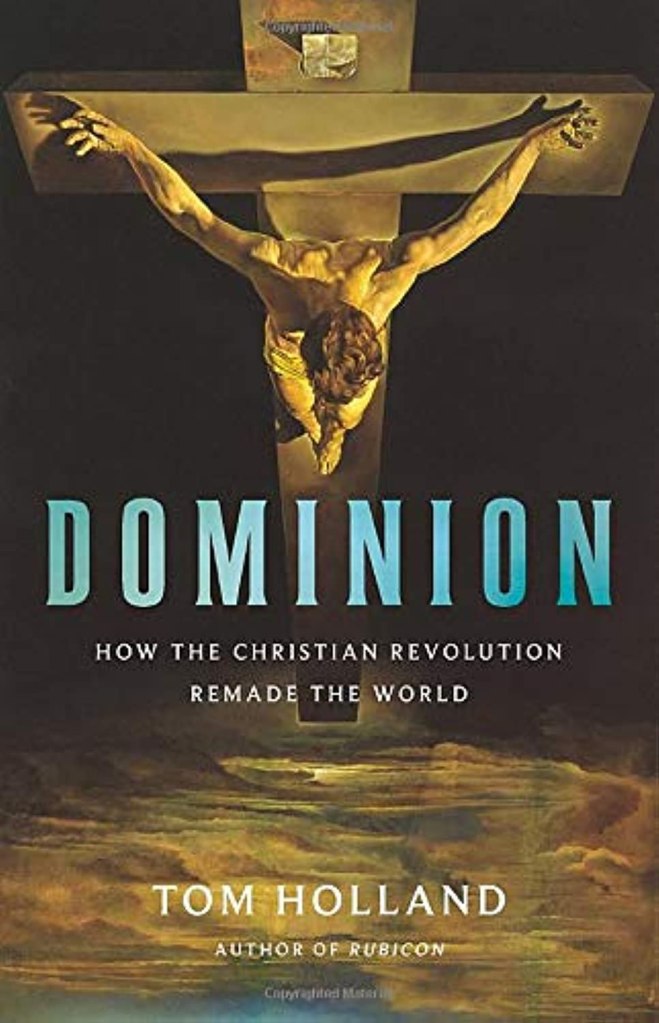
Tom Holland, in his seminal book, Dominion: How the Christian Revolution Remade the World, found the nexus for a radical change in the west in the crucifixion of Jesus. That event and the movement it inspired changed forever how the west (and now the rest of the world) views power and morality.


Tom Holland was an atheist When he did the research for this book. His area of expertise is Greco-Roman history. He was steeped in the brutish nature of the Roman world that championed power and elite, male dominance over all that was weak.

When he set out to trace his secular humanist values in western civilization, he knew there was some discontinuity between the Greco-Roman values he knew so well and his own, modern notions of basic human rights, so he was curious to locate the origin of that seismic shift.

His book, Dominion, traces our modern values from the roots where he found them in the history of western civilization. He found they go back to Jesus of Nazareth and the people who gave their lives to follow him.

The death of Jesus on the cross radically subverted the assumptions that ruled the world to that point. The Greco-Roman world that valued and honored power above all things gave way over time to the man who is claimed to be the Savior of the world who let himself be led like a lamb to his own slaughter. His life and message of self-sacrificial love became the bedrock for modern civil rights, human dignity, and the assumption that the powerful should shelter and care for the weak.

The criticism of Christians for racism and its worst manifestation – slavery – is deserved. Mostly because Christians “should’ve known better”. Of all people, Christians should have known better!

The water gets murky, though, in our modern memory because it has been influenced by a narrative that obscures the truth. The narrative that exposes the failing of Christianity often does so by directing attention away from the nonreligious world of reason and science, as if there is “nothing to see here.”

This view that rose to prominence during the Enlightenment is prevalent still today. It puts the full weight of condemnation for our failings on religion (and Christianity in particular). This is a false narrative, and, it obscures the truth and warps our perceptions that still persist.

There is nothing inherently wrong with science and reason. It is people who are flawed, and the flaws of people are not confined to science, or religion, or to any particular ideology or worldview. No ideology or worldview is immune.

Continue reading “The Errors of Our Ways: Science, Religion, and Racism”

The Trump Assassination Attempt: Knowing the Times

The church needs to maintain perspective and test everything


The world is chattering about the Trump assassination attempt. Some people are gnashing their teeth, and others are thumping their chests and pumping their fists. I don’t want to rush to conclusions about anything. There is far too much of rushing to conclusions in our world – or reflexively doubling down on the conclusions we reached long ago.

The assassination attempt, however warrants some kind of response. No one is without some thoughts on the matter. My goal, though, is to be circumspect and seek perspective

I have not been shy in my writing on my concerns about Donald Trump and the uncritical support of Trump by the body of Christ in this country. The most read article on this blog, Who Were the Sons of Issachar? And What Might They Mean for Us Today?, is an attempt to find some perspective in the swirl of religious fervor with which people support Trump.

As I write this, I recognize that Trump may likely become the next President of the United States – an unlikely two-time President. I also recognize the prophecies about the first Trump presidency and the prophecies predicting a second Trump presidency that did not come to fruition four years ago. They appear (to me) about to be vindicated in 2024.

If Donald Trump is elected for a second time, we must admit that these prophecies came true. The test of a true prophet and of a prophecy from God is whether the events predicted happen.

That isn’t the end of the story, however. Paul exhorts us to test everything and hold onto only what is good. (1 Thess. 5:21) The context in which these words were spoke is prophecies, among other things:

Do not quench the Spirit. Do not despise prophecies, but test everything; hold fast what is good. Abstain from every form of evil.

1 Thessalonians 5:19-22

What do we hold on to here? What is God saying, and what is God doing in these times

Does a second Trump presidency as prophesied mean that Trump is God’s anointed? Like David? Or Like Saul? Does it mean that the American church must put its uncritical allegiance behind Donald Trump, including all that he says, all that he does, every position he takes, and all that he stands for?

These questions are ways of asking, “What God is doing in our times?” And, maybe more importantly, “What should we be doing in these times?”

We need to be careful – to test everything. God has a way of doing things that we don’t expect and don’t understand. If we don’t believe that, we are not reading our Bible closely enough.

Continue reading “The Trump Assassination Attempt: Knowing the Times”

Thoughts on the Great Commission: Our Finite Tendency to Miss What God is Doing in Our Time

What are we missing? What dogmatic understanding have we clung to that is correct in some aspect, but not completely accurate?

Go into all the world and tell the gospel to all creation

‭As I read through the New Testament this year as part of my daily reading plan, I have finished the Gospels, and I am well into the Book of Acts. As I read through the Gospels, I was mindful of the context in location, time period, and the history of the area and the people of Israel, surrounding nations, and the Greco-Roman world leading up to the time that Jesus walked the earth. I have also been mindful of the sweep of this history as it has played out since that time to the present day.

As a believer in the story of God revealing himself to human beings in this history that we continue to live into, I am also mindful that this time was pivotal. God becoming incarnate (taking on human form and fully living into His own creation), is the centerpiece of our story. It ties the story together from the beginning to the end that will play out into the future fulfillment of God’s ultimate plans.

Abraham and his descendants have been the focus of this story from the time that he heard God encouraging him to leave his family and homeland and strike out to a land God would show him, full of the promise descendants as numerous as the sands of the shores of the sea and the stars in the sky. But the story has taken an unexpected turn – unexpected, at least, for those descendants who have been living into this story for millennia by the time of Christ.

But it shouldn’t have been unexpected. That original promise to Abraham included blessing for all the nations of the earth. This was God’s plan from the beginning – from the creation of Adam and Eve and the command to “be fruitful and multiply.”

The covenant God made with Moses with those descendants of Abraham, however, took on a life of its own – at least as far as they perceived it. They were (more or less) faithful to that covenant. At least, they clung to that story despite their failings to be faithful and despite their myopic view of what God was doing.

It was myopic because they lost sight of God’s intention to bless the nations of the earth through them. This blessing was embedded into the original promise to Abraham, and it was always intended to be part of the story. Yet, they had lost that thread.

Thus, when God entered into the story to move it along and begin to work out the thread of His ultimate plan, they didn’t recognize Him. The people God chose through whom He would work out this plan unwittingly resisted it.

Yet, God in His sovereignty was not surprised by this. He used their resistance to move the story forward. Jesus knew this when he read from the Isaiah scroll in his hometown synagogue:

“The Spirit of the Lord is on me,
    because he has anointed me
    to proclaim good news to the poor.
He has sent me to proclaim freedom for the prisoners
    and recovery of sight for the blind,
to set the oppressed free,
to proclaim the year of the Lord’s favor.”

Luke 4:18-19

When Jesus told them, “Today this scripture is fulfilled in your hearing”, they were not ready to receive it, though the fulfillment of it was long-awaited by them. Jesus knew their rejection of him would be the catalyst God would use to unfold the rest of the story:

“Jesus said to them, ‘Surely you will quote this proverb to me: ‘Physician, heal yourself!’ And you will tell me, ‘Do here in your hometown what we have heard that you did in Capernaum.’”

Luke 4:23

Jesus, the fullness of God in human form (Col. 2:9), knew he would die at the insistence of his own people, but this was meant to be.

“And being found in appearance as a man,
    he humbled himself
    by becoming obedient to death—
        even death on a cross!”

Pjilippians 2:8

God worked through this people He chose to prepare for the time He would enter the story, and their rejection of Him would be the turning point.

Continue reading “Thoughts on the Great Commission: Our Finite Tendency to Miss What God is Doing in Our Time”

A Tale of Two Processions, Two Kingdoms, and the Triumph of God

Two processions, two kingdoms clashing, and God’s triumph in the death of God incarnate on the cross


Episode 124 – Statement of Triumph – from the BEMA Podcast, with Marty Solomon and Brent Billings, inspires my writing today. It was the subject of discussion for the Saturday morning Bible study I have attended off and on with an exceptional group of men for several years.

The subject was Matthew 21:1-11. The chapter heading in the NIV translation (which would not have appeared in the original text, because there were no chapter headings in the original text) is “Jesus Comes to Jerusalem as King.”

This is usually how we read it: a “triumphal” entry. We celebrate Jesus entering Jerusalem as a king. It was triumphal, but not perhaps in the way we tend to think about it. Certainly, not in the way the fledgling followers of Jesus perceived it when they witnessed it.

Marty Solomon sets the stage in the podcast. He emphasizes that Jesus rode into Jerusalem on a donkey. It was during the week of Passover, an unusually tense time in this region of the Roman world. The uneasy tension existed at that time in that region because it was home to the only group of people in the Roman Empire who refused to worship the Emperor.

The Jewish people were stubbornly true to their God. Even so, Rome allowed the Jews to have their own ruler, Herod the Great. Herod was powerful in his own right, but he was happy to rule alongside the Romans, and the Romans accommodated him to maintain stability in the region.

Even so, this small piece of real estate was problematic for Rome. It sat at the crossroads of the earth. The Hebrew people long inhabited it, but they were a headache for Rome because of their entrenched religious traditions and unabated worship of their God.

When Herod the Great died, three of his sons took over different areas of the land Herod ruled as a vassal of the Romans. Herod Philip ruled the north (Caesarea Philippi). Herod Antipas ruled the middle region, and Herod Archelaus ruled in the south (Judea).

Archelaus only lasted two years, so Rome brought in its own ruler, Pontius Pilate (the Roman Bulldog), to maintain Rome’s control over the region. Pilate didn’t live in the sacred City, Jerusalem. Pilate lived in Caesarea Maritime (Caesarea, By the Sea), a city built by Herod to honor Caesar.

The week of Passover would have been a particularly tense time in Jerusalem because Jews from all over gathered there to celebrate the feast that remembered their great deliverance and triumph over the superpower of an earlier time, Egypt. The last thing Rome wanted was for this celebration to become a rally for rebel Jews fueled up with wine and the legend of their former deliverance.

If there was any holiday that might make the Romans nervous in Judea, it was Passover. Zealots were always stirring up trouble, and Passover would be an opportune time for a Jewish revolt against the Roman rule of this territory that the Jews long held out as their own. After all, the Jews still believed this land was to be theirs again based on their understanding of prophecies about a military coup to be led by a messiah (savior) in the line of their once great King, David.

Every year at this time Pontius Pilate would head south from Caesarea down the coastal road to Joppa. He would head east from Joppa to make his way into Jerusalem. Pilate would enter Jerusalem from the west. He traveled with great pomp and a show of force, with an army of soldiers, trumpeters, heralds, banners, and pronouncements. Pilate would lead the way on a white stallion symbolizing Roman conquest and rule.


This show of power, of course, was intentional.The article, In Through the Back Door, September 24, 2022, by Terry Gau describes these yearly processions made by Pilate into Jerusalem at the beginning of Passover week. John Dominic Crossen and Marcus Borg, memorializes the historical context in their book, Last Week, setting the stage for the final chapter of Jesus’ ministry on earth. The procession is described this way:


Traditionally, Pilate paraded into Jerusalem on the first day of Passover Week, entering the west gate – the front gate – with legions of chariots, horses, and foot soldiers, dressed for battle and armed with swords and spears.  Rome’s authority would not be questioned.  The majesty with which Pilate enters the front door of the city was meant to inspire awe and fear, respect and obedience.”


Marty Solomon imagines it this way:


You could have heard him coming from miles away. The message he wanted to send to the Jews was clear. ‘Don’t even think about it! Keep everything under control, or Rome will crush you!’”

BEMA Podcast, Episode 124


Pilate would stay in Herod’s palace in Jerusalem for the week until the festivities ended. Then he would go back to Caesarea. He wasn’t there to celebrate, though. He was there to ensure things didn’t get out of control and to keep the peace.

During one Passover week under the rule of Pontius Pilate in Judea another procession took place. It may have even happened on the same day at the same time that Pilate was entering the City from the west. This procession took place on the east side of Jerusalem where Jesus, riding on a lowly, young donkey with a small, rag tag bunch of unarmed disciples entered through the east gate – the back door to Jerusalem.


This parade was just as carefully staged as Pilate’s entry into Jerusalem. It was a counter-procession, a different vision of what a Kingdom should be, a subversive action against the powers that ruled Jerusalem. Jesus’ humble, yet triumphal, entry into Jerusalem stood in contrast to the magnificence and brutality on display at the opposite end of the city. Jesus brings peace, while Pilate brings a sword.”

In Through the Back Door


This was the backdrop for episode 124 of the BEMA Podcast and of our discussion. I sit writing at a temporary table with one chair left in my house that is all but cleaned out and being readied for sale. My future is uncertain as I recount one of the most pivotal times in human history and the dealings of God with man and its meaning for us, today.

Continue reading “A Tale of Two Processions, Two Kingdoms, and the Triumph of God”