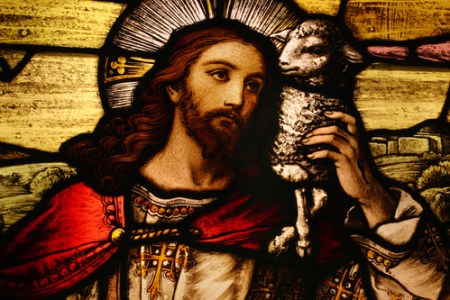
Questions of Greatness and Goodness: The Influence of Jesus on Western Civilization

Jesus wrote no books, created no great art, built no monuments and spent only three years as a public figure two millennia ago.


“The historian’s test of an individual’s greatness is ‘What did he leave to grow? Did he help men think about new ideas with a vigor that persisted after he was gone?’” H.G. Wells

H.G. Wells, the great English writer considered “the father of science fiction”, was a forward thinker, believing in the progression of man in the vein of the evolutionary theory of Charles Darwin. He was no friend of orthodox Christianity, nor of any religion. (See Wikipedia) “None of his contemporaries did more to encourage revolt against Christian tenets and accepted codes of behaviour, especially as regards sex….” (See Britannica).

It’s ironic I suppose, then, that I am thinking about Jesus as I read his words.

Wells expressed a hope in his writing “that human society would evolve into higher forms”. He believed from early on in the “doctrine of social progress”. (See Britannica) World War I impacted the idealistic hopes of his youth, but Wells continued to believe that humankind could progress through knowledge and education.

I wonder what Wells would say today?

How much have we progressed?

Wells’s last written work, Mind at the End of its Tether, written at the outbreak of World War II, suggests some further erosion in the hope of his youth. He painted a very bleak picture of the future of mankind in which nature itself rebels against the evils of men.

Would his waning optimism have shriveled altogether if he had lived long enough?

Though H.G. Wells visited with both Lenin and Stalin, he probably didn’t know all the details of the atrocities that Stalin (particularly ) committed. A grim estimate of people killed at Stalin’s direction is 40 million! (See ibtimes)

What would Wells have thought about the progression of mankind if he knew the truth? What if he knew of all the genocides that occurred and would occur in the 20th and 21st centuries alone? (See The worst genocides of the 20th and 21st Centuries)

Should we really measure humankind by their greatness?

What about the goodness of humankind?

An atheist friend of mine challenged me to prove to him that the world is a better place with religion (and Christianity in particular). I don’t recall exactly how I responded to him, but I have thought about his challenge since then.

We can’t deny that bad things have been done by people in the name of religion, including Christianity. I would not deny it. But what of the good?

H.G. Wells poses a question about greatness. My friend poses a question about goodness. What of our goodness?

Continue reading “Questions of Greatness and Goodness: The Influence of Jesus on Western Civilization”

Reading the Writing on the Cave Wall

Genevieve Von Petzinger speaks at TED Fellows Retreat 2015, August 26-30, 2015, Asilomar Conference Grounds, Pacific Grove, California. Photo: Ryan Lash/TED

Genevieve von Petzinger, a paleoanthropologist, has a TED talk that is garnering some attention. She speaks on her findings from the exploration of art and geometric signs in caves around Europe. Most people have long known about the cave art, but the geometric signs were largely ignored until von Petzinger decided to focus on them and catalogue them.

Maybe fascination with the art distracted people from the significance of the geometric signs. Whatever the reason, Von Petzinger is the first person to document and create a database of those geometric signs. She reports previously undocumented geometric signs in 70% of the caves she surveyed.

Her TED talk focused on a stunning discovery. She found only 32 different geometric signs in all the caves she visited. Thus, only 32 different geometric signs were developed over a 30,000-year span on the entire continent of Europe!

“What’s the big deal?”, you might ask. The answer is that we would expect much more variation if they were random doodles or decorations. The fact that the same signs were used over and over again suggests something more than mere art.

The signs were repeated from location to location. About 60% of the signs were used throughout the entire 30,000-year time span. Some signs appeared early and ceased to be used. Other signs appeared later. Some signs appeared in wide geographic distribution, while other signs appeared in more concentrated geographic areas. But most of the signs were found throughout the continent and throughout the 30,000-year span.

Another interesting observation is that cave art in Europe bears some resemblance to cave art as far away as Indonesia and Australia. Many of the same signs appear in far flung places, especially in the same 30,000-40,000 year range. Genevieve von Petzinger believes these findings indicate an increasing likelihood that “this invention traces back to a common point of origin in Africa”.

“[T]hat is a subject for a future talk”, says von Petzinger. Meanwhile, let’s explore the significance of the geometric signs found in the European caves

Continue reading “Reading the Writing on the Cave Wall”

Christianity and Society’s Ills

The history of the people of God. is that they are always tending away from Him in their hearts, especially at the level of power. But there is always a remnant.

Heroes Square Budapest Hungary

A social media friend recently responded to a blog article I wrote, Are Christians Hypocrites, by asking whether I thought that “higher religious subscription correlated to fewer societal ills”. I think the answer is clearly, yes! (For a skeptic who agrees with me, see this dialogue on the podcast Unbelievable!)

But I know what he was getting at. Intermixed with that “progress” in the Western world are deep grains of corruption and evil in which the Church was not only complicit, but intimately involved.

My friend is a skeptic and an atheist. He believes that the world is better off without religion. He is critical of Christianity, and let’s face it: “the Church” has created its share of societal ills.

People are often critical of Christians and Christianity with some basis in fact for its checkered past. Christians often view that history differently than non-Christians, but a candid person must admit that corruption in “the church” evidenced in history is undeniable.

For skeptics, this vein of corruption running through the history of the Church “spoils the whole thing, undermines the truth of Christianity and justifies their rejection of it and the God Christians profess to believe. The fact that popular history focuses on that corruption, to the exclusion of all the good that Christianity has brought to the world, doesn’t negate the fact that such corruption existed and still exists.

When my friend posed his loaded question to me, I suspect that he sees a correlation between religion and societal ills. I did not argue with him about it because there is more than a kernel of truth to the statement.

But there is much more to the analysis. To begin with, all people are corruptible, not just church people. Corruption is, itself, dependent on the good that it corrupts. Corruption is the misuse, misapplication and exploitation of something good for bad purposes. Good must exist before corruption does its work.

One aspect of church history that correlates with that corruption is the “marriage” of church and state power. I think that Lord Acton was right when he said, “Power tends to corrupt, and absolute power corrupts absolutely.” When the church becomes intertwined with worldly kings and kingdoms, the influences of power, wealth and all that goes with it colors the church, and the church is inevitably corrupted by it.

Continue reading “Christianity and Society’s Ills”

CS Lewis on the “True Myth”

All myth is an attempt to shine light on truth. True Myth is the ultimate Light shining on the ultimate Truth. 

The Areopagus in Athens

“Now the story of Christ is simply a true myth: a myth working on us in the same way as the others, but with this tremendous difference that it really happened: and one must be content to accept it in the same way, remembering that it is God’s myth where the others are men’s myths: i.e. the Pagan stories are God expressing Himself through the minds of poets, using such images as He found there, while Christianity is God expressing Himself through what we call ‘real things’. Therefore it is true, not in the sense of being a ‘description’ of God (that no finite mind could take in) but in the sense of being the way in which God chooses to (or can) appear to our faculties. The ‘doctrines’ we get out of the true myth are of course less true: they are the translations into our concepts and ideas of that which God has already expressed in a language more adequate, namely the actual incarnation, crucifixion, and resurrection. Does this amount to a belief in Christianity? At any rate I am now certain (a) That this Christian story is to be approached, in a sense, as I approach other myths. (b) That it is the most important and full of meaning. I am also nearly certain that it really happened….”


This quotation is from CS Lewis in a letter to Arthur Greeves: from The Kilns (on his conversion to Christianity), 18 October 1931. It captures the thought process of CS Lewis at the point in time when he was becoming convinced of the truth of Christianity.


If you have read much of what I write, you would easily notice that I quote and reference CS Lewis often. He resonated with me in my faith journey that began in college, and he continues to resonate with me.

He is cited by more diverse groups of people than any Christian thinker, perhaps, in the 20th Century. He had a unique way of approaching things from unique points of view, often pulling fresh ideas from the dusty tomes of ancient literature. His concept of myth and True Myth is one such point (though the source is actually JRR Tolkien).

Some might consider his frequent allusions to ancient, pagan myth heretical. Some might even confuse his love of pagan myth with New Age belief, but he flatly rejected the occult. He was orthodox in unorthodox ways, but his creative approaches to orthodoxy were refreshing and thought-provoking.

We don’t have to look any further than the ultra-orthodox, Apostle Paul, to find some common ground with CS Lewis. When Paul was in Athens, some Epicureans and Stoics he met in the marketplace brought him to the Areopagus to address an erudite Greek crowd. In that address, Paul referenced an altar inscribed “To An Unknown God” and quoted pagan writers when he said:

“in him we move and live and have our being”.

Acts 17:26 (quoting a line from Cretiga, by Epimenides of Knossos)

“For we are indeed his offspring ”

Paul quoted the Cretan philosopher, Epimenides, also in Titus 1:12. Paul knew enough about pagan philosophy and poetry that he could quote from pagan works multiple times in his writings and addresses.

Paul quoted the pagan philosopher to express a spiritual truth about our lives in Christ, and Paul quoted the pantheistic poet, Aratus, to convey a theistic principle about God. (See Acts 17:22-28 – Quoting the Philosophers?) Paul connected with the people “where they were,” using language and references from the culture they understood to convey something about God.

Paul was well-read in the literature of his culture, and he used pagan philosophy and poetry to introduce people to the Gospel. This is exactly what CS Lewis does in in his own writing. Through his deep knowledge of pagan myth, he recognized strands of truth, and he recognized the difference between “man’s myth” and “God’s myth (the the “True Myth”).

In using the term, myth, Lewis is talking about story and narrative. Many stories and narratives convey a modicum of truth. CS Lewis observes that most myth from around the world contains some elements of truth, and Lewis insisted we shouldn’t be surprised by this – because truth is universal.

The difference between myth and True Myth, according to Lewis (and Tolkien), is that all other myth is a shadow of the True Myth. All myth is an attempt to shine light on truth. True Myth is the ultimate Light shining on the ultimate Truth.

All myth conveys truth through storytelling. True Myth isn’t just another story, though; it is “the” Story. It isn’t “just” myth, but reality, because “it really happened,” as CS Lewis said.

The True Myth is the Gospel. God, the Creator of the universe and everything in it, created man in His own image as His crowning creation. Then, God became a man, injecting Himself into His own creation, in order to communicate His very heart to us and to rescue us from going our own way by revealing the ultimate purpose for which God created us – to have loving relationship with God, our Creator.

Continue reading “CS Lewis on the “True Myth””

A Cosmic Wrench in Our Power Grid

Thoughts on scientific, technological and moral advancement and religion.


The podcast, Unbelievable, with host, Justin Brierley, is becoming a favorite food for thought. I just listened to Steven Pinker vs Nick Spencer: Have science, reason & humanism replaced faith? Pinker is an atheist professor of Psychology from Harvard, and Spencer is billed as a member of “the Christian think tank, Theos”. The subject was “Pinker’s recent book ‘Enlightenment Now’, addressing his claim that science, reason and humanism are the drivers of progress in the world, not religion”.

As with most of the episodes I have listened to, this one was a very civil and respectful “debate”, really more of a dialogue, on the respective points of view. This civility and respect sets Unbelievable apart from more reactive “discussions” of controversial topics.

In this particular discussion, the focus was on Pinker’s optimistic view of humanism bolstered by science and technology echoing the familiar theme that we are progressing as a species as we free ourselves from religion with the aid of science and technology carrying us forward. Pinker minimizes the influence of religion on the enlightenment and the sudden advancement of science that accompanied it, while Spencer argued that the influence of religion is what fundamentally motivated and shaped those movements.

Spencer agreed with much that Pinker says about the progress of modern man, though he disagrees that science has shaped the moral advances we have experienced. He says that the value of the individual and sanctity of human rights is at heart a religious concept. He even points out that Pinker has to resort to the religious term, sacred, to describe these concepts as some evidence of the religious influence.

I have long toyed with the notion that we are not as advanced, morally, as we think ourselves. The 20th Century was the bloodiest of all centuries. Characteristic of the 20th Century was the genocidal bloodshed and cruelty of the atheist regimes under Stalin, Mao Tse Tung, Pol Pot and others. Some would add Hitler to the hit list of atheist genocidal despots, but that point is often argued, with religionists foisting Hitler on the atheists, and the atheists pushing him back on the religionists.

Hitler is somewhat of an enigma, generating an almost religious following marked by a personality that modeled a religion-like fervor. Pinker and Spencer debated whether Hitler was influenced by Darwinism, with Pinker countering that Hitler despised Darwin.

Though the truth of Hitler’s motivations my remain a mystery, and despite the unprecedented genocides perpetuated in the 20th Century, Spencer agreed with Pinker that we have progressed morally into the 21st Century. We generally exhibit a higher morality, however you slice it, (at least in the western world) in modern times than ever before, and this higher morality tracks scientific and technological progress.

As the two men carried on the conversation about the relative influences of religion and scientific and technological advancement on that progress, some thoughts occurred to me that I hadn’t considered before. I would agree with Spencer that religion (principally Judeo-Christian principles in the west) has largely carried us to this place where, ironically, we are finding no more need of God.

This perspective, also, flows from those same Judeo-Christian roots that holds out human pride as the principal problem (sin) of humankind. Having achieved a degree of independence and comfort through the advancement of technology, we believe “can do this” on our own (to paraphrase the testosterone influenced enthusiasm of my former teenage boys).

Continue reading “A Cosmic Wrench in Our Power Grid”