The Roots of Modern Ethics in the Ancient Near East

Of the origins of monotheistic religion and ethics.

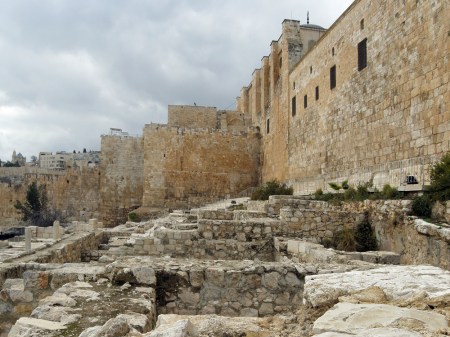
Jerusalem: The Temple Mount from the time of the Second Temple

When I was in college, the first class I took was World Religions. Though I graduated with an English Literature major, I also had enough credits to be a Religion major. I didn’t need the dual major. I only took the religion classes because they interested me.

I also became a believing Christian during my college years. It was a transition that took place between that World Religion class and the summer between Sophomore and Junior years. It’s a long story that I might tell in detail some time, but the point for now is that I did a lot of reading and thinking about these things in those years and in the decades since. It doesn’t make me a theologian, but I have more than a passing interest.

Early on I learned that the creation story and flood story in Genesis, among other things, have counterparts in other religions, including other religions in the same area of the world – the Ancient Near East. Phoenicians, Assyrians, Persians, and other people groups had similar myths that have been uncovered from that general time period.

I learned that Zoroastrianism shared attributes similar to the ancient Hebraic view of the world, including the idea a singular creator God, a dualistic cosmology of good and evil, the ultimate destruction of evil, judgment after death, etc. The scholarly understanding when I was in college was that Zoroastrianism predated Hebraic thought and influenced it.

It occurred to me at the time, not having any reason to doubt what I was taught, that Abraham may have been particularly open to his encounter with God if, indeed, he had lived in an area of the world and in a time in which there was this kind of influence. It made some sense. He was the right guy in the right place with the right influences setting the table for an encounter with God, the Creator of the world. Perhaps, Abraham brought the influence of monotheistic Zoroastrians into the pagan, polytheistic world of Canaan.

Recently I did some research on Zoroastrianism. Wikipedia acknowledges that Zoroastrianism has “possible roots dating back to the second millennium BC”, though the “recorded history” of Zoroastrianism dates back only to the 5th Century BC. (Wikipedia). The conjecture that Zoroastrianism dates back further to the second millennium BC is has no present support in the historical record.

If we date the accounts of Abraham and his descendants according the biblical chronology and references, that history goes far back into the second millennium BC, but the consensus of modern archaeologists and theologians reject that dating in favor of first millennium BC dating. (See Wikipedia, for example) Modern scholars don’t take the Bible at face value. In fact, they presumptively dismiss the Bible as historical record.

Scholarly views are not universal on this issue, of course. Not by a long shot. Modern archaeological and written evidence exists to suggest that the modern consensus is wrong about the timeline for the life of Moses, the Exodus and other things. (See for instance Patterns of Evidence: The Moses Controversy) The Patterns of Evidence theory is that historians and archaeologists who assume a particular timeline for certain events are not apt to see the evidence for those events if they occurred in a different timeline.

The Patterns of Evidence thesis is that evidence for the events described in the biblical narrative is there if we use the right timeline and look for them in the right time periods. Specifically, the biblical accounts of Moses, the Exodus, and entry into the land of Canaan are apparent in the archaeological record and historical data on the biblical timeline (second millennium BC), but they are not evident in the first millennium timeline applied by modern, skeptical scholars.

Certain archaeological finds, like the Ebla Tablets, also raise questions about the modern scholarly consensus. The importance of “looking” in the right places according to the right timelines is explored in Timing the Walls of Jericho.

Back to Abraham, though. He was reportedly from the area of Ur (in modern southwest Iraq), which is quite a distance from the area of Canaan (later Judea) where he ended up – about 1600 miles in fact. In Ur, he may have come in contact with Zoroastrians and similar influences. That idea intrigued me in college, and it still does. So I revisit that thought journey again today.

Continue reading “The Roots of Modern Ethics in the Ancient Near East”

Sunday Worship is Evidence for the Resurrection

The sudden change from Saturday observance to Sunday observance in the First Century is evidence of a momentous occurrence that lead to the change.


Many of the things we do have become so traditional and commonplace that we don’t think about when they started and why. One of those things is the practice of Christians gathering on Sundays for “worship” or “church”. After all, Christians have been gathering on Sundays for almost 2000 years!

But why? It isn’t that difficult to figure out from a thematic, theological position, but what is the history? And why is that important?

We are approaching another Easter so the topic of the resurrection is top of mind this time of year. Of course, the resurrection of Jesus is the answer to the questions I have posed.

Christians gather on Sundays because Sunday was the day of the resurrection according to the Gospel accounts (all four of them). While we take the Sunday gatherings for granted (unless you are a Seventh Day Adventist), the change from Saturday gatherings to Sunday gatherings has historical significance that supports the resurrection as an historical fact.

Continue reading “Sunday Worship is Evidence for the Resurrection”

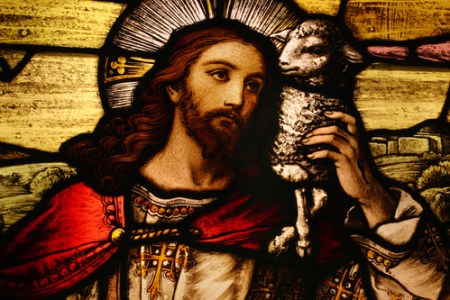
Who Was Jesus?


Who was Jesus? A friend recently asked, “Jesus was a Jew preaching Judaism. Right?” He explained his thought that the people who came after Jesus created a new religion using him as the central figure in spite of who he really was – just a Jewish man preaching Judaism.

This is a popular Internet characterization of Christianity. I am not a scholar on the subject, but I did minor in religion in college. I took all the courses for a religion major, including the thesis course, and I even did the research and wrote the thesis. I would have had a religion major if I had turned in my thesis. I didn’t do it because I didn’t need the major. I took the classes because I was interested in them. I didn’t hand in the thesis paper because I didn’t feel good about it.

A religion major at a small liberal arts school meant majoring in “religion” generally. There were no flavors available for particular study. We looked at all religions, though we focused most heavily on Judaism and Christianity. That is because there was one “Christian” professor and one “Jewish” professor.

The Christian professor took the position that “all roads lead to the top of the same mountain”. Of the Christian road, he was very fond of Liberation Theology that took the position that the God has been changing, progressing and more or less learning to be God throughout time. Liberation Theology was born in South America among the people who were oppressed by the corrupt government and military forces in the 1970’s, and the Catholic priests who espoused this theology believed in taking arms in counter-insurgence against the oppressive political and military regimes.

My “Christian” experience included some very progressive literature. We were encouraged to sit in on lectures given by people like Hare Krishnas and a European Muslim – both lectures that I attended, among others. The Jewish professor was very much the modern, reformed variety – not conservative or Hasidic. This was my introduction to religion and to the Bible.

I did read the Bible from cover to cover in college, not only as an academic exercise as part of my course of study, but because I was drawn to it. In the midst of the all-roads-lead-to-the-same-mountaintop atmosphere in which I studied, I began to be taken by Jesus, who said, “I am the way, and the truth and the life, and no one comes to the Father but by me.” (John 14:6) This is because Jesus stood head and shoulders above all the other religious personalities that I read about. There was something transcendentally different about him.

As I have been thinking about the (largely rhetorical) question my friend posed about Jesus, I think of the sweep of the Bible – Old Testament to New Testament, beginning to end. Having been intimate with it for well over 30 years, having read it many times over, and recounting my own journey of discovery, I feel compelled to tackle the question, but the scope of the answer is daunting.

Continue reading “Who Was Jesus?”

Questions of Greatness and Goodness: The Influence of Jesus on Western Civilization

Jesus wrote no books, created no great art, built no monuments and spent only three years as a public figure two millennia ago.


“The historian’s test of an individual’s greatness is ‘What did he leave to grow? Did he help men think about new ideas with a vigor that persisted after he was gone?’” H.G. Wells

H.G. Wells, the great English writer considered “the father of science fiction”, was a forward thinker, believing in the progression of man in the vein of the evolutionary theory of Charles Darwin. He was no friend of orthodox Christianity, nor of any religion. (See Wikipedia) “None of his contemporaries did more to encourage revolt against Christian tenets and accepted codes of behaviour, especially as regards sex….” (See Britannica).

It’s ironic I suppose, then, that I am thinking about Jesus as I read his words.

Wells expressed a hope in his writing “that human society would evolve into higher forms”. He believed from early on in the “doctrine of social progress”. (See Britannica) World War I impacted the idealistic hopes of his youth, but Wells continued to believe that humankind could progress through knowledge and education.

I wonder what Wells would say today?

How much have we progressed?

Wells’s last written work, Mind at the End of its Tether, written at the outbreak of World War II, suggests some further erosion in the hope of his youth. He painted a very bleak picture of the future of mankind in which nature itself rebels against the evils of men.

Would his waning optimism have shriveled altogether if he had lived long enough?

Though H.G. Wells visited with both Lenin and Stalin, he probably didn’t know all the details of the atrocities that Stalin (particularly ) committed. A grim estimate of people killed at Stalin’s direction is 40 million! (See ibtimes)

What would Wells have thought about the progression of mankind if he knew the truth? What if he knew of all the genocides that occurred and would occur in the 20th and 21st centuries alone? (See The worst genocides of the 20th and 21st Centuries)

Should we really measure humankind by their greatness?

What about the goodness of humankind?

An atheist friend of mine challenged me to prove to him that the world is a better place with religion (and Christianity in particular). I don’t recall exactly how I responded to him, but I have thought about his challenge since then.

We can’t deny that bad things have been done by people in the name of religion, including Christianity. I would not deny it. But what of the good?

H.G. Wells poses a question about greatness. My friend poses a question about goodness. What of our goodness?

Continue reading “Questions of Greatness and Goodness: The Influence of Jesus on Western Civilization”

Reading the Writing on the Cave Wall

Genevieve Von Petzinger speaks at TED Fellows Retreat 2015, August 26-30, 2015, Asilomar Conference Grounds, Pacific Grove, California. Photo: Ryan Lash/TED


Genevieve von Petzinger, a paleoanthropologist, has a TED talk that is garnering some attention. She speaks on her findings from the exploration of art and geometric signs in caves around Europe. Most people have long known about the cave art, but the geometric signs were largely ignored until von Petzinger decided to focus on them and catalogue them.

Maybe fascination with the art distracted people from the significance of the geometric signs. Whatever the reason, Von Petzinger is the first person to document and create a database of those geometric signs. She reports previously undocumented geometric signs in 70% of the caves she surveyed.

Her TED talk focused on a stunning discovery. She found only 32 different geometric signs in all the caves she visited. Thus, only 32 different geometric signs were developed over a 30,000-year span on the entire continent of Europe!

“What’s the big deal?”, you might ask. The answer is that we would expect much more variation if they were random doodles or decorations. The fact that the same signs were used over and over again suggests something more than mere art.

The signs were repeated from location to location. About 60% of the signs were used throughout the entire 30,000-year time span. Some signs appeared early and ceased to be used. Other signs appeared later. Some signs appeared in wide geographic distribution, while other signs appeared in more concentrated geographic areas. But most of the signs were found throughout the continent and throughout the 30,000-year span.

Another interesting observation is that cave art in Europe bears some resemblance to cave art as far away as Indonesia and Australia. Many of the same signs appear in far flung places, especially in the same 30,000-40,000 year range. Genevieve von Petzinger believes these findings indicate an increasing likelihood that “this invention traces back to a common point of origin in Africa”.

“[T]hat is a subject for a future talk”, says von Petzinger. Meanwhile, let’s explore the significance of the geometric signs found in the European caves

Continue reading “Reading the Writing on the Cave Wall”