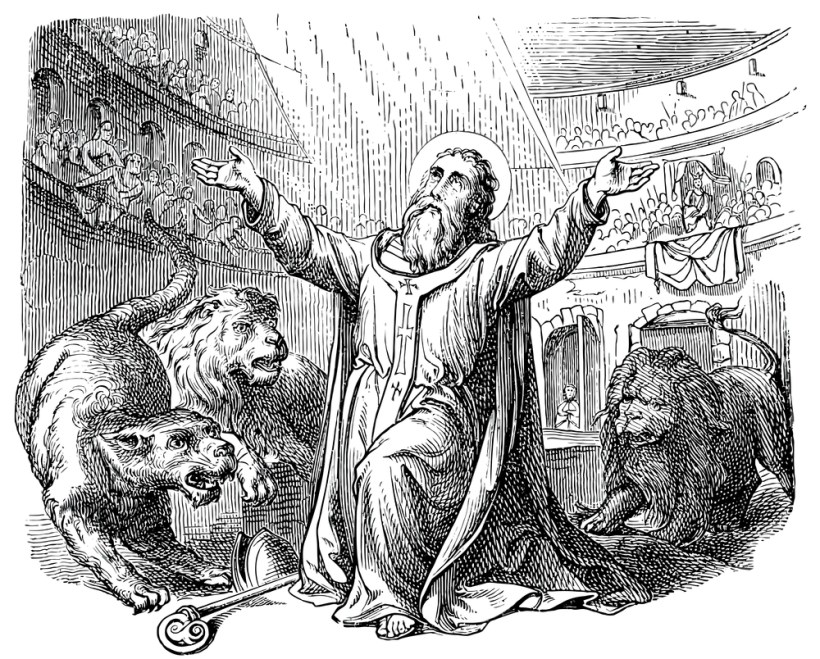
Sean McDowell did his doctoral dissertation on the fate of the Apostles of Jesus. Legend has it that they all died as martyrs, except for the Apostle John, because they witnessed the death and resurrection of Jesus and were willing to attest to it with their own deaths.
But is that really true? That is the question Sean McDowell set out to answer with scholarly research and analysis.
Church “tradition” maintains that all the apostles, except for John, were martyred. This is my understanding also, more or less, going back many years, though we may not have historical evidence that comports with modern standards to support what happened to all the Apostles.
The deaths of Peter and Paul are pretty well-attested. They died martyrs’ deaths, but what about the others?
Sean McDowell recently did a short video inspired by the results of his doctoral study, A Historical Evaluation of the Evidence for the Death of the Apostles As Martyrs for Their Faith, and the book, The Fate of the Apostles. While his study reveals we lack evidence that meets a standard of modern historiography about the martyrdom of most of the apostles, we have solid evidence for least two of them, and we have some evidence for the martyrdom of other eyewitnesses of the death of Jesus. From these facts, McDowell raises five key points.
Ritual Baths along Way of the Patriarchs or Way of the Fathers. The name is used in biblical narratives that it was frequently traveled by Abraham, Isaac and Jacob. Samaria, Israel
I am reading through the Bible again this year, but I am reading it in chronological order using the You Version Bible app. I am not sure how old I was when I realized that the books of the Old Testament are not in chronological order and that events in one book overlap events in other books. But that isn’t the point of this blog piece.
I am in Leviticus right now. The struggle is real! So many laws! So many times the text goes over the same things, or so it seems, but I am trying to maintain focus, and I am asking the Spirit for help in understanding what is going on, what God is saying, what He is foreshadowing, etc.
The last couple of days I have been reading the instructions for all the various types of offerings (animal sacrifices if we want to be blunt), and I have just gotten into laws for ceremonial cleansing for various “leprosies” and other “unclean” conditions. It can seem so mundane, archaic, maybe even naive and unenlightened to a modern mind.
For instance, it doesn’t take too long to figure out that all kinds of skin conditions were labeled leprosy. When we read in the English Standard Version about leprosy in houses, we realize that it’s probably talking about mold. (Some translations call it mold in fact.) The vocabulary and understanding of the Bronze Age mind was limited. It’s no wonder the Richard Dawkins of the world, reading these passages with a 21st Century mind, scoff at first blush.
But, underneath that temptation to scoff is a heavy dose of pride and lack of appreciation for what God is doing in the information and instruction that He was inspiring Moses to write in these passages. God was speaking to them in their language and according to their understanding to set the stage for a global plan that would be unveiled over many centuries and millennia that, even now in the 21st Century, is unfolding and being revealed.
Jesus is the key that unlocks the door to the Old Testament Scriptures.
I don’t claim to have all the answers or all the insights, though I am reminded of the words of Jesus to the Pharisees: “You study the Scriptures diligently because you think that in them you have eternal life. These are the very Scriptures that testify about me, yet you refuse to come to me to have life.” (John 5:39-40) For the scoffer, Jesus might have said, “You don’t study the Scriptures because you think that they are mythical superstition that has no life. Those Scriptures testify about me, and you refuse to come to me to have life!”
Jesus is the key that unlocks the door to the Old Testament Scriptures. But, I still struggle sometimes to find the relevance, significance or meaning in some of these passages. I’ll be honest. I am sure I’m not alone.
One thought comes back to me today as was I reading about the ceremonial cleansing rituals. A thought that goes back many years, but with a new twist today. It has occurred to me before that many of the cleansing laws, laws about what animals they can eat and not eat, and so on, acted like in place of our modern knowledge of germs, disease and other health dangers that the people in that time simply didn’t know. I have long been struck by that thought, but I had never made the additional connection that strikes me with significance today.
In my college English classes, I recall the attitude that Tom Holland conveys in a recent interview of he and AC Grayling by Justin Brierley on the Unbelievable? podcast: Did Christianity give us our human values? Neither Holland nor Grayling are believing Christians, so I was intrigued to listen to what they had to say.
Holland explained that he was raised in the Anglican church, but he found Christianity to be “dull” at an early age. He was much more drawn to the ancient, classical world in the same way he was drawn to dinosaurs when he was younger. “It was big; it was fierce; and it was extinct. To be honest, I was very much on the side of Pontius Pilate: the eagles, the togas, the glamour of it. Jesus becomes slightly dull in comparison. He was a loser, really.”
Tom Holland says there wasn’t a dramatic moment in which he lost his faith. It was more like his faith was a dimmer switch dialing down. He says, “My faith was essentially blotted out by the sun of my fascination with the classical world.”
This was more or less the attitude I remember in the education of my youth. In my high school Latin class, we celebrated Roman society, even dressing in togas one day for some kind of classroom party. In 1978, just before I set off for college, the movie, Animal House, practically turned the toga party into a curricular activity.
I remember distinctly a professor explaining through an entire class on Milton’s Paradise Lost why Satan is the most appealing character in that classical work. The theme of naïve innocence and initiation into the world of knowledge that brings with it the thrill of discovery and loss of innocence runs through all of English literature.
The loss of innocence is a rite of passage. The world of knowledge, being equated with that loss of innocence, is more fun, interesting and downright exciting than the pious world that is inevitably left behind. “Religion” (Christianity) was viewed as a desperate attempt to hold on to that naiveté, even as the proverbial horses of lust, titillation and wonder about the forbidden world are escaping the barn.
Tom Holland, like my worldly professors in college, gladly left the “dull” world of Christianity behind. When he set out to write history, he was drawn to write about the Greeks and Romans of his youthful fascination. This journey, though, eventually led him to a surprising conclusion. He says,
“I found the experience of living in the minds of people like Caesar, … people I had deeply admired as a child, almost hero worshiped … increasingly unsettling.”
The disconnect increased the more he dug into it. If the values of the ancient Greco-Roman world are foreign to modern, western values, what was the source of his modern, western values? What were the real roots of his western values if they are not Greco Roman?
Through the process of researching and writing history, Holland came to realize that the present values of humanism, secularism and liberalism that are prized in western society find their roots in Christianity. The realization of the impact of Christianity on the values and assumptions of Western civilization was “sharpened” for him in the process of writing a book on the history of Islam.
Holland recalls that he found himself coming to the conclusion that “[much of what] Muslims believe about the origins of Islam are actually mythic, are back projections”. Muslim critics repeatedly complained of the book he wrote on the Islam, challenging him that he wouldn’t dream of subjecting his own beliefs and values to the same critical review. Thus, Holland says, the book he wrote most recently, Dominion: How the Christian Revolution Remade the World, began as an attempt to subject the origins of his own cultural values to the same standard of critical review.
He says that the book was his effort to take the criticism to heart and to trace the thread of his own humanist, liberal values back to see “where it leads through the labyrinth”. Speaking of that effort, the culmination of which is now in print, he says,
“Ultimately, it leads back to Christianity, and I’ve come to the conclusion that, in almost all of the essentials, myself, my friends, the society in which I live, the whole of the west is so saturated in Christian assumptions that it is almost impossible to remove ourselves from them.”
This is not the post-modern, post-Christian narrative that I have heard elsewhere. Indeed, AC Grayling, the other guest on the podcast that inspires this blog today, takes a different view. That is the subject of the interview. The interview is worth a listen, whether you might side with Grayling or with Holland. The fact that Holland comes out of the atheist camp to announce what he has determined from his research is noteworthy. Therefore, I publish this short blog post and invite you to listen along to this interesting discussion.
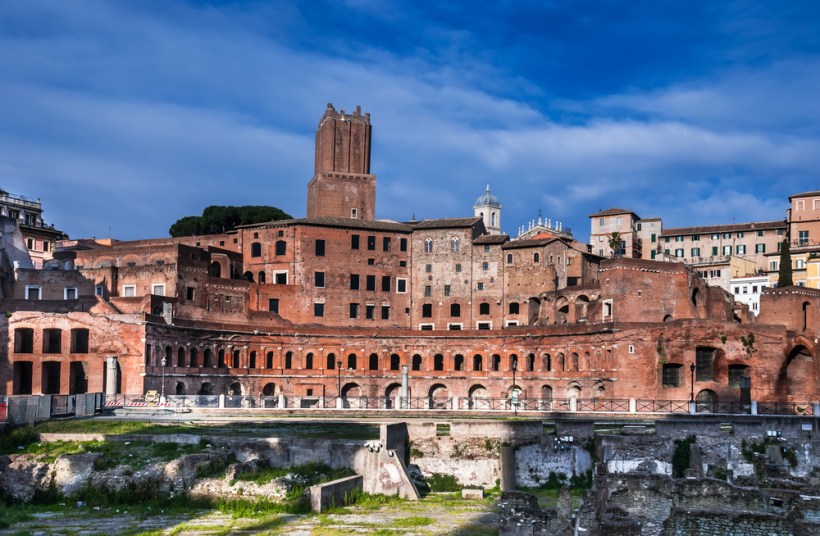
Rome, Italy. Trajan Markets, built in 2nd century AD by Apollodorus of Damascus in the time of Emperor Trajan
The following descriptions of Jews contrasted with Christians in the Roman Empire inspire my thoughts today:
“Rome respected Judaism because the religion was ancient and enduring. Jews had survived opposition for over a thousand years and, in spite of that opposition, had spread throughout the Roman Empire and beyond.… Roman authorities did not require Jews to venerate the gods (say, through sacrificial offerings in local temples) or to serve in the military, and Romans viewed and used at least some local synagogues as civic centers, which implies that Judaism served the larger Roman public, however modestly. Jews were far more integrated into Roman society than it might at first appear.
“…. Jews worshiped one God, Yahweh, to whom they were exclusively devoted; followed a rigorous set of ethical and religious practices; and refused to participate in pagan rituals and festivals. They observed a way of life that set them culturally apart. The Jewish rite of circumcision kept Romans who were attracted to Judaism from wholesale conversion. Jewish kosher laws required that Jews shop in their own stores, their dress codes made them noticeable, and their commitment to marry only fellow Jews prevented them from assimilating into Roman culture.”
“Christians appeared to live like everyone else. They spoke the local language, lived in local neighborhoods, wore local styles of clothing, ate local food, shopped in local markets, and followed local customs. ‘For Christians cannot be distinguished from the rest of the human race by country or language or custom. They do not live in cities of their own; they do not use a peculiar form of speech; they do not follow an eccentric manner of life.’ At a surface level Christians appeared to blend in to Roman society quite seamlessly.
“Yet they were different, too, embodying not simply a different religion but a different—and new—way of life. ‘They live in their own countries, but only as aliens. They have a share in everything as citizens, and endure everything as foreigners. Every foreign land is their fatherland, and yet for them every fatherland is a foreign land.’ They functioned as if they were a nation within a nation, culturally assimilated yet distinct at the same time. ‘Yet, although they live in Greek and barbarian cities alike, as each man’s lot has been cast, and follow the customs of the country in clothing and food and other matters of daily living, at the same time they give proof of the remarkable and admittedly extraordinary constitution of their own commonwealth.’”[1]
This is the fascinating description of Christians from an anonymous letter writer in the Second Century to Diognetus, a Roman official. The comparison inspires a number of thoughts that are worth exploring.
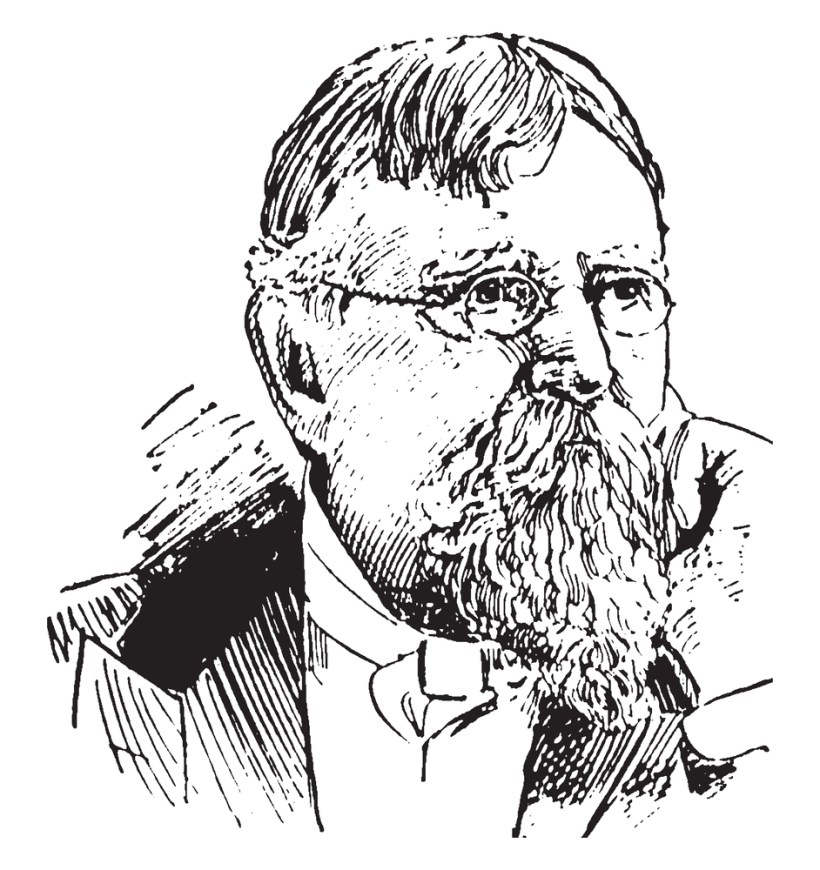
Gen. Lew. Wallace, 1827-1905, was an American lawyer, union general, governor of the New Mexico Territory, politician, and author, vintage line drawing or engraving illustration
John Ingersoll, the son of a Congregationalist pastor who shared a pulpit with the famous American revivalist, Charles Finney, was an agnostic. His father was mistreated by the church for deviating from “Old School Calvinism,” resulting in him leaving the ministry and the church. His young son, John, became a lifelong agnostic, preaching as vociferously against faith in God as his father once preached faith in God.
Such was the great, negative influence of the tensions among Christian brothers in New England in the early 1800’s. The schism between Old School Calvinism and New School Calvinism lasted about 20 years beginning in about 1837. (Wikipedia) Only 20 years, but it influenced Ingersoll to live his life in hostility toward God and religion.
Similar schisms, of course, have occurred throughout church history. Many of them have damaged the church and the witness for Christ in the world as Christians fight with each other over relatively minor views on doctrine. At the extreme end, Christians murdered Christians at the stake over doctrinal disagreements.
In this instance, the Old School adherents stuck close to the “Westminster standards” and didn’t support the “New School revivalism” championed by Presbyterian revivalists, like Finney, and New England Congregationalist theologians like Jonathan Edwards. For those interested in history, Princeton Theological Seminary was the defender of the Old School, while Yale and Lane theological seminaries were the champions of the New School. Ironically, neither of the Ivy League institutions is known for their orthodoxy any longer, and Princeton boasts perhaps the most well-known Bible skeptic, Bart Ehrman.
On a more positive note, the “renewed interest in religion” generated by the revivalism of the Second Great Awakening inspired the social activism that energized the abolitionist movement. Lyman Beecher, the father of the famous abolitionist, Harriet Beecher Stowe, was a New School Calvinist.
Revivalism and slavery were key issues in this schism. Revivalism divided the Old School and New School, while slavery divided both and eventually brought elements of the Old School and New School back together against factions that were divided along geographic lines – north and south – as the country teetered toward civil war.
I am struck that social and theological movements always stretch old wine skins and cause divisions – today no less than in the past. While conservatives entrench, progressives plow new paths. While old, brittle wine skins burst, wasting the contents on the ground, over eager revolutionaries might abandon the wine skins altogether. Either way, the wine (the very purpose of the wine skin) is often lost in the process.
I am also reminded of the “proverb” spoken in Ecclesiastes: “It is good to grasp the one thing and also not let go of the other; for the one who fears God comes forward with both ….” (Ecc. 7:18 NASB) When God’s people can hold onto the old and grasp the new at the same time, the church comes forward with a more complete revelation and understanding of God – assuming that old and new align.
Throughout history we see God moving among people, emphasizing new things at different times. People react by resisting, holding back and becoming entrenched or embracing the new thing, letting go of the old and eventually tilting off the path in the other direction. Wisdom lies in grasping the new thing God is doing without letting go of the truth firmly established by God in the past. This is the stretch that requires the new wine skins!
But back to the story of John Ingersoll: he unwittingly influenced the writer of one of the greatest Christian novels written by an American. Lew Wallace, the author, was a Civil War general who commanded Union troops at Shiloh. Ingersoll served under him in that great battle. It was their chance encounter that prompts this article.