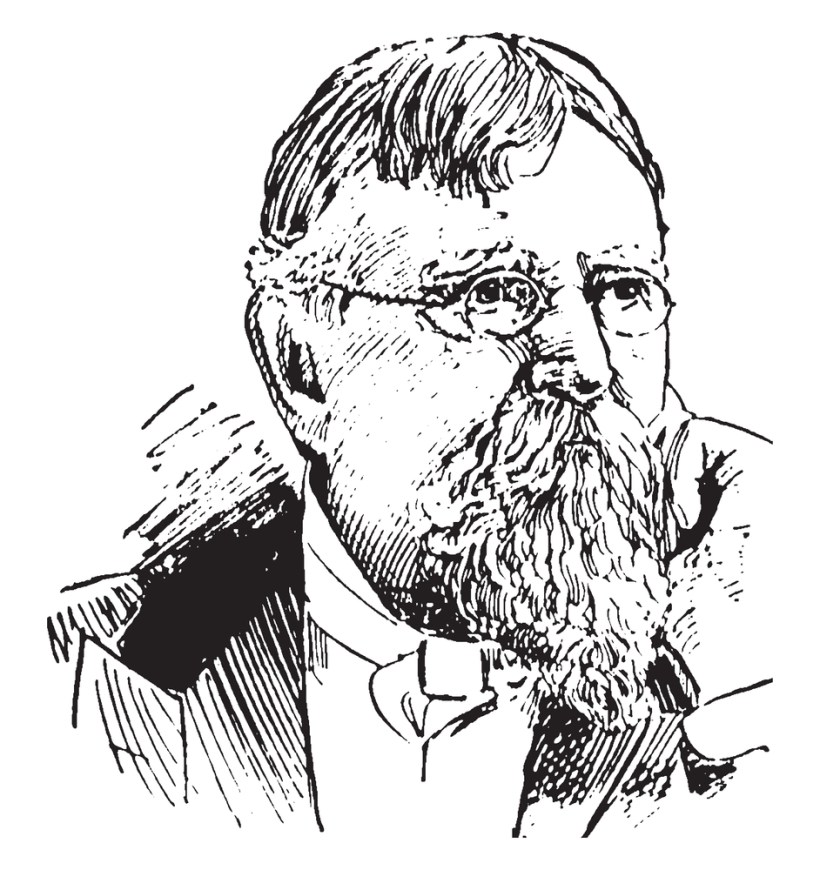
John Ingersoll, the son of a Congregationalist pastor who shared a pulpit with the famous American revivalist, Charles Finney, was an agnostic. His father was mistreated by the church for deviating from “Old School Calvinism,” resulting in him leaving the ministry and the church. His young son, John, became a lifelong agnostic, preaching as vociferously against faith in God as his father once preached faith in God.
Such was the great, negative influence of the tensions among Christian brothers in New England in the early 1800’s. The schism between Old School Calvinism and New School Calvinism lasted about 20 years beginning in about 1837. (Wikipedia) Only 20 years, but it influenced Ingersoll to live his life in hostility toward God and religion.
Similar schisms, of course, have occurred throughout church history. Many of them have damaged the church and the witness for Christ in the world as Christians fight with each other over relatively minor views on doctrine. At the extreme end, Christians murdered Christians at the stake over doctrinal disagreements.
In this instance, the Old School adherents stuck close to the “Westminster standards” and didn’t support the “New School revivalism” championed by Presbyterian revivalists, like Finney, and New England Congregationalist theologians like Jonathan Edwards. For those interested in history, Princeton Theological Seminary was the defender of the Old School, while Yale and Lane theological seminaries were the champions of the New School. Ironically, neither of the Ivy League institutions is known for their orthodoxy any longer, and Princeton boasts perhaps the most well-known Bible skeptic, Bart Ehrman.
On a more positive note, the “renewed interest in religion” generated by the revivalism of the Second Great Awakening inspired the social activism that energized the abolitionist movement. Lyman Beecher, the father of the famous abolitionist, Harriet Beecher Stowe, was a New School Calvinist.
Revivalism and slavery were key issues in this schism. Revivalism divided the Old School and New School, while slavery divided both and eventually brought elements of the Old School and New School back together against factions that were divided along geographic lines – north and south – as the country teetered toward civil war.
I am struck that social and theological movements always stretch old wine skins and cause divisions – today no less than in the past. While conservatives entrench, progressives plow new paths. While old, brittle wine skins burst, wasting the contents on the ground, over eager revolutionaries might abandon the wine skins altogether. Either way, the wine (the very purpose of the wine skin) is often lost in the process.
I am also reminded of the “proverb” spoken in Ecclesiastes: “It is good to grasp the one thing and also not let go of the other; for the one who fears God comes forward with both ….” (Ecc. 7:18 NASB) When God’s people can hold onto the old and grasp the new at the same time, the church comes forward with a more complete revelation and understanding of God – assuming that old and new align.
Throughout history we see God moving among people, emphasizing new things at different times. People react by resisting, holding back and becoming entrenched or embracing the new thing, letting go of the old and eventually tilting off the path in the other direction. Wisdom lies in grasping the new thing God is doing without letting go of the truth firmly established by God in the past. This is the stretch that requires the new wine skins!
But back to the story of John Ingersoll: he unwittingly influenced the writer of one of the greatest Christian novels written by an American. Lew Wallace, the author, was a Civil War general who commanded Union troops at Shiloh. Ingersoll served under him in that great battle. It was their chance encounter that prompts this article.
Continue reading “The Unwitting Encounter that Inspired A Great Christian Novel”

