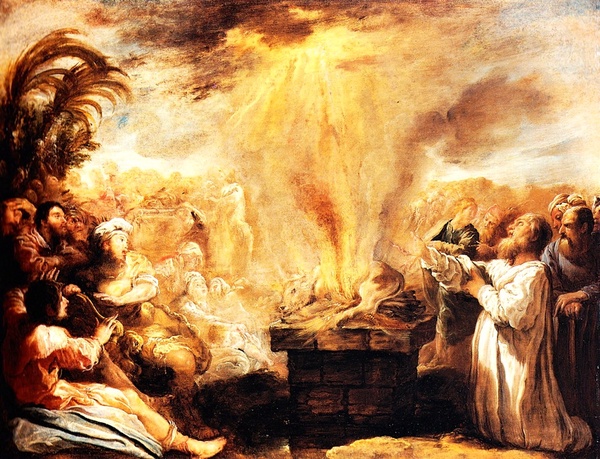
Elijah: Closing the Curtain on Bitter Disappointment in the Gentle Presence of God

Most of us can’t relate to the boldness of Elijah’s faith, but I think we can all relate to the devastation of Elijah’s disappointment.

Elijah was the hero of the story that provided the backdrop for a sermon on faith and fear at Ginger Creek Community Church where I attend. The sermon series contrasts faith and fear, but I believe the Holy Spirit nudged me in a different direction. The message about faith and fear was a good one, but the disappointment of Elijah is what caught my attention.

For context, Israel was experiencing a 3-year drought and famine. Ahab, the notoriously corrupt and ungodly leader, was king. The entire nation was enthralled with worshiping foreign gods, and especially Baal, the Canaanite god of weather and fertility[1]

Baal was maybe a natural choice for them in the midst of a severe drought and famine. The popularity of Baal in Elijah’s culture was at an all-time high, but Elijah remained true to Israel’s covenant God, Yahweh.

Yahweh was Israel’s traditional God. The claim from ancient times was that He was the only true God, but it was no longer popular to worship Him. People still clung to a semblance of traditional, cultural practice, but other, foreign gods were much more popular, so, Elijah challenged them: 

“How long will you go limping between two different opinions? If the Lord is God, follow him; but if Baal, then follow him.” (1 Kings 18:21) 

The brashness of Elijah’s faith in God is hard for us to appreciate, perhaps. We get a clue from the fact that there were 450 prophets of Baal, and Elijah was the only prophet in the bunch who remained loyal to Yahweh. Elijah proposed a challenge that would put his life at stake. He said,

“’Let two bulls be given to us, and let them choose one bull for themselves and cut it in pieces and lay it on the wood, but put no fire to it. And I will prepare the other bull and lay it on the wood and put no fire to it. And you call upon the name of your god, and I will call upon the name of the Lord, and the God who answers by fire, he is God.’” (I Kings 18:23-24)

The loser(s) in this challenge would be put to death, which was the penalty for false prophets at the time. Elijah put everything on the line for God. 

If the gambling industry in Las Vegas existed in Israel at that time, the odds were stacked heavily against Elijah, but Elijah wasn’t intimidated in the least. Elijah even let the prophets of Baal choose the bull they wanted first and offered to let them go first. (1 Kings 18:25)

The other prophets set to work. They prepared the bull of their choice, and they called on Baal.

From morning to noon, they called on the god of popular culture, but there was no response. (1 Kings 18:26) When Elijah mocked them, they cried louder and cut themselves until they bled, but nothing happened. (1 Kings 18:27-29)

When it was Elijah’s turn, he invited the people to help him rebuild a small altar to Yahweh that had been torn down (a symbolic gesture no doubt). He prepared the remaining bull and stacked the wood.

Then he did the unthinkable: he upped the ante by having water poured over the offering – not once, but three times – until it was thoroughly soaked. (1 Kings 18:30-35) When Elijah was done, he prayed:

“O Lord, God of Abraham, Isaac, and Israel, let it be known this day that you are God in Israel, and that I am your servant, and that I have done all these things at your word. Answer me, O Lord, answer me, that this people may know that you, O Lord, are God, and that you have turned their hearts back.” (1 Kings 18:36-37)

Elijah’s wanted to demonstrate the power and authority of Yahweh, to vindicate himself, to renew the covenant between his people and God and turn their hearts back to Yahweh. He was so confident God could do these things, that he put his own reputation and his very life on the line.
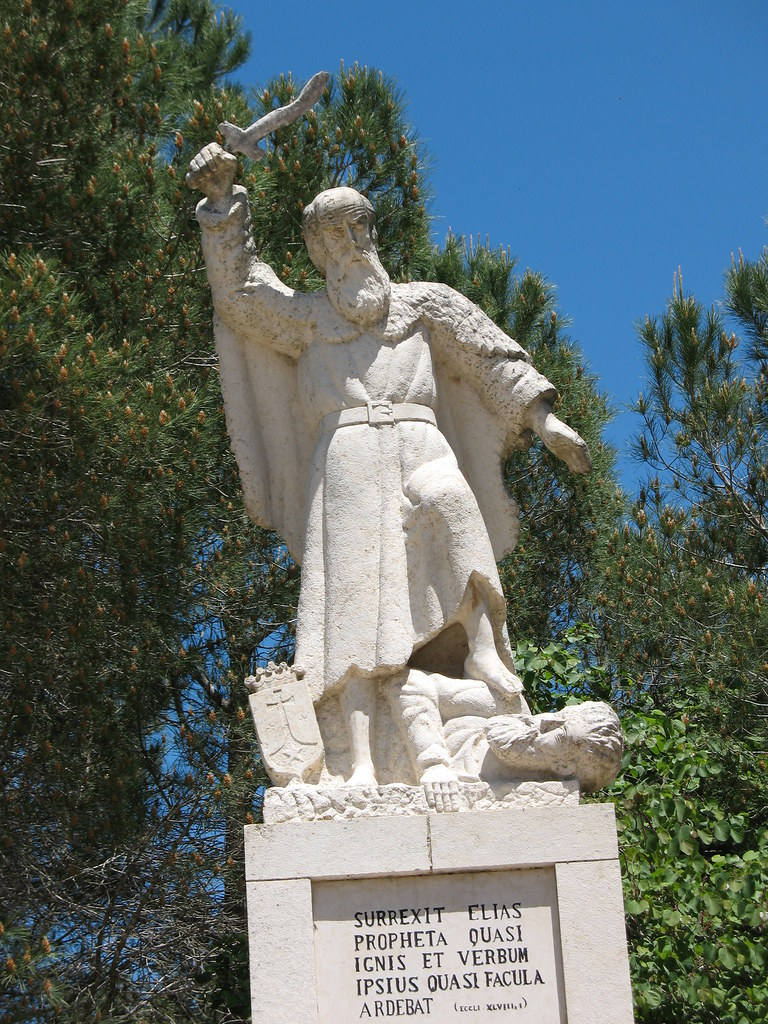
Of course, we know the story: God showed up. God’s fire didn’t just consume the offering; it consumed the bull, the wood, the stones on the altar and even the dust, and then the fire “licked up” the water left in the trench around the altar. (1 Kings 18:38)

There are few demonstrations of faith in the Old Testament as bold or powerful as this one. Elijah stood against all his contemporaries. He stood against the king, himself. He was the only prophet still faithful to Yahweh (as far as he knew). He put it all on the line, and God showed up in a powerful way!


The people fell on their faces and acknowledged God. (1 Kings 18:39) Elijah was vindicated, and his prayers were answered. His expectations were met. Or so it seemed.

This isn’t the end of story, though. The rest of the story is where I want to pick up.

Continue reading “Elijah: Closing the Curtain on Bitter Disappointment in the Gentle Presence of God”

The End of Stubborn Piety, and a New Beginning.

“[R]ising anxiety, suicide, and deaths of despair speak to a profound national disorder….”

Donald Trump with Jerry Falwell, Jr. at Liberty University in Virginia

I just read Three Decades Ago, America Lost Its Religion. Why? By staff writer for the Atlantic, Derek Thompson. I find The Atlantic to be full of insightful articles, even when I don’t wholeheartedly agree with them. This article is no exception.

Thompson recalls those enlightened 19th century pundits who predicted the death of God and advances in “scientific discovery and modernity” that would lead to widespread atheism. Thompson is a skeptic, himself. While Europe has largely gone the way the pundits predicted, The United States has resisted that prognostication – at least until recently.

Thompson blames “America’s unique synthesis of wealth and worship” and “stubbornly pious Americans” for the United States not going with the flow of the Enlightenment ascent of man from the superstitious dark ages into the light of science and reason.

While the rest of the western world has been drifting away from religious affiliation, and religion altogether, the United States seemed impervious to those forces working on the rest of the western world – until recently. Things began to change in the United States in the 1990’s, and that trend continues.

The article borrows heavily from Christian Smith, a sociology and religion professor at the University of Notre Dame, for figures and figurings of the reasons why. The shift is clear, though, and the statistics bear it out, that religious affiliation and interest in religion in the United States is waning and going the way of the rest of the western world.

“According to Smith, America’s nonreligious lurch has mostly been the result of three historical events: the association of the Republican Party with the Christian right, the end of the Cold War, and 9/11.” Smith goes on to provide some explanation for how these “events” have triggered the change. He says,

“The marriage between the religious and political right …. disgusted liberal Democrats, especially those with weak connections to the Church. It also shocked the conscience of moderates, who preferred a wide berth between their faith and their politics.”

Thompson’s article got me thinking. He is right about the trend away from religion in the United States. We don’t need data to tell us that. The “nones” are increasing while the committed believers are decreasing. That these observations come from “outside the camp” doesn’t make them false.

Thompson’s explanations for the reasons why this is may be more of a mixed bag. He (naturally) views the changes through a naturalistic lens. He may be right about some of the cause and effect, but he (naturally) isn’t likely to see the more spiritual side of those things.

I “grew up” spiritually during the mid to late 80’s when the marriage between religion and the political right was consummated. I fell out of step with it, and lost track of it, when I went to law school in 1988. Apparently the honeymoon went well.

I count myself (even today) as an evangelical (though I search for a different label). My spiritual upbringing included the experience of the courting of the religious right of the Republican Party. (Or was it the other way around?)   

Law school, however, challenged even my most sacrosanct connections, and the cares and concerns of fatherhood and providing for a growing family distracted me from other relationships. It was all I could do to hold onto God during this time, and the truth is that He mostly held onto me.

Perhaps, that was a blessing in disguise, as I didn’t grow into the religio-politico affiliation that seems to characterize a large segment of the evangelical church today. I am a more distant observer of that relationship today, so I think I have some objectivity left.

I agree (partially) with Thompson’s assessment that the congruence of the religious right and the political right changed the political landscape. It also changed the religious landscape. Perhaps, more than we might care to acknowledge.

Continue reading “The End of Stubborn Piety, and a New Beginning.”

Separating the Church from Babylonian Morality in the Race Discussion

If we fall into a politically partisan conversation, the Gospel takes a back to secular politics.

The following thoughts and observations come from and are inspired by a conversation between Preston Sprinkle and Dr. Ed Uszynski. (See Episode 877: Race, CRT, and Evangelicalism of Theology in the Raw.)

Sprinkle and Urszynski are in agreement that Christians generally are doing a poor job of grappling with the issue of race in the United States. Most Christians are vocal in their criticism of secular solutions, but few Christians are really engaging with the underlying issues.

Critical Theory, CRT and Marxist ideology and terminology are fueling the discussion in the secular culture. Identity politics, systemic racism, police brutality is the language commonly used in the secular world to frame the discussion. Whether Christians are condemning these concepts or aligning with them, Christians are not offering much in return.

In the podcast, one the two men (I can’t remember which) said that we should have different language inside the Church. We should have Gospel language that addresses injustice.

“We should have a theological understanding of the concept of justice…. We should be immersed in care and concern for vulnerable populations, regardless of color, regardless of gender, regardless of background. We should be robustly able to think about what it means to care for the least of these, to watch out for people who are being taken advantage of…. That’s a biblical idea that we should be deeply immersed in theologically and biblically.”

That, however, isn’t happening in most Christian circles. People who are engaging in the conversation are engaging in it with the secular terminology and don’t recognize that we need to separate ourselves from that secular perspective. We are defining ourselves in relation to secular concepts, rather than driving the conversation from a biblical perspective with biblical concepts and biblical terminology.

Christian are either adopting CRT in church, which is the primary, secular approach, or Christians are rejecting CRT without offering a Gospel orientated alterative. People address CRT (by opposing it), but they are largely not addressing or effectively engaging the race conversation on a theological level.

“We have done a horrible job, generally, in embracing, and believing and obeying the rich theological theme of what the Kingdom of God is designed to look like and how it is designed to function in terms of its multiethnic backbone.”

Continue reading “Separating the Church from Babylonian Morality in the Race Discussion”

Some Thoughts on Miracles and God’s Presence in the World

Reasonable, intelligent people with impressive degrees, credentials and accomplishments exist on both sides of the God equation

NT Wright commented recently on the modern, western notion that God is largely absent and distant from the world He created. Every once in a while He “reaches in” and does something extraordinary, and we call that a miracle.

There are people in the west who still believe that God is active in the world, but western society is more characterized by a view that is God aloof, if He exists (and the western world is more or less aloof toward God). We tend to forget that much of the rest of the world does not share our view.

I believe this view of God and of miracles goes back to the Enlightenment and Deism that gained popularity in the last three centuries or so. Deism is the theology that grew out of the Enlightenment, applying Enlightenment ideals of rationalism, order and a reliance on scientific method. Deists believed that God exists, but He does not intervene and is not active or present in the world.

Deist thinkers conceived of the world like a watch that is wound up and left to run on its own. This thinking harmonized well with trends in scientific thought at the time. Darwin and others before him began to see no need of God to explain the laws of nature because scientific inquiry revealed those laws of nature to be true, dependable, and capable of explanation without reference to supernatural agency. Deism kept God in the picture, but relegated Him to bystander status.

Many Enlightenment thinkers worked consciously and intentionally to shrug off any implication of the supernatural in the study of the natural world. Science, after all, is the study of the natural world. With the discovery of laws like the law of gravity, there was plenty for scientists to do without contemplating a Law Giver.

The definition of science now excludes inquiry of or appeal to anything other than “natural” explanations. Though “science” once meant knowledge, generally, it now means only knowledge of natural things and natural processes (which by definition excludes consideration of supernatural things).

Many modern scientists are materialists, meaning that they believe that nothing exists but the natural world – space/time, matter and energy (whatever that is). They believe nothing exists beyond the natural world, and, therefore, they say that science is the study of all reality. They assume, therefore, that nothing exists that cannot be explained by science.

In this worldview, they conflate the facts that science reveals with reality. On the Deist and Enlightenment view, miracles are an aberration. Indeed, the very definition of a miracle is something that is highly improbable or extraordinary, something unexpected and inexplicable on the basis of natural or scientific laws.

Deism is largely a theology of the past, but the Enlightenment lives on in the modern, materialist who makes no room whatsoever for a transcendent God or anything supernatural (beyond nature). God is excluded from the materialist worldview by definition. Any apparent aberration to natural laws and material things is an unknown merely awaiting a natural explanation.

Miracles in a Deistic world are so rare as to be highly unlikely. Miracles in a modern, materialist worldview are impossible. They simply don’t happen.

This is the faith of the modern materialist – that every phenomenon known to human experience has a natural explanation. We stopped looking for God because we saw order in nature and that God is of no consequence to the study of natural laws. From a determination that God is aloof is a short walk to the conclusion that God does not exist.

Wright makes the observation that the Bible has no word like miracle. The closest we get to it might be the phrase, “signs and wonders”. Many people in the Ancient Near East saw God (or gods) in everything. The Enlightenment posited that this was due to a lack of explanation for most things that we now identify in natural laws, and many modern people now cannot see God at all in anything.

Scripture reveals a God who is far from aloof. That idea, though, is increasingly a foreign concept in the modern, western world. The God revealed in the Bible is known both by His “faithfulness” and His presence, investment and activity in the world, but many modern people have written off those notions.

The idea that God is faithful has been replaced with the understanding of natural laws. We believe our understanding of the way natural laws work has supplanted God. God was a construct we invented when we didn’t have explanations for natural phenomena, but now that we understand natural phenomena we have no need for the concept of God.

Even as a Christian, a person who believes in God, I have been influenced by the western world in which I grew up. NT Wright’s observation that the concept of a miracle is a western concept, not a biblical one, leads me to put my thoughts into print as I work out the tension between biblical revelation and my western mindset.

Continue reading “Some Thoughts on Miracles and God’s Presence in the World”

God’s Plans Are Bigger than We Often Perceive, and He is Working Them Out Sometimes Despite Us

God promised Abraham, “In you all the families of the earth shall be blessed”.

In the service this morning, the message was about Joseph. As often happens, I saw something I hadn’t seen before. The depth and nuance and intricate tapestry that is Scripture often works that way.

I will get to the point, but first, I need to build the backstory. Most readers know of Joseph, so I will be brief. Joseph was the youngest of the 12 sons of Jacob. Jacob was the son of Isaac, the famous son of Abraham. Abraham was the man of faith to whom God gave the following promise:

Go from your country [land] and your kindred and your father’s house to the land that I will show you. And I will make of you a great nation, and I will bless you and make your name great, so that you will be a blessing. I will bless those who bless you, and him who dishonors you I will curse, and in you all the families of the earth shall be blessed.” (Gen. 12:1-3 ESV)

I added the emphasis and will come back to it. In the meantime, we need to recall that Joseph was betrayed by his brothers, who were jealous of him. They plotted to kill him and left him for dead in the bottom of a well.  He was “rescued” by a passing caravan that sold him into slavery in Egypt.

We could say much about the story of Joseph, but I want to fast forward. Joseph’s life teetered on the edge of utter desperation. He experienced a series of very high highs and very low lows. God ultimately blessed Joseph and elevated him to the second most powerful position in Egypt because of Joseph’s faithful use of the gifts and wisdom God gave him.

Many years after his brothers left him for dead, Joseph superintended a massive grain storage plan for Egypt that positioned his “adoptive” country to weather a long, severe famine and provide food for all its people and other nations besides. That same famine prompted his brothers to travel to Egypt when they were on the verge starvation and desperation.

When they arrived and got inline to buy grain, they had no idea they were appearing before their brother, Joseph, but Joseph recognized them and asked them to go back to Canaan and bring his father, Jacob, back down to Egypt with them.

Joseph’s brothers, his father and the whole tribe returned to Egypt. When they returned and finally realized the powerful man who sent them for their father was Joseph, they were ashamed. They also feared retribution against them for their betrayal, but Joseph was gracious and gave them favorable living conditions until Jacob died.

This is the point of the story that was addressed in the service today. Joseph’s brothers were fearful, still, that he held a grudge after Jacob died and would pay them back for their betrayal. (Gen. 50: 15) They didn’t immediately go to Joseph. Instead, they sent a message to Joseph containing instructions their father, Jacob, gave them to say to Joseph: “’I ask you to forgive your brothers the sins and the wrongs they committed in treating you so badly.’” (Gen. 50: 17)

Much could be said about the fact that they sent their father’s instructions to them, rather than their own, delivering own, heartfelt message to their brother, Joseph, but this story isn’t about them. It’s about Joseph.

“Don’t be afraid. Am I in the place of God? You intended to harm me, but God intended it for good to accomplish what is now being done, the saving of many lives. So then, don’t be afraid. I will provide for you and your children.” (Gen. 50:19-21 ESV) (Emphasis added)

Continue reading “God’s Plans Are Bigger than We Often Perceive, and He is Working Them Out Sometimes Despite Us”