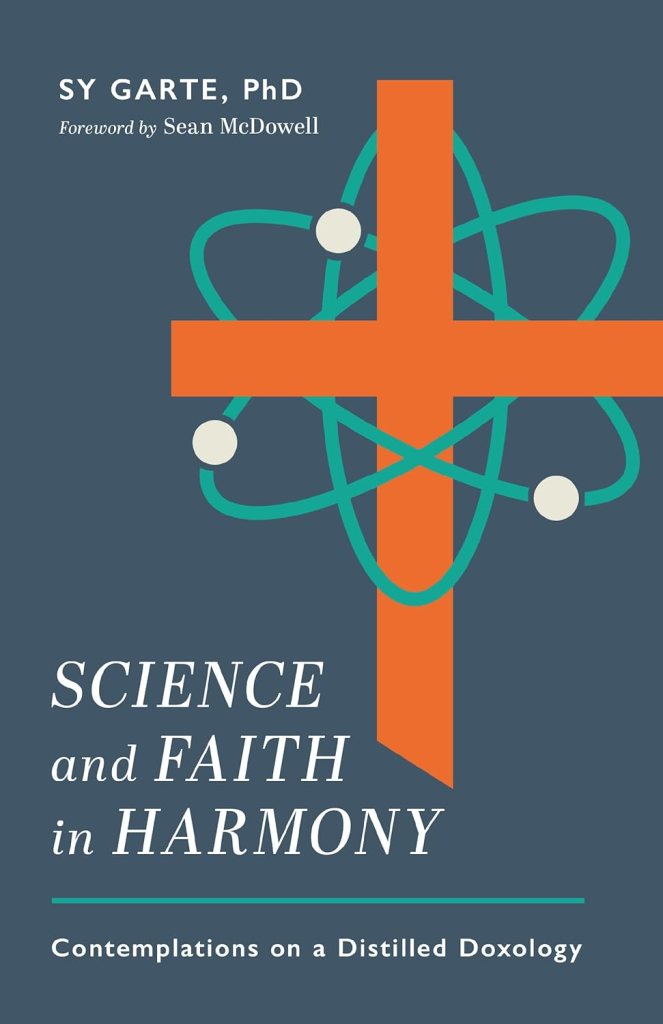
In his new book, Faith and Science in Harmony: Contemplation on a Distilled Doxology, Sy Garte makes the following statement:
“[Science] cannot be used to demonstrate the existence of God beyond doubt since it lacks the appropriate methodology and conceptual framework to investigate the divine. But if God exists, we would expect to find things about our universe outside of what we’d expect if there was no God – things that point to a Creator – and that is exactly what we find.”
Science in Harmony: Contemplation on a Distilled Doxology, p. 110
This statement is a good summary of the content of the book.
Sy Garte was a third generation atheist for decades, well into middle age. He is a retired scientist whose upbringing, education, and worldview was defined by materialistic and naturalistic assumptions. He was educated and trained to follow the science, and the science led him to him edges where science could not go.
The penumbra of a reality that was eclipsed to him in those materialistic assumptions emanated from behind those dark edges. He recognized the limits of those assumptions, and his curiosity led him explore the strange light at their edges.
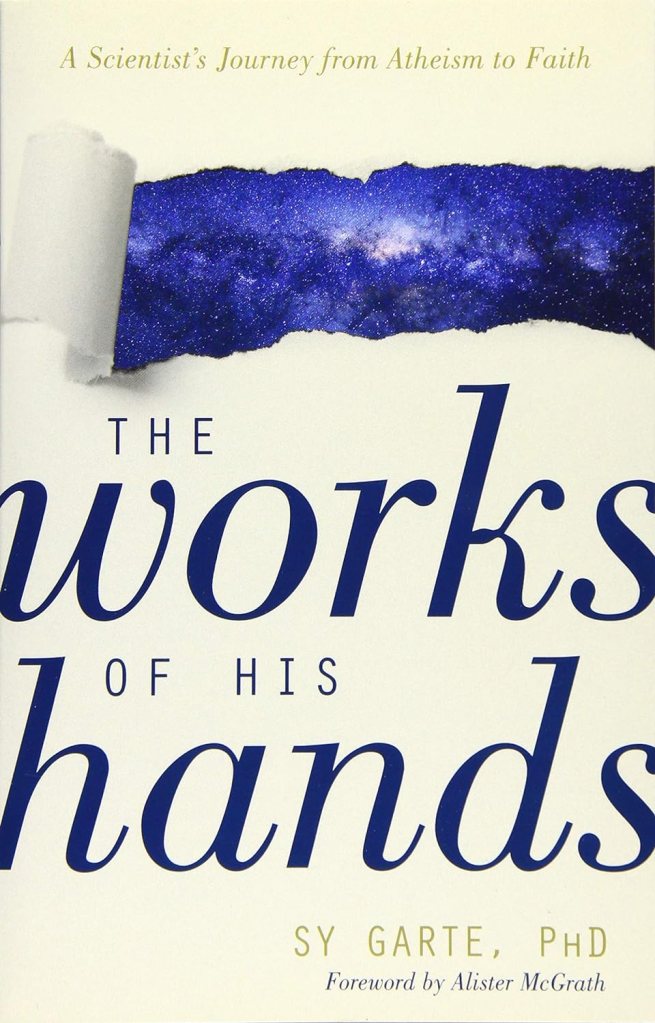
Sy Garte tells his story in the book, The Works of His Hands: A Scientist’s Journey from Atheism to Faith. He followed the science where it led him. When it led him to dead ends where science could not go, he explored where science pointed. The journey took years. His story may not be your story, but it is well worth the read. It may even illuminate your own journey.
His most recent book, Faith and Science in Harmony: Contemplation on a Distilled Doxology, explores “the things that point to a Creator” in snippets of insightful science, poetry and story. He takes the reader to the penumbra and explores the light that shines out from behind it with snippets of science, stories, and unique insights.
Each chapter is short, packed full of a lifetime of insight, science, and faith that emanates from the science to which he devoted his life. The book illuminates a reality that was not accessible by that science alone, but to which that science leads. The book is as readable and accessible as it is intriguing and insightful.
The weaves science into a tapestry of personal stories, anecdotes, examples, quotations, Bible verses, and citations that explore the strange light that emanates from the edges where science meets faith.
Dr. Sy Garte is a biochemist and has been a professor at New York University, University of Pittsburgh, and Rutgers University. He has authored over two hundred scientific publications and four previous books.
Sy Garte has served as division director at the National Institutes of Health and Vice President for Research (acting) at the Uniformed Services University of the Health Sciences. He has also served on the Board of Advisors for the John Templeton Foundation. Sy is the Editor-in-Chief of “God and Nature” magazine and vice president of the Washington, DC, chapter of the American Scientific Affiliation (ASA). He is a Fellow of the ASA.
Sy is now a lay leader and certified Lay Servant in the United Methodist Church. Although retired from active employment, Sy keeps busy writing and evangelizing online and in the church. He also contributes to science and faith journals such as Perspectives in Science and Christian Faith, and keeps a blog “The Book of Works”.
The “hiddenness of God” is a reality that causes some people to doubt the existence of God. If God is so great and so loving, why is He hidden to so many people? If God really exists, why isn’t God plainly evident to everyone? If God desires everyone to know Him, what’s the problem?
I have many thoughts about this dilemma, and I have written on the hiddenness of God many times before. Today, however, I want to highlight some thoughts that come through comments by an Australian YouTuber, Confident Faith, on a conversation between Jordan Peterson and Bishop Barron.
They discuss the nature of God – what kind of “being” God is. We naturally approach the idea of God from our human perspective. A person might wonder, “How can we even know what kind of a being God is?” Especially, if we are not even sure God exists!
But, we can know what kind of a “being” a God who could have created the Universe may be. Our reason suggests to us that a God who is capable of creating the time, space, and matter that comprises the Universe must be separate from and “other” than the reality of the Universe. Such a creating God must exist in a reality that is not contained within the Universe.
If we might think of the Universe as a box, we might say that boxes don’t simply for or create themselves. A box maker (who is not a box) creates them. Thus, we can intuit that Universes don’t form or make themselves. A Universe maker is required who is contained within a Universe.
If the box (or universe) is all we know, it’s hard to conceive of something outside the box (universe). It’s exceedingly hard for us to conceive of reality other than the basic units of time, space, and matter that comprise the physical Universe in which we live. Therefore, we have an exceedingly difficult time wrapping our minds around the idea of a Creator of those who is not contained within the reality of our Universe.
Even my attempt to describe the problem is inadequate, as the only reality we know is a physical one (comprised of that same time, space, and matter). For a God to have created those things and to have formed them into the Universe, that God would have to have been timeless, spaceless, and immaterial (not contained within that box), yet present with it.
I know that many people believe that a thing can create itself. Stephen Hawking famously said, “Because there is such a thing as gravity, the Universe can and will create itself from nothing.” This is a box creating a box analogy. Hawking is essentially saying that the substance that makes up the components of the box (Universe) self formed and self organized into a box (Universe).
I, personally, find it harder to believe that the Universe created itself than to believe that God, who exists “outside” time, space, and matter, created the Universe.
This fundamental difference in approach and perspective is the Continental Divide on the issue of the existence of God. A person who is unwilling or unable to consider anything “outside” the bounds of the time, space, and matter that comprise the Universe is going to be utterly incapable of “seeing” (grasping, conceiving, or even allowing for) the possibility of God.
But, this way of thinking is not foreign to any of us. In fact, it’s most natural for us to think this way, because all we know is the box (Universe) in which we live.
In dealing with this dilemma, Bishop Barron goes back to the ancient text in Deuteronomy when Moses asked God, who should I say sent me. Barron says that Moses was basically asking, “What kind of a being are you?” In doing this, Moses is trying to put God into categorical terms.
God’s response was, “I am who I am!” God is saying that He cannot be categorized as we categorize things in this Universe. This response points Moses to outside the box (Universe). This means, says Barron,, “God is not a being, but Being, itself.”
If we follow down the path of Moses’s questioning, we inevitably end up as an atheist. If we insist on putting God into categorical terms, like the time, space and matter we can touch, see, feel, and measure, God remains a mystery. We can’t touch, see, feel, or measure God because He is not comprised of (or limited by) physicality (time, space and matter), and, therefore, God is not a categorical object in the world.
Augustine called God the “Prius” – the thing that is prior to being, itself. God is that upon which the categorical world depends. God is not the highest being (as we often conceive Him to be), the highest being is still just a being; rather, God is the essence of being.
I like the way Confident Faith wraps up these things. He says,
“God is not a physical being like we are in this material world. For example, humans, animals and plants are all physical beings in this physical world. However, the pitch of God’s existence is infinitely higher. He is not physical like we are. He is Spirit. God does not exist somewhere in this physical universe. You won’t find him hiding behind some distance galaxy way out on the known limits of the known universe. Likewise, you won’t find Him hiding somewhere in the subatomic realm. It’s foolish to expect or demand that God be found in this way…. God is not just one being among many in this world. God is the very source of being.”
We are finite; God is infinite. We are contingent and caused; God is non-contingent and uncaused. We are physical, but God is Spirit. Therefore, Confident Faith says,
“Taking these factors into account, it’s reasonable to hold that God’s existence in nature will always, to a degree, be a mystery or hidden from us.”
The hiddenness of God, therefore, is a function of the difference between a box maker and the things in the box. We are a “thing” in the box of this Universe, and God “outside” of it. We are constrained by our physicality, and God is not constrained by physicality because God is Spirit.
Our ability to grasp and to understand such a God, therefore, requires us to let ourselves think outside the box of this Universe. We have to be willing to think outside the box to be able to begin to gain some understanding of God.
I have embedded the short YouTube video on this subject below, but I will close with a few other passages in the Bible the speak profoundly of the nature of God. These passages reveal that God’s hiddenness has purpose, that God knew what He was doing in creating the world the way He did, and His “hiddenness” from us is part of that purpose.
“God is spirit, and those who worship him must worship in spirit and truth”
John 4:24
The God who made the world and everything in it, being Lord of heaven and earth, does not live in temples made by man,nor is he served by human hands, as though he needed anything, since he himself gives to all mankind life and breath and everything. And he made from one man every nation of mankind to live on all the face of the earth, having determined allotted periods and the boundaries of their dwelling place, that they should seek God, and perhaps feel their way toward him and find him. Yet he is actually not far from each one of us, for
“‘In him we live and move and have our being’;
as even some of your own poets have said,
“‘For we are indeed his offspring.’
Acts 17:24-28
Paul recognized in his address to Greek philosophers in the passage quoted above the “hiddenness” of God, such that we must “seek” Him and “feel [our} way toward Him”. I believe, as some have objected, that God could have made himself plainly evident to us, but He chose not to do that.
I believe the reason He chose not to reveal Himself plainly to us is to give us space to seek Him because we want to, not because we must. If God was plainly evident, what choice would we have?
I believe that God is not looking for automatons that are programmed to obey. God wants us to know Him and to love Him authentically. He does not desire that we merely believe in Him; He desires a reciprocal relationship with us. but A clue to this lies in the words of James:
Even the demons believe—and shudder!
James 2:19
The demons have no doubt that God exists, but they hate God, and they “bristle” at the thought of God!
In the event a person might be tempted to think that the hiddenness of god is unfair, we have these promises:
Ask and it will be given to you; seek and you will find; knock and the door will be opened to you. For everyone who asks receives; the one who seeks finds; and to the one who knocks, the door will be opened.
Matthew 7:7-8
Behold, I stand at the door and knock. If anyone hears my voice and opens the door, I will come in to him and eat with him, and he with me.
Revelation3:20
God may be “hidden” to us, but He desires to be “found”. He promises that He will reveal Himself. We can’t be half-hearted about it, however.
You will seek me and find me when you seek me with all your heart.
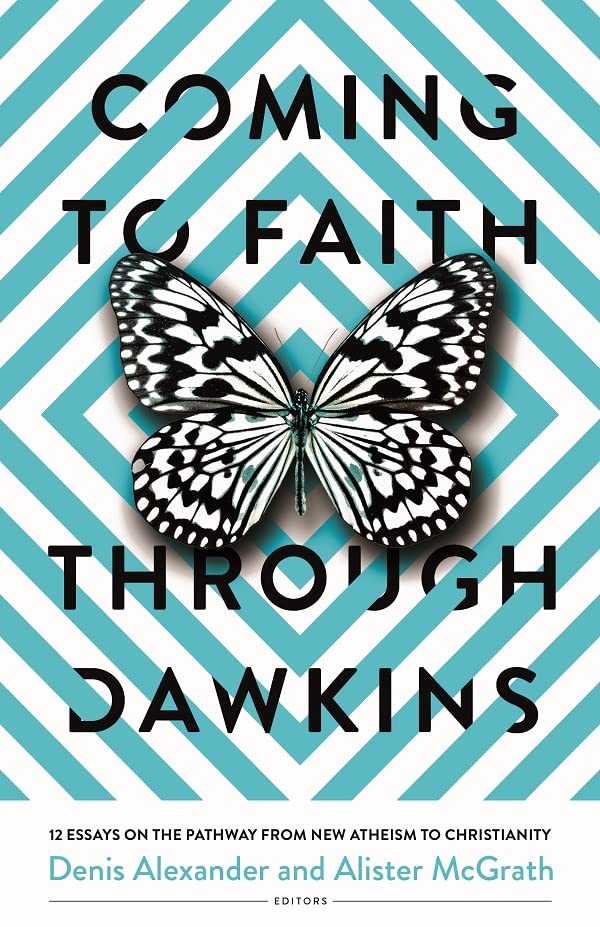
In case you don’t know, the book is a compilation of the stories of twelve people who were influenced by Richard Dawkins in their journeys from atheism to belief in the God of the Bible. Dawkins, of course, is one of the original (and most vocal) of the “new atheists. Thus, the title and subject matter of the book is ironic, intriguing, and not a little controversial.
O’Connor’s critique of the people whose stories are recounted in the book is that they seem to focus on their personal experiences. He says he is not convinced by the personal stories because they focus too much on personal experience and too little on syllogisms, rational arguments, and logical processes in their coming to faith.
This statement, as we shall see, is not a little ironic. O’Connor, though, expresses the modern western sensibility about personal experiences that are discounted and dismissed in favor of more objective evidence.
To be fair, many of the stories in the book recount the intellectual paths people trod on their way to faith, though the stories do not rigorously lay out the arguments, logic, and proofs. We shouldn’t be surprised by that, as the book focuses on peoples’ stories, and people’s stories are personal experiences.
Each of these journeyers from atheism to faith found problems, errors, bad philosophy, and nonsensical statements in Dawkins’s positions that led them to question his underlying assumptions (which were their underlying assumptions also). This, itself, was a rational process. The intellectual problems they saw in Dawkins’s positions made them skeptical of his skepticism.
O’Connor’s critique of the experiential nature of the stories might be discounted on that basis, but I want to focus on something else. This critique came up in the second of two segments. I want to go back to the first segment and contrast his critique with another statement O’Connor made to get to my point today. (See Coming to Faith through Richard Dawkins Part 1)
When asked what might convince him of the existence of God in the first segment, O’Connor said (without hesitation) that personal experience would be the most likely thing. Therefore, the critique O’Connor made in the second segment (complaining of the overly experiential nature of the stories) is ironic in light of O’Connor’s own admission that personal experience might be the one thing that could convince him that God exists (if he had such an experience).
This incongruity in O’Connor’s criticism about personal experience, and the value of personal experience in what we believe, is the thing I want to explore today. Atheists are not alone in being skeptical of personal experience. And with good reason. But personal experience is, nevertheless, vital to our human understanding of anything.
I follow a daily Bible reading plan every year. In most years I read through the Bible from beginning to end, but this year I am focusing on the New Testament only. Today, I came across this rather innocuous verse that prompts my thoughts:
Now when he was in Jerusalem at the Passover Feast, many believed in his name when they saw the signs that he was doing. But Jesus on his part did not entrust himself to them, because he knew all people.
John 2:23-24 ESV
Though I was raised Catholic, a combination of evangelical people who shared the Gospel with me led me to a real, authentic belief in God and surrender to Jesus “as my Lord and Savior” (as the saying goes). I can’t say that I didn’t believe in God before that time (intellectually), but God didn’t mean anything to me before then. I had no relationship to God, and the existence of God carried no relevance in my life.
As a young Christian, I put great weight on simply believing in Jesus, which was what was emphasized to me. It seemed to me that believing in Jesus was all a person needed to do to be saved, and everyone who believed in Jesus was OK. I think that is still fundamentally true, but it is not the whole truth.
I was grateful, of course. Belief in Jesus changed my life! I recognized the changes deep within me, which I believe is indicative of being born again. My eyes were opened, and now I could see!
Many years later, however, it doesn’t seem quite so simple. Examples of people who go to church, and claim to be Christian, but who don’t act anything like Jesus, are legion. This hypocrisy among the people who call themselves Christian is a common reason why people say they don’t go to church any more. Many people don’t live what they believe.
Of course, we are all hypocrites to some extent. None of us live up to God’s standard. (Nor do we even live up to our own, lower standards, if we are being completely honest.)
There are differences in degrees. Some people are more like Jesus than others. The Bible acknowledges that we must all grow in our knowledge of God, and the Bible recognizes that sanctification is a process.
In my own life, I experienced some relatively instantaneous changes in me, especially in my attitudes, in what I was drawn to, and in my understanding (like a light bulb turning on). I also continued to struggle with habits of thought and action, some of which dog me still to this day.
We want simple formulas. Romans 10:9 says, “[I]f you confess with your mouth that Jesus is Lord and believe in your heart that God raised him from the dead, you will be saved.” ( ESV) This literally says that believing in our hearts and confessing with our mouths that Jesus is Lord is all that is necessary for salvation.
I believe in that “formula” with all my heart. BUT – at the same time – it is is not quite so simple. Jesus said, “Many will say to me, “Lord! Lord!”
We might have a tendency to view the “Romans Road” as a kind of magic formula that makes a person a Christian, but it doesn’t exactly work like that. Anyone can mouth those words with no change in their inner reality. It’s not enough to confess with your mouth, a person must believe in his/her heart.
Anyone can confess that “Jesus is Lord”. The confession must come from a real and authentic belief in the heart that results in a change to be assured it has real substance.
This change is not something we can manufacture. It occurs organically from the inside out. The change may not even be immediately noticeable. This is because the change results from God working inside us, not by our efforts to conform, but by His regenerative work in us. It may take a while to bear fruit on the outside.
People look at the outward appearance (confession), but God judges the heart. (1 Samuel 16:7) People may claim to be Christian, especially in the United States where being Christian can provide social, political, or other capital, but that doesn’t mean everyone who claims to be a Christian is an authentic believer and follower of Jesus.
Jesus said that many people will say to him on the day of judgment, “Lord, Lord”, but he will tell them that he never knew them. (Matt. 7:22) Jesus said that some of these people will even prophesy, cast out demons, and perform miracles in his name, but, they are not true believers. (Matt. 7:23) (If you want to hear the personal stories of people who recognize that they were once “false converts”, I am providing a link to their stories here.)
The Chicago Statement on Biblical Inerrancy is just a little older than my Christian faith. It was relatively new when I first read the Bible in college and when I first asked Jesus to be the Lord and Savior of my life. I have wrestled with the idea of inerrancy from the beginning of my Christian life until now.
It isn’t that I don’t think the Bible is the “word of God”. It isn’t that I don’t have a “high” view of the reliability, integrity, and divine nature of the Bible. It isn’t that I don’t think the Bible was inspired by God and should be relied on as His word to us to follow.
I believe all these things, but I have issues with statements on inerrancy that seem to push what the Bible says about itself beyond what it says.
Finally, I have found some similar thinking in two of the great Christian thinkers of our time: Mike Licona and William Lane Craig. In his blog, Risen Jesus, Licona introduces a paper to the world that he wrote and presented at the annual meeting of the Evangelical Theological society.
In the paper, Licona cites Craig in support of a new proposal on inerrancy. First, though, he explains some of what is problematic with the Chicago Statement. I am not going to restate the points he makes here. You can read the paper, CSBI Needs a Facelift, yourself, but I will summarize it for those who don’t have the time or inclination to read the original (though it isn’t long).
Licona starts with the two main verses that provide the inspiration (pun intended) for the doctrine of inerrancy: 2 Timothy 3:16 and 2 Peter 1:20-21. At the center of this are the words “God-inspired” or “God-breathed” which are English translations of the Greek word, “theopneustos“.
Licona traces the history of the use of the word, theopneustos, prior to the 3rd Century. The word was not often used, and it was used in very diverse contexts. Licona quotes a commentary on 2 Timothy, stating, “Theopneustos does not have enough precision to go beyond the basic idea that the Scriptures came from God.” and he concludes:
Therefore, 2 Timothy 3:16 does not contribute as much to our discussion as we may have first thought. So we should be cautious not to read more into it than Paul may have intended.
The 2 Peter 1:20-21 text speaks of prophets who were “carried along by the Holy Spirit.” Licona observes that the Greek word translated “carried along”, pherō, is also used by Philo “to describe how prophets received revelation from God, during which time they had ‘no power of apprehension’ while God made ‘full use of their organs of speech.’ Josephus likewise used this word to say that “God’s Spirit put the words in the mouths of the prophets” (quoting Licona, who paraphrased Josephus).
The 2 Timothy passage and the 2 Peter passage express different ideas and give rise to different pictures of how God speaks to/through people who authorized the writings of the Bible. some writings purport to be prophetic and some do not expressly adopt that attitude. The Chicago Statement assumes that both passages mean the same thing, but most biblical scholars disagree with that conclusion.
Licona goes on to summarize some phenomena in the text of the Bible that suggest a “human element in Scripture”. Licona concludes from this, “Although [the human element] does not challenge the doctrine of the inspiration of Scripture, it does challenge the concept of inspiration imagined by [the Chicago Statement].”
These issues with the ambiguous meaning of the Greek words and the very different images of God working to convey His “Word” through people (God-breathed and carried along by the Spirit), can be reconciled with a “new” paradigm, says Licona. This paradigm was suggested by Craig in 1999.












 Navigating by Faith