The Observation of an Atheist Historian: What Makes Christianity Stand Out Among World Religions


The radical quality of the love of Jesus stands out over and above all other examples. I have written on this before (the Christian expression of the Golden Rule compared to other religions). Most other world religions express some concept of the Golden Rule, but not in the way that Jesus did.

Other world religions state the Golden Rule in a limited way, such as not doing things to others that you would not want them to do to you. It’s the idea of refraining from doing evil. Under that concept of the Golden Rule, we simply need to avoid doing evil to our neighbors. There is no compulsion to do good to them. Ignoring your neighbor would be perfectly acceptable on this less golden iteration of the principal.

Most major world religions do not express the Golden Rule positively, as Jesus did: do unto others what you would have them do unto you. In this statement of the principal, doing unto others is an affirmative duty. Simply refraining from doing them evil is not the concept of the Golden Rule expressed by Jesus.

Jesus made this clear in the parable of the Good Samaritan. The parable begins with a man who was robbed and left injured on the road. A priest and Levite (the priestly cast of Judaism) walked by the man on the other side of the road, ignoring him, while a Samaritan (an outcast to Jews) crossed the road to tend to the injured man. The good Samaritan was the example of the person who demonstrated love for a “neighbor” because he didn’t just ignore the injured man lying in the road.  The idea of the Golden Rule that Jesus expressed includes an affirmative duty to do good.

To be fair, some religions come close to an affirmative expression of the Golden Rule, which I affirm in the previous blog piece, but there is one additional expression of the Golden Rule that stands alone: that is the concept of loving even our enemies and doing good to those who intend evil toward us.

I think of these things as I pause from listening to Douglas Murray in a discussion with Esther Riley on the Unbelievable? podcast with Justin Brierley, the host. (See Douglas Murray and Esther O’Reilly – Christian Atheism and the search for identity. The video is embedded below.)

Douglas Murray, an atheist and openly gay man, makes the observation that most Christian tenets can be found in other cultures, save one: that is the principal that of loving and forgiving even our enemies. Loving and forgiving our enemies is the ultimate statement of the Golden Rule.

Even when we have enemies who intend to do us harm, and even when they actually do us harm, Jesus says, “Forgive them.” The conversation got into some recent examples of that expression of love and forgiveness that I will explore.

Continue reading “The Observation of an Atheist Historian: What Makes Christianity Stand Out Among World Religions”

The End of White Christian America?


The headline reads: White Christian America ended in the 2010s.[1] As a white evangelical (and male), the first reaction to such a headline, I admit, is to cringe. We hear so much about the white privilege, white evangelicals and white Christians, generally, and none of it with “white” in the description is positive.

It gets old for me, if I am being honest. I am human after all. But, if this time really spells the end of “white Christian America”, however that might actually be defined, then so be it.  Truth is truth. Reality is reality.

Of course, the headline in the NY Times in 1966 reading that God is Dead[2] proved to be a bit exaggerated. Thus, I don’t necessarily concede that white Christian America ended in the 2010s. I am skeptical of statistics and statisticians. I am skeptical of sweeping statements. I am skeptical of the biases that inform the conclusions we reach.

Further, the statement implies that we can identify white Christian America (and agree on a definition). I don’t identify with the stereotypes that appear to be informing the article. As an example, my wife and I decided to live in a city and allow our children to go to public school in which white folks like us are minorities. We made that decision for the sake of giving them the experience of diversity. We embrace diversity.

That’s the problem with broad, sweeping generalizations. I feel that most of the white Christians I know view the world more like me than the article suggests. Maybe I’m wrong, but some significant segment, at least, of the white Christian population is mischaracterized in the assumptions.

I don’t associate white with Christian. No educated person could (or should) associate Christian with white (European) people globally. Not anymore.

“White Christian” Europe is a ghost of what it was. Europe and Canada are decidedly “post-Christian”, and the United States is following. Meanwhile, Christianity in Latin and South America is growing at a record pace, as is Christianity in China and Iran, even amidst increasing oppression and persecution. Jesus was a Middle Eastern “man of color”, and most Christians in the world are non-white.

Still, the numbers in the United States tell a story. I am just not sure we are very good at reading and understanding the story they tell. I would argue that the story these numbers tell is more about a seismic shift in the predominant worldviews that drive societal change in the United States than a racial divide – not that there is no racial divide.

Though I am skeptical about the story this article tells, the numbers suggest that something is going on. Some shift has occurred over the last decade or two that is revealed in these numbers, and it is a shift away from a politically conservative, Christian position (white, black, brown or other).

The predominantly white, evangelical movement that has rallied around Trump as a political savior is a last ditch, desperate and ill-conceived attempt (in my opinion) at clinging to a position of societal influence. It’s an attempt to exert human wisdom and strength into a flawed human system. I am not sure how much of that effort is inspired by faith in the sovereignty of God and how much of it is inspired by “the will of man”.

Yes, God establishes authorities, like Donald Trump, and that means God establishes the authority of other leaders, like Barack Obama (or any other leader, for that matter).[3] If we believe God establishes any authority, we have to believe He establishes all of them (even the ones we don’t like, the ones that we feel are a threat to us). We can’t say with any degree of integrity that God only establishes certain authorities that we favor, and not others.

Frankly, we need to reconsider how to interpret Romans 13 on that score, starting with the fact that Paul spoke those words to the Romans who suffered greatly under a harsh and hostile Roman world that worshiped Caesar and put to death those who would not bow down to him. It can’t mean what we popularly think it means in the United States.

We also need to be careful about putting our confidence in kings. Our confidence should be grounded in God, alone. God established Saul as king when the people wanted a king (like the other nations), but that wasn’t actually a blessing; it was actually a rejection of reliance on God.[4]

God gave the people what they wanted, though they were rejecting God in the process. God used that circumstance, as He uses all things, to accomplish His purposes, of course. But that doesn’t mean that the people who championed a king were on the right side of that equation.

We have to remember that our ultimate destiny isn’t in this world, but in the life to come. If the numbers and the trends they reveal suggest anything, they suggest that we will need an eternal perspective all the more as we lose hold of our significance among the powers and influences of this modern world. This is no less true in the United States.

And if the world hates us (for the right reasons – because we are God’s people, not because we have power or privilege), we shouldn’t be surprised. The world hated Jesus too. Our best response isn’t to cling to worldly power, but to die on the cross that God has shaped for us.

God is strong in our weakness. In this time in which Christians seem to be losing our foothold in the national power structure, we need to look to God for our strength. That isn’t a bad thing, in my opinion. That’s where we should be looking for our strength in all circumstances. It’s easier, though, to lean on God’s strength when we are weak.

And, assuming that is the case, it’s going to be easier for us to lean on God as time goes on. Not necessarily because we want to, or because that is our natural inclination (because it isn’t), but because we will have no other choice. And if that is the case, then so be it.

I won’t rue the end of white America, though I would gladly trade the white part for the Christian part. The white part will continue to color. It’s inevitable, and frankly I think for the best in a world that is increasingly global and diverse. Every tribe and tongue is represented in Revelations, so why would Christians do anything but applaud the increasing diversity of the United States?

As for Christianity, I would gladly lose cultural (American) Christianity for real spiritual renewal.  Maybe God is stripping away the impurities to expose the gold. If that is the case, we have a long way to go, and the fire is going to get hotter.

~~~~~~~~~~~~~~

[1] White Christian America ended in the 2010s, by Robert P. Jones, the CEO and founder of PRRI (Public Religion Research Institute) and the author of “The End of White Christian America,” which won the 2019 Grawemeyer Award in Religion. His forthcoming book is “White Too Long: The Legacy of White Supremacy in American Christianity”, published at NBCnews.com Dec. 27, 2019.

[2] God is dead, and religion dying, remembered by James Finn in the New York Times April 19, 1970

[3] For an excellent expose on the way we cite Romans 13 to support our own bias, see Misusing Romans 13 To Embrace Theocracy, by Stephen Mattson at sojo.net December 10, 2019.

[4] See Is Donald Trump the King We Wanted? at Navigatingbyfaith.com November 17, 2019.

Is Donald Trump the King We Wanted?


Paul, speaking to the Christians in Rome, penned these words that echo still in 2019 in the minds of people who seek to do God’s will: “there is no authority except that which God has established. The authorities that exist have been established by God.” (Romans 13:1)

Lest we gloss over the historical context, Paul wrote these words from a Roman prison cell. He wrote them not knowing that he would never live free again. He would remain a prisoner until his public execution at the hand of those same Roman authorities established by God.

Not that Paul would have said anything different if he had known his fate. I don’t believe knowledge of his future would have changed anything he said. In the same letter to the Romans, Paul said, “If we live, we live for the Lord; and if we die, we die for the Lord. So, whether we live or die, we belong to the Lord.” (Romans 14:8)

I have heard many people recite Romans 13:1 in support of defending Donald Trump. Many of those same people would have bristled to consider the same verse during the Obama presidency.

The Scripture didn’t change. Our application of it changed.

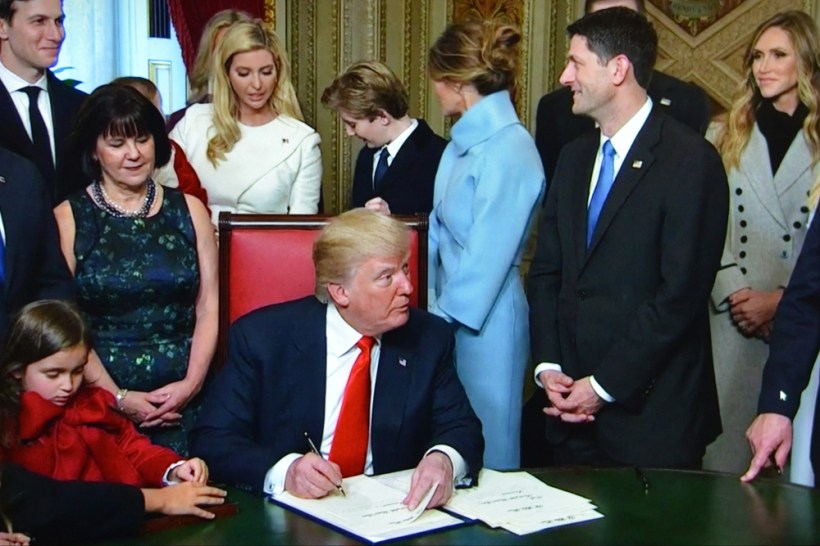
Many people who have championed Trump for President, and Trump as President, have claimed that God wanted Trump to be President. Like Daniel in the Persian palace, they say Trump is God’s man in the White House.

I have been skeptical of that claim. Not that it couldn’t be true, but the Donald is no Daniel. The fruit of his life, his words, his demeanor, and his actions is not consistent with God’s character.

I admit that I had to be cautious in my skepticism as I read the story of a fireman, Mark Taylor, who prophesied in 2011 that Trump would be President. This was more than an entire term before Trump became president. Those prophetic words echoed in the back of my mind as the election results slowly revealed a Trump victory in 2016 to a nation of shocked newscasters and political pundits on live television.

(I note that the same man who claimed God told him Trump would be president, claimed he would defeat Obama in 2012. He was wrong about the timing. He has also claimed a number of things that have not occurred. “Taylor’s other prophecies have proven to be less than accurate. The Guardian reported that he said a ‘red tsunami’ would solidify Republicans’ hold on Congress, and that he predicted former President Barack Obama would be arrested for treason. Taylor also says Trump will release evidence of cures for cancer and Alzheimer’s disease.”)

Paula White, who is now an adviser to Trump in the White House, said after he was elected, “Trump has ‘been raised up by God’ and added, ‘It is God who raises up a king. It is God that sets one down. When you fight against the plan of God, you are fighting against the hand of God.’”

Of course, she would have been just as right if she were speaking of Barack Obama eights years earlier and four years earlier. I would be surprised, though, if she said the same thing 8 years ago or 4 years ago.

I wondered then, as I do now: does Trump’s victory mean that we (believers) won too? Did God give us what He wanted? Or did God give us what we wanted?

Continue reading “Is Donald Trump the King We Wanted?”

The Incomparable Importance of the Salvation of Kanye West

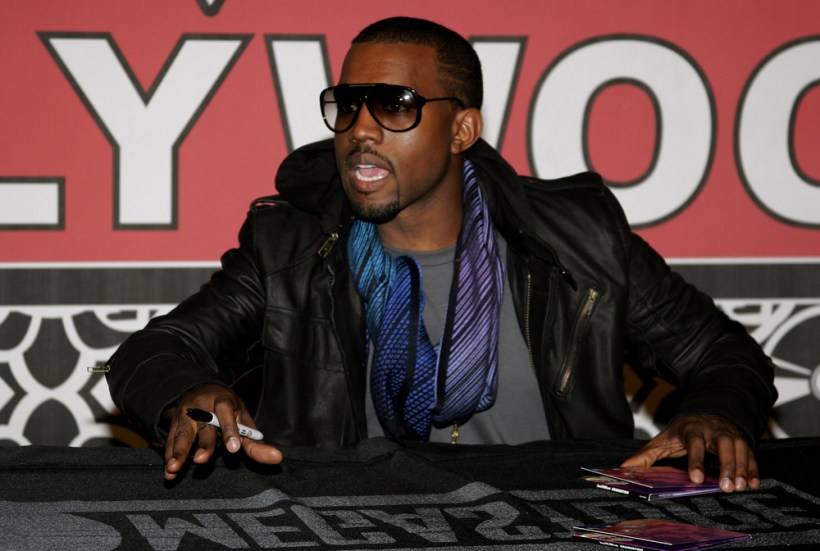
Kanye West has come out of his cocoon with big, bright butterfly wings that have all the markings of a man who is born again


I dare say that Kanye West will likely do more for North American Christianity than Donald Trump will. There is more rejoicing in heaven over one sinner who is found than over the 99, and the kingdom impact may be even more profound.

I don’t know where Donald Trump is in his spiritual walk, if he has one. The fruit isn’t apparent to me (not that I am the one to measure it). Kanye West, on the other hand, has come out of his cocoon with big, bright butterfly wings that have all the markings of a man who is born again.

He just recently announced that he will never sing his old songs (as they are) again. One Facebooker commented that Kanye West will lose millions of dollars if he does that! That is the mark of a man who has been changed by the Holy Spirt, who has traded earthly treasure for a heavenly one.

From “I am God” to “Jesus is King”

From “I am God” to “Jesus is King”, the title of his new album, the transformation is extreme. It strikes me that Kanye West is not a person to do things halfway or halfheartedly. How many of us would dare to proclaim publicly, “I am God?”

Yet everyone who refuses God’s love, who ignores that God is God, the Creator of the heavens and the earth and all that is in them, is essentially “saying” the same thing. We might not dare to say it out loud for fear that someone will think we are nuts, but we live as if we are little gods when we do not acknowledge and honor God as God.

We have watched Kanye West live out his extravagant and extreme life in the most public of ways. He is a cultural icon, one of the biggest idols of our time, but he is just a person like you and I. God is no respecter of persons.

On the other hand, God knows the innermost thoughts and intents of Kanye West’s heart, like He knows ours. God knows us all intimately. The good and the bad.

Though he once proclaimed he is God, Kanye West was not too far gone for God to reach him, to redeem him, to wash him white as snow and to set him free from the delusions and blindness that afflict us all (though maybe not as publicly). Until the scales fall from our eyes, our hearts are softened like flesh and we humbly receive God’s gift of life that no one in this world can earn, we are just as “gone” as Kanye West was.

I do fear that Kanye West has a rough road ahead. He was doing 120 mph the other way. Every fiber of his being is in the habit of going in a different direction. The wealthy and the famous are like camels trying to thread through the eyes of needles. It won’t be easy.

But, with God, all things are possible. This was the message Jesus gave us. Though it may be that difficult, God can do in Kanye West what He has done in countless men and women who have responded to that knock on the door, opened it and invited Jesus in.

Donald Trump may be seen as the savior of Evangelical power in the American political system, but I know for a fact that the impact of one sinner saved is greater than all the political power in this country and on earth. Perhaps, CS Lewis said it best:

“… Christianity asserts that every individual human being is going to live for ever, and this must be either true or false.  . . .  And immortality makes this other difference….  If individuals live only seventy years, then a state, or a nation, or a civilisation, which may last for a thousand years, is more important than an individual.  But if Christianity is true, then the individual is not only more important but incomparably more important, for he is everlasting and the life of the state or civilisation, compared with his, is only a moment.” C.S. Lewis, Mere Christianity 74-75

The salvation of Kanye West is of incomparable importance to the kingdom of God over things like the political and cultural influence of people like Donald Trump (or Kanye West for that matter) in this present world. Such temporary influence as a presidency or all of western civilization, itself, cannot compare to the unfathomable glory of the kingdom of God filled with mortal beings changed in the twinkling of an eye fully and finally into immortal, immutable children of the Living God – you, me and Kanye West included.

Celebrity Christianity

LOS ANGELES, CA. November 9, 2016: Actor Brad Pitt at a special fan screening for “Allied” at the Regency Village Theatre, Westwood.

Following on the heels of public “deconstruction” stories (like Joshua Harris and Marty Sampson) and the suicide of a well-known pastor, Jarrid Wilson, come the stories about newfound faith in God by public figures like Kanye West, Demi Lovato and now Brad Pitt. I feel like we need to be careful here.

Our faith shouldn’t rise or fall on the stories of public figures. The human tendency to follow and be interested in people we admire (or even idolize) is strong. A little perspective should be maintained, though.

God is no respecter of persons.

Though we put stock in what other people do or say, people are not the standard. God, alone, is the standard, and we should be careful to focus on Him. As big and bold as a person might seem, he or she is as finite as we are, flawed by sin and limited by our individual perspectives, influenced by any number of factors, many of which we may not completely appreciate (or even be aware).

One writer surmises that our reactions to celebrities becoming Christians (or renouncing Christianity) says more about us than them.

We live in a celebrity culture in which fame equals validation and significance. When we hear news about a celebrity conversion, we usually don’t picture the lone individual standing before almighty God—stripped of all earthly trinkets and worldly success—on the same level as you and me and everyone else. We still see them in their celebrity form, as the avatar created by their promotional machine. And once someone professes faith, we tend to slip into the same worldly assessment of their significance.

This leads us to put too much emphasis (and faith) in the celebrity who becomes Christian, and that is dangerous for our faith – and theirs. We are quick to hold them up as examples and leaders, but faith, redemption, sanctification and growth in the knowledge and grace of God is a process. It takes time.

Joshua Harris wrote a book, Kiss Dating Goodbye, that catapulted him into the Christian limelight at the age of 21. Marty Sampson, the once Christian songwriter, became a worship leader for the megachurch Hillsong at the age of 20. Talent and fickle fame are not substitutes for depth and strength of character and faith.

We need to be careful not too put too much emphasis in the newfound faith of celebrities. We should not expect them to become overnight spiritual leaders. Neither should we be overly skeptical. They need room to grow and mature in Christ, like anyone else, and I fear that celebrity is not fertile soil for Christian growth.

Think of the rich young ruler.

Jesus described the way to follow him. It looks like taking up a cross. It involves learning the value of being last and adopting a servant of all perspective. Paul warns us that no one should think more highly of himself than he ought. Neither should we think too highly of others – for their sakes and ours.

Our rush to establish a celebrity as a leader in matters of faith does injustice to both the celebrity and also the church, requiring a sped-up sanctification process on behalf of the celebrity (because they’re already seen as a leader) and setting the church up for letdown when the movie star disappoints.

With said, I celebrate the newfound faith of any person, celebrity or commoner, like me. Let us pray for them and keep our eyes fixed on Jesus, the author and perfecter of their faith and ours.