Is Offense a Measure of whether the Gospel is Authentically Preached?

Jesus said, “My sheep hear my voice, and I know them, and they follow me.” (John 10:27)

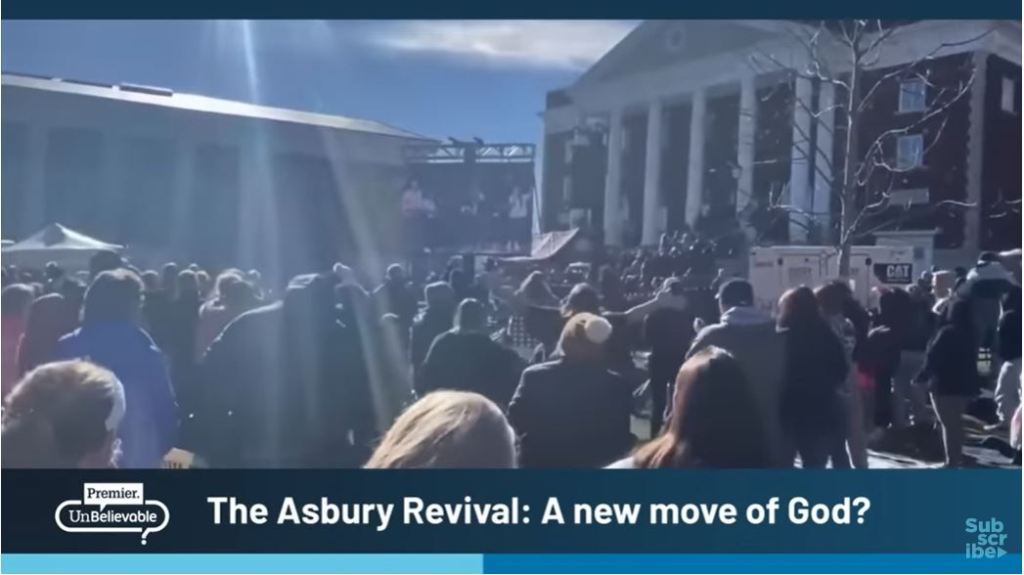
On a recent Unbelievable Podcast, Justin Brierley posed the question: is the gospel really being preached if no one is being offended?

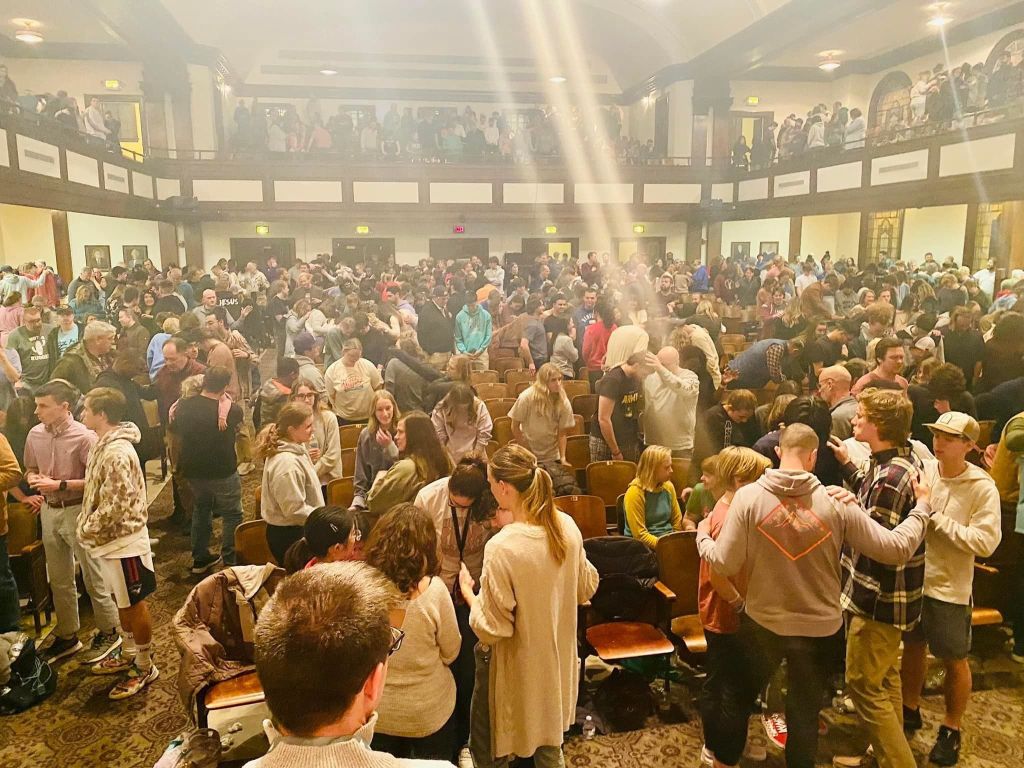
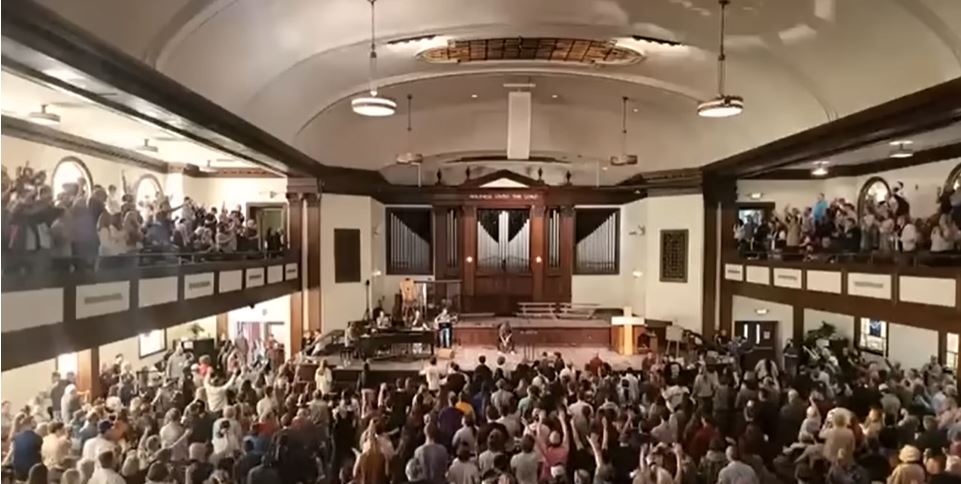
That question might seem odd out of context, so I should quickly add that the question was posed in the context of the “Asbury Revival”. Many Christians are advocating caution. They are expressing concern about calling the happening at Asbury University in Wilmore, KY a “revival”. Some are questioning whether God was involved at all.

The claims people are making include, among other things, that there is no preaching going on, that the Gospel is not being preached, and that no one is being offended by the message. The latter statement prompted the question.

Is that the measure of whether the gospel is being preached? That some people are offended? Do we really think that it isn’t really the Gospel unless some people are offended?

Because some people were offended that no one seemed offended, does that count as people being offended?

As food for thought, it seems that everyone was offended during the Super Bowl by the two commercials paid for by a Christian group (with a lot of money) conveying the message that “God gets us”. It seems that everyone was offended by those ads, both the secular world and the Christian world. Does the offense mean that the Gospel was preached?

Perhaps, but only if the right people are offended? What if Christians are offended? What if progressive Christians are offended? What do we mean by “progressive”?

Again, is that really the measure of whether the Gospel was preached? Is that really the right question? Isn’t the Gospel the Gospel? Isn’t the Gospel the Gospel, whether some people are offended or not?

What is the Gospel?

We all know that “gospel” means good news, right? But, what is it? What is the good news?

Paul defines the Gospel to the Corinthians when he says, “I want to remind you of the Gospel I preached to you….” (1 Cor. 15:2) He adds, “ By this gospel you are saved, if you hold firmly to the word I preached to you. Otherwise, you have believed in vain.” (1 Cor. 15:3) Then, he says that the gospel message, which is “of first importance”, is as follows:

“… that Christ died for our sins according to the Scriptures, that he was buried, that he was raised on the third day according to the Scriptures, and that he appeared to Cephas [Peter], and then to the Twelve.”

1 Corinthians 15:3-5

When disagreements arose among the Corinthians, and some were lining up behind Paul, and others were lining up behind Apollos, Paul was perplexed by their disunity. He implored them “that all of you agree with one another in what you say and that there be no divisions among you, but that you be perfectly united in mind and thought.” (1 Cor. 1:10)

Paul was perplexed that some were touting him above Apollos, and the other way around. “Is Christ divided”, he asked rhetorically. (1 Cor. 1:13) The obvious answer is no! And the obvious implication is that we should not be divided either.

The problem with the Corinthians was that they were quarreling with each other over their allegiances to Paul and to Apollos. They were disagreeing and quarreling over peripheral things. Thus, Paul says he only came “to preach the gospel—not with wisdom and eloquence, lest the cross of Christ be emptied of its power.” (1 Cor. 1:17)

Emptied of its power? What did Paul mean? Paul said,

“When I came to you, I did not come with eloquence or human wisdom as I proclaimed to you the testimony about God. For I resolved to know nothing while I was with you except Jesus Christ and him crucified. I came to you in weakness with great fear and trembling. My message and my preaching were not with wise and persuasive words, but with a demonstration of the Spirit’s power, so that your faith might not rest on human wisdom, but on God’s power.”

Paul didn’t emphasize his preaching. He didn’t come with “wise and persuasive words”. He emphasized the “demonstration of the Spirit’s power”. The demonstration of the Spirit’s power is usually what we associate with a revival or an awakening. It isn’t the preaching; there is always preaching, but we don’t always get a demonstration of the Holy Spirit.

Continue reading “Is Offense a Measure of whether the Gospel is Authentically Preached?”

Taste and See that God is Good: The Asbury Revival

We spend far more time praying for renewal of our strength than soaring on wings like eagles.


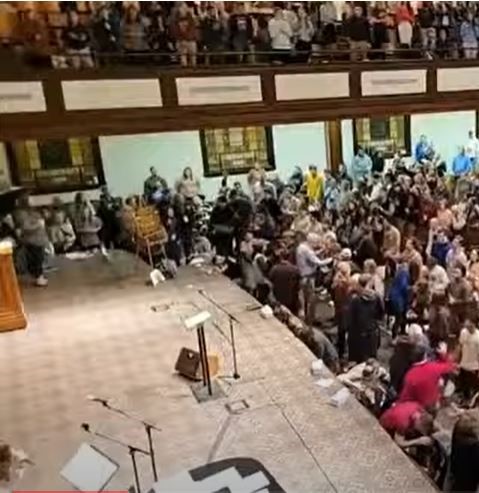
I have noticed with some mild interest at what is going on at the chapel on the Asbury University campus in Kentucky. Posts show up in my Facebook feed daily, as I am connected to many Christians (and many other people too) on Facebook. One post today, shared from someone who has been there from the beginning, described it succinctly as follows:

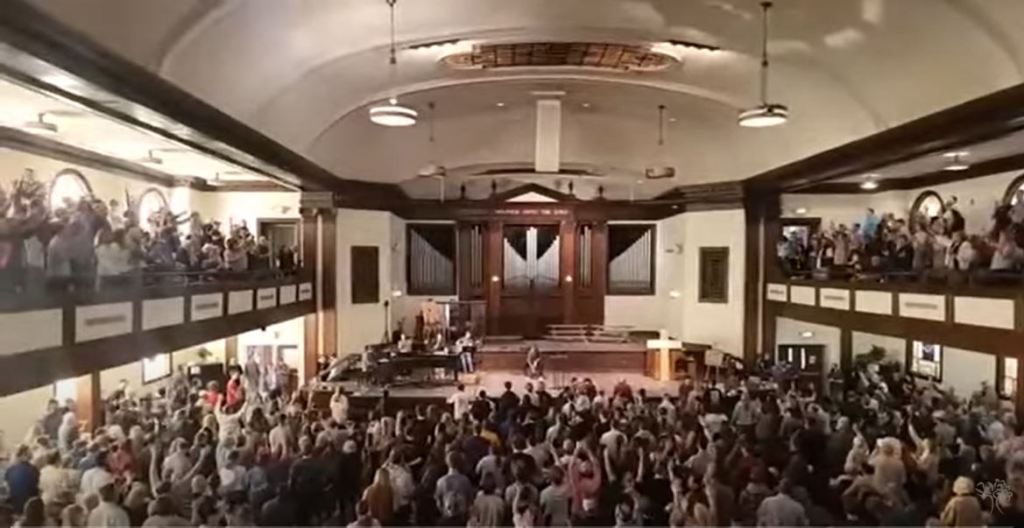
“A chapel service that didn’t stop but continued spontaneously for 8 days now.”

Today has been ten (10) days since that spontaneous beginning, and I have been watching various live streams of the February 8th chapel service that is still going on. This is how it started:

How the Asbury University chapel started on February 8, 2023

I have seen doubters and critics, I have seen posts from people who jumped in their cars and traveled hundreds of miles to see it for themselves: this chapel service that started and has not stopped. It has continued around the clock for 10 days now.

I have seen hype. I have seen caution. Critics caution about emotionalism. Critics want to de-emphasize experience and double down on the Bible and doctrine. Critics say that an omnipresent God should not require a person to travel to a particular location to experience Him.

I have been cautious myself. I am also aware that a sovereign God does what He wants to do despite our understanding of scripture, and theology and the way things ought to be. I have experienced “moves of the Holy spirit”, myself.

I have experienced that people cannot dictate how, when, or whether the Holy Spirit moves. “The wind blows where it will.” We don’t put the Holy Spirit in our pocket like a rabbit foot. We don’t command or possess Him.

People have described what is going on at Asbury University as a revival. That term may conjure up images of a “tent revival” and flamboyantly crass preachers, artificially slick hair, words that drip like honey, and ecstatic chaos.

The Asbury Revival is characterized by a different atmosphere. The person’s post from today who has been there from the beginning said this:

“To quote Professor McCall, a theology professor at Asbury Seminary, ‘what we are experiencing now—this inexpressibly deep sense of peace, wholeness, holiness, belonging, and love—is only the smallest of windows into the life for which we are made.’”

As a child of the 60’s and 70’s, I am reminded of the hippies who wanted “Peace and love. Not war!” I think of John Lennon who imagined a world without war – and without religion – with only peace. Hippies, however, were a contentious bunch, and John Lennon was no saint.

Not that I blame them for dreaming or trying. It’s just that people are completely incapable of making these kinds of dreams come true. Just when we think we have created our utopia, it is already disintegrating and slipping through our fingers like a mirage we feel we can grab hold of.

I lived for several years in a communal house. It was a leftover from the flower children of the 1960’s who became the Jesus people of the 1970’s. I loved it, but it was no utopia. The reality is that people have rough edges. So, “iron sharpens iron,” but the sharpening isn’t always a pleasant process.

Yet, when people get together to devout themselves to following God together, to worship and pray together, to do life together, God is in their midst. These words of Jesus are as true today as the day he spoke them:

“Where two or three gather in my name, there am I with them.”

Matthew 18:20

These words are true when our rough edges are rubbing against each other as much as when we “feel the love” (which may not be as often as we like). Even then, I have never experienced the intimacy with another human being as I have experienced when I have experienced the Holy Spirit “moving” in me, usually during times of group worship..

I have experienced the “inexpressibly deep sense of peace, wholeness, holiness, belonging, and love” described by the Asbury professor. It cannot be manufactured or trumped up. When it “happens”, words are difficult to describe it; the experience is life changing.

The experience is only truly life changing, however, if we recognize that the experience is not the point. The experience is a brush with God, who is the source of peace, wholeness, holiness, belonging and love.

If we walk away from the experience longing for another experience, we have missed the important thing. It isn’t ultimately the experience that we long for at all; we long for God, and relationship with Him.

If we chase the experience, it becomes ever more elusive. In our desperation and desire to repeat it, we may resort to emotionalism. We may even resort to trumping up experiences that are artificial.

We desperately need connection to our Creator and the lover of our souls.

Continue reading “Taste and See that God is Good: The Asbury Revival”

How Should Christians Live Out the Gospel in a Post Roe v. Wade World?

What does God do with babies who die in the womb?

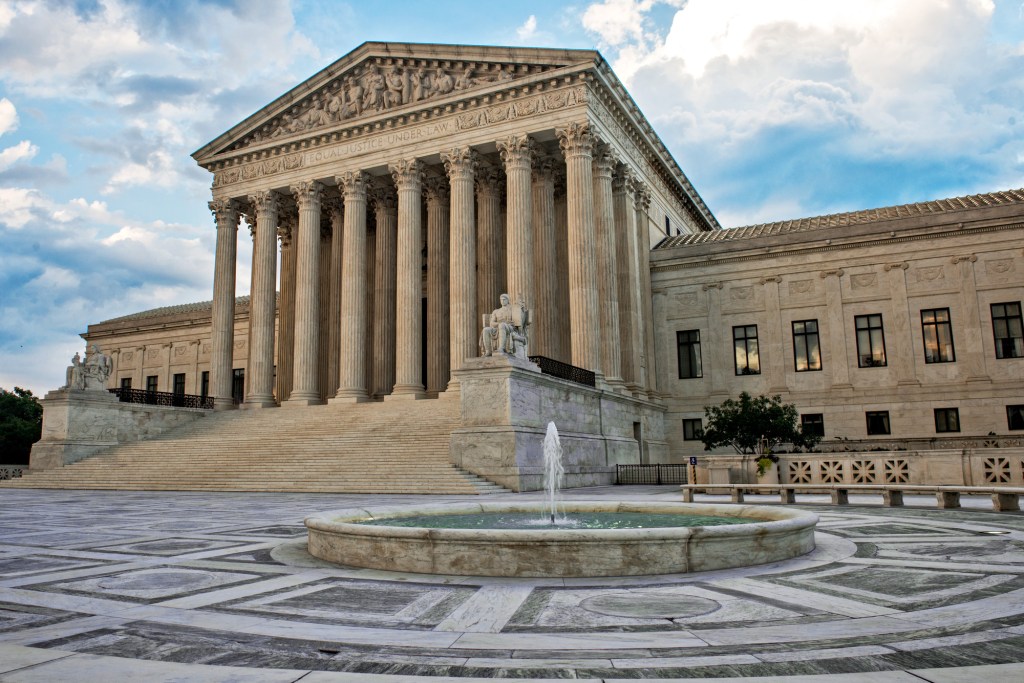
Davide French has expressed some of my own angst at the news that the Supreme Court overturned Roe v. Wade in a recent article, Roe Is Reversed, and the Right Isn’t Ready. Like him, I have championed the pro-life cause. My wife and I marched in Washington. We protested at an abortion clinic. We supported a crisis pregnancy center. I have largely been silent, however, for the past 30 some years.

In 1988, the year I entered law school with two children, financial difficulty, and a very uncertain future, my wife became pregnant. It was the most difficult year of our lives. She was severely sick, living in a strange place 1000 miles from her family under extreme pressure.

When the doctor told her the baby tested positive for spina bifida, and she should consider an abortion, she changed doctors. I supported her fully. We were committed to life.

My son who was born in 1989 is 33 years old now. He bears the scar tissue at the base of his spine where his spinal cord once looped outside his spinal column. He was born that way – with the scar tissue, healed over, fully formed and perfectly healthy.

He became a champion wrestler, All-State, many times All-American, many times national finalist, multi-time national champion. My wife might not have been born if abortion was legal in 1961, and my son would not have been born if we we listened to our doctor.

We were very fortunate, and we are very grateful, and I realize the story could very well have been different. Many people are not as fortunate.

There is a constitutional issue with abortion, a moral issue, and then there is the issue of how the body of Christ demonstrates God’s love in this broken world. I have some thoughts on each of these issues, and I feel compelled to weigh into these turbid waters despite my hesitation.

The constitutional issue has been settled… for now. As an attorney and having studied the Roe v. Wade decision in law school, I can say with some degree of confidence that it had thin precedential support. It’s foundations were shadowy and wispy as a matter of constitutional jurisprudence, relying on a medical understanding of the day, and not legal principles, to shore up a lack of solid, legal precedent.

In the David French article he quotes Justice Ruth Bader Ginsberg who seems to admit the same point. She once “declared Roe ‘breathtaking’ and warned that ‘Doctrinal limbs too swiftly shaped, experience teaches, may prove unstable.’” Her prescience was accurate. It stood for one year shy of 50, but those doctrinal limbs have given away under their own weight.

“The Court’s job is not to determine which rights we should possess but rather which rights we do possess,” says French. (Emphasis in the original) So, it should be. So, the Constitution is written. So, the jurisprudence informs us.

Lawmaking is the province of Congress, not the judicial branch. Ironically, though, the instability of that decision haunts not just the left today. Framed on the back of a politically motivated opinion for which little precedent existed for support, that one decision has greatly politicized the Supreme Court to our jeopardy.

That most people perceive the opinion that struck down Roe v. Wade as a political accomplishment is proof, and that should not be comforting news. A Supreme that can be lobbied and jockeyed and filibustered to do the majority’s bidding is a threat to freedom and sound government.

And, of course, the recent decision was just as political as the decision it overturned – maybe more so. The Court that decided such a progressive decision as Roe v. Wade was largely appointed by conservative presidents. Richard Nixon appointed Justice Blackmun, who write the majority opinion.

There was a day when Presidents made an attempt to appoint the most impressive legal minds to the high court. Confirmation hearings focused on their credentials and legal acumen. The justice appointees and the senators who vetted them knew well and respected the value of impartiality that is essential to true justice. In an odd way, Roe v. Wade, penned by a conservative appointee is proof.

For the last 40 or more years, however, most confirmation hearings on appointments to the high court have been political circuses. No question is off limits, including the direct question of how a justice will decide an issue that comes before him or her. It no longer matters that the Rules of Professional Responsibility that govern all judges forbids that very thing.

Pro-life champions are notching the recent decision as a win, but the battle rages on. This decision pushes the battle to the legislatures of the 50 states.

More fundamentally, though, pro-lifers may have won this battle, but the Republic may be losing the war. The more our Supreme operates by political fiat, the less stable we become.

As for morality, it seems that many people assume the pro-life position is a religious view. While many religious people are pro-life, many religious people are pro-choice also. I have seen many of my religious friends categorically criticize the decision in the last few days.

At the same time, the pro-life crowd includes non-religious people, including atheists, like Kelsey Hazzard, who says, “The abortion industry would have you believe that people like me do not exist.” Reducing the abortion issue to a religious category is scapegoating and insulting to people who claim not to be religious.

No other modern issue offers less common ground for compromise. A fetus is either human life with intrinsic value, or it isn’t. A women’s body is either an inviolable vessel subject to her self control, or it isn’t. A fetus in a woman’s womb is part of her body, or it’s an unborn baby with separate and distinct personage, value, and legal status.

I find the arguments for life to be compelling, but the arguments for choice are compelling also. The stories are real. The fact that women, alone, bear the burden of the consensual (or non consensual) act of sex is reality.

A man can and often does escape all responsibility, but a woman has nowhere to hide. The fact that man are not compelled by the state to bear their responsibility is criminal.

Yes, many states have laws on the books that allow a woman to prove paternity and make the man pay support, but that’s on her dime! Some local prosecutors will take those cases, but those positions are too few, too overworked, and have insufficient resources to take on all cases.

I have slowly come around to an uncomfortable angst on the morality of abortion.

Thirty four years ago, our conviction about what we should do when faced with the probability that we might have a physically deformed child was unwavering. We chose to protect the life God gave us. I still think abortion is morally wrong.

It doesn’t matter whether that life might be deformed or have down syndrome. It doesn’t matter what the economic, social, and other circumstances are. I am not saying there are no exceptions, but most exceptions do not justify taking a life.

This is the black and white, analytical position I believe in, but I know the challenge is not in the black and white, but in the grey. The exceptions to the rules are always where the difficulty lies. Life is complex, and complexity is nuanced.

I am not going to say much more about the morality. I know where I stand, but I know good people who share my faith – people I have prayed with – who do not share my position.

About 18 months go my view of things shifted through the unlikely coincidence of my annual Bible reading and a serendipitous sermon on Sanctity of life Sunday. (See Thoughts on the Sanctity of Human Life….” I hope you will take the time to read it, because it informs my questions to the body of Christ.

Does God hear the cries of unborn babies? Does God hear the cries of women who have been abused and misused? The answer is certainly, “Yes”.

There are people on both “sides” of the abortion story. I believe Scripture warns us about our focusing on the “sides” and urges us to consider the greater purposes of God. Do you remember what the angel of the Lord told Joshua, when Joshua asked which side he was on? Go ahead and check it out.

Do you think God rejects innocent babies who have not yet taken a breath? How you answer that question may well reveal how you perceive God.

How you answer that question likely influences how you respond to this issue. Read Exodus 2 and Exodus 3. Whose cries does God hear, and what cries prompt Him to respond?

I hope you don’t gloss over these questions. I hope you wrestle with the implications. Who is it that God is concerned about? And why?

Go back to the question about how God handles the death of an unborn baby who has yet to take a breath. Does He receive them? Or does He reject them?

I urge you not to gloss over these questions.

How we answer them informs how the Church should orientate itself on the issue of abortion. Our answers suggest the priority of our focus and how we should live out the Gospel on this issue.

How we do that individually is a matter of the gifting God has giving each of us, the burden He has put on our hearts, and the leading of the Holy Spirit. We will only make our way forward as the salt and light God intend us to be with much prayer and humility and trepidation.
Jonathan Haidt and the Erosion of American Democracy by the Corrosive Waters of Social Media

Something went terribly wrong, very suddenly. We are disoriented, unable to speak the same language or recognize the same truth.

Courthouse Towers and Tower of Babel. Moab, Utah

Jonathan Haidt wrote this week in the Atlantic, “The story of Babel is the best metaphor I have found for what happened to America in the 2010s, and for the fractured country we now inhabit.” He says,


“Something went terribly wrong, very suddenly. We are disoriented, unable to speak the same language or recognize the same truth. We are cut off from one another and from the past.”

I resonate deeply with this.

Haidt observes that we are “becoming like two different countries claiming the same territory, with two different versions of the Constitution, economics, and American history.” Many people talk about the tribalism of our times, but Haidt suggests that tribalism isn’t the most accurate description of what is going on. Haidt finds the clearest understanding of the polarization of our times in the story of the Tower of Babel:

“Babel is not a story about tribalism; it’s a story about the fragmentation of everything. It’s about the shattering of all that had seemed solid, the scattering of people who had been a community. It’s a metaphor for what is happening not only between red and blue, but within the left and within the right, as well as within universities, companies, professional associations, museums, and even families.”

Haidt focuses blame on social media. He identifies 2011 as “the year humanity rebuilt the Tower of Babel” with Google Translate symbolically bridging the confusion of different languages. He says (for “techno-democratic optimists”), “[I]t seemed only the beginning of what humanity could do.”

Around the same time, Zuckerberg proclaimed “the power to share” a catalyst to transform “our core institutions and industries”. He may have been prophetic, but I doubt he envisioned such a corrosive change.

Haidt, something of a social scientist, himself, says, “Social scientists have identified at least three major forces that collectively bind together successful democracies: social capital (extensive social networks with high levels of trust), strong institutions, and shared stories.” Social media substantially weakens all three of these fundamental building blocks of a cohesive society.

It started harmlessly with the sharing of personal information to stay connected, but it quickly morphed into a kind of personal performance and branding platform. Along the way it developed into powerful weaponry at the fingertips of anyone and everyone at once.

The “Like” and “Share” buttons became commodities of individual enterprise and personal combat. Algorithms exposed (and exploited) the emotional currency of heightened individuality and the power of anger.

“Going viral” fed the hopes of Internet junkies like the possibility of a jackpot snares gambling addicts in its steely fingers, and the stakes were just as high. Haidt says, “The newly tweaked platforms were almost perfectly designed to bring out our most moralistic and least reflective selves. The volume of outrage was shocking….” The rapidity and its ability to spread was more virulent than COVID, or the plague.

Haidt lauds the framers of the Constitution for designing a republic built on “mechanisms to slow things down, cool passions, require compromise, and give leaders some insulation from the mania of the moment….” Haidt recalls Madison’s warning of “the innate human proclivity toward ‘faction’” so “inflamed with ‘mutual animosity’” that people are “more disposed to vex and oppress each other than to cooperate for their common good.’”

Haidt recalls also that Madison warned of a human tendency toward “factionalism” that can fan “the most frivolous and fanciful distinctions” into passions that ignite our most violent conflicts. Social media has ultimately proven him right.

Thus, Haidt says, “Social media has both magnified and weaponized the frivolous,” chipping away at our trust. The loss of trust makes every decision and election “a life-and-death struggle to save the country from the other side”.

The sagging number of people who have faith in their elected officials hangs at an all time low. In my lifetime, the United Sates of America has gone from a high of 77% trust in the federal government (1964) to a low of 17% in 2019. (See Public Trust in Government: 1958-2021, by PEW Research May 21, 2021)

Social media has corroded trust in government, news media, institutions and people in general. Some claim that social media may be detrimental, maybe even toxic, to democracy, which requires “widely internalized acceptance of the legitimacy of rules, norms, and institutions” for survival. “When people lose trust in institutions”, says Haidt, “They lose trust in the stories told by those institutions.”

Insiders have been warning us of “the power of social media as a universal solvent, breaking down bonds and weakening institutions everywhere”, while offering nothing in return but the chaos of utter freedom and will. Haidt references movements like Occupy Wall Street, fomented primarily online, that “demanded the destruction of existing institutions without offering an alternative vision of the future or an organization that could bring it about”.

We have become a society of “people yelling at each other and living in bubbles of one sort or another”, says former CIA analyst Martin Gurri, in his 2014 book, The Revolt of the Public. The people behind the social media giants may not have intended such a result, but they have “unwittingly dissolved the mortar of trust, belief in institutions, and shared stories that had held a large and diverse secular democracy together”.

Haidt claims he can pinpoint the proverbial fall of the American Tower of Babel to the intersection of “the ‘great awokening’ on the left and the ascendancy of Donald Trump on the right”. Haidt doesn’t blame Trump for the fall; he merely exploited it. Trump proved that outrage is the currency of the post-Babel economy in which “stage performance crushes competence” and Twitter overwhelms newspapers and the nightly news, fracturing and fragmenting the truth before it can spread and take hold.

“After Babel”, Haidt says, “Nothing really means anything anymore––at least not in a way that is durable and on which people widely agree.” Haidt is particularly morose on the prospect of overcoming the rapid dissolution of the American democracy. Unfortunately, I share his pessimism. How did we get here? How do we move forward?

Continue reading “Jonathan Haidt and the Erosion of American Democracy by the Corrosive Waters of Social Media”

Immigration Policy, Declining Population Growth, the Economy and the Sheep and the Goats

As Christians, should we be more motivated by what Immigrants can do for us? Or what can do for them?

The article, Why U.S. Population Growth Is Collapsing, by Derek Thompson in a recent issue of the Atlantic reminds me of a trend I have been following for quite a few years, now, of declining population growth in Europe and the United States. I first became aware of the trend maybe 8 years ago, and most European countries were already (at that time) at unsustainable growth levels. The US wasn’t far behind.

The article linked above picks up the story as it has advanced in the last two years with COVID. Changing societal norms and expectations have led to significant declines in population growth as younger generations are getting married later in life, having children later in life and having fewer children or no children at all. COVID has rapidly accelerated the decline.

One interesting note from this article is the statement that “America’s bias against immigration is self-defeating in almost every dimension.” The article asserts (with no citation to authority) that immigrants are vital to our national economy, but I have read the studies and know the beneficial affects of immigration on an economy.

Anecdotally, I know a young woman who is a “Dreamer”. I will call her Sofia. She is the daughter of two undocumented immigrants who found themselves on the “wrong” side of the border with an infant (Sofia) after 911. They figured things would go back to pre-911 conditions when people came and went with no documentation required. That never happened, of course.

She shared with me that her father is a businessman. He has multiple businesses. He employs many people, and he teaches other people to be entrepreneurial. He pays taxes. He pays into Social Security, but he will never reap any benefit from it.

He doesn’t qualify for Social Security, and he never will. If he overpays his taxes he gets no refund. He is always afraid of being found out and deported to a country that he no longer considers his home.

Sofia grew up with the same fear. She grew up with the burden of having to be a perfect citizen. Any negative attention could expose her to to deportation to a country she has never known. She told me she knew from an early age that she would never qualify for student aid or student loans, so she would have to earn way to obtain the education she aspired to.

I didn’t realize this, but I have since learned that the IRS will assign a number to anyone, with or without a Social Security number. The IRS doesn’t care, as long as people pay taxes.

When I met Sofia, she had graduated from high school in three years with a perfect GPA, and she was on pace to finish college in three years. She had a perfect 4.0 GPA, and she planned to go to law school. She was exceptional in every way. (Since then she went to law school where she currently is.)

This story is anecdotal, but it’s indicative of the data that shows that undocumented immigrants are not a drain on our economy. Undocumented immigrants pay into the system, but they don’t qualify (in most ways) to take from the system they pay into. The statistical difference (on average) is $80,000 per person paid into the system more than what is taken out.

We actually make money off of undocumented immigrants. They shop at our stores, eat at our restaurants, pay real estate taxes, pay income taxes, pay into Social Security, provide labor for our employers (who are happy to pay them minimal wages), and more. (The popular assumption that immigrants commit more crime turns out to be false also.)

Not only are we turning our backs on the boost to our economy that more generous immigration policies would provide, but we are entering a “population danger zone” according to the author of the article cited above

All of this is to bring me to the point in writing this article, which is a little different than the points made in the article. I borrow these things from the article and from my research to get to a different point.

How should Christians generally view the issue of immigration?

Continue reading “Immigration Policy, Declining Population Growth, the Economy and the Sheep and the Goats”