The Temptation of a Kingdom in this World

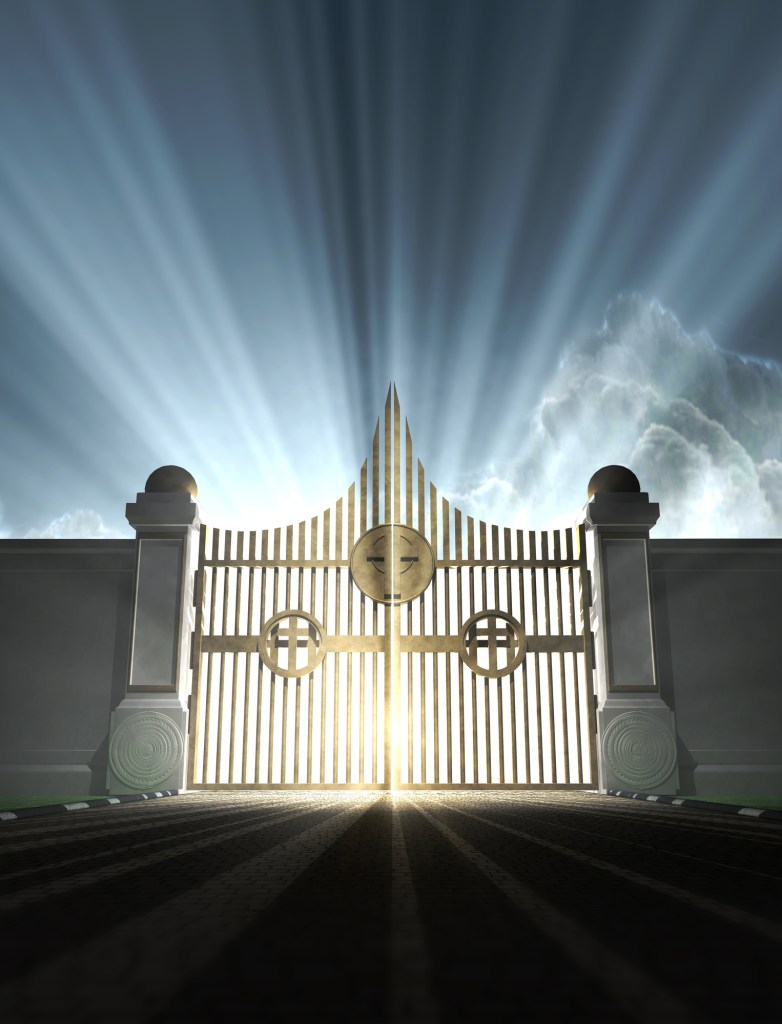
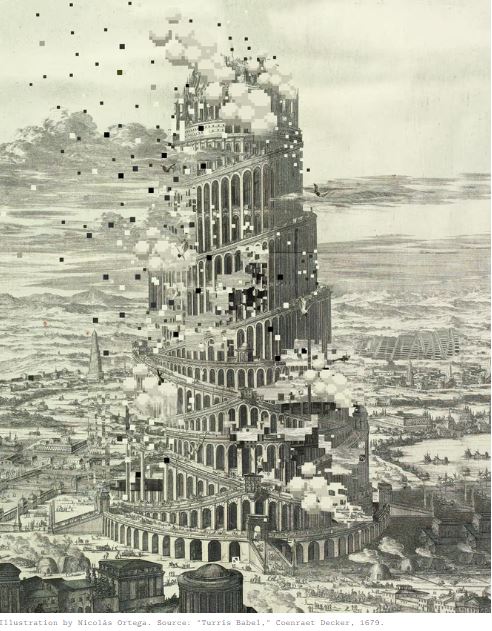
The kingdoms of this earth cannot be conflated with the Kingdom of God.

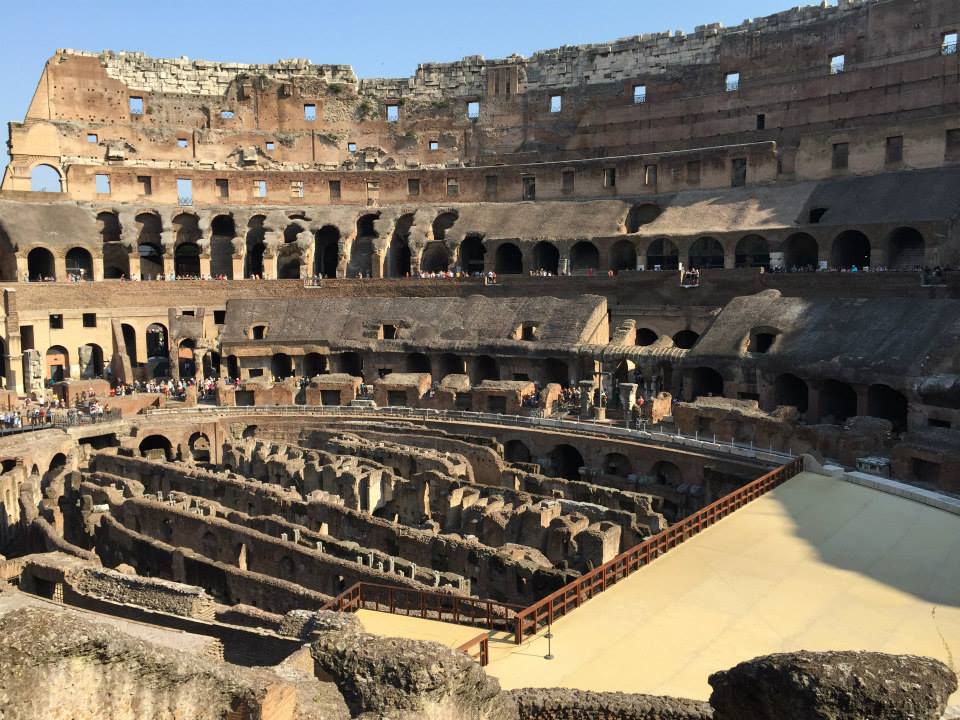
Photo Credit to Tim Butterfield

I see so many things in my daily reading of Scripture that are relevant to what is going on in my life, the things that I am talking to people about, and wrestling with myself. Today, is no different, including the following passage from Matthew from a friend who sends daily versus to people on a text list:

“The devil took [Jesus] to the peak of a very high mountain and showed him all the kingdoms of the world and their glory. ‘I will give it all to you,’ he said, ‘if you will kneel down and worship me.’ ‘Get out of here, Satan,’ Jesus told him. ‘For the Scriptures say, ‘You must worship the Lord your God and serve only him.””

Matthew 4:8-10

The relevance of this passage today relates to conversations I have had with people and articles I have written that touch on the popular infamy of so-called “Christian nationalism”. I put the phrase in quotation marks because people mean different things by it. The definition of Christian nationalism aside, I believe that the preoccupation with nationalism by some people who identify as Christians in America is unhealthy and askew.

The American Church has traditionally been very patriotic. Not that patriotism is necessarily wrong, but we have to be careful, as with all things that might compete for our allegiance and devotion to God. I have seen an unhealthy focus on the United States as a new Israel. I also believe we focus too much, sometimes, on protecting our comfortable status quo, when God may be trying to shake things up.

I won’t rehash the many times I have written about the admonition from Jesus to welcome strangers, which would seems like it should be a no-brainer for a Christian nation. The issue of abortion should also have more consensus as well. In truth, we are more a Christian nation in name in the 21st Century, than in practice.

For that reason, I understand the desire and effort to take over the political landscape for Christ.

I was once very much behind that effort. Not that I am necessarily against it now, but my understanding of Scripture and how we should operate in the world has shifted my view.

Ultimately, it doesn’t matter how relatively righteous or just the United States of America is compared to other nations of the world. We can debate whether the United States is the new Israel, but the United States of America is not the Kingdom of God.

The United States is not even like Israel, which God established in the land of His promise for His purpose. His purpose was to grow out of its soil a people and a culture through which, at the right time, He could enter into the world as God incarnate. We should not forget that God “came to His own, and His own did not receive Him”. (John 1:11)

Not even the nation of Israel is the Kingdom of God. The Zealots of the time realized to their chagrin that Jesus did not come to establish God’s kingdom as the nation of Israel. In fact, the Kingdom of God won’t be established on earth (as it is in heaven) in our lifetime, or the lifetime of anyone until the day Christ returns.

The Kingdom of God is present, but the Kingdom of God is growing organically like a mustard seed, affecting the world like leaven, buried like treasure hidden in a field or a pearl hidden in an oyster beneath the sea. The kingdom of God is expressed through the salt and light of believers who are intimate contact with the world, if, indeed, we retain our saltiness and our light can be distinguished from the darkness of the world.

When the time comes for the Kingdom of God to be established as Jesus spoke, God will establish it, and it will be established as a new heavens and a new earth. A new Jerusalem will come down and be established on earth. (Revelation 21:1-5)

Meanwhile, the kingdoms of this earth cannot be conflated with the Kingdom of God, no matter how righteous or just we feel a particular Kingdom might be.

I am reminded of these things in this passage from Matthew where Satan tempted Jesus with all the kingdoms of this world if Jesus would just bow down to him. Jesus flatly refused him, saying that he would only worship God alone. If we had the same mindset in our lives today, I doubt anyone what accuse a Christian of nationalism.

Ultimately, “the kingdom[s] of the world [will] become the kingdom of our Lord and of his Christ, and he shall reign forever and ever.” (Revelation 11:15) That day has not yet come, however. When that day comes, God is the one who will establish it.

Meanwhile, We should not be tempted to conflate any kingdom in this world with the Kingdom to come. A passage from my own daily Bible reading is right on point. Jesus said in the context of the end times:

“Heaven and earth will pass away, but my words will not pass away.”

Matthew 24:35

Caste Systems, Nationalism, and True Christian Faith

The thing about a speck in someone’s eye is that it seems like a plank to the one with the speck.

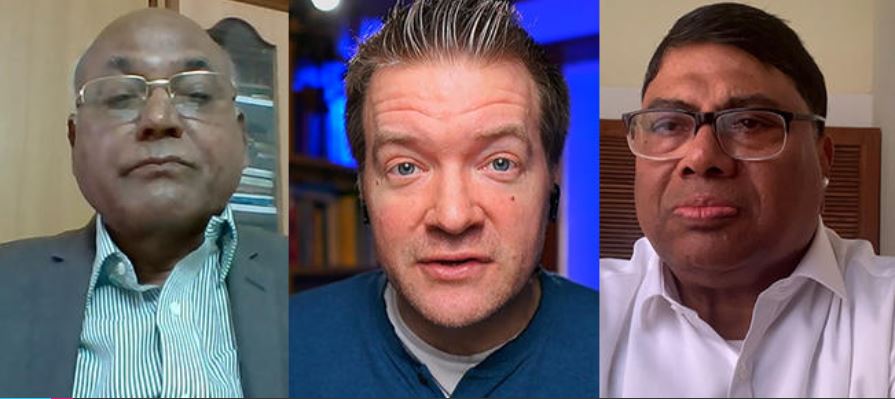
I’m listening to Unbelievable? | Hinduism, Caste & Christianity: Joseph D’Souza and Kancha Ilaiah Shepherd. The following statement by Anglican, Joseph D’Souza, caught me up: “The caste system in India has poisoned the church in India just as racism poisoned the church in the West.”

Joseph D’Souza is an Indian Christian, but he stands as an outsider in India, which is increasingly being driven by a right wing movement to preserve India’s Hindu heritage and power against the threat of Christianity, in particular. Thus, I find it ironic, and convicting, that he finds a parallel between India’s caste system and racial disparity in “the west.”

Kancha Iliah Shepherd, the other participant on the podcast, was born of the Dalit class in India – one step above the untouchable caste/class. Against all odds, and the rules of the caste system, he became educated, and he wrote a book, Why I am not a Hindu, critiquing the caste system.

On the podcast, he questioned what Hinduism has to offer the lower castes who can not receive the education of the Braham caste, cannot learn to read and write the language of the Hindu gods (Sanskrit) and cannot serve in Hindu temples? Why be a Hindu unless one is born a Braham?

D’Souza observed that many Dalit and untouchables in India are becoming Christian because of Christian doctrines, such as the doctrine that all men and women are made in the image of God; God is Creator of all people; and there is no distinction among people (no Jew or Gentile, no slave or free, no man or woman) in Christ.

Though the Hindu nationals have succeeded in passing a law against “forced conversion”, D’Souza says that no one in India is forced to convert to Christianity. People convert because they want to. The church, in fact, stands against the idea of forced conversion.

The present Hindu nationalist movement seems to be partly to blame for Christian conversions because of its adherence to the caste system. The lower castes find in Christianity a God who does not perpetuate a caste system, who made all people equally in His image, and who makes no distinction between people on the basis of caste, birth rights or nationality.

Shepherd adds that God cannot be a nationalist. If there is one true God, He is God of all people in all places, nations and stations in the Earth. Shepherd said this as an Indian of the Dalit caste in India speaking against the Hindu conservative resurgence that forbids lower castes from becoming priests while maintaining a strong Hindu nationalist position.

If we look at the world through the eyes of these Indian men, we can gain some understanding and insight to be applied to our Christian walk in the United States. We can begin to understand why Christian nationalism is heresy and why Christian tolerance, ambivalence, and apathy for racial disparity in the US is poison in the church.

Continue reading “Caste Systems, Nationalism, and True Christian Faith”

Who Is God? How Can We Approach Him? What Do the Answers Mean for Us Today?

Many things to which we devote our energies are good, but they become idols when they become our “ultimate things”.

Who will approach God? Who is the King of Glory? These are questions David poses in Psalm 24, one of the Messianic Psalms.

He begins with recognizing who God is. God is the creator of everything there is, and He possesses and has authority over all that He created.

The earth is the Lord’s, and everything in it,
    the world, and all who live in it;
for he founded it on the seas
    and established it on the waters.

Psalm 24:1-2

Though the nations all around David had their own gods in various images and likenesses, David recognizes that there is only one, creator God. One God made the heavens and the earth, and there is no god like Him. In that context he asks the question:

Who may ascend the mountain of the Lord?
    Who may stand in his holy place?

Psalm 24:3

How does one approach a God like that? How do created beings, such as ourselves, approach the God who created us? David understands that we can only approach such a God on His own terms:

The one who has clean hands and a pure heart,
    who does not trust in an idol
    or swear by a false god.

Psalm 24:4

Only a person with clean hands and a pure heart can approach a God like that. Only a person who trusts in such a God, alone, can approach Him. Only a person who understands truth and is free of deceit.

Can any of us say that we meet these conditions?

If we think honestly on these things, we have to realize that we don’t. The truth is that no one is righteous, not even one person. (Psalm 14:3; Psalm 53:3; and Romans 3:10)

Think of David, the very person who wrote this Psalm. He didn’t meet those conditions, and he certainly knew it. He is one of the most flawed people of all the people of faith in the Bible. He knew where he stood with God.

The problem: we want clean hands and a pure hear; we want to trust in God alone, and we want to hold to nothing but the truth. The truth is, though, that no one meets these conditions. No one can approach a holy God!


Yet, this Psalm exalts in the anticipation of connecting with such a God – a God who made and possesses the universe, a God who can only be approached with cleans hands, a pure heart, with singleness of devotion and in the fullness of truth. This is because David anticipates something. And this is where the Psalm shifts:

They will receive blessing from the Lord
    and vindication from God their Savior.
Such is the generation of those who seek him,
    who seek your face, God of Jacob.

Psalm 24:5-6

The resolution to the problem is that we do not approach God: He approaches us. We must receive from God his blessing and vindication. It is nothing we can ascend to, nothing we can achieve.

God knows this well, and He provided a way. As with Abraham for whom God provided a ram caught in the thicket to sacrifice in place of his son, Isaac, God has provided for us what is necessary to clear the way for us to receive Him. Through Christ, we are made holy, clean and new.[i]

The Psalm is considered “Messianic” because David anticipates our need for God to come to us, to provide for us. He says:

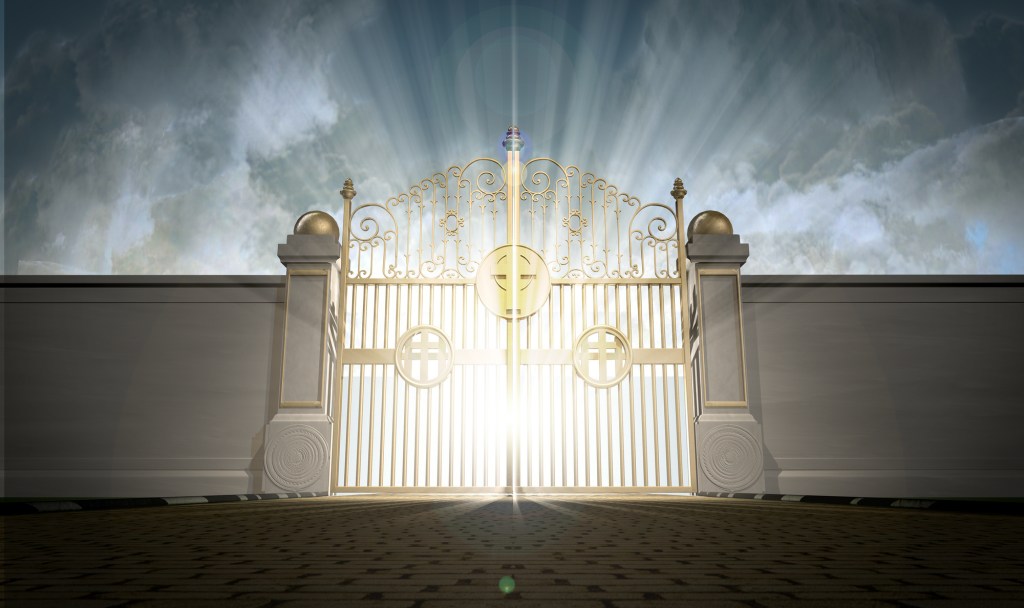
Lift up your heads, you gates;
    be lifted up, you ancient doors,
    that the King of glory may come in.

Psalm 24:7

Thus, David exalts not in the prospect that someone might ascend to heaven, but in the anticipation that God will descend to us. God meets us where we are. But there is more to this than God simply meeting us where we are: we need to be ready to receive Him.

Before the church service that inspires this article this morning, I read an article in my newsfeed: How the Capitol attacks helped spread Christian nationalism in the extreme right, from the Religious News Service. It may seem like a strange tie in to Psalm 24, but I hope you will stick with me to see the connection.

Continue reading “Who Is God? How Can We Approach Him? What Do the Answers Mean for Us Today?”

Who Has the Burden of Proof on the God Proposition?

Who has the burden of proof may depend on our end goal.

Michael Egnor published a provocative article posted on Evolution News & Science Today: Theists vs. Atheists: Who Has the Burden of Proof? Egnor’s comments follow a debate he had with Matt Dillahunty, who is, perhaps, the most popular atheist voice speaking out against religion today.

Egnor claims Dillahunty “didn’t fare well” and demonstrated “no real understanding of any of the ten classical proofs of God’s existence”. It seems that Dillahunty’s big position in the debate was that theists have the burden of proof, so there is no real need for him to assert a position; he can sit back and take pot shots at theist’s arguments and call it a win.

I didn’t watch the debate, so I am just parroting Egnor’s characterization on my way to making a different point. Dillahunty did recently attempt to undress William Lane Craig’s favorite argument, the Kalam Cosmological Argument, so perhaps he isn’t quite as derelict in his opposition as Egnor makes him out to be. (Though, again, it’s just taking pot shots at positive arguments.)

It is true that Dillahunty relies heavily on the position that he has no burden to prove the negative: that God doesn’t exist. Egnor claims this is because positive atheist arguments are “few and weak” (before putting up a strawman argument in caricature of Dillahunty’s favorite argument based on “Divine Hiddeness”, which I don’t intend to address either).

Egnor may be right, basically, in his assessment of Dillahunty’s position, though not very winsome in stating it. Of course, I wouldn’t characterize Dillahunty as winsome either. Much less so.

What caught my attention about the article wasn’t in the article at all. It was a comment about the article to the effect that anyone who is interested in truth has the burden of proof. That comment, I believe, deserves some attention.

Continue reading “Who Has the Burden of Proof on the God Proposition?”

Certainty in Uncertain Times is the Theme of the Top Article from this Blog in 2021

The most read article in 2021 for this blog has prophetic and apocalyptic undertones.

Each year since I started this blog in 2012, I have reviewed the most read blog posts of the year. Certain posts on timeless themes, like “It is Well with my Soul: The Story” (from 2014), are perennial contenders. Not this year, though. That article doesn’t even make the top ten.

While some timeless “favorites” (recognizing this is a relative term here) tend to make the list each year, 2021 is marked by the emergence of relatively new writings and a new theme. We might call that theme the signs of the times. At least, we might say that writings which reflect the current times have emerged on top.

That statement is certainly true of the article that is by far the most read article on this blog this year: Who Were the Sons of Issachar? And What Might They Mean for Us Today?

This article was written in September of 2020. At that time we were careening toward a contentious presidential election. Though it was written with only three months to the end of the year, it became the most read article of 2020 (beating out It is Well with My Soul), and it is the most read article in 2021 by far.

In fact, the Sons of Issachar article has quickly become the most read article of my blog, ever, beating out the 2014 article (It is Well with My Soul) three times over. That it grew out of my own angst leading up to the presidential election is certainly a sign of the times. We have had much angst in the last two years!

I have never highlighted a single article in my past annual summaries. This year is different. I will get to the summary, but first I will tell the back story and reflect on the significance of the Sons of Issachar article, which seems to have hit home with people.

Continue reading “Certainty in Uncertain Times is the Theme of the Top Article from this Blog in 2021”