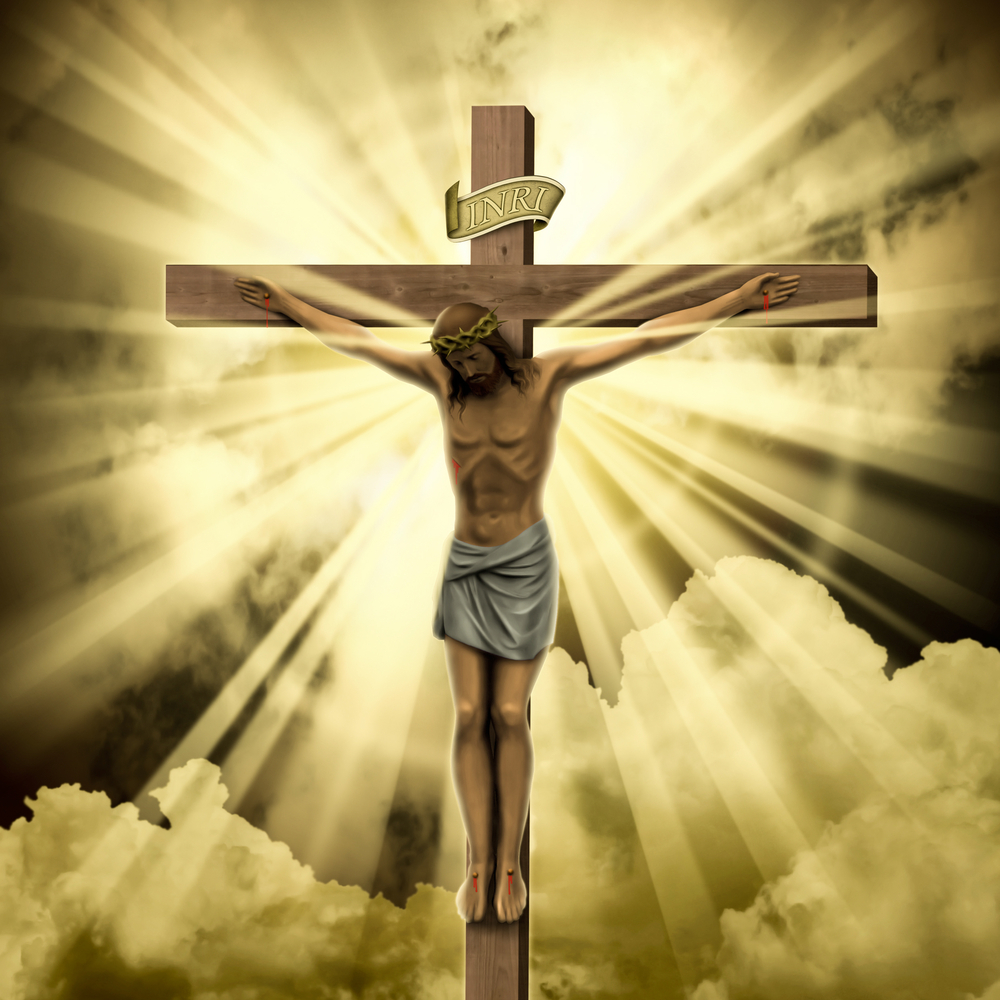
The Temptation of a Kingdom in this World

The kingdoms of this earth cannot be conflated with the Kingdom of God.

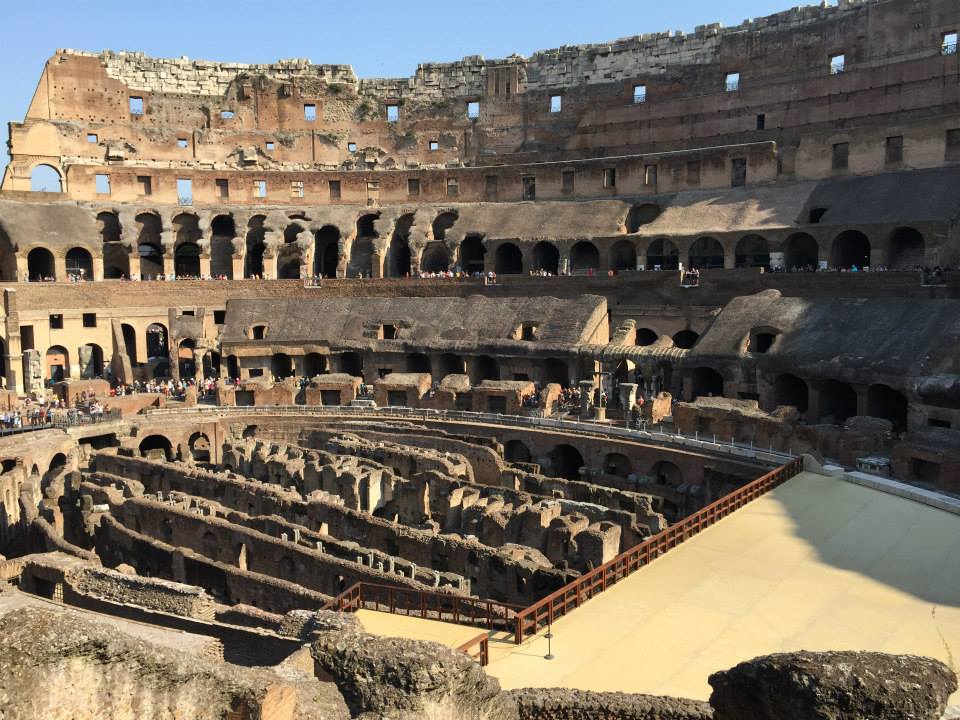
Photo Credit to Tim Butterfield

I see so many things in my daily reading of Scripture that are relevant to what is going on in my life, the things that I am talking to people about, and wrestling with myself. Today, is no different, including the following passage from Matthew from a friend who sends daily versus to people on a text list:

“The devil took [Jesus] to the peak of a very high mountain and showed him all the kingdoms of the world and their glory. ‘I will give it all to you,’ he said, ‘if you will kneel down and worship me.’ ‘Get out of here, Satan,’ Jesus told him. ‘For the Scriptures say, ‘You must worship the Lord your God and serve only him.””

Matthew 4:8-10

The relevance of this passage today relates to conversations I have had with people and articles I have written that touch on the popular infamy of so-called “Christian nationalism”. I put the phrase in quotation marks because people mean different things by it. The definition of Christian nationalism aside, I believe that the preoccupation with nationalism by some people who identify as Christians in America is unhealthy and askew.

The American Church has traditionally been very patriotic. Not that patriotism is necessarily wrong, but we have to be careful, as with all things that might compete for our allegiance and devotion to God. I have seen an unhealthy focus on the United States as a new Israel. I also believe we focus too much, sometimes, on protecting our comfortable status quo, when God may be trying to shake things up.

I won’t rehash the many times I have written about the admonition from Jesus to welcome strangers, which would seems like it should be a no-brainer for a Christian nation. The issue of abortion should also have more consensus as well. In truth, we are more a Christian nation in name in the 21st Century, than in practice.

For that reason, I understand the desire and effort to take over the political landscape for Christ.

I was once very much behind that effort. Not that I am necessarily against it now, but my understanding of Scripture and how we should operate in the world has shifted my view.

Ultimately, it doesn’t matter how relatively righteous or just the United States of America is compared to other nations of the world. We can debate whether the United States is the new Israel, but the United States of America is not the Kingdom of God.

The United States is not even like Israel, which God established in the land of His promise for His purpose. His purpose was to grow out of its soil a people and a culture through which, at the right time, He could enter into the world as God incarnate. We should not forget that God “came to His own, and His own did not receive Him”. (John 1:11)

Not even the nation of Israel is the Kingdom of God. The Zealots of the time realized to their chagrin that Jesus did not come to establish God’s kingdom as the nation of Israel. In fact, the Kingdom of God won’t be established on earth (as it is in heaven) in our lifetime, or the lifetime of anyone until the day Christ returns.

The Kingdom of God is present, but the Kingdom of God is growing organically like a mustard seed, affecting the world like leaven, buried like treasure hidden in a field or a pearl hidden in an oyster beneath the sea. The kingdom of God is expressed through the salt and light of believers who are intimate contact with the world, if, indeed, we retain our saltiness and our light can be distinguished from the darkness of the world.

When the time comes for the Kingdom of God to be established as Jesus spoke, God will establish it, and it will be established as a new heavens and a new earth. A new Jerusalem will come down and be established on earth. (Revelation 21:1-5)

Meanwhile, the kingdoms of this earth cannot be conflated with the Kingdom of God, no matter how righteous or just we feel a particular Kingdom might be.

I am reminded of these things in this passage from Matthew where Satan tempted Jesus with all the kingdoms of this world if Jesus would just bow down to him. Jesus flatly refused him, saying that he would only worship God alone. If we had the same mindset in our lives today, I doubt anyone what accuse a Christian of nationalism.

Ultimately, “the kingdom[s] of the world [will] become the kingdom of our Lord and of his Christ, and he shall reign forever and ever.” (Revelation 11:15) That day has not yet come, however. When that day comes, God is the one who will establish it.

Meanwhile, We should not be tempted to conflate any kingdom in this world with the Kingdom to come. A passage from my own daily Bible reading is right on point. Jesus said in the context of the end times:

“Heaven and earth will pass away, but my words will not pass away.”

Matthew 24:35

The Government Will Be on His Shoulder, But What Does it Mean that the Kingdom of God Is Now

How should Christians orientate themselves to the world in which we live and conduct ourselves in the political and governmental spheres of present life?

The following passage from the Prophet, Isaiah, isn’t just a platitude to recite at Christmas:

For to us a child is born,
    to us a son is given;
and the government shall be upon his shoulder,
    and his name shall be called
Wonderful Counselor, Mighty God,
    Everlasting Father, Prince of Peace.

Isaiah 9:6

Jesus has many names, but the one used (perhaps) the most is Lord. All authority on heaven and earth has been given to Jesus. (Matt. 28:18) Christians revel in that statement. In the next breath, after Jesus said this, he said:

“Therefore go and make disciples of all nations….”

Matthew 28:19

When we think of the authority and lordship of Jesus, we might jump immediately to the ultimate conclusion – of Jesus ruling and reigning at the right hand of the Father. When Jesus told the disciples that all authority had been given him, however, his instruction to follow does not take us where our minds might be tempted to go. He did command us to take over the government or set up a new government.

His charge to the disciples was to go to all nations and make disciples.

That is still his instruction at this time.

Perhaps, we can be excused for forgetting the last instructions he gave after almost 2000 years. Or maybe not…. He was pretty clear about it. We also have the following reminder from the Apostle, Peter:

“But do not forget this one thing, dear friends: With the Lord a day is like a thousand years, and a thousand years are like a day. The Lord is not slow in keeping his promise, as some understand slowness. Instead he is patient with you, not wanting anyone to perish, but everyone to come to repentance.”

2 Peter 3:8-9)

Of course, the government will ultimately be committed into His hands. (Is. 22:21) He will ultimately make a footstool of all his enemies. (Ps. 110:1) Jesus will ultimately sit on the throne with throngs of people proclaiming, “Holy, holy, holy. Lord God Almighty!” (Rev. 4:2)

Jesus will be seen as the Lion of Judah and the Root of King David (Rev. 5:5) at that time with a sharp sword coming out of his mouth, striking down the the nations, ruling them with an iron scepter, and treading “the winepress with the fury of the wrath of God the Almighty!” (Rev. 19:15)

But, that time is yet to come. We aren’t there yet.

Even in John’s vision of this future time, the most common description of Jesus is as a Lamb (28 times). Jesus is first the Lamb who was slain, and that is the most prominent name he is given, even in the Book of Revelation.


We have yet to experience Jesus, the Lion of Judah, with sword in his mouth, a scepter in his hand, and a winepress at his feet. That time has not yet come.

Meanwhile, Jesus came not to Judge the world, but to save the world. (John 12:47) Jesus came not for the healthy, but the sick; and Jesus presently desires mercy. (Matt. 9:12-13)

Jesus is not yet the Judge, treading a winepress with the fury of the wrath of God Almighty; He is the Good Shepherd searching for the lost sheep. He is not presently in the business of condemning the world; he is currently in the business of seeking and saving the lost. (Luke 9:10)

So, we should be.

The charge that Jesus gave us – to go and make disciples of all the nations – is still our marching orders. It hasn’t changed.

No matter how close we think we are to the end, God is still currently in the mode of being patient, not wanting anyone to perish, but wanting everyone to come to repentance.

We are easily distracted by many things. We can be so obsessed about the past and we can be so forward-thinking that we forget about the present. We can be so focused on the end times that we do not understand the times in which we live.

We may be close to the end times, but we may yet be far off, by human reckoning. To God, a day is like a thousand years, and a thousand years is like a day. (2 Pet. 3:8) Jesus said we would not know the day or the hour. Most importantly, we are still in the times in which Jesus told us to make disciples of all nations.

He didn’t tell us to make enemies of the nations. He didn’t tell us to set up new nations. He didn’t tell us to take over nations. He said, “Go and make disciples of all nations.”

This, so far, is just a preface for talking about politics and government in the 21st Century. Yes, the government will be on the shoulders of Jesus, but what of the Kingdom of God now? How should Christians orientate themselves to the world in which we live and conduct ourselves in the political and governmental spheres of present life?

Continue reading “The Government Will Be on His Shoulder, But What Does it Mean that the Kingdom of God Is Now” →

Enough Is Enough: Entering into God’s Rest

God’s work has been finished since creation, but that doesn’t mean His purposes are accomplished, yet

I am listening to the BEMA Podcast with Marty Solomon and Brent Billings as they work their way through Genesis applying a more Hebrew, eastern approach to understanding and interpreting scripture. I have talked about these things in previous articles, so I will not rehash.

One of the observations made in the story of creation is that God rested on day 7. The theme of God resting can be followed throughout scripture, especially in the law of the Sabbath rest.

The writer of Hebrews says that the nation of Israel would not enter His rest because they hardened their hearts “in the rebellion” in the wilderness when they “tested and tried” God; rather, they went astray in their hearts and did not know God’s way. (Heb. 3:7-11) From these statements, we understand that God withholds His rest to those who harden their hearts, test and try God, go their own ways and do not “know” God’s ways.

In Hebrew thinking, to know God’s ways is not just an intellectual thing. It’s an experiential thing. To know is to connect personally with and to experience. Knowing is not just intellectually grasping, but becoming personally intimate with something.

God promises us that we will enter into His rest if we do not harden our hearts, if we do not test and try Him and do not go astray, but know (experience, become intimate with) God’s ways. (Heb. 4:1-2) God desires for us to enter His rest.

One conclusion a person might draw from the story of creation is that God knew when to stop creating. He knew when to rest. He knew when enough was enough, and He invites us likewise to know when enough is enough: to rest.

God’s work has been finished since creation (Heb. 4:3), but that doesn’t mean His purposes are accomplished, yet. We know, for instance, that He subjected creation to futility (mataiotés – vanity, emptiness, unreality, purposelessness, ineffectiveness, instability, frailty….”) in hope. (Rom. 8:20)

If He subjected creation to futility in hope, He did it with the expectation and purpose that the hope would be fulfilled and accomplished. The hope is that “the creation itself will be liberated from its bondage to decay and brought into the freedom and glory of the children of God”. (Rom. 8:21)

This suggests that God may have been done with His works when he rested, but His purposes were not yet accomplished. Gods rest prior to the ultimate accomplishment of all that He purposed is part of the story. There is more to the story then simply the creation.

The creation was intended for a purpose that is yet to be accomplished, and our freedom and glory is needed to accomplish that purpose and to liberate creation from its bondage to decay! But what is that yet unfulfilled purpose?

Continue reading “Enough Is Enough: Entering into God’s Rest” →

Who Is God? How Can We Approach Him? What Do the Answers Mean for Us Today?

Many things to which we devote our energies are good, but they become idols when they become our “ultimate things”.

Who will approach God? Who is the King of Glory? These are questions David poses in Psalm 24, one of the Messianic Psalms.

He begins with recognizing who God is. God is the creator of everything there is, and He possesses and has authority over all that He created.

The earth is the Lord’s, and everything in it,
    the world, and all who live in it;
for he founded it on the seas
    and established it on the waters.

Psalm 24:1-2

Though the nations all around David had their own gods in various images and likenesses, David recognizes that there is only one, creator God. One God made the heavens and the earth, and there is no god like Him. In that context he asks the question:

Who may ascend the mountain of the Lord?
    Who may stand in his holy place?

Psalm 24:3

How does one approach a God like that? How do created beings, such as ourselves, approach the God who created us? David understands that we can only approach such a God on His own terms:

The one who has clean hands and a pure heart,
    who does not trust in an idol
    or swear by a false god.

Psalm 24:4

Only a person with clean hands and a pure heart can approach a God like that. Only a person who trusts in such a God, alone, can approach Him. Only a person who understands truth and is free of deceit.

Can any of us say that we meet these conditions?

If we think honestly on these things, we have to realize that we don’t. The truth is that no one is righteous, not even one person. (Psalm 14:3; Psalm 53:3; and Romans 3:10)

Think of David, the very person who wrote this Psalm. He didn’t meet those conditions, and he certainly knew it. He is one of the most flawed people of all the people of faith in the Bible. He knew where he stood with God.

The problem: we want clean hands and a pure hear; we want to trust in God alone, and we want to hold to nothing but the truth. The truth is, though, that no one meets these conditions. No one can approach a holy God!


Yet, this Psalm exalts in the anticipation of connecting with such a God – a God who made and possesses the universe, a God who can only be approached with cleans hands, a pure heart, with singleness of devotion and in the fullness of truth. This is because David anticipates something. And this is where the Psalm shifts:

They will receive blessing from the Lord
    and vindication from God their Savior.
Such is the generation of those who seek him,
    who seek your face, God of Jacob.

Psalm 24:5-6

The resolution to the problem is that we do not approach God: He approaches us. We must receive from God his blessing and vindication. It is nothing we can ascend to, nothing we can achieve.

God knows this well, and He provided a way. As with Abraham for whom God provided a ram caught in the thicket to sacrifice in place of his son, Isaac, God has provided for us what is necessary to clear the way for us to receive Him. Through Christ, we are made holy, clean and new.[i]

The Psalm is considered “Messianic” because David anticipates our need for God to come to us, to provide for us. He says:

Lift up your heads, you gates;
    be lifted up, you ancient doors,
    that the King of glory may come in.

Psalm 24:7

Thus, David exalts not in the prospect that someone might ascend to heaven, but in the anticipation that God will descend to us. God meets us where we are. But there is more to this than God simply meeting us where we are: we need to be ready to receive Him.

Before the church service that inspires this article this morning, I read an article in my newsfeed: How the Capitol attacks helped spread Christian nationalism in the extreme right, from the Religious News Service. It may seem like a strange tie in to Psalm 24, but I hope you will stick with me to see the connection.

Continue reading “Who Is God? How Can We Approach Him? What Do the Answers Mean for Us Today?” →

East and West Meet at the Tower of Babel

I have been listening to the BEMA podcast. I highly recommend it. As defined on the website, “‘BEMA’ (or bimah) is a Hebrew word that refers to the elevated platform in the center of first-century synagogues where the people of God read the Text.”

The early Christians knew their Scripture. They built their lives around it. They devoted themselves to it, and to prayer, and the apostles reaching, and to fellowship and shared meals. (Acts 2:42) The bema in was where early Christians gathered in first century synagogues before they were persecuted and scattered.

The BEMA podcast attempts to approach Scripture the way easterners would have approached Scripture – the way the early Christians in the Middle East would have approached Scripture. The idea that Hebrew people were more “eastern” in their thinking was first pointed out to m by my Jewish professor in college over 40 years ago, so following up with that concept intrigues me.

Christianity quickly became westernized, but the origins of Christianity are eastern, growing out of the Hebrew culture and scriptures. For that reason, we would do well to gain some new perspective from a more eastern way of thinking. I encourage you to listen to the first couple of episodes of the podcast linked in the opening paragraph if you want an introduction to an “eastern” perspective of the Bible.

Reading the first 11 chapters of Genesis from an eastern, Hebraic perspective, opens up new insights. Not the least of which is the genre of literature these chapters represent. They are poetry. They are written in chiasms with intricate organization and emphasis that is found in the structure of the chiasms.

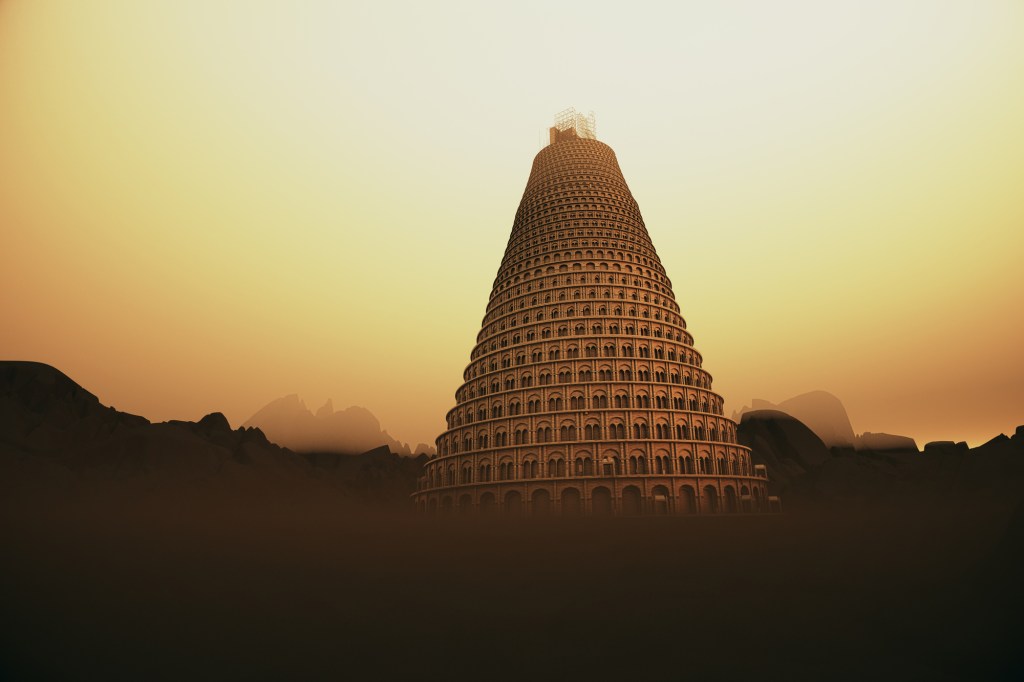
The Tower of Babel story is one of those chiastic passages in Genesis. The story actually begins in the Hebrew with the last verse of Chapter 10 (as it is organized in English Bibles), and it goes like this (ESV):

These are the clans of Noah’s sons, according to their lines of descent, within their nations. From these the nations spread out over the earth after the flood.

Now the whole world had one language and a common speech. As people moved eastward, they found a plain in Shinar and settled there.

They said to each other, ‘Come, let’s make bricks and bake them thoroughly.’ They used brick instead of stone, and tar for mortar. Then they said, “Come, let us build ourselves a city, with a tower that reaches to the heavens, so that we may make a name for ourselves; otherwise we will be scattered over the face of the whole earth.’

But the Lord came down to see the city and the tower the people were building. The Lord said, ‘If as one people speaking the same language they have begun to do this, then nothing they plan to do will be impossible for them. Come, let us go down and confuse their language so they will not understand each other.’

So the Lord scattered them from there over all the earth, and they stopped building the city. That is why it was called Babel—because there the Lord confused the language of the whole world. From there the Lord scattered them over the face of the whole earth.

Hebrew has no vowels, only consonants. Rather, vowel signs are placed over the consonants to denote where breaths should be taken for anyone reading Hebrew out loud. 

The consonants in this chiasm are repetitive: N, B, L, H; then H, L, B, N in reverse. There is a front half and a back half to the structure. The middle of the chiasm is verse 11:4, which I have emphasized by bolding it.

The verse in the middle of the chiasm is where the emphasis lies: the peoples’ concern about being scattered over the face of the earth. They didn’t want to be scattered.

Why not? That’s the question we should be prompted to ask according to the emphasis we find built into the structure of that story.

I am not sure I can do any justice to the layers of meaning and the questions that arise in these verses in a short blog post. I can only scratch the surface, but here goes….

Continue reading “East and West Meet at the Tower of Babel” →