The Bible and the Historical Provenance of Christianity

The Dead Sea Scrolls on display at the caves of Qumran that located on the edge of the Dead Sea in Israel.

Many people say they “do not believe” the Bible. But, what does that mean? The Bible is an ancient document that has been around in virtually the same form for centuries. For instance, the Dead Sea Scrolls reveal that the Old Testament has changed very little since well before the tie of Jesus. Less than 1% of the substance of the Bible has changed since the time of Jesus.

Some people argue over which writings should be included or not included in the canon that we call the Bible. The writings that are included in the current iterations of the Bible have been established for at least 1600 years. They were largely settled by consensus for at least a couple hundred years before that,

The Bible is an historical record of people and places. Many of those people and places and some events have been cross referenced by other sources, including Babylonian, Assyrian, Hittite, Roman, and other sources. Archaeological finds have also verified many of the people and places in the Bible. People may argue whether every person and place referenced in the text is actual, accurate and factual, but few people seriously argue that it has no historical value.

The Bible is also a collection of stories, poems, songs, and sayings (wisdom literature). As literature, it is full of imagery, compelling stories and words of wisdom. It has great literary value. 

The Bible is a collection of writings covering a span of about 1600 years by many authors focusing on particular people group in a particular geographical area of the Middle East during a particular time period in history. Some of the writings purport to be relatively contemporaneous accounts, and others seem more like historical accounts when they were written.

The writings that comprise the Bible have been collected and preserved as sacred text. Scribes were carefully trained to copy the manuscripts. Those scribes devoted their lives to the careful transcription of the text from generation to generation.

What is most likely meant when people say they “do not believe the Bible” is that they do not believe the Bible is the “Word of God”. People do not believe it is divinely inspired. People do not believe that the Bible is the revelation of God to people.

When people say the do not believe the Bible, they most likely mean they do not believe the Bible can be taken at face value. At face value, the writings of the Bible purport to a collection of God’s communications with a certain group of people, in a particular region of the world, over a particular time span in history.

Various people have various theories about the Bible. I have even recently heard people say that the Bible was put together by Roman dictators to “control the people” by giving them something to believe in. There is little to no scholarly support for that position by the way, but this theory and other theories abound.

Most scholars agree that the Bible has cultural, sociological, literary, and other value. Though people disagree over the degree to which the Bible has historical value, it does have some historical value as any ancient text does.

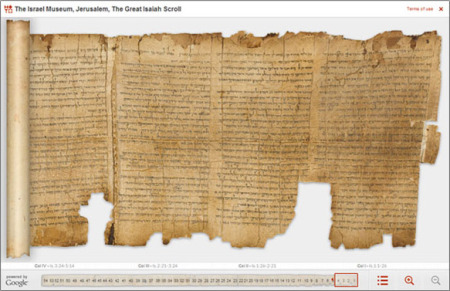
Significantly, the evidence suggests that the Old Testament writings pre-date the first Century. The Dead Sea Scrolls, which pre-date the First Century, include manuscripts from every book in the Old Testament except for Esther. Among the manuscripts found in the Qumran caves that we call the Dead Sea Scrolls, was a complete scroll of the Book of Isaiah dating to at least 200 BC that is virtually the same as the “book of Isaiah” we have preserved in modern Bibles.
It is fact that the Bible is by far the most well-preserved and well-attested ancient text in the history of humankind. We have more ancient manuscripts of the Bible, by a large volume, than any other ancient text. The volume of New Testament manuscripts is stunning compared to any other ancient text.

Continue reading “The Bible and the Historical Provenance of Christianity”

A City Set on a Hill in a Foreign World

Our end goal is not ultimately to rehabilitate an earthly city or country, but to enter into a heavenly City of which the designer and builder is God.


One Sunday I recall the pastor deviating from the planned sermon to observe that Christians today sometimes act as if God is not in control. We do this by complaining about politics, our country, the world, etc. Sometimes when the Spirit leads, we need to stop from our planned way and consider what God is saying. If we don’t, we might miss God.

There is a segment of the church that believes and acts like the USA is God’s country, a Christian nation. I think this is where many Christians allow politics into their theology at a grave danger to pure religion, which James reminds us “to look after orphans and widows in their distress and to keep oneself from being polluted by the world”. (James 1:27)

Yes, the founding fathers were “Christians”; and the country became a haven, a promised land, early on for people escaping religious persecution in England and other places. I love the fact that our country was founded on Biblical ideals, among other things, with honor for God. The freedom of religion and freedom of expression in the USA make this country great, the envy of much of the world, though not understood by much of the world as well.

Many hundreds of years before Jesus the Israelites were God’s chosen people. They were chosen out of all the people groups in the ancient Middle East on the basis of Abraham’s faith, and a promise was made to him that the whole world would be blessed by his progeny.

The promise of God to the people (Abraham and his descendants) to whom He chose to entrust that promise prepared the way for Jesus, the Messiah, except Jesus came with a plan and a message they did not expect. He came to his own, and his own knew him not. The Israelites were dug in, resting on the assumption that they alone were God’s chosen people. Many of them missed the boat. They rejected the Son of God because they had their own expectations and were not in tune with what God was doing.

We know the rest of the story, at least where the narrative continues today. God’s plan was to introduce the Christ for all people through the platform of the message entrusted to the Jewish people, who preserved that message and protected it. But many of them missed it. God does not always work as we expect Him to work.

We might say the Jews became nationalistic in their religion, and they missed the fact that God intended to bless the whole world. Yes, Jesus came to his own, but he also came to all who would believe on him. The new wine came, and the old wine skin could not contain it.

Continue reading “A City Set on a Hill in a Foreign World”

Into the Light

Psalm 139 is a favorite of mine. It can be very comforting knowing that God is intimately familiar with me. He knows my struggles, my good intentions, what I long for and what I need.

You have searched me, Lord,
and you know me.
You know when I sit and when I rise;
you perceive my thoughts from afar.
You discern my going out and my lying down;
you are familiar with all my ways.
Before a word is on my tongue
you, Lord, know it completely.

On the other hand, God knows my demons, my sinful thoughts, my envious, hateful, spiteful and selfish thoughts. He not only sees the good things I do that I want others to know; he sees the bad things I do that I want no one to see. The idea that God knows me so well – even better than I know myself – is both a wonderful and a fearful thing!

Where can I go from your Spirit?
Where can I flee from your presence?

King David’s question is rhetorical of course. The answer is surely nowhere. Nowhere can I go that God is not present. David takes comfort in that thought.

If I go up to the heavens, you are there;
if I make my bed in the depths, you are there.
If I rise on the wings of the dawn,
if I settle on the far side of the sea,
even there your hand will guide me,
your right hand will hold me fast.

That knowledge is as unnerving as it is comforting. Nowhere can I go that God is not present and nothing can I do, or even think, that God does not know it.

If I say, “Surely the darkness will hide me
and the light become night around me,”
even the darkness will not be dark to you;
the night will shine like the day,
for darkness is as light to you.

When Adam and Eve ate the forbidden fruit in the Garden, their first reaction was to hide themselves from God. People have been hiding from God ever since. It is as futile an exercise as it is foolish. God’s knows every hair on our heads, and He knows every thought that runs through our heads. He surely knows every action that we take. There is nothing we can hide from God.

Jesus lamented, “Woe to you, teachers of the law and Pharisees, you hypocrites! You are like whitewashed tombs, which look beautiful on the outside but on the inside are full of the bones of the dead and everything unclean.” Matthew 23:26-28 He sees past the outside – what we do and say for others to see. God sees into our hearts – places that we dare not even look at times.

Jesus also upped the ante: He said, the law states “thou shall not commit murder” and “thou shall not commit adultery,” but one who harbors anger against another person is subject to judgment and one who harbors lustful thoughts for his neighbor’s wife has committed adultery in his heart. Matthew 5:20-28

What is the point? We fool only ourselves and maybe others (certainly not everyone) to think that we are in any way righteous. There is no hiding from God. If the law of do’s and don’t’s is not enough to convince us that we are imperfect, sinful beings, then consider that every thought is measured against perfection. There is nowhere to hide.

Consider also that everything will be exposed. “He will bring to light what is hidden in darkness and will expose the motives of the heart.” 1 Corinthians 4:4-6 Imagine a video of all of the bad things you have done, all of the hateful, hurtful thoughts, played in front of God, you and all mankind when the curtain falls on your life.

The terrible truth is that every person has sinned; we have all missed the mark God set for us. Ephesians 2:23 If anyone claims he has not sinned, he is a liar. John 1:10

The devil is a liar and the father of all lies. John 8:44 Satan would have us bury those miserable thoughts and deeds and keep the skeletons in the closet, not admitting them even to those closest to us, not even to oursleves.

God is truth. John 4:24 There is no escaping God, but God desires mercy, not sacrifice and burnt offerings. Hosea 6:6 He is not looking for people who do everything right; he is looking for people who have a right heart.

If we step into the light, our condition is exposed. But, that is where we find truth; that is where we find God. Our natural inclination is to shrink back, but God calls us out of darkness into His wonderful light. 1 Peter 2:8-10 In that light, with our sinfulness exposed, we ask for forgiveness, and our sins are forgiven.

God is truth, and we draw near to God when we draw near to truth, even the ugly truth of the sin that lies in our own hearts. Only in the light God’s truth can we find the comfort that comes from communion with God in spirit and truth. “[A] time is coming and has now come when the true worshipers will worship the Father in the Spirit and in truth, for they are the kind of worshipers the Father seeks. God is spirit, and his worshipers must worship in the Spirit and in truth.” John 4:23-24

*********************************************************************

“Blessed is the man against whom the Lord counts no iniquity, and in whose spirit there is no deceit.” Psalm 32:1-3

But he was pierced for our transgressions,
he was crushed for our iniquities;
the punishment that brought us peace was on him,
and by his wounds we are healed.
We all, like sheep, have gone astray,
each of us has turned to our own way;
and the Lord has laid on him
the iniquity of us all.

Isaiah 53:5-6

Stepping Into the Light

If we step into the light, our condition is exposed. But, that is where we find truth; that is where we find God


Psalm 139 is a favorite of mine. It can be very comforting knowing that God is intimately familiar with me. He knows my struggles, my good intentions, what I long for and what I need.

You have searched me, Lord,
    and you know me.
You know when I sit and when I rise;
    you perceive my thoughts from afar.
You discern my going out and my lying down;
    you are familiar with all my ways.
Before a word is on my tongue
    you, Lord, know it completely.

(Psalm 139:1-4) On the other hand, God knows my demons, my sinful thoughts, my envious, hateful, spiteful and selfish thoughts. He not only sees the good things I do and think (that I want others to know); He sees the bad things I do and think (that I want no one to see). The idea that God knows me so well – even better than I know myself – is both a wonderful and a fearful thing!

The amazing thing is that He loves me. He knows me intimately – better than I know myself. and He loves me.

Where can I go from your Spirit?
    Where can I flee from your presence

(Psalm 139:7) King David’s question is rhetorical of course. The answer is clearly nowhere. Nowhere can I go that God is not present. David takes comfort in that thought.

If I go up to the heavens, you are there;
    if I make my bed in the depths, you are there.
If I rise on the wings of the dawn,
    if I settle on the far side of the sea,
even there your hand will guide me,
    your right hand will hold me fast.

(Psalm 139:8-10) That knowledge is as unnerving as it is comforting. Nowhere can I go that God is not present and nothing can I do, or even think, that God does not know it. David knew this full well. He learned it intimately through experience.

After he was tempted and succumbed to that temptation, seeing Bathsheba from his roof top, inviting her into his home and lying with her, and then plotting to send her husband to his death to cover up the misdeed, David was called to account by God in dramatic fashion. David’s sin was laid bare. He was completely undone by it. So, David knew well these words:

If I say, “Surely the darkness will hide me
    and the light become night around me,”
even the darkness will not be dark to you;
    the night will shine like the day,
    for darkness is as light to you.

(Psalm 139:11-12) When Adam and Eve sinned in the Garden, their first reaction was to hide themselves from God. People have been hiding from God ever since to this day. Hiding from God is as futile an exercise as it is foolish. God knows every hair on our heads and every thought that runs through our heads. He surely knows every action that we take. There is nothing hidden from God.

Continue reading “Stepping Into the Light”

Revisiting King Henry VIII

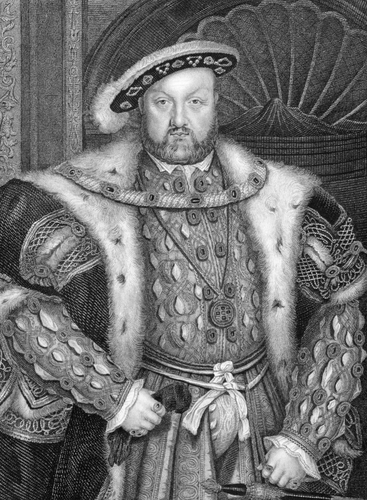
Henry VIII King of England
Depositphotos Image ID: 5598102 Copyright: georgios

I recently saw Shakespeare’s King Henry VIII at the Chicago Shakespeare Theater. The play, Shakespeare’s last one performed at the Globe Theater approximately 400 years ago, was very well done. The story line is not as compelling as most of Shakespeare’s works, but the interrelationship of church and state theme struck a chord with me, albeit a discordant one.

King Henry the VIII was born into aristocracy. Young Henry was appointed Constable of Dover Castle at age two, Earl Marshal of England and Lord Lieutenant of Ireland at age three, inducted into the Order of the Bath soon after, and a day later he was made the Duke of York. A month or so after that, he was made the Warden of the Scottish Marches. He had the best education available from the best tutors, was fluent in Latin and French and was familiar with Italian.

For all of his privilege, he was not expected to become king. His brother, Arthur, Prince of Wales, was the first born and heir to the throne, but Arthur died only 20 months after marrying Catherine of Aragon (daughter of the King and Queen of Spain). Henry VIII was only 10. (Wikipedia)

Henry became the Duke of Cornwall and assumed other figurehead duties. His father, the King Henry VII, made sure young Henry was strictly supervised, did not appear in public and was insulated from real authority. Henry VII quickly made a treaty with the King of Spain that included the marriage of his daughter, Catherine, to young Henry – yes the widow of recently deceased brother Arthur. (Wikipedia)

From this point begins a history of manipulation, abuse of power, shameless excess and rationalizations twisting biblical and religious notions to serve the king’s self-interest. This is a story that parallels the “marriage” of State and Church. The two are intertwined in an adulterous affair of blasphemous indiscretions.

Continue reading “Revisiting King Henry VIII”