Christmas thoughts: Humble Beginnings, Worldwide Ends


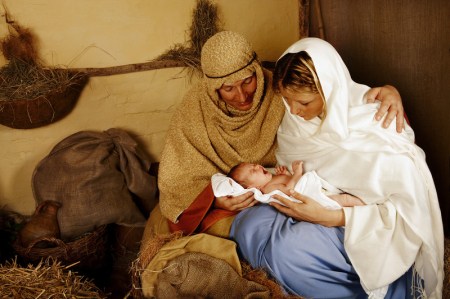
Christmastime is a time to consider the birth of Christ. It’s “the reason for the season”, as the saying goes. Even with the busyness, commercialism and looming red eclipse of Santa, we usually pause to connect the dots to the birth of Jesus.

Whether you wish people a Merry Christmas or Happy Holidays, Christmas involves some acknowledgment of the birth of a man who was called Jesus who lived and died in the 1st Century in the region we identify as Palestine and Israel today. Here, in the confluence of Roman, Greek, Jewish and pagan influences, an obscure carpenter who lived maybe 33 years began a movement in human history that has spanned the globe and stood the test of time.

That movement has become the largest religion in the world today found on every continent and in every corner of the world. It is largely responsible for all the fundamental values of Western Civilization, though many people in “the west” have lost of sight of its influence. As appreciation seems to be waning for those foundations in the west, its influence is spreading in the east and global south.

It flourishes in the cold, communist climate of China and in the hotly hostile religious climate of Iran. It has made its way into the far reaches of the earth, down remote jungle streams and over barren desert sands to touch all people groups of the earth.

The circumstances of the birth of this influential, but humble, man are shrouded in mystery and quiet awe. Though many doubt the claims attached to him, no one can doubt his time enduring and global influence. His birth is the pivotal moment in human history and the pivotal point of God’s plan for his creation if we believe what has been told.

Continue reading “Christmas thoughts: Humble Beginnings, Worldwide Ends”

What is Our Christian Response to Immigration?


Immigration is a hot topic today. It was a major issue in the recent presidential election, and it remains front and center in the public psyche. The surprise election of Donald Trump and his talk about building a wall has heightened the discussion.

The public discourse reveals a country emotionally and philosophically divided over the issue of immigration. The public discourse suggests two polarized sides: one side wanting to wall out the world, and the other side wanting to open the flood gates indiscriminately to the world.

Think about it, though: Does one side really want to wall out the world, shutting off the borders to everyone? Does the other side really want to open the borders wide to anyone and everyone without limits?

Those are rhetorical questions of course. Most people are somewhere to the center of those two positions. As Christians, though, we don’t march to the beat of popular politics. We seek to follow Jesus and aim to usher in the kingdom of God – at least that should be our aim.

So what is the Christian response to immigration?

Continue reading “What is Our Christian Response to Immigration?”

Destined for Tribulations

canstockphoto22892406
(c) Can Stock Photo

“I, John, your brother and partner in the tribulation[1] and the kingdom and the patient endurance that are in Jesus, was on the island called Patmos on account of the word of God and the testimony of Jesus.”

This is how John begins relating the revelations he received that are preserved in the Book of Revelation, the last book of the New Testament. Sometimes we read over things quickly that other times will stick out. This verse sticks out today, perhaps, because we have a good friend who is fighting cancer. Today is also the 15th anniversary of 9/11.

I recently wrote about the charge from atheists that people have faith in God because of wishful thinking. Nothing could be more wishful. True faith is forged only in tribulation. Continue reading “Destined for Tribulations”

The Message in the Earliest Creeds in the New Testament

 (c) Can Stock Photo

(c) Can Stock Photo

According to Dr. Gary Habermas, Paul cites a number of early Christian creeds in his letters, and Peter cites one as well. Perhaps, the most significant creed is found in 1 Corinthians 15:3-7.

The other creeds include 1 Corinthians 11:26; Acts 2:22-36; Romans 4:25; Romans 10:9; Philippians 2:8; 1 Timothy 2:6; and 1 Peter 3:18.[1]  Other scholars identify creeds in 1 Corinthians 11:23-29; Romans 1:3-4; Romans 10:9; 1 Timothy 3:16; 2 Timothy 2:8; and Philippians 2:6-11.[ii]

The importance of these creeds is that they include the earliest message of the church following the death of Jesus. They reveal the most fundamental and central message of the early followers of Jesus. The most significant characteristic of these creeds is a common theme – the death and resurrection of Jesus. Continue reading “The Message in the Earliest Creeds in the New Testament”

Looking Back and Looking Forward, From the Beginning to the End

 (c) Can Stock Photo

(c) Can Stock Photo


“To Him who loves us”

God loves us. Love is the beginning and the ending of the story. And love is everything in between. God created us in the beginning for love.

He gave us choice, because love does not coerce. All the misery in the world, all the pain and suffering, is because God gave us freedom of will and allowed us to go our own way. He released us to our own choices in hope that we would choose Him because we want to, because we love Him.

God sustains the world on a delicate edge, finely-tuned from the moment of creation to sustain life, and He holds it in balance to give humanity the opportunity to enter into relationship with God our creator. His handiwork is obvious if we want to see it, not so obvious if we don’t, because love does not coerce. Continue reading “Looking Back and Looking Forward, From the Beginning to the End”