I can’t how many times I have been reminded and drawn to the words Paul penned in his letter to the Philippians about Jesus (Phil: 2:6-8):
Though he was God,
he did not think of equality with God
as something to cling to.
Instead, he gave up his divine privileges;
he took the humble position of a slave
and was born as a human being.
When he appeared in human form, he humbled himself in obedience to God
and died a criminal’s death on a cross.
Scholars tell us these words were an early creed. The creed that Paul recited to the people in Philippi was probably familiar to them, as it was intended to be recited. That is the nature of creeds: they are meant to be repeated.
Thus, I suppose, the fact that I find myself drawn over and over again to the Philippian creed is apt. It carries significant and timeworn meaning to me, as it certainly must have done for Paul and and the early followers of Jesus to be considered so worth repeating.
I found myself thinking again about these words today as I wrapped up another blog post (Lessons Learned from the Edge of the Wilderness). As often is the case when meditating on Scripture, meanings deepen, grow and broaden. The Philippian creed takes on new meaning for me in light of the exercise of comparing and harmonizing the “God of the Old Testament” with Jesus (another theme I have focused on in the past).
In Lessons Learned from the Edge of the Wilderness, I was thinking about the fact that Moses and the people of Israel were distanced from God – such is the fate of all people in our natural and sinful state. In this piece, I want to explore what that means (and why it is the case), and I want to explore why our perception of God changes in the revelation of Jesus.
I am reading through the Bible chronologically. The “books” of the Bible are only roughly chronological. Following the chronology closely requires jumping around a bit. I didn’t realize to what extent that is true before taking this journey that I am on.
Presently, I am right at the point where Moses stands on top of a mountain (east of Jericho, on the edge of the plains of Moab) to survey the land that God promised hundreds of years earlier to Abraham and his descendants. Moses dies right before they go in.
Before he dies, though, he reminds the people of all that has transpired. He reminds them how God delivered them out of slavery in Egypt and went with them every step along the way. The reminder of God’s presence was with them by fire at night and cloud during the day.
God revealed Himself in dramatic ways to these people. God instructed them through Moses in very detailed ways how they could have a covenant relationship with Him as a nation. He provided ways He could be approached through Tent of Meeting, Ark of the Covenant and the offerings they were to make through intermediaries (the Levite priests) among other things.
They had 40 years of wandering in the wilderness with God’s presence continually among them in visual demonstration and ritual reminders.
Reading through this history of God’s interaction with these people through a modern, intellectual lens can be unnerving. The skepticism of the age echoes in my mind and unsettles my heart. Of particular note are the times we read that people are stricken dead for ignoring or refusing to follow the instruction. For instance, the Sons of Korah.
The sons of Moses’ cousin, Korah, led a revolt against Moses. They and all the people who followed them died when “the earth opened its mouth and swallowed them and their households, and all those associated with Korah”. (Numbers 16:1-33)
Incidences like this prompt a person of modern sensibilities to wonder, “Why would a good God do such a thing?!”(Or to allow it.) It seems Draconian.
The stakes were high for these people, and even less intentional “slips” were sometimes met with the same fate. It’s hard to imagine living in those circumstances, especially in light of the grace that seems to color everything that Jesus said and did.
If the phrase, “mic drop,” had been coined in the First Century, Jesus would have cornered the market. One of those mic drop moments occurred on the day his public ministry began.
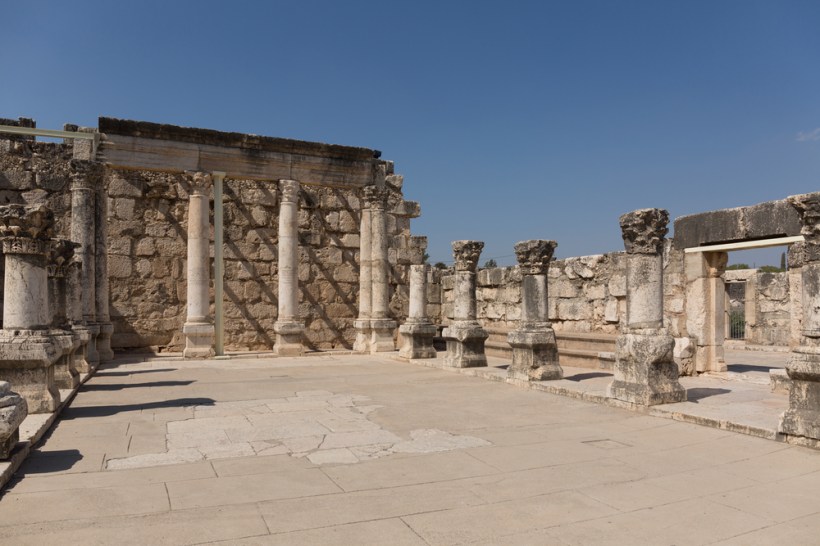
Picture this: Jesus walks into the church (synagogue) where he grew up. Everyone knows him well because he grew up among them. Nazareth was a small town, and everyone knew everything about everyone.
Jesus was visiting a church where he had grown up and studied Torah. He was still very much part of the religious community as an adult. When he attended church/synagogue on that Saturday morning and stood up to read, he was doing what he had likely done done before. Only this time would be different.
Jesus had been making quite the stir lately. His cousin, John the Baptist, was well-known for his unrelenting, uncompromising message about the coming of the one – the Messiah – and word undoubtedly spread fast when John baptized Jesus and announced that he was it! (Luke 3:4-6)
Prepare the way for the Lord, make straight paths for him. Every valley shall be filled in, every mountain and hill made low. The crooked roads shall become straight, the rough ways smooth. And all people will see God’s salvation.
Cousin John was literally quoting Isaiah 40:3-5 as if it were coming true right there in the countryside, outside of town where he spent most of his time. Crowds of people made their way out to hear him, but he wasn’t very popular among the church leaders. In fact, they rather despised him, and the feeling seemed to be mutual. He even called them a “brood of vipers”!
Until recently, Jesus seemed more respectable than that. Though they were cousins, it wasn’t like they spent a lot of time together. They were each keenly devoted to their Hebrew lessens, Bible reading, and participation in synagogue life from a young age, but John always seemed a little off, and he especially seemed to “go off the rails” as he got older.
John the Baptist was out there in the countryside calling for all who would listen to repent, He was baptizing people. Lots of people. He was attracting quite the crowd, and kept talking about the Messiah. Hi I’m
It wasn’t like John was the only one. Other men claiming to be the Messiah had come and gone. Not that John claimed himself to be the one. That was the crazy part: he lived like a homeless person, eating bugs and shunning even the modest comforts that most people had become used to. He didn’t exalt himself. His focus was always on someone else – someone greater than he.
John was attracting a less than reputable crowd too, including tax collectors. Tax collectors were sell-outs to the Roman occupiers, collecting Roman taxes from their own people, often collecting more than they should to line their own pockets. They were an unsavory and despised lot – worse than the Romans because they preyed on their own people.
The fact that John was attracting tax collectors didn’t speak well for his efforts, but the common people loved John anyway. They practically worshiped him. This was particularly galling to the faithful leaders in the synagogues who had given their lives in service to the Lord. Who did he think he was?!
They view John, no doubt, like the other so-called modern prophets who came and went, claiming to be the Messiah spoken of old. They stirred up crowds of disgruntled and marginalized Jews for a short time before the Romans got tired of the charade and put an end to it.
John seemed just like the ones who came before him, though his message was different. He was bold like the others, but in a different way. He wasn’t stirring people up against the Romans, like the others did. In fact, John seemed more interested in criticizing the religious community than the Romans, and that irked them to no end.
When Jesus attended synagogue that day, the word was all over Galilee that Jesus had gone out to meet John. It was apparently quite a meeting by the reports that were circulating. Jesus even let John baptize him. In fact, he insisted on it, and this is where things got a little sideways.. if you could believe the reports.
People said they heard a loud voice. Some said it was the voice of God. Others said they saw a dove swoop down and land right on his head. People were saying Jesus was a prophet. Some seemed to think he was the Messiah that John was talking about. It seemed like Jesus was getting caught up in John’s delusion, and he was starting to believe it.
When Jesus stood up to read that day, these things were going through the minds of the people who heard him read. They knew something was up, but they weren’t at all prepared for what he was going to do.
Ritual Baths along Way of the Patriarchs or Way of the Fathers. The name is used in biblical narratives that it was frequently traveled by Abraham, Isaac and Jacob. Samaria, Israel
I am reading through the Bible again this year, but I am reading it in chronological order using the You Version Bible app. I am not sure how old I was when I realized that the books of the Old Testament are not in chronological order and that events in one book overlap events in other books. But that isn’t the point of this blog piece.
I am in Leviticus right now. The struggle is real! So many laws! So many times the text goes over the same things, or so it seems, but I am trying to maintain focus, and I am asking the Spirit for help in understanding what is going on, what God is saying, what He is foreshadowing, etc.
The last couple of days I have been reading the instructions for all the various types of offerings (animal sacrifices if we want to be blunt), and I have just gotten into laws for ceremonial cleansing for various “leprosies” and other “unclean” conditions. It can seem so mundane, archaic, maybe even naive and unenlightened to a modern mind.
For instance, it doesn’t take too long to figure out that all kinds of skin conditions were labeled leprosy. When we read in the English Standard Version about leprosy in houses, we realize that it’s probably talking about mold. (Some translations call it mold in fact.) The vocabulary and understanding of the Bronze Age mind was limited. It’s no wonder the Richard Dawkins of the world, reading these passages with a 21st Century mind, scoff at first blush.
But, underneath that temptation to scoff is a heavy dose of pride and lack of appreciation for what God is doing in the information and instruction that He was inspiring Moses to write in these passages. God was speaking to them in their language and according to their understanding to set the stage for a global plan that would be unveiled over many centuries and millennia that, even now in the 21st Century, is unfolding and being revealed.
Jesus is the key that unlocks the door to the Old Testament Scriptures.
I don’t claim to have all the answers or all the insights, though I am reminded of the words of Jesus to the Pharisees: “You study the Scriptures diligently because you think that in them you have eternal life. These are the very Scriptures that testify about me, yet you refuse to come to me to have life.” (John 5:39-40) For the scoffer, Jesus might have said, “You don’t study the Scriptures because you think that they are mythical superstition that has no life. Those Scriptures testify about me, and you refuse to come to me to have life!”
Jesus is the key that unlocks the door to the Old Testament Scriptures. But, I still struggle sometimes to find the relevance, significance or meaning in some of these passages. I’ll be honest. I am sure I’m not alone.
One thought comes back to me today as was I reading about the ceremonial cleansing rituals. A thought that goes back many years, but with a new twist today. It has occurred to me before that many of the cleansing laws, laws about what animals they can eat and not eat, and so on, acted like in place of our modern knowledge of germs, disease and other health dangers that the people in that time simply didn’t know. I have long been struck by that thought, but I had never made the additional connection that strikes me with significance today.
This blog post is inspired by today’s sermon where I go to church. The sermon was the last in a series about how followers of Christ are called to have an impact on the world. The text is out of Matthew, known as the Sermon on the Mount:
“You are the salt of the earth, but if salt has lost its taste, how shall its saltiness be restored? It is no longer good for anything except to be thrown out and trampled under people’s feet. You are the light of the world. A city set on a hill cannot be hidden.” Matthew 5:13-14 ESV
The themes here are salt and light. God calls His people to be salt and light in the world. These should be familiar concepts, but it always helps to dive a little deeper into the things we think we already know, and it doesn’t hurt to be reminded and encouraged to live them out.
I will preface my thoughts with a personal story I have told before. In high school and college, I found in myself a yearning to go off in the woods and retreat from society. That feeling might have been originally inspired by reading My Side of the Mountain when I was in grade school.
My Side of the Mountain was about a young boy who left his home for the woods of the Catskill Mountains where he took up residence in a hollow tree. He fended for himself in the quiet and solitude of nature, taming a peregrine falcon in the process, in a very idealistic depiction of life alone in the Eden of nature.
You probably won’t be surprised to know that I was very drawn to Henry David Thoreau. That kind of contemplative life lived alone in the peace and abundance of the outdoors was alluring to me. Even after I became a believer in college, my personal dream included peace, quiet, solitude and nature.
I am still drawn to that, but God took me through a college class in which I realized that God was calling me to the noise, bustle and busyness of society – despite my reluctance. It seemed like a personal paradigm shift to me, and it was; but it really wasn’t as profound a revelation (or shouldn’t have been) as it seemed at the time.
I won’t bore you with the details here, but I realized that I couldn’t (and shouldn’t) run from the encroachment of “civilized” society on that idyllic vision of personal utopia. I needed to turn and face it. I realized God was calling me to engage the world and not run from it.
Throughout history, religious believers of various kinds formed groups that cloistered themselves from the world. From monasteries to modern communes, the tendency to want to run from the grit and grime and dirt of humanity and human institutions is a strong idealist and religious theme, but not one, it seems, God wants most of us to pursue.
That is because He calls us to be salt and light.
As I listened to the sermon today, it dawned on me that salt is only effective when it comes in contact with food. It’s purpose in drawing out the flavor of food and in preserving it can only be realized when salt is in close contact with it. Salt can’t flavor or preserve food it doesn’t touch. Continue reading “On Being Salt (and Light) in the World”→