God’s Plans Are Bigger than We Often Perceive, and He is Working Them Out Sometimes Despite Us

God promised Abraham, “In you all the families of the earth shall be blessed”.

In the service this morning, the message was about Joseph. As often happens, I saw something I hadn’t seen before. The depth and nuance and intricate tapestry that is Scripture often works that way.

I will get to the point, but first, I need to build the backstory. Most readers know of Joseph, so I will be brief. Joseph was the youngest of the 12 sons of Jacob. Jacob was the son of Isaac, the famous son of Abraham. Abraham was the man of faith to whom God gave the following promise:

Go from your country [land] and your kindred and your father’s house to the land that I will show you. And I will make of you a great nation, and I will bless you and make your name great, so that you will be a blessing. I will bless those who bless you, and him who dishonors you I will curse, and in you all the families of the earth shall be blessed.” (Gen. 12:1-3 ESV)

I added the emphasis and will come back to it. In the meantime, we need to recall that Joseph was betrayed by his brothers, who were jealous of him. They plotted to kill him and left him for dead in the bottom of a well.  He was “rescued” by a passing caravan that sold him into slavery in Egypt.

We could say much about the story of Joseph, but I want to fast forward. Joseph’s life teetered on the edge of utter desperation. He experienced a series of very high highs and very low lows. God ultimately blessed Joseph and elevated him to the second most powerful position in Egypt because of Joseph’s faithful use of the gifts and wisdom God gave him.

Many years after his brothers left him for dead, Joseph superintended a massive grain storage plan for Egypt that positioned his “adoptive” country to weather a long, severe famine and provide food for all its people and other nations besides. That same famine prompted his brothers to travel to Egypt when they were on the verge starvation and desperation.

When they arrived and got inline to buy grain, they had no idea they were appearing before their brother, Joseph, but Joseph recognized them and asked them to go back to Canaan and bring his father, Jacob, back down to Egypt with them.

Joseph’s brothers, his father and the whole tribe returned to Egypt. When they returned and finally realized the powerful man who sent them for their father was Joseph, they were ashamed. They also feared retribution against them for their betrayal, but Joseph was gracious and gave them favorable living conditions until Jacob died.

This is the point of the story that was addressed in the service today. Joseph’s brothers were fearful, still, that he held a grudge after Jacob died and would pay them back for their betrayal. (Gen. 50: 15) They didn’t immediately go to Joseph. Instead, they sent a message to Joseph containing instructions their father, Jacob, gave them to say to Joseph: “’I ask you to forgive your brothers the sins and the wrongs they committed in treating you so badly.’” (Gen. 50: 17)

Much could be said about the fact that they sent their father’s instructions to them, rather than their own, delivering own, heartfelt message to their brother, Joseph, but this story isn’t about them. It’s about Joseph.

“Don’t be afraid. Am I in the place of God? You intended to harm me, but God intended it for good to accomplish what is now being done, the saving of many lives. So then, don’t be afraid. I will provide for you and your children.” (Gen. 50:19-21 ESV) (Emphasis added)

Continue reading “God’s Plans Are Bigger than We Often Perceive, and He is Working Them Out Sometimes Despite Us”

Justice in Messianic Prophecy

Behold my servant, whom I uphold, my chosen, in whom my soul delights; I have put my Spirit upon him;  he will bring forth justice to the nations.

I have written much over the last two years on the subject of justice in Scripture. I don’t think I have done the subject justice (pun intended), so I continue to find the rights words, the right perspective and seek better understanding of God’s heart for justice as it is revealed in Scripture.

John the Apostle tells us that God is love, and the Psalmist says that justice and righteousness are the foundations of His throne. Certainly God’s love, justice and righteousness are closely intertwined.

When Jesus read from the Isaiah scroll in the temple and said it was fulfilled by him in the presence of the people who heard him, the passage he read was full of images of justice (Luke 4:18-19 (reading from Isaiah 58:6; 61:1-2)):

“The Spirit of the Lord is upon me,
    because he has anointed me
    to proclaim good news to the poor.
He has sent me to proclaim liberty to the captives
    and recovering of sight to the blind,
    to set at liberty those who are oppressed,
to proclaim the year of the Lord’s favor.”

The reading from the Isaiah scroll is a theme to which I return often

We could read this passage to mean that Jesus came to preach to those who are poor (in spirit), to proclaim liberty to the captives (in spirit), recovering of sight to the (spiritually) blind and to set at liberty those who are oppressed (spiritually). I don’t think that is an inaccurate way of interpreting what Jesus said. Jesus often used figurative language for spiritual realities and principals.

It isn’t the only way to read those words, of course. Indeed, throughout the rest of his life, Jesus healed people, gave sight to the blind, opened the ears of the deaf, set free those who were oppressed, raised people from the dead and met the physical needs of people as he traveled around preaching the good news.

Thus, I believe Jesus meant those words to have dual meanings. He was concerned about the spiritual condition of people. We might even say he was primarily concerned with spiritual well-being, but he met people at the point of their physical circumstances and conditions.

Listen to the testimonies of people, and you will find the spiritual and the physical are intertwined. Jesus still meets people at the point of their circumstances and physical, emotional and spiritual needs.

The physical needs and difficult circumstances (perhaps) a metaphor for the more critical and ultimately more important spiritual infirmity, but they are a reality that elevates and underscores the need for more holistic resolution. Without the difficulties in our lives, we might never perceive the need for that resolution

Many are the people who only want the physical healing and not spiritual healing. At the same time, the physical infirmities of a person can be so overwhelming and demanding that a person can hardly recognize the spiritual need.

Regardless of the interrelationship, Jesus addressed both the physical needs and spiritual needs of people. Justice and righteousness are God’s foundation. They are front in center in the Messianic message that foretold the coming of Jesus:

“Behold my servant, whom I uphold, my chosen, in whom my soul delights; I have put my Spirit upon him;  he will bring forth justice to the nations. He will not cry aloud or lift up his voice, or make it heard in the street; a bruised reed he will not break, and a faintly burning wick he will not quench; he will faithfully bring forth justice. He will not grow faint or be discouraged till he has established justice in the earth; and the coastlands wait for his law.”

Isaiah 42:1‭-‬4 ESV

Jesus is the fulfillment of the promise God made to Abraham. God’s promise to Abraham was a promise to all the nations (Gen. 12:2-3):

“I will make you into a great nation,
    and I will bless you;
I will make your name great,
    and you will be a blessing.
I will bless those who bless you,
    and whoever curses you I will curse;
and all peoples on earth
    will be blessed through you.”

Embedded in Isaiah’s Messianic prophecy was this promise to Abraham: “he will bring forth justice to the nations…. he will faithfully bring forth justice. He will not grow faint or be discouraged till he has established justice in the earth; and the coastlands wait for his law”.

Justice is a theme that runs through the prophets and is directly and intimately connected to Messianic prophecy. We see the Messianic character of justice in Jeremiah also:

“In those days and at that time I will cause a righteous Branch to spring up for David, and he shall execute justice and righteousness in the land. In those days Judah will be saved, and Jerusalem will dwell securely. And this is the name by which it will be called: ‘The Lord is our righteousness.’

Jeremiah 33:15-16 ESV

Jesus, of course, has become our righteousness, as the prophet foretold. He also executes justice. Justice, in the biblical sense, is not simply punishment or retribution. Justice is redemptive. It goes hand in hand with righteousness. As followers of Jesus, we are called to participate in righteousness and justice as components of the Messianic purpose of God.

On the Willows There

One of the most hauntingly beautiful songs ever written and recorded is On the Willows from Godpsell, the musical. Take a moment to listen to the song and the words.

The song lyrics are found in Psalm 137 from the Hebrew Bible and the Christian Old Testament:

“By the waters of Babylon, there we sat down and wept, when we remembered Zion. On the willows there we hung up our lyres. For there our captors required of us songs, and our tormentors, mirth, saying, ‘Sing us one of the songs of Zion!’ How shall we sing the Lord’s song in a foreign land?”

Psalm 137:1‭-‬4 ESV

The Psalm is a communal lament of the exiled people of Abraham’s ancestry in Babylon yearning for Jerusalem in their homeland. The rivers of Babylon are the Tigris and the Euphrates and their tributaries.

As I meditate on these things, I find it ironic that the region of the Tigris and Euphrates are thought to have been the location of the Garden of Eden. When the Psalm was written, the area was governed by Nebuchadnezzar II, the most powerful ruler in the known world at the time, who had sieged Jerusalem, captured its inhabitants, and driven them to Babylon.

The song captures beautifully the sorrow and longing of a people who had recently lost their homes and all that was familiar to them. Not just their homes, but their way of life, their safety and security, their community, their culture, their ancestral roots, and their spiritual sanctuary – the Temple. Everything they valued most highly was lost in the exile, even their purpose and reason for living.

Jerusalem was the gem of the land God had promised to their ancient father, Abraham. Abraham had wandered from Ur, not far from Babylon, at the direction of God over one thousand miles to a “land God would show him”, a land God promised for his descendants.

Several generations after Abraham, his descendants were forced by famine to find refuge in Egypt where they were initially welcomed with open arms. They were eventually enslaved there for the ambitions of the Egyptian Pharaohs. They labored there, captives in slavery, for approximately 400 years.

Through a miraculous series of events, Moses led them out of Egypt and out of the grasp of their captors. They wandered 40 years through desert regions between the land of their former captivity and the land God promised many, many generations earlier to Abraham. God lead them by cloud during the day and by fire at night.

When they finally arrived in the land God promised so many years earlier, a land flowing with milk and honey, it was a homecoming of epic proportions. They lived and flourished there for many generations and centuries.

They were able to fend off the surrounding threats and to establish an Eden of sorts for themselves. Their safety and security that allowed them to construct a grand Temple where they could commune intimately with their God who rescued them out of slavery and delivered them to the promised land.

But all was not well in this Eden. Much like the first Eden, choices were made that ran counter to the designs and intentions for their wellbeing.

Through the Prophets, we learn that they became complacent in their comfort and abundance. They forgot the God who rescued them and delivered them into the land and gave themselves to idols. They stopped doing justice among one another, and they became as corrupt, wicked and evil as the nations that were driven out of the land before them.

This cycle of Edenic living, exile, longing, deliverance, redemption, Edenic living, exile and longing is the story of humankind. The exile is long and the yearning for Eden is great.

Continue reading “On the Willows There”

From the Image of God to the Likeness of God: from the Old Self to the New Self

In Genesis 1:27, we learn that God created human beings in His image:

God created mankind in his own image,
    in the image of God he created them;
    male and female he created them.

In his letter to the Ephesians, Paul urged them (and us),

to put on the new self, which in the likeness of God has been created in righteousness and holiness of the truth.

Ephesians 4:24

Thousands of years have passed between those two statements. God has been working out His purposes in the heavens and the earth from before the beginning. Creating man in His image and establishing man in His likeness has been central to that purpose.

Reading the words of Paul in Ephesians, which clearly echo the description of God’s creation of human beings, got me thinking about the difference between the image of God that was built into human beings from the start and the “new self” that Paul urges us to put on that is created in the likeness of God.

What is the image of God in which we were created?

What is the likeness of God that we must put on? (A new self created in righteousness and holiness)

Why must we put on a new self created in the “likeness of God” when human beings have already been created in the “image of God”? What is the difference between the two?

I try not to lean on the assumptions that come first to mind when approaching Scripture. I often go back and work through a text looking for things I haven’t seen before. As I write this, I don’t know exactly what I will find. I was intrigued by the echoes of Genesis in Paul’s words to the Ephesians and prompted to dig into them freshly.

Continue reading “From the Image of God to the Likeness of God: from the Old Self to the New Self”

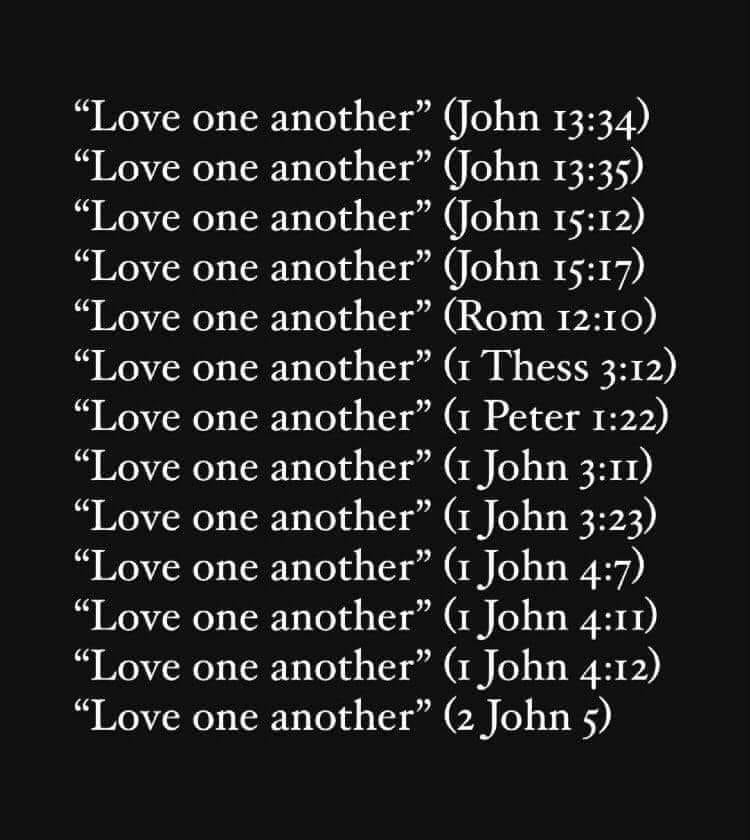
How Important is Love in Your Theology?

Where does love come from?

Tina Turner sang, “What’s love got to do with it?” We might ask that question about theology. We might even ask that question about life, itself!

Most people, I think, would say that love has a lot to do with life and theology. Or, at least, it should!

What does the Bible say? Does it affirm that intuition? The answer is clear that the Bible affirms that intuition of the importance of love ins spades!

What is love?

“Love is patient and kind; love does not envy or boast; it is not arrogant or rude. It does not insist on its own way; it is not irritable or resentful; it does not rejoice at wrongdoing, but rejoices with the truth. Love bears all things, believes all things, hopes all things, endures all things.” (1 Corinthians 13:4-7)


“This is love, not that we have loved God but that he loved us and sent his Son to be the propitiation for our sins.” (1 John 4:10)


“Greater love has no one than this, that someone lay down his life for his friends.” (John 15:15)

What is the source of love?

“[L]ove is from God”

1 John 4:7


“God is love.”

1 John 4:16

How important is love in the Bible?

“So now faith, hope, and love abide, these three; but the greatest of these is love.”

1 Corinthians 13:13

The supreme importance and place of love in Scripture reveals that love could not more more important or prominent in our theology! Any theology, therefore, that is light on love is light on truth.