
Jonathan Haidt and the Erosion of American Democracy by the Corrosive Waters of Social Media

Something went terribly wrong, very suddenly. We are disoriented, unable to speak the same language or recognize the same truth.

Courthouse Towers and Tower of Babel. Moab, Utah

Jonathan Haidt wrote this week in the Atlantic, “The story of Babel is the best metaphor I have found for what happened to America in the 2010s, and for the fractured country we now inhabit.” He says,


“Something went terribly wrong, very suddenly. We are disoriented, unable to speak the same language or recognize the same truth. We are cut off from one another and from the past.”

I resonate deeply with this.

Haidt observes that we are “becoming like two different countries claiming the same territory, with two different versions of the Constitution, economics, and American history.” Many people talk about the tribalism of our times, but Haidt suggests that tribalism isn’t the most accurate description of what is going on. Haidt finds the clearest understanding of the polarization of our times in the story of the Tower of Babel:

“Babel is not a story about tribalism; it’s a story about the fragmentation of everything. It’s about the shattering of all that had seemed solid, the scattering of people who had been a community. It’s a metaphor for what is happening not only between red and blue, but within the left and within the right, as well as within universities, companies, professional associations, museums, and even families.”

Haidt focuses blame on social media. He identifies 2011 as “the year humanity rebuilt the Tower of Babel” with Google Translate symbolically bridging the confusion of different languages. He says (for “techno-democratic optimists”), “[I]t seemed only the beginning of what humanity could do.”

Around the same time, Zuckerberg proclaimed “the power to share” a catalyst to transform “our core institutions and industries”. He may have been prophetic, but I doubt he envisioned such a corrosive change.

Haidt, something of a social scientist, himself, says, “Social scientists have identified at least three major forces that collectively bind together successful democracies: social capital (extensive social networks with high levels of trust), strong institutions, and shared stories.” Social media substantially weakens all three of these fundamental building blocks of a cohesive society.

It started harmlessly with the sharing of personal information to stay connected, but it quickly morphed into a kind of personal performance and branding platform. Along the way it developed into powerful weaponry at the fingertips of anyone and everyone at once.

The “Like” and “Share” buttons became commodities of individual enterprise and personal combat. Algorithms exposed (and exploited) the emotional currency of heightened individuality and the power of anger.

“Going viral” fed the hopes of Internet junkies like the possibility of a jackpot snares gambling addicts in its steely fingers, and the stakes were just as high. Haidt says, “The newly tweaked platforms were almost perfectly designed to bring out our most moralistic and least reflective selves. The volume of outrage was shocking….” The rapidity and its ability to spread was more virulent than COVID, or the plague.

Haidt lauds the framers of the Constitution for designing a republic built on “mechanisms to slow things down, cool passions, require compromise, and give leaders some insulation from the mania of the moment….” Haidt recalls Madison’s warning of “the innate human proclivity toward ‘faction’” so “inflamed with ‘mutual animosity’” that people are “more disposed to vex and oppress each other than to cooperate for their common good.’”

Haidt recalls also that Madison warned of a human tendency toward “factionalism” that can fan “the most frivolous and fanciful distinctions” into passions that ignite our most violent conflicts. Social media has ultimately proven him right.

Thus, Haidt says, “Social media has both magnified and weaponized the frivolous,” chipping away at our trust. The loss of trust makes every decision and election “a life-and-death struggle to save the country from the other side”.

The sagging number of people who have faith in their elected officials hangs at an all time low. In my lifetime, the United Sates of America has gone from a high of 77% trust in the federal government (1964) to a low of 17% in 2019. (See Public Trust in Government: 1958-2021, by PEW Research May 21, 2021)

Social media has corroded trust in government, news media, institutions and people in general. Some claim that social media may be detrimental, maybe even toxic, to democracy, which requires “widely internalized acceptance of the legitimacy of rules, norms, and institutions” for survival. “When people lose trust in institutions”, says Haidt, “They lose trust in the stories told by those institutions.”

Insiders have been warning us of “the power of social media as a universal solvent, breaking down bonds and weakening institutions everywhere”, while offering nothing in return but the chaos of utter freedom and will. Haidt references movements like Occupy Wall Street, fomented primarily online, that “demanded the destruction of existing institutions without offering an alternative vision of the future or an organization that could bring it about”.

We have become a society of “people yelling at each other and living in bubbles of one sort or another”, says former CIA analyst Martin Gurri, in his 2014 book, The Revolt of the Public. The people behind the social media giants may not have intended such a result, but they have “unwittingly dissolved the mortar of trust, belief in institutions, and shared stories that had held a large and diverse secular democracy together”.

Haidt claims he can pinpoint the proverbial fall of the American Tower of Babel to the intersection of “the ‘great awokening’ on the left and the ascendancy of Donald Trump on the right”. Haidt doesn’t blame Trump for the fall; he merely exploited it. Trump proved that outrage is the currency of the post-Babel economy in which “stage performance crushes competence” and Twitter overwhelms newspapers and the nightly news, fracturing and fragmenting the truth before it can spread and take hold.

“After Babel”, Haidt says, “Nothing really means anything anymore––at least not in a way that is durable and on which people widely agree.” Haidt is particularly morose on the prospect of overcoming the rapid dissolution of the American democracy. Unfortunately, I share his pessimism. How did we get here? How do we move forward?

Continue reading “Jonathan Haidt and the Erosion of American Democracy by the Corrosive Waters of Social Media”

The Danger of Religiosity, Political Expediency and the Weight of the Cultural Moment

We can be so caught up in our own lives and the world around us that we fail to recognize the God who gave us life and created the world.

I have been reading through the Gospel narratives leading up to the death and resurrection of Jesus during Lent. My reading included the following passage that jumped out at me:

“Then they led Jesus from the house of Caiaphas to the governor’s headquarters. It was early morning. They themselves did not enter the governor’s headquarters, so that they would not be defiled, but could eat the Passover.” 

John 18:28 ESV

I will get the point, but first we need to build in a little context. This passage describes a passing moment leading up to the crucifixion after Judas betrayed Jesus in the garden. Jesus was taken, first, to the palace of Annas (John 18:13) and then to Caiaphas, the Jewish High Priest. (John 18:14)

After Caiaphas questioned Jesus, Jesus was taken to the Roman governor, Pontius Pilate. The High Priest wanted Jesus put to death for blasphemy, but only the Roman state had authority to impose capital punishment.

Caiaphas was the High Priest who presided over the Sanhedrin, the official religious body recognized by the Romans. Caiaphas was made the High Priest by the Roman procurator Valerius Gratus. Annas, the father-in-law of Caiaphas, had presided over the Sanhedrin before Caiaphas.

They were the official heads of the ruling group of religious leaders in First Century Judea in the time of Jesus, the Sanhedrin. They stood between the Romans, who conquered and controlled the region, and the Jewish people on matters of the Jewish religion.

During this tumultuous time, a group of violent men, the Zealots, who were opposed to Roman rule threatened to upset the political balance and peace. Similarly, the growing, unpredictable following of Jesus posed a threat to the Sanhedrin’s position as trusted middlemen trying to preserve peace and the status quo.

Potential disruption threatened the delicate balance. The Sanhedrin tried to walk the line between the threat of the Roman Empire on the one side and the Zealots and others who might provoke the Romans to tighten their grip on Judea, dismiss the Sanhedrin from their power position, and clamp down on the freedoms of the Jewish people they ruled.

Tensions were not just a threat to the Sanhedrin, who were officially given some overlapping authority the Romans; they were legitimately a threat to the well-being of all the Jews in Judea. Thus, we read in John that Caiaphas advised “advised the Jewish leaders that it would be good if one man died for the people”. (John 18:14)

The suggestion was based on practical expediency. Though Jesus wasn’t a Zealot, he was very popular among the people, likely including the Zealots who hoped Jesus would spell the end of the Roman occupation.

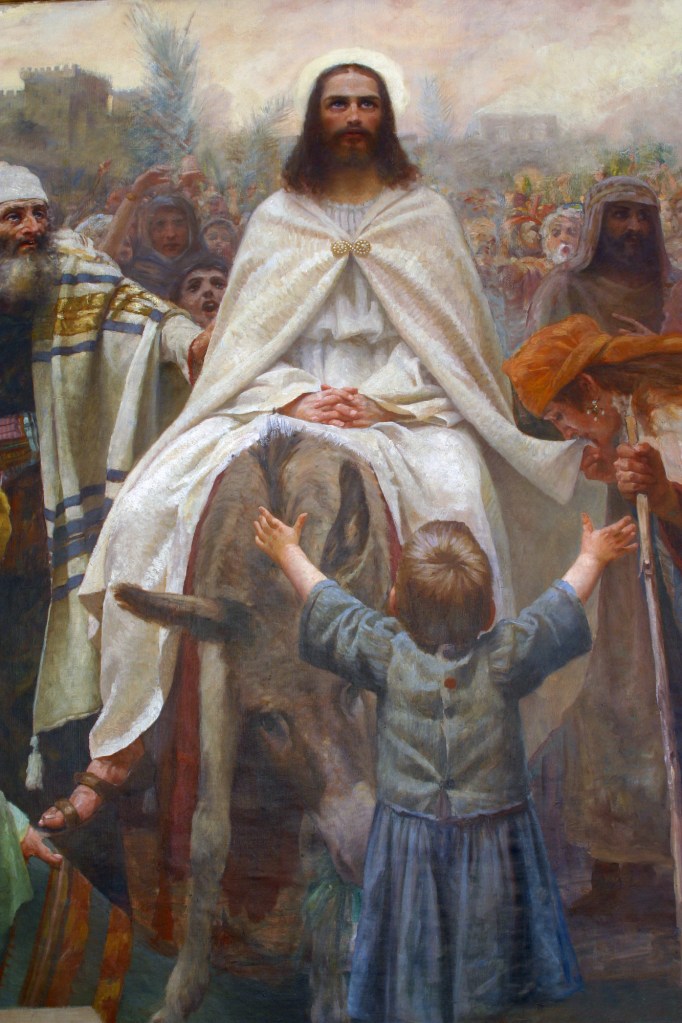
The concerns of the religious leaders were no doubt heightened to a critical level when Jesus came riding into Jerusalem on a donkey in triumphant celebration greeted by a “great crowd” that lined the streets, waiving palm branches and shouting,

“Hosanna!…. Blessed is the king of Israel!”

John 12:12

I am going to get to the danger of religiosity, political expediency and the weight of the cultural moment as the title to this article promises. First, however, I want to develop the backstory a bit further. To do this, we need to jump forward several months in time.

Continue reading “The Danger of Religiosity, Political Expediency and the Weight of the Cultural Moment”

The Group Affiliations the Apostles Had and What It Might Mean for Us

When I look at American expressions of Christianity today, I wonder if we demonstrate the right way to follow Jesus.

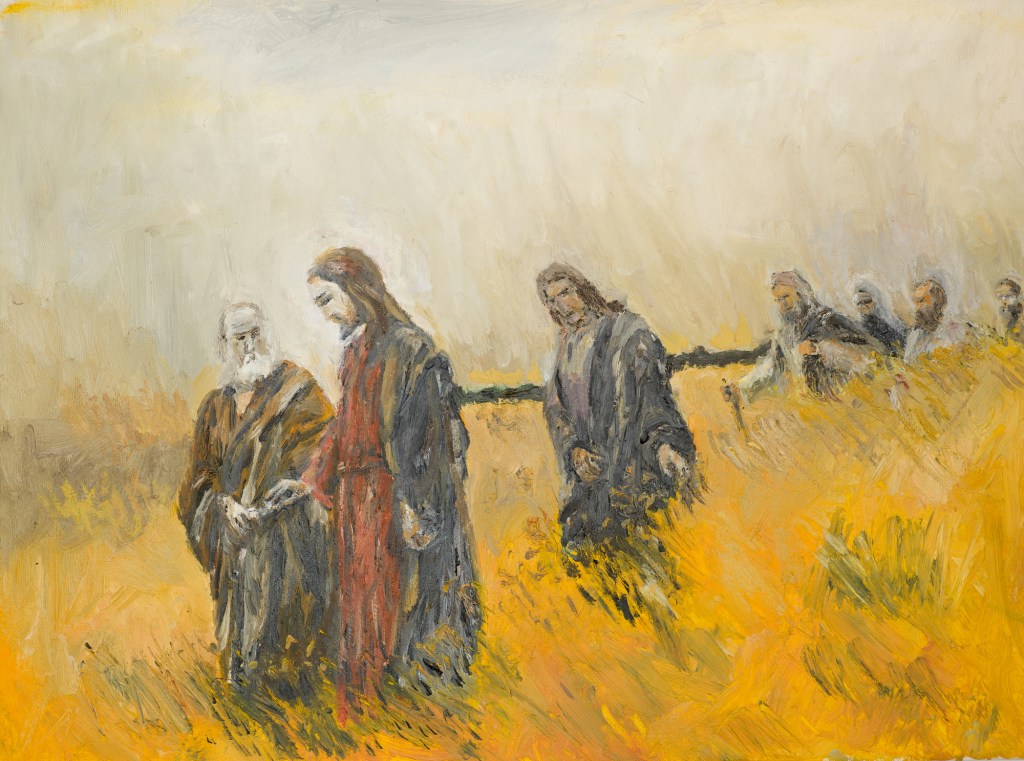
Oil painting illustrating Jesus Christ and his disciples on a meadow

I have spent some time lately considering the various influential groups of people in the time of Jesus and the orientation of those groups toward Jesus. I have wondered why Jesus seemed to pick on the Pharisees more than the other groups, especially since they seemed most aligned with him and had the most in common with him.

As I researched and thought about the various groups of Jewish influencers in the First Century in relation to Jesus, I began to think about the apostles, and their connections to these groups. I am always mining for insight as I read Scripture, and today my mind turns toward the relationship of the twelve apostles to those same groups of First Century, Jewish influencers.

We don’t know much about the background of the twelve disciples, except that most of them were “common” men of generally humble means. One disciple was identified with the Zealots (Simon, the Zealot, also known as Simon the Canaanite). Matthew, the tax collector, might have been Herodian (or may have been viewed as one).

We really don’t know about the group affiliation of the other disciples, at least not from the explicit text. They seem to have been ordinary people with no distinct association with particular groups. They did not seem to be closely associated with any of the five groups Jewish leadership groups in First Century Judea.

Even Simon, who is known as the Zealot, probably left his group behind to follow Jesus. Just as Matthew left behind his livelihood (tax collection) to follow Jesus. Of course, Simon (Peter) and Andrew dropped their fishing nets to follow Jesus, as did the brothers, James and John. It’s no stretch, therefore, to imagine that Simon, the Zealot, would have similarly “dropped” or left behind his affiliation with the Zealots to follow Jesus.

In fact, the theme of leaving behind your group seems to run throughout the teaching and example of Jesus. Jesus said, “[E]veryone who has left houses or brothers or sisters or father or mother or children or lands, for my name’s sake, will receive a hundredfold and will inherit eternal life.” (Matt. 19:29)

He called Peter and Andrew and James and John away from their profession of fishing. He called Matthew, the tax collector, away from his profession of tax collecting. I think it’s fair to assume that Jesus called Simon, the Zealot, away from the Zealots to follow him.

The theme of leaving behind family, livelihood and group identity runs deep in Scripture, all the way back to Abram (as Abraham was originally known) when God called Abram to leave his country, his people, and his father’s household and go to the land God would show him. (Gen. 12:1)

Hebrews 11 commends Abraham for the example of faith demonstrated in responding to God’s call and leaving behind the familiarity of all the things that typically identify people and their place in the world. Abraham and all the people of faith commended in Hebrews 11 demonstrated a kind of faith that made them “aliens and strangers on earth”.

Jesus called the rich young ruler to walk away from his wealth. (Matt. 19:16-30) Jesus told Nicodemus, the Pharisee, that he would have to be born again to see the kingdom of God. (John 3:3) Nicodemus was born into an enviable position in his community and may have winced at the thought of needing to be “born again”.

The kingdom of God is something I have been mulling over for many weeks, and months. It’s a theme I have written about often lately, and it has occupied a prominent place in my meditations lately.

The five main groups of Jewish influencers in the First Century had one thing in common – they were operating on a spectrum of influential relationship to the political structures and religious structures in their world. They were invested and embedded into their positions, and identities, with the people with whom they affiliated – like the partisanship and critical group affiliations we have today.

Along came Jesus, however, and he called people “out of the world”. (John 15:18-19) Jesus called people to leave their lives, and identities, and associations behind to follow him. I believe he is still calling people to the same allegiance today.

We don’t know much about the backgrounds and affiliations of the twelve disciples, perhaps, because they did just that. They left those things behind to follow Jesus. They became known, simply, as disciples of Jesus. They were, simply, Christ followers.

I am interested in these things because of what it means for us. If we would be disciples of Jesus and Christ followers, how do these things translate to our lives in the 21s Century?

Continue reading “The Group Affiliations the Apostles Had and What It Might Mean for Us”

Jesus Among the Religious and Political Groups of His Time

This is a companion piece to the last article I wrote and published: Why Did Jesus Pick on the Pharisees So Much? The former article was inspired by 40 years of observation that Jesus was harshly critical of the Pharisees. His treatment of them virtually jumped off the pages at me when I first read the Gospels in college.

The Pharisees, though, were only one of the influential groups of Jews in First Century Judea. We see some evidence of Jesus rubbing shoulders with the other groups, but not nearly as much as Jesus engaged the Pharisees.

We might be tempted to assume that the Pharisees were particularly wicked and sinful – far more than the other groups Jesus encountered – but that isn’t so. Jesus was most like the Pharisees, and they were most like him in their theological leanings and in the social circles in which they operated.

For that reason, I focused in my last article on the question: why was he so harsh towards them? I could have asked: why didn’t he pick on the other groups more?

In this article, I will explore the other groups and the difference between them and the Pharisees. I will spend a little time pondering how Jesus and the twelve apostles related to these groups in the Gospel accounts and provide my own thoughts as they occur to me.

First Century Judea was broadly possessed by two groups: the Jews, of course, and the Romans. The Jews had long lived in this land that God promised their ancestor, Abraham, but the Romans were newcomers. they were recent conquerors, following the Greeks, in a long line of challengers to the Jewish occupation of the land.

The five Jewish groups represent a spectrum of relational attitudes towards the Romans and each other in their religious and not-so-religious observances, lifestyles and attitudes. I will tackle them in order of their relationship to the Romans and their religious orientation.

Continue reading “Jesus Among the Religious and Political Groups of His Time”

Why Did Jesus Pick on the Pharisees so Much?

Perhaps, we malign the Pharisees more than we should.


Have you ever noticed that Jesus engaged more with certain groups of people than with others? In the 1st century Judea, there were at least five distinct Jewish groups: the Herodians, the Sadducees, the Pharisees, the Zealots, and the Essenes. The record we have in the Gospels shows that Jesus engaged one of these groups far more than the others.

My interest in this question goes back to the very first time I read the Gospels in a college world religion class. The way Jesus focused on the Pharisees virtually leapt off the pages at me! He was brutal to them! And, that is putting it politely.

Jesus called the Pharisees hypocrites (Matt. 23:13, 15, 23, 25, 27, 29), blind guides (Matt. 23:16, 19, 24, 26), blind fools (Matt. 23:17), “white-washed tombs” that “appear outwardly righteous”, “but inwardly … full of hypocrisy and wickedness” (Matt. 23:27), and a “brood of vipers”! (Matt. 23:33)

I am not saying that Jesus didn’t engage the other groups. It’s just that he engaged one group far more than the others. The Pharisees are mentioned ninety eight (98) times in the New Testament, mainly in the Gospels.

The Pharisees were not friendly with Rome. They hoped in the restoration of the throne of David. Unlike the Zealots, who violently opposed Roman rule, the Pharisees more or less ignored Rome. They devoted themselves to God and following the Law.

Unlike the Essenes, who retreated to the desert and removed themselves from Judean community and life, the Pharisees remained in the community. Like Jesus, they remained engaged.

The religious views of the Pharisees were in opposition to the Sadducees on resurrection, the reality of supernatural and demonic activity and the authority of the Prophets. While the Sadducees were officially recognized as religious leaders by Rome, the Pharisees were religious leaders for the common people.

Though they were popularly influential, the Pharisees wielded no political influence or position. Though some Pharisees were wealthy, they were elite primarily in their religious study and devotion.

In many ways, the Pharisees were most like Jesus, and Jesus was most aligned with them in their social orientation and religious views. “They were the holy men who kept the law; they pursued purity with a passion and wanted nothing more than to live lives that pleased God. They were sincere, albeit sincerely misguided.”

So, that brings me to the question: Why did Jesus pick on the Pharisees so much? In the remainder of this article, I will give you my current answer, though I reserve the right to change it (again).

Continue reading “Why Did Jesus Pick on the Pharisees so Much?”