Does the Bible Speak to the Age of the Universe?

Will the entrance exam to get into heaven depend on your understanding of the age of the universe?

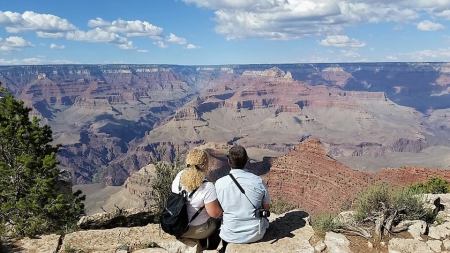
Photo by Chris A. Fraley

The age of the Earth is a hot button topic for Christians today. Science suggests that the Earth is old, but a large segment of western Christianity has put down big stakes on the claim that the Earth is young. We have to be careful here that this tension doesn’t overshadow the Gospel.

To be fair, it isn’t all western Christianity. It’s American Christianity where the age of the earth has become almost a litmus test in some circles for belief in God. But is it a good litmus test? Does the Bible speak to the age of the universe?

Frank Turek observes that we have to make assumptions when we talk about the age of the universe. (See The Bible and the Age of the Universe) For instance, when we measure the universe by the speed of light, the calculation shows that the universe is 13.8 billion years old. If we assume the speed of light has not changed since the earth was created, then the earth is 13.8 million years.

But, “Is that a good assumption?” asks Turek. What do you think? Does the Bible have answers for these kinds of questions? Read on if you want to know.

Continue reading “Does the Bible Speak to the Age of the Universe?”

The Sun Shines On Everyone

Depositphotos Image ID: 39362765 Copyright: elenathewise

The sun shines on both the evil and the good; the he rain falls on the just and the unjust. (Matthew 5:45) People often ask, “Why bad things happen to good people?” Maybe a better question is why do we live in a world that is so beautifully sustaining for life.

Why do we live in a world that is filled with beauty and blessing and good things? Yes bad things happen, but there is much good.

I think about this in the context of the revelation of Scripture. The thrust of scripture is the story of God creating us to have fellowship with us and a reciprocating loving relationship.

God made us in his own image, having a will – the ability to choose. This will God gave to us was displayed in the story of the garden of Eden and is a central theme to the story. Having the ability to choose is essential to a reciprocal, loving relationship.

How do we know that God loves us? Look at the fine tuning of the universe. The universe sits atop a razor edge of cosmic factors that are all finely tuned down to the smallest of parameters, right from the first nanosecond of the Big Bang, so that a planet like the Earth exists to support life like us.

We find nowhere else in the universe a place in which life like ours is able to flourish. (This is doesn’t man that we will never find such life, but it is safe to say that life such as what we experience on Earth is exceedingly rare in the universe, and the whole cosmos seems to be designed just so this one small planet hurtling around a small sun in a smallish solar system can sustain us.)

God created a habitation for us, a place in which we can play out our Eternal choices. A place where we can choose to love Him and, so, to enter into the purpose that was planned for us from the beginning.

Archaeology that Supports the New Testament Record

Depositphotos Image ID: 139260410 Copyright: vblinov
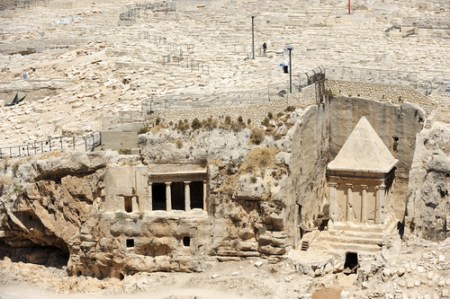
Kidron Valley and the Mount of Olives

This is the second in a two-part blog series inspired by an interview with archaeologist, Dr. Craig Evans. The first article was general in nature, focusing on people in the biblical record who are confirmed by archaeological finds, and noting that modern archaeology continues to affirm the historical reliability of the Bible. In this piece, we focus on the New Testament, which is Dr. Evans’s specialty.

Significantly, when asked whether he is aware of any archaeological finds that contradict the Gospels, Dr. Evans responded, “Where it relates to the Gospels – the Gospels talk certain people, certain places and certain events – and everywhere archaeology has any relevance that touches on it in any way, the archaeology supports what the Gospels say.” Thus, the theme continues: that modern archaeology, far from casting a shadow of doubt on the bible, shines light on it, illuminating the biblical accounts with archaeological discoveries.

Continue reading “Archaeology that Supports the New Testament Record”

No Greater Evil. No Greater Love.

The evil that we suffer is no greater than the evil God endured at the hand of His own creation


Has there ever been a greater evil in the world then this…

That God humbled himself to become one if us, divesting himself of all of his greatness and glory, to give Himself to us. The light came into the world, but the world loved darkness instead.

God became a man and came to us, and we rejected him. God presented himself to us, and we crucified him, publicly humiliated him, cruelly beat and tortured him, mocking him as he died on the cross.

Is there no greater love than this…

That God, the creator of the universe became one of us. He laid aside all of his greatness that sets Him above everything that He created and become part of His creation.

That he would do that for us, experiencing the same sorrows, the same humiliation, the same awful pain, the same rejection, the same fatigue and need for sleep and hunger and thirst as we experience – that God would stoop to become one of us and to die on a cross as a sacrifice for us to redeem us from our own sinful ways – is an unbelievable feat of love.

He did even for the sin of rejecting the very God who created us.

That God would do these things reveals to us that he works in and through a sinful, fallen, and evil world, and He uses the very darkness of the world to display His light and His love for us.

God stands above and beyond time, surveying all that is, all that ever was, and all that ever will be. He knew the time of His coming before the initial burst of the creation of the cosmos that spawned the earth and eventual life it would contain, including us.

He knew the reception He would be given. He knew the time of His dying at the hands of His creation. He knew the time of His rising from the dead, and He knows the end He has planned out for all those who receive Him.

Just as God’s light shone in the darkness of the world in the life, death and resurrection of Jesus, we can take comfort in the hope of salvation God wrought for us and the promises that await us.

Archaeology Continues to Confirm Bible Stories

While many people remain skeptical of the Bible, modern archaeological discoveries favor the historicity of the biblical record.

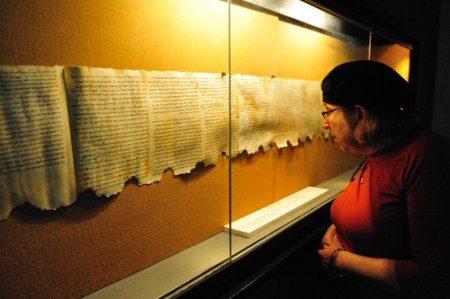
Depositphotos Photography ID: 25083325 Copyright: lucidwaters QUMRAN, ISR – DEC 14

I recently listened to an interview of Dr. Craig Evans, who wrote the book, Jesus and the Remains of His Day: Studies in Jesus and the Evidence of Material Culture. The book is described as a collection of articles demonstrating how archaeological evidence “enlightens our understanding of the life and death of Jesus and the culture in which he lived”. The interview focused on archaeology, generally, and especially on the way archaeology sheds light on the New Testament.

In this piece, I am following up on the more general discussion. When asked if he was aware of any finds that have failed to support the biblical record, Dr. Evans could not think of any. Rather, he commented that archaeological evidence is found every year that confirms the biblical record. Of particular note are the people mentioned in the Bible that archaeology has affirmed.

Continue reading “Archaeology Continues to Confirm Bible Stories”