Another Look at God In Light of the Evil in the World (Postscript)

The sufferings of this present time are not worth comparing with the glory that is to be revealed to us.

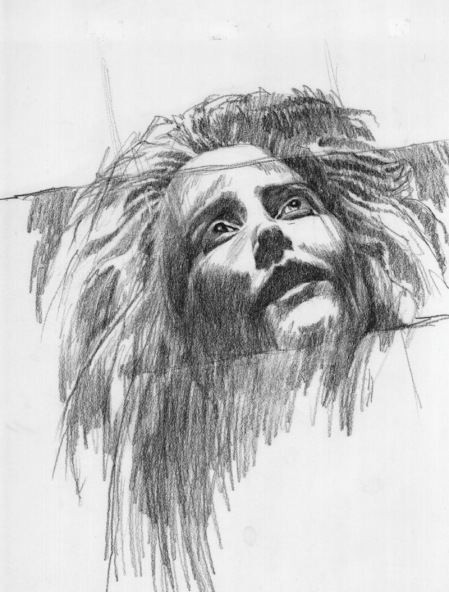
Self Portrait by Joni Eareckson Tada

This is a postscript to a series of blog posts that, frankly, could go on. It follows what was to be the conclusion of a series on the problem of evil – Another Look at God in Light of the Evil in the World (Part 4). Why does evil occur and God doesn’t prevent it? If God is God, and He is all-powerful and all-loving, why does He allow evil, pain and suffering?

I do need to bring this to a conclusion, but I have some “final” thoughts. I also have some experiences to relate: not mine, but of someone who knows pain and suffering better than I.

But first, we have to admit that, if God is God, and if He cares, and assuming He could prevent the pain and suffering in the world, why doesn’t He? It’s a legitimate question!

If Jesus didn’t rise from the dead, I believe we would not be talking about him still in the 21st Century. There would be no point in Christianity whatsoever. He would have fallen into obscurity as just another idealistic dreamer whose fate, like all the other ill-fated dreamers who ever lived, seals our doom as a people, as a species on this planet.

But if Jesus did rise from the dead, no over feat in the history of mankind is more important or more significant. We can’t just dismiss it.

Continue reading “Another Look at God In Light of the Evil in the World (Postscript)”

Another Look at God In Light of the Evil in the World (Part 4)

God is intimately acquainted with the pain and suffering we experience. The God of the cross who knows and understands our suffering can be trusted.


I have tackled the problem of evil – why is there pain and suffering in the world if God is good and all-powerful? – in a series blog posts, beginning with an introduction, followed by Part 1, Part 2 and Part 3. The impetus for the blog posts comes from the explore God discussion that was happening at over 800 churches in the Chicago area over the winter of 2019. The series of blog posts was more specifically inspired by the discussion of The Problem of Evil and Suffering on Veracity Hill between Kurt Jaros, the host, and John Peckham from Andrews University

The problem is easy enough to state, but it’s difficult to resolve, if, indeed, there is a resolution. Although not every religion maintains that God is personal, volitional, all-powerful and all-good, the problem of evil. Not every world religion faces the problem head on. Buddhism, for instance, posits that evil doesn’t really exist; it’s an illusion.

I have been exploring a Christian response to the problem, but it’s all pretty academic unless and until we are overwhelmed by evil, pain and suffering in our own lives. At the point of real evil, pain and suffering, an academic response doesn’t seem to satisfy.

Just last week, in the midst of thinking through the issues and writing the blog series, a tragedy of overwhelming proportions happened right in the city where all my kids went to school. An apparently disgruntled employee on the cusp of being fired from his 15-year position at a local manufacturing plant in Aurora, IL, opened fire on employees in the plant, killing five of them and wounding six other people, including six police officers responding to the alarm that went out. The youngest victim was a 21-year old college intern who started his internship in the HR department that day.

When a person is reeling from pain and suffering that hits close to home, especially from such a senseless, intentional and indiscriminate act of violence, the academic answers ring hollow and fall flat.

Without letting go of any of the attributes of God that are revealed in the Bible, we can work through the problem intellectually and logically to a solution, as I have tried to do in the summary that is contained in the previous blog posts. In some ways this solution is like the theory of gravity for Christianity. We can understand it, but knowing the cold, “scientific” facts are no consolation after falling off a cliff.

What remains, after we have worked through an intellectual solution to the problem, is the emotional, existential weight of the problem of evil. This is where we live. The weight of the problem of evil is hard to shake, quite frankly, when the pain and suffering becomes personal. When we come face to face with evil, pain and suffering in the world in our personal lives, an intellectual response isn’t enough.

This is exactly when people turn to religion and to God for comfort and answers…, or turn away. If all that Christianity has to offer is an academic response, what is the use?

Continue reading “Another Look at God In Light of the Evil in the World (Part 4)”

Grabbing Hold of the New Testament without Letting Go of the Old

Is there a disconnect in the way God is revealed in the Old Testament as compared to the New Testament?


I have been listening to the podcast, Ask NT Wright Anything, with host, Justin Brierley, out of the UK. It’s good to get other perspectives on any topic, as we tend to be blind to the particular bents and biases and ways of thinking that we have, not realizing that there are other ways of viewing things.

One amazing thing about Scripture is that it has been translated into over 300 languages, hundreds of more translations than any other book of any type. Though the combination of writings making up the Bible were written over a period of about 1500 years by about 40 Ancient Near Eastern authors from one concentrated area in the world, it has found universal acceptance and application, even today, nearly 2000 years after the last writing.

From Afghanistan to Zimbabwe, Australia to the West Indies, Canada to Papua New Guinea, the Congo to Russia, and El Salvador to Mongolia, the Bible has found an audience of devotees who consider it the Word of God. The Bible has resonated with virtually every people group in the world.

In western civilization, and the American version of it, in particular, we can be pretty provincial in our understanding, for all the sophistication we think we have. We have developed certain blind spots, and we get hung up in certain ruts that we don’t even realize are obstacles to a more nuanced, balanced and (perhaps) accurate understanding.

For instance, the prosperity gospel is uniquely western, and particularly American. The prosperity gospel isn’t preached in Pakistan, Sudan, Honduras or Haiti. It shouldn’t take much thought to realize the reason why. Our America view of the gospel, God and the Bible can be (and is) influenced by our cultural bents. Without the balance of other views, we can tend toward the heretical.

Another example of our cultural bent is our western and American view of the Old Testament and “the God of the Old Testament”. Most non-westerners don’t have the issues we have with “the wrath of God” and some of the passages of the Old Testament that seem unsavory to the modern sensibilities of Americans.

This doesn’t necessarily make the rest of the world “right”, but we have to realize that our views may not be perfectly “right” either. We can all benefit by views of people who have different cultural backgrounds.

American, for instance, have gotten hung up on things like the “inerrancy of Scripture” and a “fundamentalist”, literalistic view of the Bible. NT Wright talks about this often in his interviews with Justin Brierley. He notes that Americans tend to trip over details and miss “the story”.

NT Wright was recently speaking of the issues that some people have with the Old Testament, fixating on whether it is historically and factually true in every detail. In doing so, we may might never get to the story, and the meaning of the story, which is the whole point! We get stuck in a rut asking whether it is true in every detail, and, “If we can’t be sure that it is true on every point, can we really trust it?”

Continue reading “Grabbing Hold of the New Testament without Letting Go of the Old”

Inerrancy and the Spirit of the Age

Paul encountered the risen Lord Jesus in person, and that personal experience eclipsed “doctrine” and forever infused all that he knew into a living faith.


When I was in college, I was one thesis away from being a religion major. I took the thesis class, did the research and even wrote the paper. I just didn’t turn it in.

I graduated with an English Literature major. I didn’t need Religion for the double major. I wasn’t satisfied with the product, so I didn’t turn the paper in.

I’ve recalled these things before, but I haven’t really addressed the subject of that thesis paper. It was biblical inerrancy.

I recall the religion major that fell short now, and the topic that derailed it, following some comments that NT (Tom) Wright made to Justin Brierley on the podcast, Ask NT Wright Anything (episode #8, I believe).

I chose the topic, of course, but I felt I bit off more than I could chew. It turns out there may be good reason the topic was so difficult for me, a new believer at the time. NT Wright sheds some light on the subject.

Continue reading “Inerrancy and the Spirit of the Age”

To Those Who Don’t Believe in Religion

Some thoughts from a person whose friends probably consider religious who bristles at the word, religion.


A friend of mine commented recently, “I don’t believe in religion.” I agreed with him, responding, “Religion is man-made.” But part of me flinched a little bit at my own comment.

Religion is what I left when I left the Catholic Church, but religion is what I studied in college. A World Religion class led me forward on a journey that ended in my commitment to Jesus as the Savior and Lord of my life, terminology I realize that smacks of religion.

That commitment made in a particular place and time began a life-long journey of faith, of attempting to know, understand and follow a living God. Not religion, but relationship with God, the creator of heaven and earth Who “knit me together” in my mother’s womb, Who can number the hairs on my head, Who knows the thoughts and intents of my heart.

I bristle at the word, religion, but I realize my friends probably consider me religious. Ironic isn’t it.

These thoughts are triggered by reading Colossians 2:8:

“See to it that no one takes you captive by philosophy and empty deceit, according to human tradition, according to the elemental spirits of the world, and not according to Christ.”

I realize this may seem like so much religious mumbo jumbo. All the more reason to unpack it if I can.

Continue reading “To Those Who Don’t Believe in Religion”