Jesus taught his disciples to pray, “Forgive our sins as we forgive those who sin against us.” (Luke 11:4) Jesus illuminated that prayer with the parable of the unforgiving servant (Matthew 18:21-35) after Peter asked him how often we must forgive those who sin against us.
In the parable, the master forgave the great debt the servant owed him, but the servant demanded payment of the small debt someone else owed the servant. At the end of the parable, the master says to the unforgiving servant, “Should not you have had mercy on your fellow servant, as I had mercy on you?”
I have been listening to Tim Keller a lot lately. Keller says, “How we deal with our wounds is a model for how we relate to God.” He adds that “’the mercy rule’ demonstrates that God distributes His forgiveness through people. He forgives us as we forgive others” – a simple but profound statement.
It isn’t that we earn forgiveness from God metes by notching sufficient forgiveness of others on our belts. We don’t earn forgiveness from God anymore than someone who has wronged us earns our forgiveness. The whole point of forgiveness is unmerited favor. Forgiveness is never earned; forgiveness is being released from consequences we deserve.
But, forgiveness is still a two-way street. God, apparently, has built into the fabric of His universe the principle that we are forgiven to the extent we forgive. It’s like a law of physics in the moral and spiritual world.
In addition, Keller says, “The way we distribute mercy says a lot about how we relate to God.”
When Peter asked how many times we must forgive?” He offered what he undoubtedly thought was a generous amount: Seven times. You have undoubtedly heard the statement: Fool me once, shame on you; fool me twice, shame on me. This sentiment is not a new one. Sometimes we say, “three strikes, and you’re out!” Peter upped the ante generously to seven times, thinking that seven times must surely be good enough!
But Jesus said, “No, seventy times seven!” We should forgive people exponentially more than we think! In fact, the real point of what Jesus was saying is that we shouldn’t keep tabs. We should always forgive… if we want to be forgiven.
Like a law of physics, forgiveness cannot flow to us unless we let it flow through us.
As Peter demonstrates in his question to Jesus, this is very hard for us to understand. Surely, there must be a limit to forgiveness! Surely, there is a line that can be crossed, across which forgiveness is not allowed and not required! So it seems to us, but in so thinking, we fail to understand the nature and character of God.
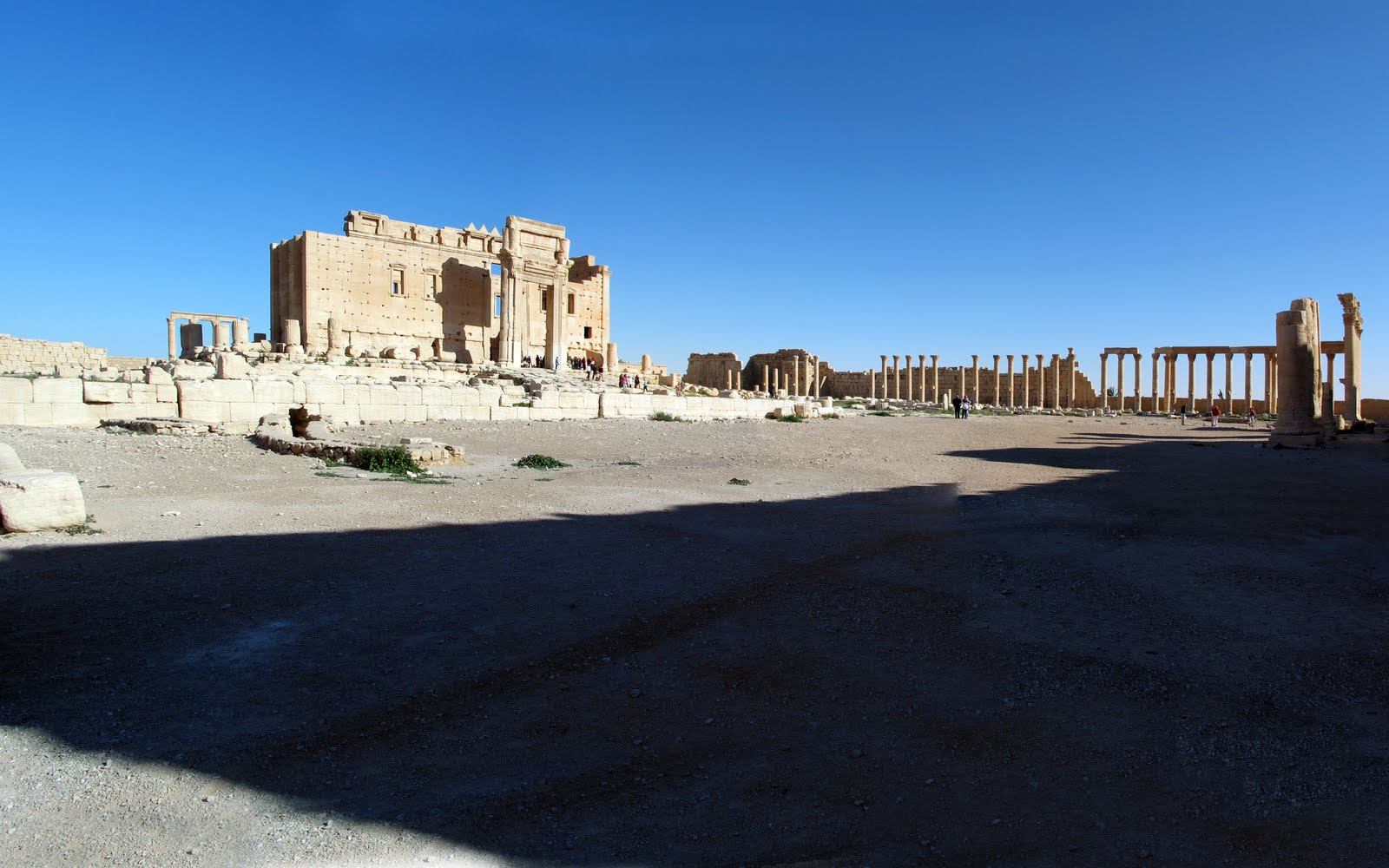
Sometimes things we read in the news hit close to home, even from halfway around the world in an ancient, foreign land. A friend from college has a personal connection to the ruins of the temple in the Palmyra Valley of Syria. He visited there and took the photos I have published in this blog with his permission. He describes the Valley, sitting about 125 miles north-east of Damascus, Syria, in the desert, as it appears above, “a welcome relief after weeks, months on the road” for the people traveling the Silk Road from the east.
The “peaceful place… filled with memories” was no longer peaceful and filled with pleasant memories when I began this piece. I started this blog article years ago, when ISIS was at it’s public height. I don’t know how things stand today. The news has moved on, leaving whatever ravages that continue and desolation that remains out of the pubic eye.
“‘Among the great cities of antiquity, Palmyra is comparable only to Petra in Jordan, Angkor Wat in Cambodia, and the Athenian Acropolis in Greece,’ argues GW Bowersock, professor emeritus of ancient history at the Institute for Advanced Study in Princeton.””(quoted in Isis’s Destruction Of Palmyra: ‘The Heart Has Been Ripped Out of the City’ by Stuart Jeffries in the Guardian Sept. 2, 2015)
In light of fond reminiscences of a peaceful time, relationships developed between disparate brothers and sisters who shared good will and the historic significance of this desert oasis along the ancient Silk Road, the utter sadness and ache of the loss of the ruins is deep and vacuous. And more so now that my part of world has largely forgotten the devastation that exploded in front of the world’s eyes just a few short years ago.
In the Atlantic, the headline read with finality, An Ancient Temple in Palmyra Is Destroyed. “Reports of the site’s destruction come just days after the Islamic State killed Khaled Asaad, an 82-year-old Syrian expert on Palmyra who refused to divulge the location of artifacts despised by the militant group [and coveted for the booty they would bring]. Asaad had run Palmyra’s antiquities department for 50 years.”
“The taking of the historic city of Palmyra by Islamic State represents ‘the fall of a civilisation’, according to Syria’s antiquities chief Maamoun Abdulkarim. Speaking to Reuters today, he said: ‘Human, civilized society has lost the battle against barbarism. I have lost all hope.’” (Mark Woods Christian Today Contributing Editor 21 May 2015)
Temple at Palmyra by Steve Murray
Barbaric, incomprehensible, brutal, evil, criminal, atrocity …. Words fall short. No regard for history, culture, art, life …. The ISIS militants did not even have regard for their own lives, and the wrought unspeakable destruction and the taking of precious life in the Venice of the Sands.
Christians, humanists, peaceful Muslims, people of all stripes condemn what ISIS has done. The destruction of the ancient ruin of Palmyra is a war crime. The killing of Khaled al-Assad, the curator and protector of the Palmyran antiquities, is an atrocity of the worst order. He gave his life to protect those beautiful, ancient ruins…, but the ruins were destroyed with him. The various reactions to the crime and atrocity are understandable and expected.
The worldwide reports emphasized a common theme: the harsh clash of religious fundamentalism with civilized society is characterized by destruction and violence. “ISIS did not merely blast apart old stones—it attacked the very foundations of pluralistic society.” (The Rubble of Palmyraby Leon Wieseltier in the Atlantic Sept. 4, 2015). Indeed, ISIS displayed the worst of religion – the worst of humanity.
The destruction of ancient historical artifacts and buildings is nothing new, of course.
“In this iconoclasm – literally, the destruction of religious icons and other images or monuments for religious or political motives – Isis has its place in a rich history of destruction. Moses reduced the Golden Calf, made from Israelites’ golden earrings, to dust. Centuries later, the 93 carved relief sculptures of the life and miracles of the Virgin Mary in Ely Cathedral’s lady chapel, were hacked off during the Reformation. In between Moses and the mutilation of Ely was something called the Iconoclastic controversy in the history of the Eastern or Byzantine Christian church. Between AD 726 and 843, the then emperors of Byzantium believed icons were not only a reversion to the pagan idolatry of the ancient Greeks and Romans, but that their existence was the chief obstacle to the conversion to Christianity of Jews and Muslims, to both of whom the image was anathema. Iconoclasm, then, is by no means only an Islamic thing.” (quoted in Isis’s Destruction Of Palmyra: ‘The Heart Has Been Ripped Out of the City’ by Stuart Jeffries in the Guardian Sept. 2, 2015)
As we reel in sadness and righteous anger (something the irreligious seem to have learned well from the religious in recent times) over the destruction of such significant ancient preserves, there is a greater loss. Ross Burns, adjunct professor of ancient history at Macquarie University in Sydney, Australia, whose life is devoted to the preservation, study and appreciation of antiquity, appropriately recognized,
“[T]here are more important considerations in Syria in 2015 than the preservation of ancient monuments. ‘The physical damage to monuments has to be assessed against the scale of the human tragedy….’” (Id.)
“O Lord, our Lord,
How majestic is Your name in all the earth,
Who have displayed Your splendor above the heavens!”
(Psalm 8:1)(NASB)
If the distance between the earth and the sun (93,000,000) was just the thickness of a piece of paper, then the distance between the earth and the next nearest star would be a stack of papers seventy feet (70’) high; and the distance of the earth and the next nearest galaxy would be a stack of papers 310 miles high; and our galaxy, the Milky Way, is comparatively a speck of dust among the hundred billion galaxies! (That we can see)
I don’t know, personally, if these comparative figures are accurate. I am quoting Tim Keller, who was quoting someone else. I do know that the universe is mind-boggling in its immensity and complexity. As much as we have learned about the vastness of the universe and the macro and micro complexities of the world it demonstrates, we uncover more questions than answers as our knowledge grows.
When the Psalmist penned the words above, he didn’t know the half of it, but what he did know (and did not know) inspired in him the awe of God. He wasn’t much different from us in that respect, though we are tempted to treat our vastly superior knowledge from the Psalmist (as minimal as it it still is) as something that warrants discounting the knowledge of God.
Yet what is our knowledge that we raise more questions with every answer?
In the July/August issue of Christianity Today, the new President and CEO of the magazine, Timothy Dalrymple, talks of the “humble heroism of everyday faithfulness” in his From the President page. In a world of constant attractions and distractions, this simple word is timely. It’s always timely.
I am reminded of the book, A Long Obedience in the Same Direction Discipleship in an Instant Society, by Eugene H. Peterson. This book that came to my attention about 38 years ago when I was in college. A fellow Intervarsity member had just purchased the book to read. Her quiet, unassuming involvement in our group carried the weight and strength of authenticity, and the title of her purchase convicted me.
I felt impressed that I should read it. I had already become aware of my tendency to be controlled by those attractions and distractions that clamor for attention by reading the title of another book that caught my attention: Tyranny of the Urgent, by Charles Hummel, another Intervarsity connection.
These memories are clear to me. I was in my senior year of college, wondering expectantly what the future lay in store. I was busy with involvement in Intervarsity, finishing up an English Literature major and other commitments, complaining (maybe more like boasting) about being busy, desiring to follow and to be used by God.
God was talking to me in those days. I took notice. I had half an intention to read one or both books. I thought it might be a good idea. I felt like maybe God was saying something to me, but I probably won’t ever know exactly what God would have said to me if I had read them.
If I am being honest, I might have let my heart convince me there was no time for standing still, taking what seemed like a long way around to read books about simplifying my life and just humbly being faithful.
My desk at the office is cluttered with papers, magazines, notes, tokens of meaning and dozens of things that will catch not much more than my attention. My bedroom is cluttered with books and magazines I have read, books I have started reading, books I bought with the intention of reading – including books, no doubt, that never will read. Things have accumulated everywhere they lay waiting for some conviction of devoted simplicity to take hold on me.
I am still driven by the tyranny of the urgent, and a long obedience in the same direction is more the measurement of God’s faithfulness to me than any intention I have carried out in my own desire. I doubt I am unique in this, but that is not a great consolation.
People discussed and debated who was Jesus during his life, and people continue to ask the question today: who was Jesus? It’s really pretty remarkable that people are still asking that question today if you think about it. Jesus didn’t write anything. He didn’t create a lasting work of art. He didn’t conquer anyone.
Yet, people are still talking about Jesus today. Jesus is worshiped by some as God. He is revered my every major religion as a prophet or wise, spiritual man. He is even respected by the irreligious as a moral and good man. Though he didn’t pen a single word as far as we know, more books have been written about him than any man who lived.
So, it makes sense to ask: who was Jesus? It’s not an irrelevant question, even today, so many years after is life and very public and widely attested death.
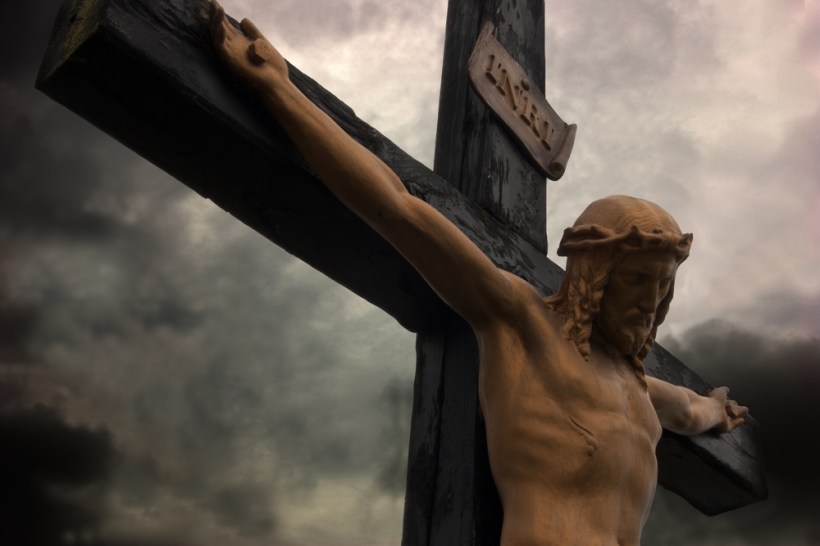
The Internet skeptics who question whether the man, Jesus, ever lived are simply living in denial. Not even most atheists doubt that the man known as Jesus of Nazareth, the man who was crucified on a cross, was an actual man who lived in the first century. A more serious and compelling question is: who was Jesus?
So, let me get right to the point. The following statement from Paul, the once hater and persecutor of Christians who became a follower, highlights why this question is still relevant today:
“For God presented Jesus as the sacrifice for sin. People are made right with God when they believe that Jesus sacrificed his life, shedding his blood. …. God did this to demonstrate his righteousness, for he himself is fair and just, and he makes sinners right in his sight when they believe in Jesus.” Romans 3:25-26
How we respond to this statement is a litmus test of sorts. It raises the ultimate question – who was Jesus – in a way that gets right to the heart of the matter. We can’t read that statement, if we truly understand it, without worshiping and loving such a God or recoiling in horror, indignation and revulsion.
One of the most biting critiques of the Bible and the story of Jesus is that God killed him. God demanded a sacrifice, and Jesus was it. If God is God, He orchestrated the death of Jesus to sate His own demands for justice, homage and retribution.
People like Richard Dawkins make this accusation of “the Christian God”. They say that even if God exists, they would never follow such a vindictive, spiteful God like that.
Lay aside the propriety of created beings standing in moral judgment of the Creator of the universe. If the Creator of the universe was a spiteful, vindictive mean-spirited Being, what could we do about it? And what would our moral indignation have to do with anything?
But of course, the Richard Dawkins types don’t believe in God. What they do believe is at the heart of this blog piece. They believe that Jesus was a just a man. He wasn’t divine. He was no different than you and me.
If Jesus was just a man, the Christian view that Jesus was sacrificed and killed to satisfy God’s sense of justice – or vindictiveness, or spite or evil desire to inflict pain – is something that seems despicably bad. As moral beings, we can see that such a thing would be wrong. It’s twisted. We know better. It doesn’t feel right.
But the fundamental question isn’t: why did God kill Jesus (or have him killed)? The fundamental question is: who was Jesus? We have to answer this question before we can make any sense of the latter question.







 Navigating by Faith