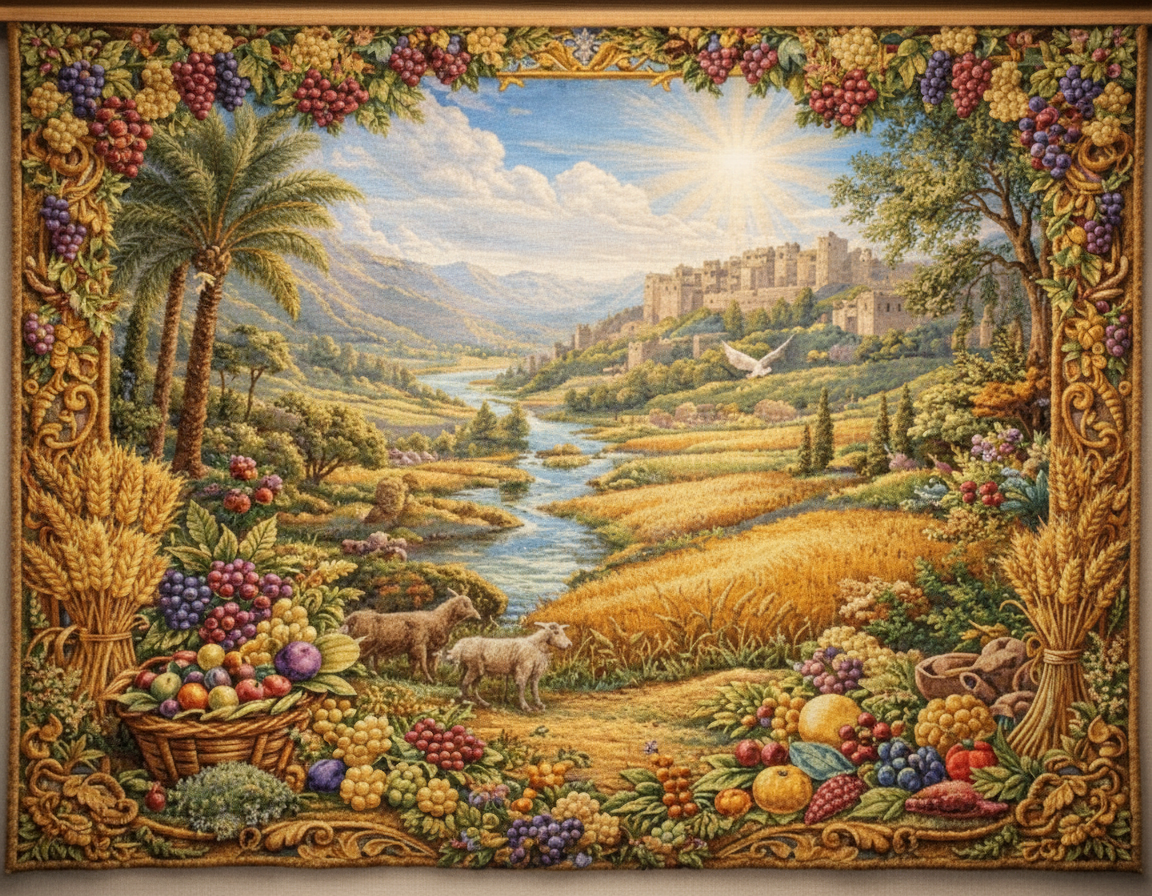
I am increasingly impressed by the importance of understanding the arc and sweep of Scripture from Genesis to Revelation. Though the Bible is a collection of many writings by many authors compiled over many centuries, it is a single, finely woven tapestry rich and brilliant in its nuance and theme, but we can easily lose the big picture if we aren’t careful.

We can get lost, though, in the seeming tangle of individual threads on the wrong side of the tapestry – on the back side.
In the illustration above, the back side of the tapestry makes no sense.
When the same tapestry is flipped around, it portrays a beautiful illustration of the promised land, full of lush vegetables, fruit, and trees a stream, and bright blue sky.

We would have no sense of the beauty of the tapestry if we only saw it from the back side.
We also need to step back often and consider the trajectory, arc, and sweep of Scripture – from beginning to end – to make sense of the individual threads that may not appear to make sense in isolation. If we pulled out a magnifying glass and looked at any small portion of the tapestry, we would not see the grand design until we step back.
From the time of Abraham, Isaac, and Jacob onward, the Bible seems to be all about these patriarchs and their descendants to whom God promised a land. For over 400 years Abraham’s descendants looked forward to taking possession of this land. Led by Joshua,they finally enter into the land after 40 years of wandering in the wilderness with Moses. They drive out the inhabitants, settle in, and live there almost a millennia through cycles of judges and kings. It seems all about this land and its people.
The land, the great leaders, the Law seem to define their destination. Again and again, however, those things prove to be provisional. The leaders fail. The Law fails because they seem wholly incapable of keeping it. The very land, itself, seems to fail them.
When we step back, we see that these things that seem to be the main point of the whole story actually point beyond themselves. They expose something deeper. They give way to something infinitely greater.
One of those themes that gets buried and lost in the jumble of threads is Jubilee. The Jubilee instructions are embedded in the middle of the Law in Leviticus 25. They are God’s specific instructions on how Israel was to live in the land into which God was leading them. That they never actually carried out the Jubilee instructions as near may account for us failing to recognize their importance in the tapestry of God’s Word.
The Radical Vision of Jubilee
In Leviticus 25, God established the Year of Jubilee—a societal reset unlike anything in the ancient world. The Year of Jubilee was to be observed after seven periods of seven years. In the 50th year, the Year of Jubilee, the land was to be returned to its original owners. Debts were to be released. Indentured servants were to be set free. This was to happen every 50 years.
At first glance, Jubilee appears to be an economic policy. A cringeworthy redistribution of wealth that might offend modern, conservative sensibilities. But underneath it lies a theological theme – a theme of God’s design – that reshapes everything when we see it:
“The land is mine” sayeth the LORD, “and you are strangers and sojourners in it.“
(Leviticus 25:23)
God never intended Israel to own the land.
Let that sink in.
God wanted them to live in the land, to work the land, to benefit from the land—but only and always as temporary dwellers -as foreigners. They were not to call the land home. They were never meant to treat the land as their own – as owners.
In that light, we can understand why Abraham was commended for living in the land of promise “as in a foreign land, living in tents.” (Hebrews 11:9)
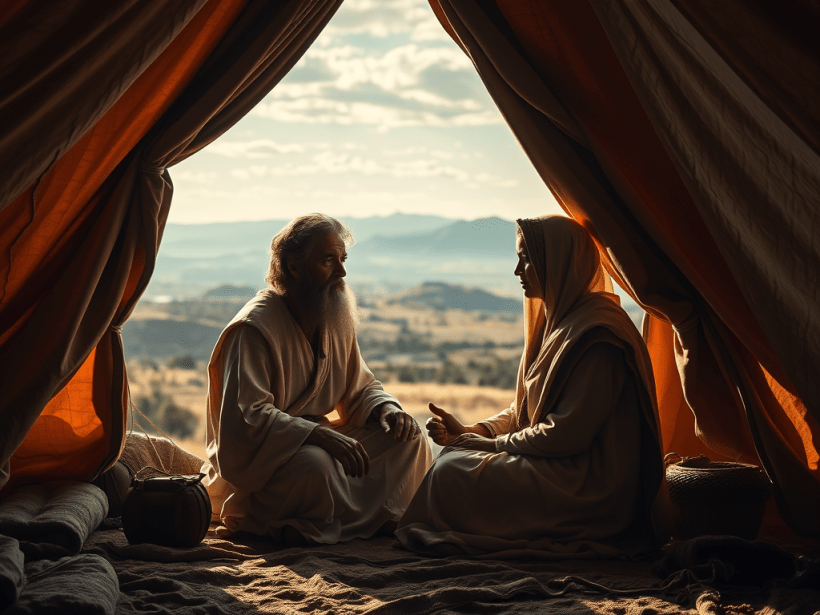
We can understand why, the writer of Hebrews commended the people of faith who “acknowledged that they were strangers and exiles on the earth.” (Heb. 11:13) They were “seeking a homeland … a better country … a heavenly one.” (Hebrews 11:15-16)
Thus, Jubilee is not about fairness, or economics, or socialism—it is about something much more transcendent. It is about God’s eternal plan for the heavens and the earth and all the people in it. It is a reminder to Israel (and us) of who they are in relation to God. It is a reminder that to them (and to us) this world is not all there is. God has bigger plans!
A People Shaped by identity
Though God promised them a land, their identity was the most important thing. God’s vision for them extends beyond land into identity. The Israelites were not meant to identify with the land, but with God.
They were to identity as God’s people living temporarily in a land God gave them, and they were to be a light to the nations. From the days of Abraham, God planned to bless all the nations through his descendants. They were to be a people God called out from among the nations to covenant with Him. These people were intended to identify with God’s greater purpose in the world – which was for all the nations.
Israel is commanded to care for the stranger, the poor, and the landless in the land of God’s promise—not merely as an act of generosity, but as an expression of memory and identity:
“You were strangers in Egypt.”
God wants them to remember who (and whose) they are. God rescued and redeemed them for Himself and for His purposes. Their story is meant to shape their community and society into what God wanted them to be that He would establish in His land – through His land – to carry out His eternal plans for all people.
They were not to be a people defined by power, dominance or possession, but by dependence, deliverance, provision, and protection of others – just as God delivered them, provided for them, and protected them. God’s instructions were structured to prevent them from becoming the kind of nation under which they once suffered – a nation like all the other nations around them. They were to be different, holy, and set apart for God’s greater purpose
The Failure of God’s Covenant People
It seems they were doomed from the get go. Moses warned them they would fail. (Deut. 30:1-6; 31:16-21; 31: 24-29) He wrote a song to remind them when they failed of God’s faithfulness and compassion. (Deut. 32) Joshua warned them they would fail. (Joshua 24:19-2023:14-16) God, being all-knowing and unbounded by space and time, certainly knew they would fail.

Just as Adam and Eve failed by not trusting God, by attempting to seize the knowledge of good and evil for themselves – to define it for themselves – the Israelites failed.
They did not carry out the Jubilee instructions. they did not keep the Law. They courted other gods, and they repeatedly did what was right in their own eyes. (Judges 17:6; 18:1; 19:1; 21:25)
Israel settled into the land as God told, Joshua died, and the very next generation lost the main thread of the story. They did what was right in their own eyes. After cycles of failure under judges, they thought a king (like the other nations had) would make a difference. Meanwhile, the Jubilee vision God gave them never got off the ground.
A King Like All the Other Nations
Israel asked for a king when the cycle of judges seemed to fail. In desiring a king, they rejected God’s plans and embraced the patterns of the world defined by worldly power. (1 Samuel 8:5, 8; 10:19)
Instead of being a light to which the nations around them would be attracted and assimilated into God’s plans, they assimilated the patterns of the nations around them into their community, their religious practices, and their hearts. Instead of being a light to the nations, they were constantly at war with the nations around them.
They forgot who God said they were. They forgot God’s plans for them – to be a light to the nations, to assimilate foreigners into their set apart community, to protect the poor and vulnerable, to live in God’s land as God’s guests.
They failed to hold onto and carry out God’s plan for them. The prophets speak into this collapse with piercing clarity. They call out those who “join house to house” and accumulate at the expense of others. They expose a society that has forgotten (or maybe never fully understood) its God, its identity, and its story.
And beneath it all lies a deeper problem—not merely a structural failure of laws and systems, judges and kings, but a failure of the human heart. The people do what is right in their own eyes because they want to do what they want to do. This is the universal problem of humanity.
The Arrival of a Different Kind of King
Into this world where no one is righteous – not even one – comes God incarnate announcing:
“The kingdom of God is at hand.”
Matthew 4:7; 10:7; Mark 1:15
The first-century Jews might have been excited to think about a military overthrow and establishment of David’s kingdom—a restoration of what they thought was lost. What they lost was the real thread of the story – God’s plans and purposes for them in the world. They wanted to restore their former glory, but God wanted for them a much greater Glory that comes with God’s ultimate intentions and plans for them.
Jesus came to fulfill the Father’s plans. As foretold by the Prophet Joel, he came to introduce a “new thing.” It is new because the covenant people of God failed to live into the Jubilee instructions. It is new because the Law is only a shadow. The reality is in Christ. But it is not actually new – it is what God always envisioned.
God had given his people every opportunity to carry out His plans. God allowed them the space to succeed … and to fail. It was inevitable that they would fail, however, and failure is a lesson that had to be learned.
It isn’t a failure of God, but a failure of creatures made in God’s image who needed to learn they can’t be God. They can’t put other things in place of God.
God’s purposes are not their own. They can’t trust in themselves. They must be wholly given to God – not just their pledge of allegiance, not just their best efforts, not just lip service, but their hearts.
When Jesus proclaimed “the year of the Lord’s favor,” He was invoking Jubilee language. Yet he did not organize a national reset. He did not redistribute land or dismantle political systems. These things were just the shadow of the real thing, which is a spirit of Jubilee.
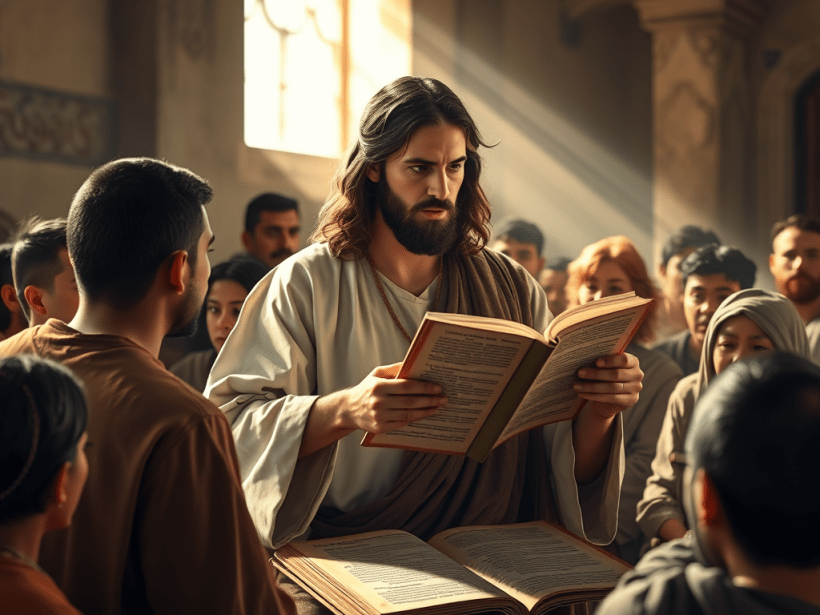
God did not give them another opportunity to succeed or fail on their own following in the ways of the nations of the world. Instead, God became man in Jesus and did a new thing – as the Prophet Joel foretold. He came not to condemn. He came to save. He healed. He forgave. He restored. He opened the doors of God’s kingdom to the outsider – the Gentiles.
Jesus said he came to proclaim the Year of God’s Favor – Jubilee. Then he lived it out. He demonstrated it. He showed the true nature of the Jubilee instructions, which are transcendent – not tied to structures or systems – but lived out through the heart of one who has received God’s favor with thanksgiving and gladly extends that favor thot people around them.
Jesus offers us the Law of God – the law of love – written on the hearts of men and women who will give their hearts to Him without condition.
From Land to Kingdom
Jesus makes clear that the focus should never have been the land. The focus is and always should have been God’s kingdom, which is not of this world. (John 18:36) The kingdom of God is where the City of God exists that Abraham envisioned: “the city with foundations, whose architect and builder is God.” (Heb. 11:10) According to the writer of Hebrews, all people of faith welcomed this City “from a distance, admitting that they were foreigners and strangers on earth.” (Heb. 11: 13)
The kingdom of God is not tied to geography. It is not defined by ethnicity, human heritage, or the will of man. (John 1:13) It is not enforced by political power. It has no king but Jesus – the suffering servant, the Lamb of God who was slain for the sins of the world.
The kingdom of God is portable. It moves with, through, and among God’s people. It takes root wherever hearts are aligned with God.
And with that shift, identity changes – it transforms. God’s people are not landholders rooted in a given land. God’s people always were and always will be sojourners until our hearts find their home and rest in God. God set eternity in the hearts of people (Ecclesiastes 3:11) so we would seek him and find him and not put our roots down in this this world.
God’s people are not rooted in ancestry, birthright, or marriage. There is no Greek nor Jew in Christ. Jesus tore down these dividing walls. (Eph. 2:14)
God’s people are not established by the will of men. They are established by the will, the plans, and the promises of God. They are established in relation to God and people whom God loves.
God’s people are not established or sustained by the power of men. They are redeemed, established, and sustained by the power of God until the coming of our Lord and the introduction of the new heavens and new earth where the New Jerusalem comes down from heaven. (Revelation 21)
The home of God’s people is no longer (and never actually was) confined to a place. It was never meant to be a place in this world. We will not arrive to the place of our sojourn until we shuffle off this mortal coil and our perishable body gives way to the imperishable seed of Christ in us.
A Jubilee Written on the Heart
What the law could not ultimately produce, Jesus brings into being. Debt release becomes forgiveness. Freedom becomes liberation from sin and death. The reset is being born again, born from above – redemption and reconciliation with God and the promise of eternity with Him.
The Spirit of Jubilee is embedded in our hearts where God takes residence now as in His holy temple. Being reconciled with God we are now ambassadors of God’s kingdom – which is here now in our midst, yet is still to come. When that City that has been long awaited descends from heaven and Jesus takes his rightful throne on the earth made new, there will be no more pain, no more tears, no more war, no more rebellion against God.
This is God’s eternal plan – to bless all nations through the spiritual descendants of Abraham. Followers of Jesus Christ are the true descendants of Abraham who have no permanent place in this world to lay our heads because our rooms are prepared for us in heaven.
The Law was always just a shadow pointing toward the ultimate reality – the transformation that takes place in the hearts of God’s people who became salt and light in the world. The spirit of Jubilee is now in us and in the Body of Christ if, indeed, we live into the kingdom of God that is in us now, but it still yet to come.
No longer dependent on periodic resets, the life of Jubilee becomes a way of being—expressed through generosity, mercy, and shared life. This is the Law written on our hearts, and it is lived out in transformed lives.
The early church reflects this beautifully: possessions are shared, needs are met, and barriers fall—not because they are forced to comply, but because they have been transformed. Jesus broke down the dividing walls, and we have been freed to live the life God always intended for His people.
The Long Road to Restoration
If we trace the arc of Scripture from Judges through the kings, from the Prophets to Jesus, from exile to restoration, from the Law to God’s kingdom, a consistent pattern emerges: External structures cannot solve internal rebellion.With or without kings, the outcome is the same unless something deeper changes.
Jubilee pointed in the right direction. The cycles of failure through the judges and the kings exposed the limits of human power to accomplish God’s purposes through external law. The prophets revealed the heart of the problem – the human heart corrupted by sin.
And Jesus brings the solution—not by imposing outside controls, but by changing human hearts of stone into hearts of flesh, by transforming and renewing the human mind, and by redefining what it means for God to reign in and among His people. It isn’t accomplished through the top down power of Law, judge, and king – but through the inside out power of personal transformation by a God who works within us to will and to act according to His good purpose.
The Final Home
The story does not end with wandering. The story does not end in endless cycles of human striving, limited success, and the downward spiral of failure.
Scripture ultimately points to a day when the tension resolves—when the sojourners are gathered, when God dwells fully with His people, and when everything fractured is restored.
In that moment, the purpose behind Jubilee is fully realized: No more loss. No more displacement. No more injustice. Not because the system has been reset—but because creation itself has been made new.
Living in the Tension
For now, we live in between. We are citizens of a kingdom that has come, yet we are waiting for its fullness. We are ambassadors of a kingdom that is in our midst, but we await its arrival when God will remake the heavens and the earth and set His great City into it in which He will again walk and live with us face to face.
We are still sojourners, not because we are lost, but because we are on our way home.
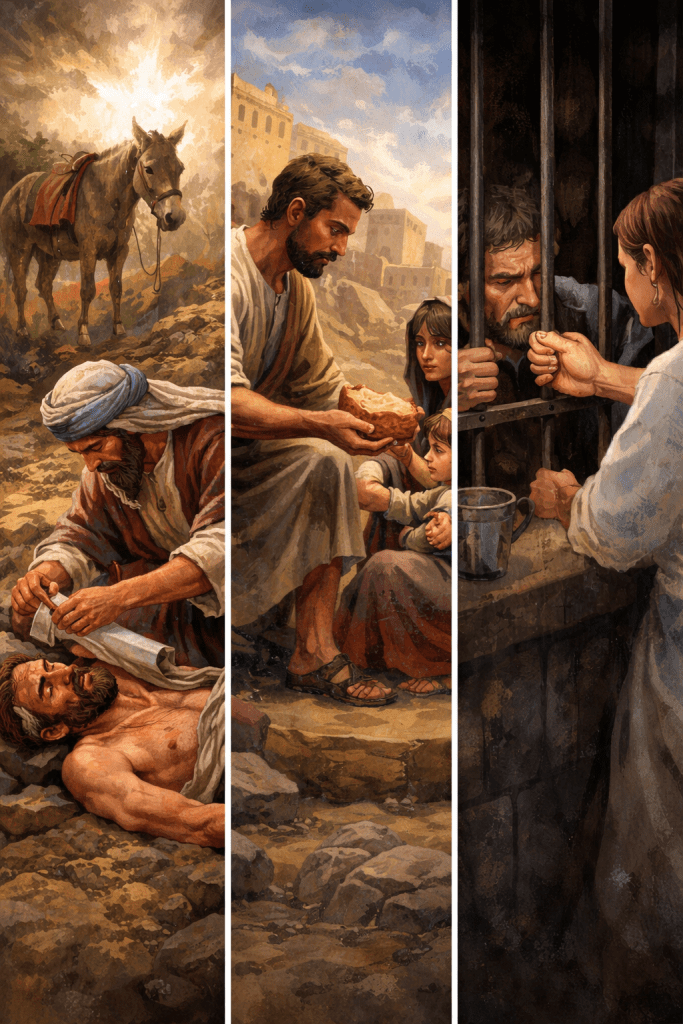
And in this temporary space we call “this world,” we are called to live out the reality of Jubilee—not as law, but as life: to hold loosely, to give freely, to remember who owns the land—and everything else. In this time, we remember who we are by welcoming and being kind to strangers because they are sojourners like us in whose hearts eternity has been set so that our longing will find its home in Christ who unites all God’s people.
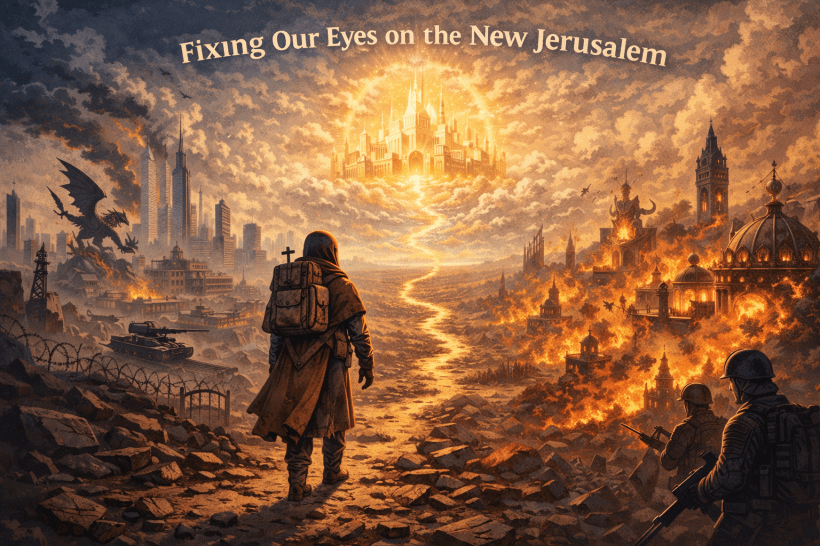
Though it sometimes looks like this

 Navigating by Faith