We should live God with our minds but should not forget to live out our love as we do.
Snow Angels, Goodness, and Intelligence – http://www.theimaginativeconservative.org/2017/04/snow-angels-goodness-intelligence-jason-baxter.html
We should live God with our minds but should not forget to live out our love as we do.
Snow Angels, Goodness, and Intelligence – http://www.theimaginativeconservative.org/2017/04/snow-angels-goodness-intelligence-jason-baxter.html

We must choose to receive Jesus, and then He gives us the right to become children of God.

“But to all[1] who did receive[2] Him, to those who believed[3] in His name, He gave the right[4] to become[5] children[6] of God— children born[7] not of blood, nor of the will[8] of the flesh[9], nor of the will of man, but born of God.” (John 1:12-13)
Johns packs a lot into these short verses, tucked into the first chapter of his Gospel that is profoundly full of other significant meaning:
“In the beginning was the Word, and the Word was with God, and the Word was God…. All things were made through him….In him was life, and the life was the light of men…. The true light…. was in the world, and the world was made through him, yet the world did not know him. He came to his own, and his own people did not receive him. But to all who did receive him… he gave the right to become children of God…. And the Word became flesh and dwelt among us….”[10]
These are some of the most profound and remarkable verses in all of Scripture. God became flesh, and He lived among the people He chose as His own, but they didn’t even recognize who He was. But those who received – who believed Him – He gave the right to become children of God.
I see two choices here: the choice of receiving Christ and the choice God gives us after receiving Christ – the right to become children of God. My Reformed friends might be tempted to overlook the import of this power-packed passage. I am little unnerved by it myself, truth be told. I don’t trust my own heart to make the right choices!
Continue reading “The Choices God Gives Us”

The Scripture presents to us a tension between the necessity of free will and the certainty of God’s sovereignty.
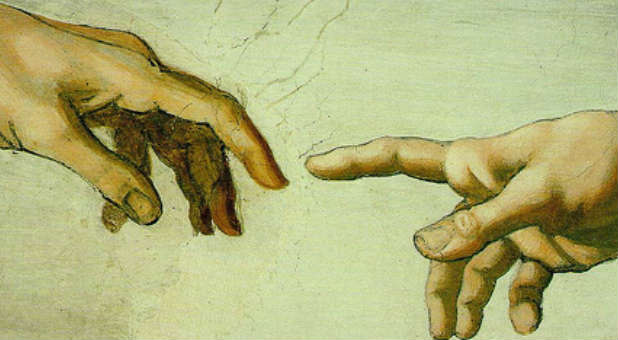
God lets us choose Him: “But to all who did receive Him, to those who believed in His name, He gave the right to become children of God.” But that isn’t the beginning of the story – or the end of it.
God chooses us. He gives us the right to become children of God[i], and He made that choice before the foundation[ii] of the world. We become the children of God not by blood descent, not by the will of parents or anyone else – maybe not even by our own will – but by God’s choice.[iii]
I do not have a systematic theology. I am not a theologian, and my understanding of systematic theology is limited, but free will has always seemed self-evident to me. It also seems eminently biblical. God created us in his own image[iv], and a primary characteristic of God is agency. We see in the story of Adam and Eve that God gave us agency too, by giving them dominion over the animals of the earth and in the choice to eat of the fruit of the tree of the knowledge of good and evil.
The freedom to choose is also a necessary condition of love. God is love[v], and he created us in His image to reflect Him, to glorify Him and to love Him.
The point of an image is to image. Images are erected to display the original. Point to the original. Glorify the original. God made humans in his image so that the world would be filled with reflectors of God. Images of God. Seven billion statues of God. So that nobody would miss the point of creation. Nobody (unless they were stone blind) could miss the point of humanity, namely, God. Knowing, loving, showing God.[vi]
God created us to love him. Therefore, we must have agency/free will in order to be able to reflect back His love as He intended.
But there is another side to this. There is not only what we call faith; there is grace. There is God’s unmerited favor. God chooses us. We call this predestination and attribute it to God’s sovereignty
Continue reading “God Chooses US”

Is the Jesus story just is an amalgam of pagan myths?

The answer is pretty decisively, no! Much has been said of this popular Internet opinion by actual historians and biblical scholars of every stripe, Christian, agnostic, and atheist. Very few, if any, scholars who have proven themselves in the world of academia and who have been vetted by peer reviews, hold to this view. It’s an odd exception that finds a lot popular acceptance among the self-initiated.
This is true whether the scholar happens to be a theist or atheist, believer or nonbeliever. There simply isn’t any credible evidence for it. The only evidence lives in the active imaginations of people who want it to be true, like Bill Maher. Of course, he even did a movie about it.
While many people have published articles, lectures, and videos on the subject, I appreciate this one I have embedded below by Steven Bancarz, who was, until somewhat recently, not a Christian. In fact, he was a New Age adherent. Not only that, he was considered an expert on New Age religion with a robust YouTube channel devoted to New Age thought and a regular contributor to the largest New Age website on the Internet.
Steven now exposes the spurious nature of the New Age world he once championed and denounces it after his conversion to Christianity. (From New Age to Jesus – My Testimony) He spends his time researching Christian and non-Christian sources on various subjects that once occupied his mind as a New Age follower.
Steven Bancarz once believed the opposite to what he now believes to be true. Therefore, he brings with him the mindset of a once skeptic. That approach results in a certain freshness and clarity that I appreciate. I recommend the following video on this popular notion that the resurrection story was copied from pagan myth:

We live with the duality of being born of the flesh and born of the spirit

“Two things cannot be in one place. Where you tend a rose, my lad, a thistle cannot grow.”[i]
This quotation by Frances Hodgson Burnett is pretty profound when you think about it. A person cannot feed love and feed hate at the same time. One displaces the other, like light displaces the darkness.
Except, we know from our own experience that we can love and hate at the same time. It’s just that we cannot love and hate the same thing at the same time. This is what the quotation is saying: a rose and a thistle cannot occupy the same space, though roses and thistles can certainly stand side-by-side. We can love one person and hate another.
Jesus puts a twist on these thoughts when he says that a person cannot serve two masters. When two priorities are vying for position in our hearts, they cannot both occupy the top position: “Either you will hate the one and love the other, or you will be devoted to the one and despise the other.” And Jesus provides us a ready example: “You cannot serve both God and money.”[1]
Continue reading “The Rose and the Thistle”

Take a few minutes to slow down and think about what's going on in your world...
Letters on my journey of rediscovering hope
"The LONG VIEW ON THE HIGH ROAD" -- Intriguing perspectives on life
Using the wisdom of the past to enhance your future event
Science, Faith, and Spaniels
 Navigating by Faith