What If AI Destroys Our Confidence in Knowing the Truth about Anything?

Where there is knowledge, it will pass away.

I recently listened to Glen Scrivener on his Speak Life podcast episode, AI Destroys Everything, Including Atheism. What caught my attention was his replay of some observations by Kurzgesagt on AI, AI Slop Is Destroying the Internet. Kurzgesagt is a website dedicated to “a science-based, humanist and optimistic worldview,” which is interesting in light of its pessimistic view of the future with AI.
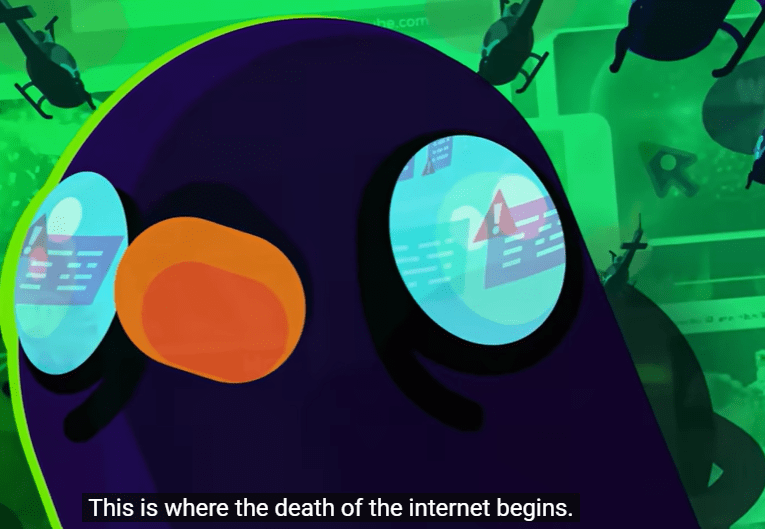
This is what the folks at Kurzgesagt say:


“In an online world where money is made with attention, fake users spread their slop in review sections, generate fake traffic, or poison discourse. AI has supercharged this and made slop much harder to spot. Today, about half of internet traffic is bots. The majority of them are used for destructive purposes. It’s never been easier to make mediocre content, from the black hole of meaninglessness that is linked in, low-effort short videos just engaging enough to hypnotize kids and fry their attention spans, to endless soullessly rewritten books on Amazon. AI music is invading streaming platforms. Google AI is summarizing websites instead of sending traffic to them. On YouTube, new channels publish long-form videos multiple times a week with AI-generated thumbnails, voices, and scripts. True crime, video essays, science, no space is safe. We’re in the golden era of soulless slop.”


The Kurzgesagt folks speak with learned experience about the effort and amount of time it takes to produce a thoroughly fact-checked video on science, which is what they do, spending on average 100 hours fact-checking and compiling sources for each video. They use firsthand sources and engage experts for input and critique before they post a video.

When AI became available, the folks at Kurszgesagt were excited to employ AI to cut down on all that time and effort to produce content. This is what they found:


“When AI appeared, we were very excited. A mechanical brain able to super quickly collect information. So we went to work, and it looked amazing. And then we started fact-checking. We didn’t expect it to be perfect, but it was way worse than we thought. Confidently incorrect. AI is so bad at this.”
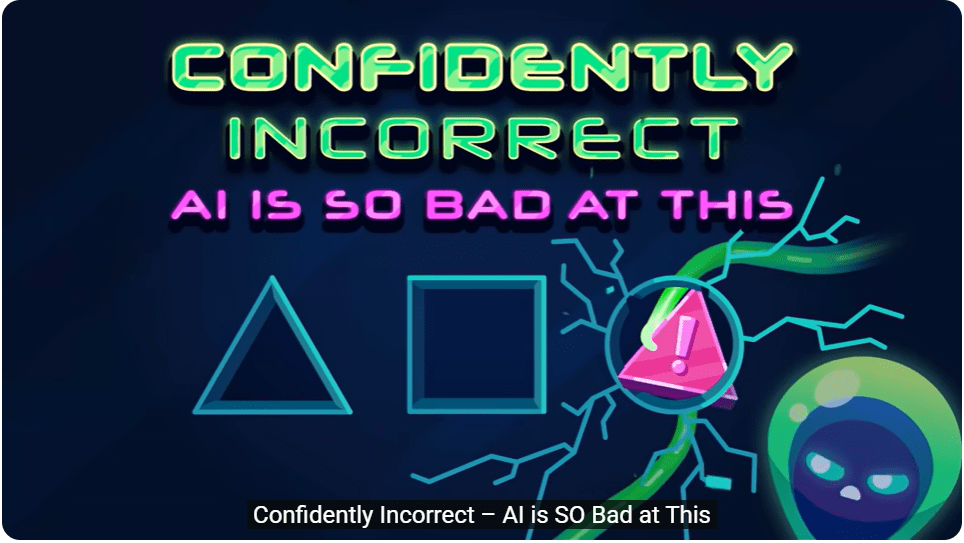

The video provides an example of the ways in which AI invents truths that are not truths, and then untruths are added to the source code that the next generation of AI is going to use and assume is true. The falsehoods continue to be repeated. As this happens, “more and more of the slop is built up”, and the falsehoods becomes entrenched.

It seems pretty bleak. AI is running away with falsehoods that are becoming entrenched and may become impossible to weed out. But it gets worse, according to Kurzgesagt:


“When you catch it lying, it immediately admits it, vows to never do it again, and then it does it again. As eloquent as current language models feel, there’s nobody home. No greater intelligence or consciousness is talking back to you. Current AI is a very complex hammer that doesn’t understand what it’s doing or what nails are. But we’re letting it add new shelves to the library of human knowledge.”


Accordingly, “it may become impossible to know what’s true or not!” It’s an insidious problem. AI seems to be “confidently correct” even when it’s “casually lying to your face often very subtly.”

But it gets worse still. People are learning how to manipulate AI. “Just in July 2025, it was discovered that a number of researchers had started to sneak hidden messages into their papers. In white text, or too small for the human eye, they prompted AIs to review them positively and not point out flaws.”

Whether it’s intentional manipulation or lazy, careless dependence on AI, our ability to decipher truth may be severely compromised. “As more and more people are using AI carelessly, the library of human knowledge is getting less and less reliable.”

Of course, AI may get better. That is ultimately the confidence and hope of a science-based, humanist, optimistic worldview – that man is ever advancing and progressing and will overcome all obstacles. As I Christian, I don’t share that hope or confidence in the progress of mankind. My hope is in the redemption and saving grace of God.

What if, then, it doesn’t get better? What if AI so takes over the Internet and so entrenches the “slop” that we can not truly tell fact from fiction? What if AI gets so good at fooling us and churning out confidently packaged falsehoods faster than human fact-checking can debunk them, and takes over the Internet? What if our confidence in knowing the truth about anything is destroyed as AI takes over the world?

Paul has an antidote to that, and the antidote is love. Let me explain.

Continue reading “What If AI Destroys Our Confidence in Knowing the Truth about Anything?”
Who Has the Burden of Proof on the God Proposition?

Who has the burden of proof may depend on our end goal.

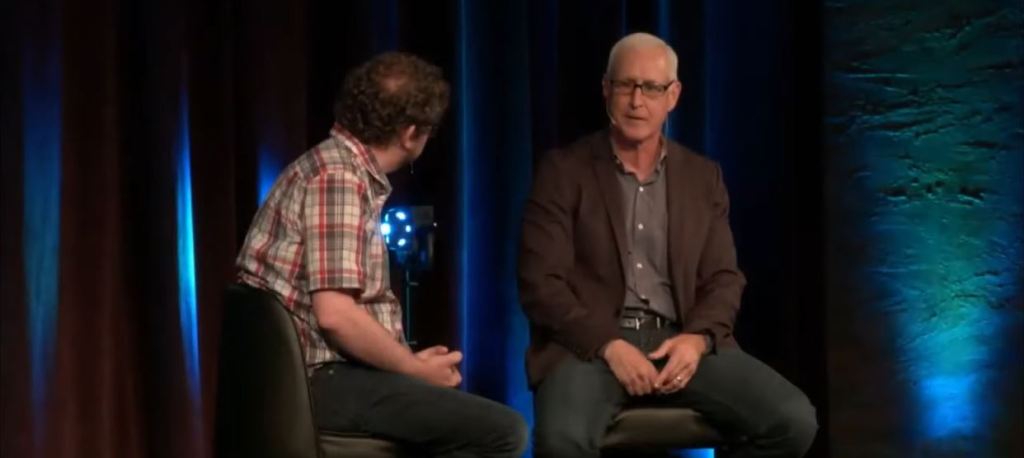
Michael Egnor published a provocative article posted on Evolution News & Science Today: Theists vs. Atheists: Who Has the Burden of Proof? Egnor’s comments follow a debate he had with Matt Dillahunty, who is, perhaps, the most popular atheist voice speaking out against religion today.

Egnor claims Dillahunty “didn’t fare well” and demonstrated “no real understanding of any of the ten classical proofs of God’s existence”. It seems that Dillahunty’s big position in the debate was that theists have the burden of proof, so there is no real need for him to assert a position; he can sit back and take pot shots at theist’s arguments and call it a win.

I didn’t watch the debate, so I am just parroting Egnor’s characterization on my way to making a different point. Dillahunty did recently attempt to undress William Lane Craig’s favorite argument, the Kalam Cosmological Argument, so perhaps he isn’t quite as derelict in his opposition as Egnor makes him out to be. (Though, again, it’s just taking pot shots at positive arguments.)

It is true that Dillahunty relies heavily on the position that he has no burden to prove the negative: that God doesn’t exist. Egnor claims this is because positive atheist arguments are “few and weak” (before putting up a strawman argument in caricature of Dillahunty’s favorite argument based on “Divine Hiddeness”, which I don’t intend to address either).

Egnor may be right, basically, in his assessment of Dillahunty’s position, though not very winsome in stating it. Of course, I wouldn’t characterize Dillahunty as winsome either. Much less so.

What caught my attention about the article wasn’t in the article at all. It was a comment about the article to the effect that anyone who is interested in truth has the burden of proof. That comment, I believe, deserves some attention.

Continue reading “Who Has the Burden of Proof on the God Proposition?”

What Does Archaeology Have to Do with Racial Justice in Modern Times?

A new voice is rising up that is reconnecting social justice to the truth of scripture

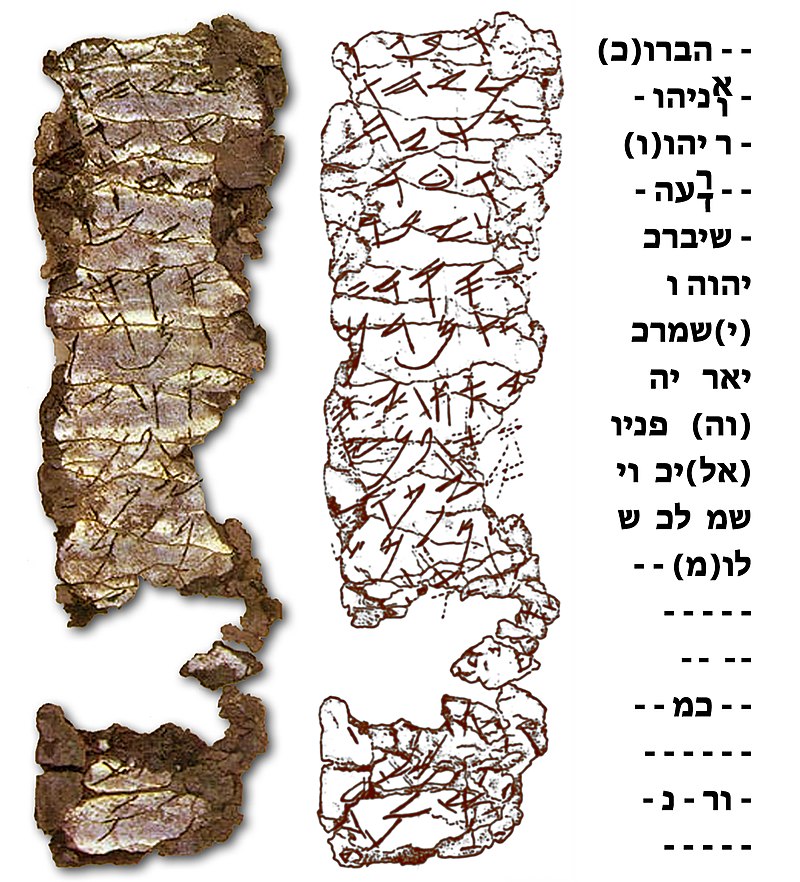
The Dead Sea Scrolls on display at the caves of Qumran that located on the edge of the Dead Sea in Israel.

“These are the things you are to do: Speak the truth to one another, render true and perfect justice in your gates. And do not contrive evil against one another, and do not love perjury, because all those are things that I hate – declares the Lord.” Zechariah 8:16-17

A major archaeological discovery was made recently in some remote caves in the Judean Desert. Among the discoveries were, coins from the time of the Bar Kochba Revolt, the skeleton of a child dating back some 6,000 years, and a 10,000-year-old exceptionally well-preserved basket. (From 2,000-year-old biblical texts found in Israel, 1st since Dead Sea Scrolls by Rossella Tercatin for the Jerusalem Post, March 16, 2021.)

These items were found in “the Cave of Horror” in the Nahal Hever area of the Judean Desert. The Nahal Hever is an intermittent stream in in the West Bank, flowing from Yatta to the Dead Sea. At the head of the stream are two caves, the “Cave of Letters“, and, further up, the “Cave of Horror“.

Though the caves are hard to access, looters have raided them over the years. Archaeological efforts many years ago netted portions of the Book of Numbers, Psalms and Deuteronomy. Until recently, people might have assumed all artifacts to be found in those caves had already been removed.

The Greek scroll of the minor prophets found at Nahal Hever may even be the most significant find to date. Some date these fragments in the 50 years before Christ, and others date them in the 50 years after Christ. We don’t really know, but scholars seem to agree that the fragments come from “an early revision of the Septuagint in alignment with the Hebrew text”.


Modern archaeological finds continue to affirm Scripture and the continuity of Scripture through the ages. Poignantly for today in these times, the discovery of the scroll of the minor prophets found in the Nahal Hever speaks to an age old theme.

The passage in Zechariah 8 quoted above was found among the fragments. From old, from ages and ages past, we find that God desires truth and justice from His people.

“Speak the truth to one another, render true and perfect justice in your gates.”

I am reminded that God’s desire for justice and truth from His people is the same today as it was then. I think about these things after listening to the Disrupters podcast in which host, Esau McCalley, spoke to the political strategist, Justin Giboney. As they were talking about faith and politics, I realize that justice and truth continue to be priorities for God, and only the circumstantial details have changed.

Continue reading “What Does Archaeology Have to Do with Racial Justice in Modern Times?”

How Can You Say your Religion is Right, And Everyone Else is Wrong?

“How can you say your religion is right and everyone else has it wrong?” This is a common challenge to Christianity, but not just to Christianity. All of the world religions make exclusive truth claims.

Even religions that ascribe to values like unity and universalism (like maybe the Baháʼí faith, which “stresses the unity of all people as its core teaching“) make exclusive truth claims. Their claims deny claims of other, competing religions and worldviews that are expressly more exclusive and/or which ascribe to unity and universal application with different parameters.  

The idea of exclusive religious principles is especially anathema in a post-modern world. It’s the cardinal sin of post-modernism. In such a world, it seems crude and out of step to believe, let alone admit that you believe, that some religious and philosophical assertions are true and others aren’t.

It’s much more acceptable to say that I can have “my belief”, and you can have “your belief”. We would quickly add, “What’s true for me doesn’t have to be true for you.” We believe with religious truth that people should be able to have their preferred spiritual cake and eat it too.

We do this with ethics also. People sometimes conflate religious or spiritual truth with ethics, but that’s another topic maybe for another time. People also, generally, don’t feel so magnanimous in allowing differing beliefs when they feel their own oxen have been proverbially gored. 

In the western, post-modern world, it’s ok for me to believe in chakras, or karma, or queer theory or a particular gender identity (even if my gender identity is unique to me), or aliens and whatever ethical construct goes with those things. It doesn’t need to be internally cohesive. It doesn’t really matter what a person believes, as long as she doesn’t claim it to be universal or exclusive. Claims of universality and exclusivity though, are not tolerated. 

Notice, however, that even this “tolerant” position can’t escape the charge of being an exclusive truth claim. The very claim that no one can make exclusive truth claims is an exclusive truth claim.

The person who says exclusive truth claims are not valid is making that claim contrary to all people who believe that exclusive truth claims are valid. 

I believe that people who are making the claim that religious people (especially) should not make excusive truth claims are doing so in response to people whoa re fanatical, self-righteous, judgmental, and even militant about their truth claims. Much tension in the world, cruelties perpetrated against other people, and even wars are the result of such exclusive religious truth claims. We can’t deny it. 

So what do we do? Following are some thoughts on the subject of truth claims, with some additional comments on the subject of tolerance and respect.

Continue reading “How Can You Say your Religion is Right, And Everyone Else is Wrong?”

J. Warner Wallace on the Limited Usefulness of Personal Testimonies

Experience and testimony can move people, but it doesn’t tell us whether something is true.

J. Warner Wallace, the “cold case detective”, has become a leading Christian apologist. He brings a unique perspective to the world of faith.

Having grown up in an atheist family, he didn’t come to faith until well into adulthood. He didn’t grow up in the church, obviously. The traditional focus on personal experience and testimonies in evangelicalism was not part of his background. He didn’t come to faith through experience or the influence of personal testimonies. For him, it was simply a matter of the facts.

Wallace observes that the most popular answer people give for being a Christian is that they were raised in a Christian family. The second most popular answer people give for being a Christian is some experience that demonstrates to them personally that Christianity is true.

Wallace criticizes these bases for Christian faith because Mormons give similar answers to explain their belief in Mormonism. The number one answer people give for being a Mormon is that they were raised in a Mormon family, and the second most popular answer is some experience that demonstrated for them that Mormonism is true.

Christians don’t think Mormonism is true, but their stories of coming to faith are the same as ours. Thus, Wallace concludes, experience can be a powerful thing, but it doesn’t necessarily settle the truth of the matter, and people who rely on personal experience are relying on a weak anchor to faith.

More important than experience is whether something is true.

Wallace goes on to share his testimony in the short interchange linked at the end of this article with the caveat given above – don’t put too much faith in his (or anyone else’s) testimony. Still, we like testimonies, right?

Continue reading “J. Warner Wallace on the Limited Usefulness of Personal Testimonies”