Myth, Seasons, and the Resurrection of Jesus

Should the claim that Christianity is similar to prior, pagan mythology concern us?

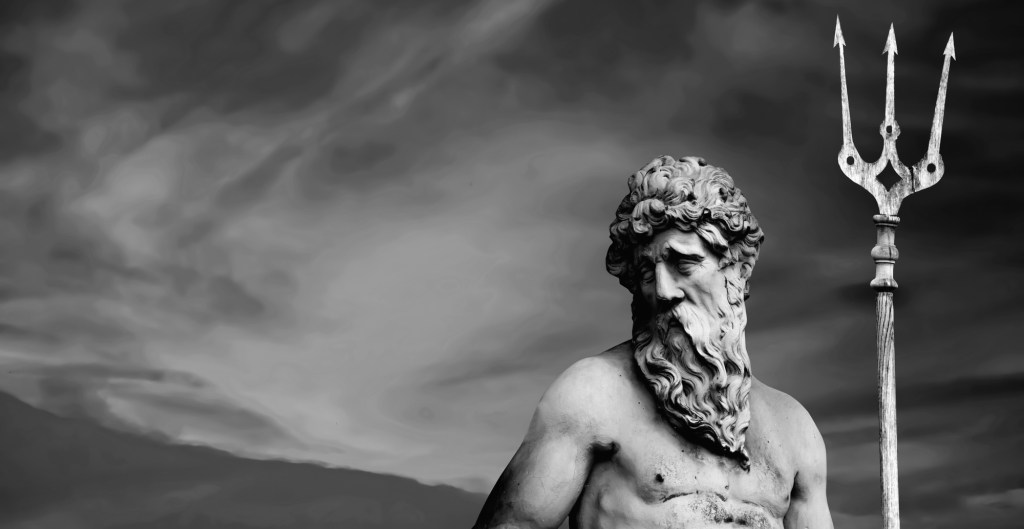
The god of the sea and oceans Neptune (Poseidon).

Popular trends arise in culturally contingent ways, and those trends often dominate the public mind for a season. Thus, the idea that Christianity borrowed from prior pagan mythology gained notoriety with the rise of New Atheism. The Zeitgeist: The Movie (2007) is a poster child for this popular trend in thinking.

The Zeitgeist movie forces the narrative, ignoring glaring dissimilarities, and manufacturing similarities that don’t really exist. It ignores (or isn’t familiar with) the relevant academic scholarship, but it has been watched well over one million times. We might say that the Zeitgeist movie has become legendary in a truly mythic sense itself.

I will go out on a limb, nevertheless, to say that Christians have shown far too much angst over this trend of claiming that Christianity is similar to prior pagan mythology. There are critical differences, and they are significant, but there are some similarities also. Do the similarities pose a problem for Christianity?

The short answer is, no. In fact, if truth is truth and reality is reality, ancient, pagan attempts at explaining that reality are likely to hit on some metaphysical truth. If they didn’t, I might begin wonder about the nature of reality and our ability to recognize and understand it.

Mythic literature as a genre is an attempt to provide some explanation and understanding of basic realities and the ebb and flow of life. I am reminded of these things as I sit outside on an unseasonably warm day in November with a view of trees bared of their multicolored leaves that have been collected by my earnest neighbors in piles lining the suburban streets for pickup.

Fall is ebbing into the dark night of winter. The subtle coolness in the breeze portends (what seems to me now) a distant spring. I am braced for what comes next as I enjoy what is likely to be the lest vestige of warmer days for longer than I care to think about.

My hope for the spring, however far off it seems in my present mood, is rooted in my experience of the certainty of the seasons. I know my hope is not fanciful, even as I brace (all too knowingly) for the cold, bleak trudge ahead.

It seems completely natural that ancient mythology captures this duality in stories that have religious significance. These experiences are common to man. We remind ourselves of the hope of spring as we gaze in wonderment at fall trees in the throes of seasonal death and the chill onset of winter. It reminds us of our own life and death sagas, even now in all our modern comforts.

Our modern comforts allow us to be a bit more disconnected and circumspect, perhaps, than our ancient forbearers. Those comforts and great advances in scientific knowledge allow us to be intellectual about these things. Ancient pagans lived literally at the mercy of the seasons, and all the things they didn’t know played like gods on the stage of their fraught imagination.

Modern people chalk seasonal changes up to natural cycles that just happen. We believe humans chased all the gods off long ago. The ownership we have asserted in our knowledge of the way the world works gives us an illusion of control that I surmise is not all that much different than the ancients, who sought some ownership and control of this world through the mediators of gods they thought they could appease.

Pagans found solace in the seasons as we do. Myth is rooted in collective experience, and it is driven by an impulse to understand and import control into our experience. We also have a natural inclination to seek meaning. We might call this impulse a “religious” one.

Though we have the chased the gods off, we still have a religious impulse. Though we no longer believe in many gods, and we no longer venerate ancient myths with more than a curious read, the idea of one, Creator God God persists, and it is not explained away by modern science and knowledge. The Bible, though it has ancient origins, stands up to our modern scrutiny in ways that pagan myth does not.

Continue reading “Myth, Seasons, and the Resurrection of Jesus”

From Atheism to Faith: The Story of Mary Jo Sharp

“I really didn’t have a view of God, and I wouldn’t have thought to gain one or why a person should want to gain one. It just wasn’t on the radar”

Mary Jo Sharp grew up in a secular home. Her parents didn’t go to church. Her community in Portland, Oregon was post-Christian, and she didn’t even know people who claimed to be Christian.

She was aware of Christianity in culture, but she didn’t have any firsthand contact with Christian culture. Her parents weren’t’ religious, and they didn’t go to church.

Her father was a “huge Carl Sagan fan”, and she was influenced by his love for science, outer space and nature. She was influenced almost exclusively by a materialist worldview from a young age – the view that reality consists only of what we can see, hear, feel, touch, and taste in the material realm. (There is no other “realm”.)

Materialism was the theme that ran through the TV shows on science and nature that her father would watch. “This was the background that formed my view of reality,” says Sharp, “I really didn’t have a view of God, and I wouldn’t have thought to gain one or why a person should want to gain one. It just wasn’t on the radar”

She says she didn’t know that the materialist view is only one view among other views on the nature of reality. She says, “It’s just what I was exposed to.” She didn’t know any other way to view the world and reality.

The Christians she would later meet seemed “nice and innocuous”, but she predisposed to be wary of them from the exposure to Christianity on television. Her view of religion was also shaped by her knowledge of a cult at a compound in her area that attempted a bio-terrorist attack on nearby cities, using salmonella to poison people. Therefore, she says,

“I had a lot of misgivings about what religion was, who God is or was. I didn’t understand what religion was for. It seemed like the kind of thing people did because they were raised that way, and I wasn’t.”

Mary Jo Sharp was an atheist from as young as she can remember. Atheism to her was normative. She had a good life. Her parents loved her. She loved science. She loved music. She had no needs that might drive her to religion for comfort.

Her primary exposure to religion was in the myths of ancient religions. She says, now, that she had a kind of “chronological snobbery”, believing that she was more “progressed” than other people who still had vestiges of a religious faith. She felt her family was better than others who still clung to religious myths.

There was no crisis in her life. She saw herself as a good person. “I had it together,” she says, but one thing opened a door (just a crack) to the possibility that reality was more than she supposed.

She was becoming aware of the wonder of the world, and that wonder caused a subtle tension in her materialist assumptions. She felt wonder at sunsets and mountain ranges and music that she couldn’t explain on the basis of her view of the world as the product of random and meaningless matter and energy.

Things were about to change for her when a person she respected in her life gave her a Bible. She “didn’t receive it well”, but the timing was fortuitous because of the subtle questions that were beginning to occur to her prompted by wonder.

She didn’t have a source for answering the questions she had. She didn’t have philosophy training to help put her questions into context because her public school education did not include training in critical thinking or how to tackle the big questions of life.

Though she didn’t react well to the gift of a Bible she received one day, she read it. Reading the Bible opened her mind up to possibilities she hadn’t considered before.

She says, “I was really caught off guard because it wasn’t what I expected.” She was experienced in reading mythology from the Samarians, Greeks, Egyptians and Native Americans, but the Bible stood in contrast to those mythological writings. “As I was digging into the Bible, it was nothing like that…. It sounded more report-like.”

She realized, of course, that some portions of the Bible are poetic. Other portions of the Bible, however, like Luke, read like reports of factual things. Those portions of the Bible include many details of places, times, people, happenings, etc. On reading Luke, she recalls, “It sounds like he was just trying to report what was going on.”

That “shook” her because the Bible seemed to be written by people who were just trying to convey what happened. It didn’t read like mythological stories made up with the primary purpose of conveying moral lessons, as the writings with which she was more familiar.

Continue reading “From Atheism to Faith: The Story of Mary Jo Sharp”

CS Lewis on the “True Myth”

All myth is an attempt to shine light on truth. True Myth is the ultimate Light shining on the ultimate Truth. 

The Areopagus in Athens

“Now the story of Christ is simply a true myth: a myth working on us in the same way as the others, but with this tremendous difference that it really happened: and one must be content to accept it in the same way, remembering that it is God’s myth where the others are men’s myths: i.e. the Pagan stories are God expressing Himself through the minds of poets, using such images as He found there, while Christianity is God expressing Himself through what we call ‘real things’. Therefore it is true, not in the sense of being a ‘description’ of God (that no finite mind could take in) but in the sense of being the way in which God chooses to (or can) appear to our faculties. The ‘doctrines’ we get out of the true myth are of course less true: they are the translations into our concepts and ideas of that which God has already expressed in a language more adequate, namely the actual incarnation, crucifixion, and resurrection. Does this amount to a belief in Christianity? At any rate I am now certain (a) That this Christian story is to be approached, in a sense, as I approach other myths. (b) That it is the most important and full of meaning. I am also nearly certain that it really happened….”

This quotation is from CS Lewis in a letter to Arthur Greeves: from The Kilns (on his conversion to Christianity), 18 October 1931. It captures the thought process of CS Lewis at the point in time when he was becoming convinced of the truth of Christianity.


If you have read much of what I write, you would readily notice that I quote and reference CS Lewis often. He resonated with me in my own faith journey that began in college, and he continues to resonate with me.

He is cited by more diverse groups of people, perhaps, than any person I can think of. He had a unique way of approaching things from unique points of view, often pulling fresh ideas from the dusty tomes of ancient literature. His concept of myth and True Myth is one such point (which actually comes from JRR Tolkien).

Some might consider his frequent allusions to ancient, pagan myth heretical. Some might even confuse his love of pagan myth with New Age belief., but he flatly rejected the occult. He was orthodox in unorthodox ways, but his creative approaches to orthodoxy were refreshing and thought-provoking.

We don’t have to look any further than the ultra-orthodox, Apostle Paul, to find some common ground with CS Lewis. When Paul was in Athens, some Epicureans and Stoics he met in the marketplace brought him to the Areopagus to address an erudite Greek crowd. In that address, Paul referenced an altar inscribed “To An Unknown God” and quoted pagan writers:

“in him we move and live and have our being”.

Acts 17:26 (quoting a line from Cretiga, by Epimenides of Knossos)

“For we are indeed his offspring ”

Acts 17:28 (quoting a line from Phenomena 5 by Aratus of Soloi)

Paul quoted the Cretan philosopher, Epimenides, also in Titus 1 (v. 12). Paul knew enough about pagan philosophy and poetry that he could quote from pagan works multiple times in his writings and addresses.

Paul quoted the pagan philosopher to express a spiritual truth about our lives in Christ, and Paul quoted the pantheistic poet, Aratus, to convey a theistic principle about God. (See Acts 17:22-28 – Quoting the Philosophers?) Paul connected with the people “where they were”, using language and references they understood to convey something about God.

Paul was well-read in the literature of his culture, and he used pagan philosophy and poetry to introduce people to the Gospel. This is exactly what CS Lewis does in in his own writing. Through his deep knowledge of pagan myth, he recognized strands of truth, and he recognized the difference between “man’s myth” and “God’s myth, the the “True Myth”.

In using the term, myth, Lewis is talking about story and narrative. Many stories and narratives convey a modicum of truth. CS Lewis observes that most myth from around the world contains some elements of truth, and Lewis insisted we shouldn’t be surprised by this, because truth is universal.

The difference between myth and True Myth, according to Lewis (and Tolkien), is that all other myth is a shadow of the True Myth. All myth is an attempt to shine light on truth. True Myth is the ultimate Light shining on the ultimate Truth.

All myth conveys truth through storytelling. True Myth isn’t just another story, though; it is “the” Story. It isn’t “just” myth, but reality, because “it really happened,” as CS Lewis said.

The True Myth is the Gospel. God, the Creator of the universe and everything in it, created man in His own image as His crowning creation. Then, God became a man, injecting Himself into His own creation, in order to communicate His very heart to us and to rescue us from going our own way and missing the ultimate purpose for which God created us – to have loving relationship with God, our Creator.

Continue reading “CS Lewis on the “True Myth””

Tolkien, Lewis and True Myth

Are myths just arbitrary inventions of fiction? Do we pull them out of thin air?

From a clip from EWTN’s “Tolkien’s ‘The Lord of the Rings:’ A Catholic Worldview”

Are myths fiction? The stories they tell aren’t true. Are they, therefore, lies? Are they worthless? Nothing but “beautiful lies”? Nothing but fairy tales?

These are the questions posed by one man playing J.R.R. Tolkien to his counterpart playing C.S. Lewis in a fictional conversation between the two men: Lewis and Tolkien Debate Myths and Lies (embedded at the end of the article).

This interplay, while fictional, is intended to capture the essence of the relationship between Lewis and Tolkien as Lewis was transitioning from the materialism he embraced as a young man to theism. At this point, he is wrestling with doubts that were rising in his mind about the truth of that materialist  world view. He was becoming convinced his previous conclusions no longer made sense.

Lewis had been raised on a diet of classical Greek and Latin literature that he learned to read in the original languages. He read these classics along with Celtic, German and other literature filled with myth, allegory and symbolism. The literature captured his imagination as a child and young adult.

As he got older, he embraced materialism, but that materialism eventually clashed with a profound undercurrent of something “real” that appealed to him in that ancient literature. The reality Lewis was confronting might, perhaps, be considered nothing more than a love of art, beauty, poetry and love itself that the materialist enjoys in common with more metaphysically minded men.

But it raises some existential questions: Is matter and energy all that exists? What of the sublime reality we all intuitively “know” and sense in classic, timeless literature and art?

Tolkien’s response to Lewis’s existential angst is the subject of this article. The substance of it continues to resonate and illuminate such modern thinkers as Jordan Peterson, whose thoughts on the same subject are contained (briefly) in a short video embedded at the end.

Meanwhile, I have done a transcript of the fictional reimagining of the Tolkien and Lewis discourse to follow:

Continue reading “Tolkien, Lewis and True Myth”

Myth, Appearance and Reality

What other appearances (like the sun orbits the earth) and corresponding realities (like the earth orbits the sun) exist that we have yet to debunk or lay hold of?

 (c) Can Stock Photo

(c) Can Stock Photo

Some of the great breakthrough realizations in human history are that the earth is not flat, that the earth is round and rotating, that the Sun does not revolve around the earth, that the Earth revolves around the Sun, and the earth along with other round bodies in space rotate around each other kept in correlation with each other by gravitational pull. These realities are different than the appearances.

We appear to be standing on a stationary earth that, for all we can see, is flat. The Sun appears to rise, cross the sky and set every day. It is no great leap to understand that the sun might move around the earth, though the perception of a flat earth persisted into modern times. The moon seems to move around the earth in the same way the sun seems to move around the earth, but one does move around the earth and the other doesn’t.

Although we have known the realities for centuries, we still talk in terms of the appearances. We talk about the Sun rising and setting. We describe the phenomena as sunrise and sunset. Someone unfamiliar with our colloquialisms might hear us speak and think that we are ignorant of the truth.

The appearances have a strong hold on us. So strong that they persist in our language and how we describe things on a day to day basis. Those appearances stubbornly refuse to leave our everyday speaking patterns.

What other appearances and corresponding realities exist that we have yet to debunk or lay hold of? Continue reading “Myth, Appearance and Reality”