Our Post Enlightenment, Neo Religious World and the Proof of God

Not all truth is known through scientific inquiry and method.


As often happens with me, the things I have been listening to and reading have converged in a meaningful way. Whether we attribute these “convergences” to God’s presence in our lives or dumb luck, pure happenstance, or “coincidence” is a matter of speculation and faith.

Whatever you want to call it, I take special notice of these things. I pay attention. I take them seriously, and they become signposts on my journey through life.

Perhaps, I am just being a good attorney. I am trained to find harmony and contrast in nuanced fact patterns and to apply legal principals to them. Finding harmonies and contrasts and applying spiritual principals to them operates in the same vein. That’s the way my mind works.


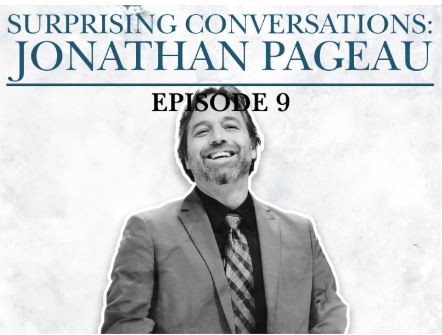
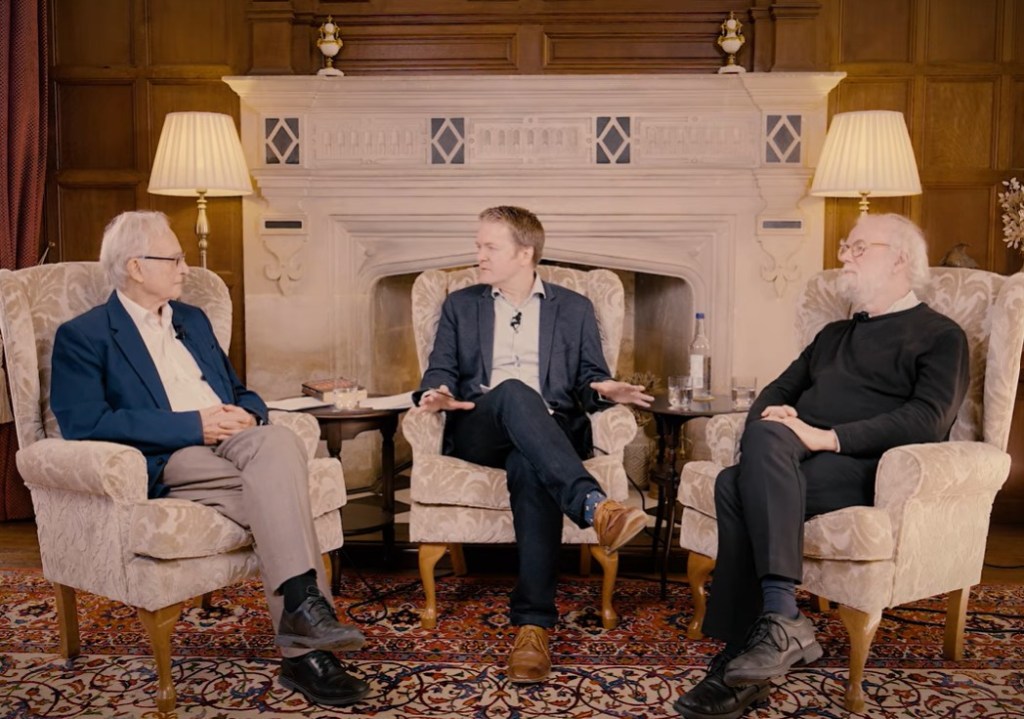
Yesterday, I listened to an interview of Jonathan Pageau by Justin Brierley. Pageau is an interesting character and a critical thinker. His recent conversation with Brierley inspires my writing today.


Raised in Montreal influenced by French Catholicism in a French Baptist Church community, Pageau has moved over to Eastern Orthodoxy by way of 4-year and 3-year stints in the Congo and Kenya. He has an undergraduate degree in postmodern art. He returned from Africa to obtain a degree in Orthodox Theology and Iconology from Sherbrooke University in Quebec. Along the way, Jonathan Pageau has become a cutting edge Christian thinker who is in demand as a speaker.

One line of discussion caught me ear in the interview with Justin Brierley that I want to explore. The subject touches on post-Enlightenment, neo-religious thinking and the proof of God.

Continue reading “Our Post Enlightenment, Neo Religious World and the Proof of God”

Of Powers and Principalities and Following Christ in the Midst of the Fray

The post-Christian right and post-Christian left battle for our allegiance


I have listened to all 30 episodes of Season 1 of the podcast, The Surprising Rebirth of Belief in God, by Justin Brierley. I have listened to dozens of podcasts, and I think this is one among the best, most well-produced podcasts I have found. The first episode of Season 2 inspires my writing today.


In this episode, Justin Brierley poses the question, “Whether the seeming rebirth of belief in God is right wing?” A return to Christian values seems to coincide with a resurgence in conservative politics, but, let’s look closer.


Is Christianity right wing? The African American church would beg to differ. Does Christianity have a right wing and a left wing? Or is Christianity another bird entirely?

At about the 45 minute mark in the podcast, Glen Scrivener identifies three strains of culture in the current western world. One strain is “blasting off into progressive liberalism.” Another strain is “snapping back to the worship of the strong”, a return to the world of Nietzsche. A third strain involves the “surprising rebirth of belief in God”, as Brierley puts it, where a trickle my become a flood, and Christian revival happens.

Scrivener is hopeful that the signs of Christian renewal in the west foreshadow revival, but he observes that these different strains of culture are moving forward at the same time, albeit in conflict with each other. They each have a trajectory that will continue into the future, and, “It will be a mess,” says Scrivener.

He believes Christian revival will happen, but he believes that progressive liberalism will also continue on its trajectory, divorcing itself more completely than it already has from nature and the Christian story. He believes that a devolution into what he calls “the default nature of the flesh” will continue as well, where might makes right.

Indeed, these things are happening now. Will they continue on the same trajectory into the future? Time will tell, but I think he is right: that there is a “post-Christian right” and a “post-Christian left” that are presently locked in a battle for the minds of the people of the western world.

I would add that the world, generally, is and will continue to be the devil’s playground until Jesus returns. At least, that is what the Bible says (millennium variations aside).

Continue reading “Of Powers and Principalities and Following Christ in the Midst of the Fray”

Listening in on a Discussion of the Coronavirus and the Church

What some might see as a threat to the vitality of Christian community, others see as opportunity to advance the kingdom of God.


I am reading through the Bible chronologically this year and paying attention to themes that sweep from beginning to end. One great theme is the promise to Abraham and his descendants, that God would bless him and make of him descendants that would be too numerous to count, and by them God would bless all the nations of the world.

I just got done contemplating why, when God entered the world as a human being and came to “His own” His own people didn’t recognize or receive Him. They had developed their own expectations that were very focused, understandably, on the nation of Israel and the promised land, and Jesus didn’t meet the expectations they had. (See What We Can Learn from Expectations about What God Is Doing.)

Expectations are good. It’s good to be expectant about what God is doing, but the danger is that we anchor those expectations in our own perspectives, which are unavoidably limited. Our expectations should be shaped by Scripture and relationship to God alone, but (being human) we tend to superimpose our own personal, community, societal, cultural and philosophical models on top of that foundation. Sometimes we even import biblical principles on top of a foundation that is not biblical.

American Christianity is no different than any other cultural expression of Christianity in that regard. Perhaps, American Christianity is even super-sized in that tendency, however, because of our historical sense of manifest destiny and extreme confidence in the rightness of the great American experiment in Democracy, capitalism and constitutional framework that has allowed the United States to thrive and become the dominant country in the world.

Because of the human tendency to filter everything through our unique perspectives and miss what other people with different perspectives can see, I spend time listening to and reading Christians and people with other perspectives from other parts of the world. For that reason, I listen to many of the episodes of the Unbelievable? podcast with Justin Brierly, a British Christian, who interviews people from various parts of the world from various viewpoints, including Christian and non-Christian worldviews.

The coronavirus pandemic has created a confluence of varying viewpoints in the Church global, the American Church, and communities in and out of the Church and societies all around the world. That global pandemic has, perhaps, heightened the degree of angst that comes to bear on other issues in the world and locally, such as the current racial tensions in the US and particularly acute response that we have experienced as events have unfolded that have opened and exasperated old racial wounds that have not yet healed.

How we respond to these things as Christians is critical. It affects the effectiveness of our mission to carry out the Great Commission – the marching orders Jesus gave to His followers to spread the Gospel throughout the world. The pandemic means that we can no longer carry on “business as usual”. Indeed, God often used catastrophic and extreme measures to accomplish His purposes throughout Scripture and (certainly I believe) continues to do so today. There is opportunity in these times to adjust with what is happening, listen for what God is saying to the Church and advance His kingdom.

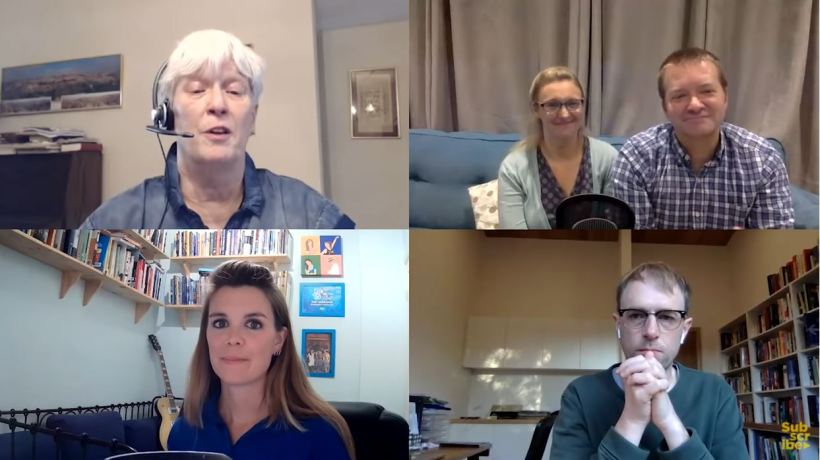
I think of these things as I listen to the recent interview by Justin Brierley of three Christians talk about the coronavirus: Mark Sayers from Australia, AJ Roberts from Los Angeles, Ruth Jackson from Great Britain. Continue reading “Listening in on a Discussion of the Coronavirus and the Church”

Inerrancy and the Spirit of the Age

Paul encountered the risen Lord Jesus in person, and that personal experience eclipsed “doctrine” and forever infused all that he knew into a living faith.


When I was in college, I was one thesis away from being a religion major. I took the thesis class, did the research and even wrote the paper. I just didn’t turn it in.

I graduated with an English Literature major. I didn’t need Religion for the double major. I wasn’t satisfied with the product, so I didn’t turn the paper in.

I’ve recalled these things before, but I haven’t really addressed the subject of that thesis paper. It was biblical inerrancy.

I recall the religion major that fell short now, and the topic that derailed it, following some comments that NT (Tom) Wright made to Justin Brierley on the podcast, Ask NT Wright Anything (episode #8, I believe).

I chose the topic, of course, but I felt I bit off more than I could chew. It turns out there may be good reason the topic was so difficult for me, a new believer at the time. NT Wright sheds some light on the subject.

Continue reading “Inerrancy and the Spirit of the Age”

Homosexuality and the Church

What we need is for the church to have the conversation on homosexuality better.


I am a big fan of Justin Brierley’s podcast, Unbelievable! on Premiere Christian Radio in the UK. The theme of the podcast is to interview persons with different viewpoints on a variety of subjects that usually focus on some aspect of faith. Often the interviewees include a person of faith and a person of no faith. Sometimes, the interviewees are people of different faiths. The podcast that aired on November 24, 2018, included two Christians on different sides of the debate about homosexuality: How should gay Christians express their sexuality?

David Bennett “grew up in an agnostic/atheist home” but became a “conservative” Christian, while Justin Lee represents the mirror image of David’s experience. Justin grew up in “a very devoutly Christian home”.

Justin relates that he understood that being a Christian meant “taking a loving but principled stand against homosexuality” and that “being gay is a sinful choice”. He felt it was his obligation as a Christian to speak out and encourage people not to be gay. He believed that God would “lead people out of homosexuality”. He believed that homosexuality was a choice, which is what his Southern Baptist church taught.

But then, Justin came to realize that he was same sex attracted himself. In spite of praying and believing that God would change him, his feelings didn’t change. He struggled with that realization until he came to believe that same sex attraction is not a sin. Though Justin is still single, he now engages in ministry to the gay and lesbian community who he says have been left adrift by the greater Christian community.

These two men, both same sex attracted, have come from opposite shores, crossed in between, and take different positions in respect to homosexuality and faith. They engage in a very thoughtful, honest and thought-provoking conversation with Justin Brierley in the podcast.

You can hear the whole thing by clicking on the link in the first paragraph above. Meanwhile, I will summarize their divergent experiences that cross over from opposite shores below.

Continue reading “Homosexuality and the Church”