Social Justice and Gospel Justice, Part II

The fact that the world “does justice” motivated by different ideals is no reason for the body of Christ to fail to do justice motivated by the grace and love of Christ.

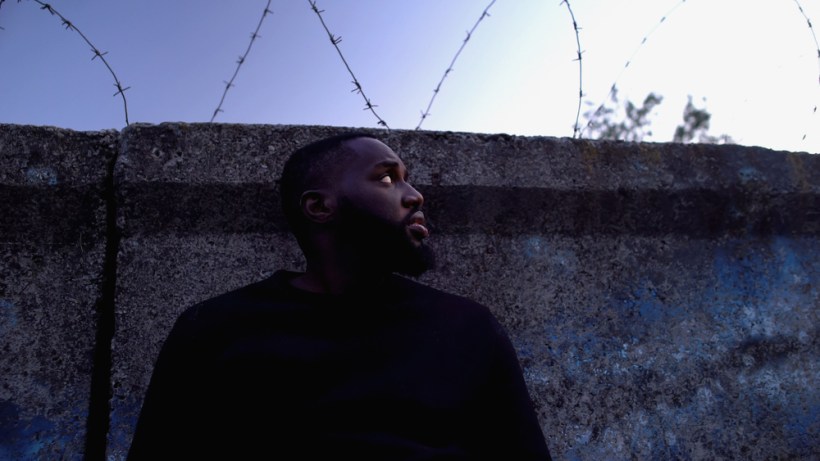
Imprisoned afro-american man looking at barbed wire, refugee camp, hopelessness


Jesus came to proclaim the gospel, which he described as “good news to the poor”, and he came to set the oppressed free. If we are to follow Jesus, the Gospel and justice go hand in hand. I wrote about the way Gospel and justice go together right from the start of the ministry of Jesus in Social Justice and Gospel Justice, Part I.

Among some evangelicals, though, we tend to see these things as almost diametrically opposed. Gospel and “justice” are almost viewed as the difference between orthodoxy and heresy, conservatism and liberalism. We have allowed a separation to creep in between the Gospel and Justice. And I dare say we have become unbalanced.

Of course, the same thing has happened in reverse. A “social justice” has developed that denies the gospel and is disassociated from the gospel. This, perhaps, explains the reaction of the orthodox church to the term “social justice”. 

I will try to make sense of this divorce of Justice from the Gospel in evangelical circles, and the divorce of the Gospel from Justice among non-evangelicals, in this blog post.

Continue reading “Social Justice and Gospel Justice, Part II”

Distinguishing Biblical Justice from Social Justice I

Self portrait of beautiful girl in shanty town.

As Board member of the predominantly evangelical ministry, Administer Justice, a faith-based legal aid organization, I am concerned for Justice. That’s what the ministry is about.

Some skepticism is apparent among evangelicals and other conservative (or orthodox) Christians, however, about the biblical propriety of justice. To be more accurate, the concerns lie with the idea and movement that is labeled “social justice”, but the caution bleeds over into a focus on justice, itself.

Forgetting, for the moment, that a form of justice has been promoted that is divorced and disassociated from orthodox, conservative Christianity, is there any question that our God is a just God.

“His work is perfect, for all his ways are justice. A God of faithfulness and without iniquity, just and upright is he.” (Deuteronomy 32:4)

“Righteousness and justice are the foundation of your throne; steadfast love and faithfulness go before you.” (Psalm 89:14).

God is intimately and preeminently concerned about justice and expects us to “do justice”.

“Learn to do good; seek justice, correct oppression; bring justice to the fatherless, and please the widow’s cause,” (Isaiah 1:17)

“He has told you, O man, what is good; and what does the Lord require of you but to do justice, and to love kindness, and to walk humbly with your God?” (Micah 6:8)

And this biblical sense of justice isn’t just limited to the exhortations of prophets in the Old Testament. Jesus was very clear in His view of justice when he said,

“But woe to you Pharisees! For you tithe mint and rue and every herb, and neglect justice and the love of God. These you ought to have done, without neglecting the others….” (Luke 11:42)

Lest we risk being counted among the Pharisees, we need to take his words to heart. We should not neglect to do justice. We should get about doing the justice God commands us to do.[i]

At the same time, the phrase, “social justice”, carries with it connotations that we rightfully consider with caution. Though we can agree on many of the evils that are the targets of social justice – hunger, poverty, human trafficking, abuse of the elderly and so on – there are some key differences we should recognize between mere “social justice” and biblical justice.

For one thing, secular social justice focuses only on the here and now; whereas biblical justice focuses both on the here and now and eternity. The secular notion of social justice that is based on “civil rights” and “human dignity” has its roots in the idea that all people are made in the image of God, but it has been severed from those roots.

Social justice divorced from the idea of a just God is “grounded” in a currently persuasive social construct created by people that is not rooted to an eternal or timeless truth. That means there is no assurance that the same construct will continue to be persuasive in 500 years, or 100 years, or even 50 years.

But it goes deeper than that. I am not going to attempt a definitive treatise of the differences. I am going to highlight some basic differences with the help of J. Warner Wallace[ii] with the hope of bringing a little clarity that will help Christians take seriously God’s call for us to do justice without getting “off the path” into the secular weeds.

Continue reading “Distinguishing Biblical Justice from Social Justice I”

Jesus, Is Still Shaking the Church Like He Shook the First Century Religious Leaders

Righteousness and justice are the foundations of God’s throne. They are the building blocks of His character.

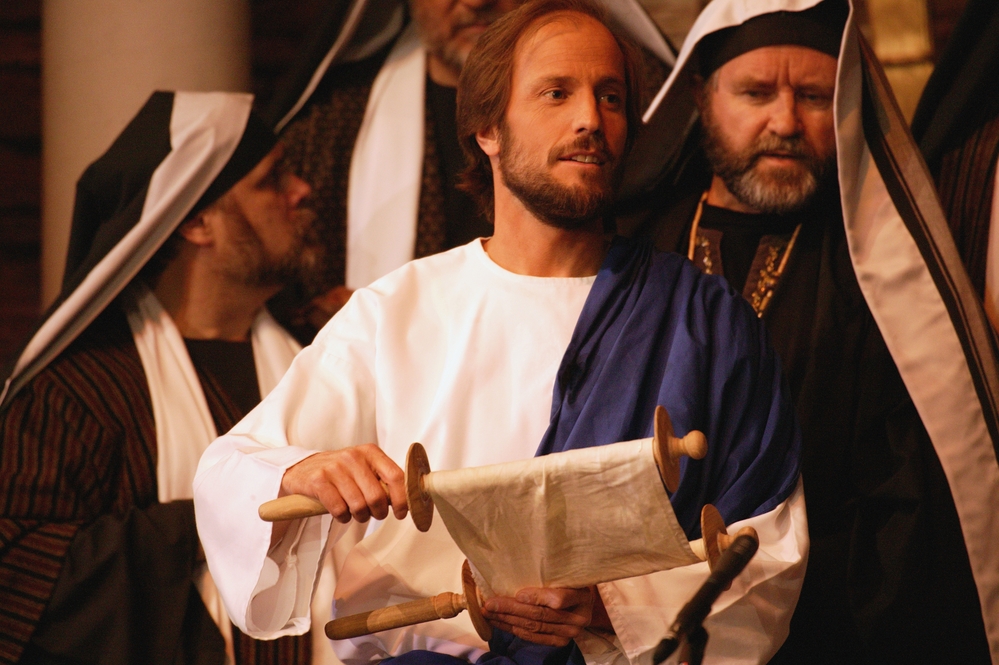
I wrote about A Mic Drop Moment in First Century Galilee back in March of 2020, referring to the passage in Luke 4 in which Jesus read from the Isaiah Scroll in the synagogue in Galilee where he announced his public ministry. I have been focused on that passage since the spring of 2019, when I was drawn to it for a talk on doing justice.

I am still continually drawn to that passage. I intended to write more about justice when I wrote that piece in March of 2020, but it wasn’t until July that I actually got around to it. (See Evangelicalism and Injustice Part I, Evangelicalism and Injustice Part II and The Need for the Church to Address and Injustice, for example.)

The world changed dramatically between March 2020 and July 2020. COVID shut down commerce and isolated people. The George Floyd killing happened in June, and we were embroiled in nationwide unease and unrest. The need for justice in a spiritually dry and parched world was quite evident, then, as the scabs of centuries of racial injustice were torn open and bleeding.

The focus of my writing has been on my fellow evangelicals. They way I have phrased this introduction may strike discord among my church family (or so I imagine as I write this).[i] I am convinced, however, these things are centrally important to God and how the body of Christ lives out the Gospel in the world.

Righteousness and justice are the foundation of God’s throne. Mercy and truth go before Him. (Ps. 89:14)

If we want to get closer to God, to know Him better and to be like Him in this fallen world, we need to focus on these: righteousness and justice. They are the twin pillars of God’s character.


This morning, Jeff Frazier’s sermon at Chapelstreet Church in Batavia, IL was on the same passage in Luke 4 that I have been reading periodically since 2019.[ii] I focus on a particular emphasis today that prompts this article, but let me set the scene first.

The entirety of the passage is found at Luke 4:16-30.  I encourage you to read it now or read my mic drop description of it (as if Jesus read from the Isaiah scroll in a neighborhood church today).

The key points for this article are that Jesus went to his home synagogue and read from the Isaiah scroll to his “own people” who knew him well. When Jesus said the messianic message of that passage was being fulfilled in their hearing, the people asked him, “Aren’t you Joseph’s son?”

Still, they spoke well of him and marveled at his “gracious words”. (Luke 4:22) Then Jesus made them uncomfortable by foretelling that they would taunt him and reject Him, adding, “[N]o prophet is acceptable in his hometown.” (Luke 4:23-24)

I imagine the synagogue went quiet quickly. They probably looked at each, thinking or saying things, like,

  • What is he saying?
  • Did I just hear him right?
  • Weren’t we just saying how he has grown up into a fine young man?
  • Did  he just accuse us of rejecting him?
  • We haven’t done anything!
  • We weren’t even thinking those things!”

But Jesus didn’t stop there. He turned the heat up a notch! This is where things really got dicey in his hometown synagogue. This is the point I am seeing in this passage today – something for us to think about in the American Church today.

Jesus referenced two passages of Scripture and two stories of revered Hebrew prophets. His citation to Scripture may not have raised eyebrows. It was the application of them that riled up his synagogue audience.

Continue reading “Jesus, Is Still Shaking the Church Like He Shook the First Century Religious Leaders”

When Truth Stumbles in the Public Squares

Have you ever considered how vital truth is to justice? 


“Justice is turned back, and righteousness stands far away; for truth has stumbled in the public squares….”

Thus, said the Prophet Isaiah (Isaiah 59:14 ESV) to the nation of Judah approximately 700 years before the new millennium that begins at 1 AD. Thus, might a modern prophet say today, over 20 years into the new millennium beginning with 2000 AD. Justice is still turned back while truth stumbles today in the public squares.

Fake news is the story of our times. We can’t trust anything written or said in the public squares. Never has so much information been available to people; but the glut of information comes without a guaranty: Buyer beware.

Indeed, information has become a commodity that is bought and sold. We get to choose our own facts. We can take our facts from Fox News, CNBC, Dailywire, Buzzfeed, and hundreds (probably thousands) of sources – served up just the way we like them.

We’ve also dispensed with the distinction between fact and opinion. Facts now are served up with ready interpretations. We used to call it “spin”, but we don’t even bother anymore. Facts are sorted for us as well, packaged together in neat bundles, with the pesky counter facts removed for our convenience.

Have you ever considered how vital truth is to justice?

Should there be any wonder that justice is turned back as truth stumbles in the public square?

“Behold, the Lord ‘s hand is not shortened, that it cannot save, or his ear dull, that it cannot hear; but your iniquities have made a separation between you and your God, and your sins have hidden his face from you so that he does not hear…. No one enters suit justly; no one goes to law honestly; they rely on empty pleas, they speak lies, they conceive mischief and give birth to iniquity…. [W]e hope for justice, but there is none; for salvation, but it is far from us. For our transgressions are multiplied before you, and our sins testify against us; for our transgressions are with us, and we know our iniquities: transgressing, and denying the Lord, and turning back from following our God, speaking oppression and revolt, conceiving and uttering from the heart lying words.”

Isaiah 59:1-2, 4, 11-13 ESV

The way to justice is the way back to God. The way to justice requires truth, honesty, integrity and righteousness.

Contemplating the Failure of Our Attempts at Justice

Even when we strive in good faith with our best efforts, we often fail.


“Like a pregnant woman who writhes and cries out in her pangs when she is near to giving birth, so were we because of you, O Lord; we were pregnant, we writhed, but we have given birth to wind. We have accomplished no deliverance in the earth….” (Isaiah 26:17-18 ESV)

These words were written approximately in the 700’s BC by the prophet, Isaiah. Yet, there are as relevant today as they were almost 3000 years ago.

That is my opinion, of course. What do I know?

As an attorney, I am in an unique position to speak to the American system of justice. I have seen it operate from the inside out, and I have participated in it for going on 30 years, so I think I have sufficient insight to be able to provide a well-informed opinion on the subject.

I was intrigued, even stricken by a bit of awe, in law school as I studied the history of American jurisprudence (with its roots in English common law, but for Louisiana, which has roots in the French legal system of justice). The principals, which build on themselves going back to ancient times, and the care and thought that informed American Jurisprudence is something for which I developed quite an appreciation. Many of those principals were, in turn, developed in view of the ancient texts that we call the Bible.

I graduated from law school at the age of 31, having much “real world” experience under my belt before law school, but I was filled, nevertheless, with the kind of naivete and idealism that is informed by the theory but is untried in the practice.

I have tried hard to carry with me the ideals of justice that inform our legal system, and I have fought for almost 30 years, now, to implement them to the extent that they are within my control of influence. Unfortunately, one person is not able to move those wheels of justice that grind very far off the course on which they doggedly and often very bluntly drive forward leaving casualties of justice in the great ruts they create.

Relative to current events, a 2018 report to the UN on the criminal justice system in the United States reveals some gross disparities in the outcomes. “African-American adults are 5.9 times as likely to be incarcerated than whites and Hispanics are 3.1 times as likely.” The report summarizes the disparities in this way:

“The source of such disparities is deeper and more systemic than explicit racial discrimination. The United States in effect operates two distinct criminal justice systems: one for wealthy people and another for poor people and people of color. The wealthy can access a vigorous adversary system replete with constitutional protections for defendants. Yet the experiences of poor and minority defendants within the criminal justice system often differ substantially from that model due to a number of factors, each of which contributes to the overrepresentation of such individuals in the system.”

Racial disparities in our criminal justice system are only one area in which our system of justice fails to provide the justice it promises. On the ground level, I saw the failure of justice nearly every time I stepped into a courtroom in thousands of ways, big and small.

Continue reading “Contemplating the Failure of Our Attempts at Justice”