
How Do We Know When a Person Is a False Messiah or False Prophet?

Jesus told us what to look for

“[I]f anyone says to you, ‘Look, here is the Christ!’ or ‘There He is!’ do not believe it. For false messiahs and false prophets will appear and perform great signs and wonders to deceive, if possible, even the elect.”

Matthew 24:23-24

This is a significant warning from Jesus about future times – our times. It’s easy to call out false messiahs and false prophets, and many have done that, but we should be cautious and careful in our understanding of what a false messiah or false prophet and, more importantly, how to spot one.

The Greek word translated a “false” in this passage is ψευδή (pseudés) meaning “false, untrue”, and “(by extension) erroneous, deceitful, wicked.” The word comes from the root verb ψεύδομα (pseudomai) meaning “to utter a lie or attempt to deceive by falsehood.”

The Greek word Χριστός (Christos), of course, means Christ – the Christ – as in Jesus Christ, but, it could mean more than that. Christos derives from the verb chrio (χρίω), which literally means “to smear or rub with oil.” It also means “to anoint” (especially for a divine purpose” and “(by implication) to consecrate to an office or religious service.”

Jesus used chrio when he said, “The Spirit of the Lord is upon me, because he has anointed me to proclaim good news to the poor.” (Luke 4:18) In more modern terminology, we might say that Jesus was appointed to proclaim good news to the poor. The “anointing” (the pouring of oil on a person) was symbolic of a person’s appointment to a position. In religious circles, we might use the word, “calling,” today.

The idea of anointing a person appointed by God for a particular office was practiced in the Old Testament as well. Samuel “took a flask of olive oil and poured it on Saul’s head”, and he said, “Has not the LORD anointed you ruler over his inheritance?” (1 Samuel 10:1)

Christos has a counterpart in the Hebrew word, מָשַׁח (mashach), meaning “to rub with oil, i.e. to anoint,” and “(by implication) to consecrate.” Hebrew kings, priests, and prophets were anointed in this manner as a way of recognizing their position (appointment). Thus, מָשִׁיחַ (Messiah), literally “Anointed One,” emerged from this practice.

The Greek word, Christos, is the equivalent of the Hebrew word, Messiah, of course. We tend to think only of Jesus Christ, “the” Messiah, when we use those terms, but anointing men for their offices was common practice in the Old Testament and New Testament times by Hebrews and by Greeks. Anyone who was anointed (appointed) for an office was an “anointed one.”


A false Messiah is one who falsely claims or acts as if he is anointed (appointed) for a particular role. The Hebrew word for Prophet (προφήτης (prophétés)) means speaking forth by the inspiration of God, so a false prophet would be one who falsely speaks as if by the inspiration of God.
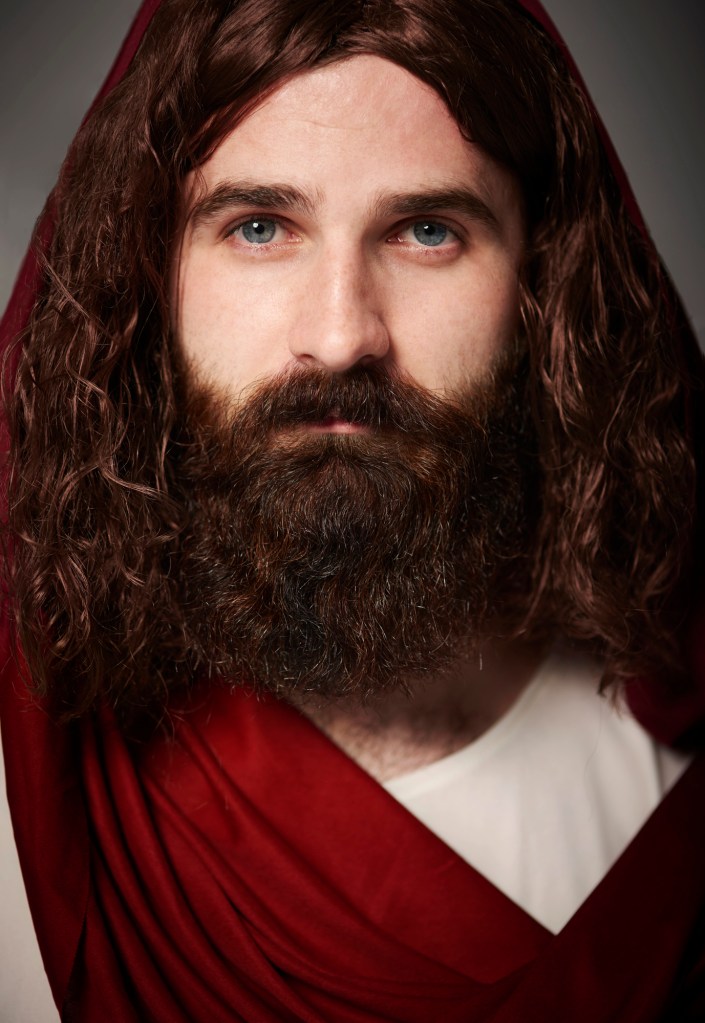

Jesus uses the terms, false messiahs and false prophets (plural), to signify that many people would come claiming (or claimed) to be messiahs or prophets. He says, they will deceive many people and even the elect, if possible. Elsewhere, Jesus says they “will come to you in sheep’s clothing” and warns us to “Watch out!” (Matt. 7:15)

Is it possible for God’s children to be deceived? I would like to think not, but then why does Jesus warn us to “Watch out!”? Why does Jesus say false messiahs and false prophets might even deceive “the very elect”?

I don’t know if God’s children – the sheep who hear His voice – can ultimately be deceived by false messiahs and false prophets, but that doesn’t mean we could not be deceived at some point or for a time. It’s safe to say, I think, that Jesus would not have warned us at all if it wasn’t at all possible to be deceived to some extent.

At a minimum, Matthew 24:24 highlights the extreme danger and the potential for even believers to be swayed or confused by the powerful deceptions of false messiahs and false prophets. Peter warns us soberly that “there will be false teachers among you” (1 Peter 2:1), so we need to beware. But, how?

So far, we can say from the descriptor of false messiahs and false prophets that they are deceivers; they are not truly anointed for the purposes they or others claim; and they do not truly speak under inspiration from God. They deceive and lie, and that is what makes them dangerous. But, again, how will we know?

When God became man and came to His own people, they didn’t even recognize Him or receive Him. (John 1: 9-11) If God came in the flesh to people with whom God had a covenant for many hundreds of years, and they didn’t recognize Him, we should have the humility to admit that we might not recognize God always when He is active in our world, and for the same reason we might be fooled by false messiahs and false prophets.


What, then, are the clues that a messiah (one who seems to be anointed for a purpose, calling, position) or a prophet (one who purports or who is purported to speak by the inspiration of God) is false? Fortunately, the Bible gives us more information to go on.


Continue reading “How Do We Know When a Person Is a False Messiah or False Prophet?”

The Way of Righteousness and the Holy Command: an Introduction

We escape the corruption of the world by the way of righteousness and the sacred command. But, what if we lose the way and don’t know the sacred commandment?


Have you ever read a passage in the Bible that weighed heavily on you? A verse that caught you up short?  A verse that gave you great concern? A verse that made you question your own salvation?

I assume we all (who take the Bible seriously) have experienced that. I believe the Holy Spirit interacts with us as we read the Bible (which the writer of Hebrews says is “living and active”). Sometimes we are encouraged, and sometimes the light of scripture shines into the recesses of our hearts and exposes things that bother us. (And so they should!)

Indeed, I believe that this is one of the great benefits of reading Scripture on a regular basis. God talks to us through His revealed Word. He interacts with us in ways that get to the core of our being … if we let Him … to teach us, to convict us, to correct us, and to instruct us in righteousness. (2 Timothy 3:16)

I recently read the following verses in my daily Bible reading:

If they have escaped the corruption of the world by knowing our Lord and Savior Jesus Christ and are again entangled in it and are overcome, they are worse off at the end than they were at the beginning. It would have been better for them not to have known the way of righteousness, than to have known it and then to turn their backs on the sacred command that was passed on to them.

2 Peter 2:20-21

Peter goes on to quote two “proverbs” about: 1) a dog that returns to its vomit (quoting Proverbs 26:11); and 2) a sow that is washed that returns to wallowing in the mud.

These examples seem to be clear illustrations of people who, having been cleansed from sin, return to their sin. If you have ever returned to the sin you have walked away from, you know the angst that reading this verse can bring.

Peter says it is better that we never know Jesus than to have known him and walked away! People are worse off not to have known the “way of righteousness” than to have known it and turned their backs on the “sacred command” (or holy commandment).

I am convicted when I read these things. I sometimes despair of the sin I tend to repeat. I have often felt like a slave to certain sin, and I been anxious for my own salvation when I read a verse like this.

I think we should feel the full weight of verses like this. God is clearly interested in the fruit of our lives. A bad tree cannot produce good fruit. If we are tapping into the wrong tree, nothing we do can produce good fruit. The problem isn’t in the fruit; the problem is the source.

Continue reading “The Way of Righteousness and the Holy Command: an Introduction”

Fruit, Love and False Prophets

It’s a sad state of affairs that Christians today may be more well known for their fighting with each other than for their love for each other. 


Someone commented recently on Facebook that some of the harshest critics of Christians on social media are Christians. (Assuming that anyone who self-identifies as a Christian is a Christian.) This reminded me of what Jesus said to his disciples after Judas left the last supper to betray him.

When he was gone, Jesus said, “Now the Son of Man is glorified and God is glorified in him. If God is glorified in him, God will glorify the Son in himself, and will glorify him at once.
“My children, I will be with you only a little longer. You will look for me, and just as I told the Jews, so I tell you now: Where I am going, you cannot come.
A new command I give you: Love one another. As I have loved you, so you must love one another. By this everyone will know that you are my disciples, if you love one another.”

John 13:31-35

“Now” the Son of Man is glorified, Jesus said. He was lifted up, but it wasn’t the kind of “glory” anyone expected. It was the glory of Jesus being obedient to the Father and accomplishing all that intended.

Jesus knew he was leaving, and (if we read between the lines), he knew the disciples left in front of him would struggle at first. What was the key instruction in this time? What was the one thing he gave them to hold onto?

Love one another. As I have loved you, so you must love one another. By this everyone will know that you are my disciples, if you love one another.”

It’s a sad state of affairs that Christians today may be more well known for their fighting with each other than for their love for each other. 

People will say that the doctrine is important and that Paul and the early church were also concerned about doctrine. This is true, of course.

It also occurs to me that the 1st century Christians lived in a world that was predominantly non-Christian. They were a very small minority. The disagreements among Christians likely went completely unnoticed by the world at large.

Christians are in the majority in the United States today, so negativity from Christians toward Christians in the United states is highly noticeable. With so many people who call themselves Christian, the fighting is going to get noticed.

A person might say further that love is tempered by truth. Love that does not recognize and confirm to truth is not love. Right? I cannot help but thinking, however, that such a statement sounds particularly like something a Pharisee may have said in the 1st century.

Isn’t it a shame that, with so many Christians in this country, we do not shine like that proverbial city on a hill? And, by shine, I mean with the love of God for each other (and for others – and even for our enemies).

Looking back at the first Christian leaders who had disagreements, I see that they spent time in prayer – together with each other. They worked to find common ground, and they agreed to disagree on peripheral things. They did not bicker publicly among themselves.

We see many examples of this in the Book of Acts and the epistles that make up the New Testament. Early Christians did not agree on everything, but they agreed on essentials, and they allowed room for disagreement.

Early Christians did take a strong stand against heresy, but we can’t just everything on which we disagree matters of heresy. Heretical doctrines in the 1st Century, like Gnosticism, have their 21st Century counterparts. We call certain clear departures from orthodox Christianity heretical, like the Jehovah Witnesses and Mormons, but the fighting my friend on Facebook was sad about is fighting among Christians who are somewhere in the range of Christian “orthodoxy”.

That is the rub.

Continue reading “Fruit, Love and False Prophets”

Who Were the Wolves Jesus Warned the Disciples About?

When Jesus said, “Be wise as serpents and innocent as doves”, who was he speaking about?


I am reading in Mathew right now in my year long reading plan, focusing this year on the New Testament. I have read the whole sweep of the Bible, from the Old Testament through the New Testament, each year for a number of years. I am not sure how many, because I have not kept track.

The words, “be wise as serpents and innocent as doves”, came up in conversation with my son a few days ago, so these words caught my attention in my daily reading this morning. I had not paid much attention to the context in which Jesus spoke these words before:

“I am sending you out like sheep surrounded by wolves, so be wise as serpents and innocent as doves. Beware of people, because they will hand you over to councils and flog you in their synagogues.” ‬

Matthew‬ ‭10:16‭-‬17‬ ‭NET

These are the instructions Jesus gave the disciples when he sent them to “the lost sheep of the house of Israel”. Jesus was very specific in his instructions, telling them what to do and what not to do, what to wear, how to conduct themselves, and Jesus pointedly included the following instructions:

“Do not go among the Gentiles or enter any town of the Samaritans. Go rather to the lost sheep of Israel.”

Matthew 10:5-6

I realized this morning for the first time the significance of the warning that Jesus was giving to his disciples when he sent them “out like sheep surrounded by wolves”. (Matt. 10:16) That instruction takes on a different color for me, now, considering that the “wolves” surrounding the disciples would be the religious people in their world – their fellow Jews.

Jesus was not sending the disciples among the Romans, or the Greeks, or even the Samaritans. Jesus was sending his disciples to the lost sheep of the house of Israel.

Jesus told the disciples to go only to the lost sheep of the house of Israel, and Jesus warned them they would be surrounded by wolves. This means Jesus was sending the disciples to the sheep in the house of Israel, and the disciples would be surrounded by wolves in the house of Israel.

The conclusion seems clear that the sheep in the house of Israel to whom Jesus was sending his disciples were going to be among wolves, who were also in the house of Israel.

These words of Jesus provide us the time worn adages about wolves among the sheep and wolves in sheep’s clothing. Jesus repeats this theme of the lostness of religious people and the wolfishness of religious leaders over and over again throughout the Gospels. So much, that this theme has stuck out like a sore thumb to me in recent years. (I have written about it in articles like, Why Did Jesus Pick on the Pharisees so Much?)

I have been recently pondering about the many criticisms Jesus leveled against the religious leaders of his day. Do these criticisms have any warrant today? How should we view what Jesus said to the religious leaders of his day? Is the significance historical, only? Or does it have application today in our Christian world?

Continue reading “Who Were the Wolves Jesus Warned the Disciples About?”

Questions for the Church in America

There were many so-called prophets who said what the people wanted to hear, but they weren’t the real prophets of God.


The NPR headline reads – Survey: White Evangelicals See Trump As ‘Honest’ And ‘Morally Upstanding’. The tenor of the article runs counter to what the polled “white evangelicals” espouse. Some of the comments on social media reflect the same sentiment: “Nothing new to me as they are all my racist, homophobic relatives”; and “Scary”.

I am reading through the Old Testament in 2020 in chronological order this year, and I am currently slogging through Kings and Chronicles. It’s a tough go, and especially tougher as I think about the current political and religious landscape in the United States. It’s hard to know where religion ends and politics begins.

The depressing thing about Kings and Chronicles is how far the people of God go off the ranch. Starting with King David, the man after God’s heart, it’s a steady downward spiral with a few brief interludes of an effort to rid the kingdoms of idols, injustice, and immorality.

I say kingdoms (plural) because the people began to polarize under King Solomon, and they formed two kingdoms immediately after he died: Israel and Judah. They spent much of their time after that and before the Babylonian captivity fighting and killing each other!

Let me just say this before I go further: the United States is NOT a nation of God’s people like Israel (and Judah) was. Yes, we have been blessed by God. Our “founding fathers” honored God (more or less) and used some biblical principals (among other things) on which to form the Constitution and laws by which we are governed. BUT, the USA is not God’s chosen people like Israel (or Judah) was.

We shouldn’t flatter ourselves that way. The Roman Empire became a Christian nation, too, after Constantine. England, and France, and most of the European countries were Christian nations at one time – even more than the US is today because religion and state were combined. Church and State were married together in governance through the Middle Ages (though it didn’t stop them from warring with each other either).

There is only one people to whom God chose to reveal Himself and to enter into covenant relationship for the purpose of blessing all nations. He did this to set the stage for His own humble entry into history and eventual sacrifice for our sins. Those chosen people aren’t us.

God already accomplished His purpose for which He chose those people. Now He is on to the blessing of the nations part – the redemption of the world through all who follow Him.

We can say with biblical confidence that God ordained Donald Trump as President (Romans 13:1), but for what purpose? Certainly God is working out His purpose, but it may not be what people think.

God gave Israel King Saul when they demanded a king, but their demand for a king was a rejection of God. Is Trump the king we wanted? Not that God is thrown off by those things. He works His purpose regardless of the vagaries and ambivalence of His people.

I am not concerned about God accomplishing His purposes. He will! But what about the church in America? Where do we stand in all of this?

Continue reading “Questions for the Church in America”