Daniel and Nebuchadnezzar: What Dreams Are Made Of?

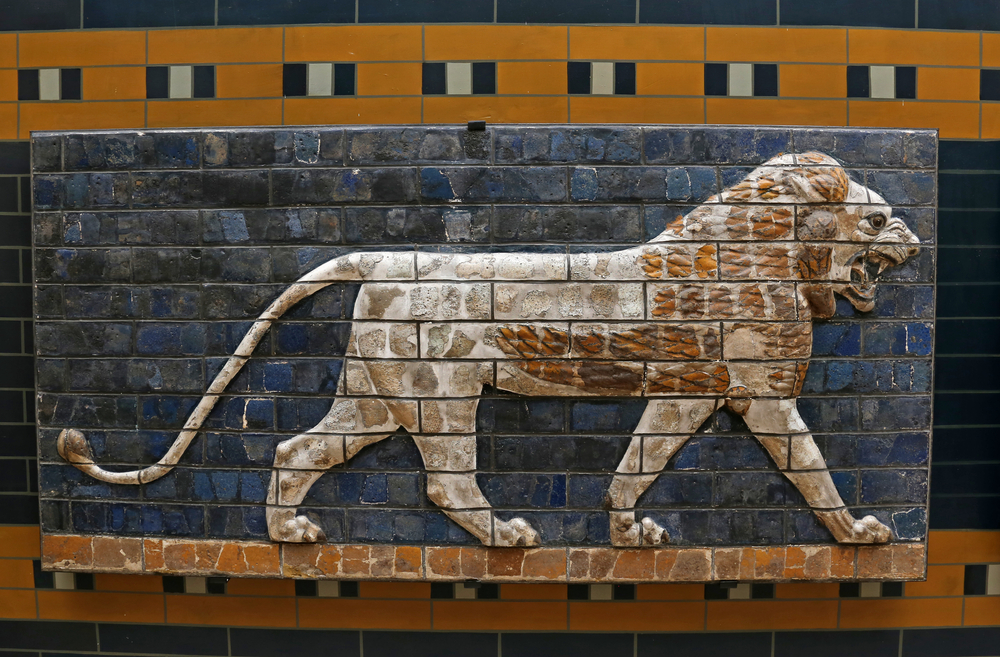
A lion from Ishtar Gate of Babylon built by King Nebuchadnezzar II in about 575 BC.. The piece is located in the Istanbul Archaeological Museum, in Istanbul, Turkey.

We all have them. I suspect that most dreams are just subconscious streams of thoughts and emotions played out in disconnected images in the twilight between full sleep and consciousness. They might be interesting to a psychologist, but we can hardly count on them for meaningful information or guidance.

Some people believe that all dreams have some meaning, and some people believe that dreams have external meaning and significance (not just internal, psychological meaning and significance). Though I question that, I don’t discount that God can speak to us through the medium of dreams.

For as much attention people give them, dreams are not a prominent feature of biblical focus. The dreams that come to my mind are the dreams of Pharaoh and the dreams of Nebuchadnezzar. One of those dreams stands out to me, not so much because of the dream, itself, or its interpretation, but the response to it.

We need a little backstory first, though. Nebuchadnezzar could be ruthless, as kings often were. When he had a dream that troubled him in the second year of his reign (see Daniel 2), he called in his magicians, enchanters, sorcerers and astrologers to tell him what his dream was. They were eager to interpret it, but the king had something else in mind.

The King said that he had determined before summoning them that they must tell him what the dream was and interpret it or he would them “cut into pieces” and their homes “turned into piles of rubble”! I’m sure they were a bit less eager, but they pressed him, “Tell your servants the dream, and we will interpret it.”

They didn’t understand him (or they didn’t want to understand him), so he clarified his demand again: “I am certain that you are trying to gain time, because you realize that this is what I have firmly decided: If you do not tell me the dream, there is only one penalty for you.” The King wanted them to tell him what his dream was. He figured if they could tell him what his dream was they could interpret it for him also.

They protested, “There is no one on earth who can do what the king asks!” Still, the King had them all executed. He would have executed Daniel also, but Daniel prayed to God and was shown the King’s dream during the night so that he was able to describe the dream and interpret it.

But this isn’t the dream I want to focus on. The interpretation of the dream in Daniel 2 was benign and foretold the distant future after the King’s life. King Nebuchadnezzar had another dream that is described in Daniel 4, and the interpretation of this dream was anything but benign.

To make a long dream short, the King dreamed of a mighty tree and a messenger from heaven who called out: “Cut down the tree and trim off its branches; strip off its leaves and scatter its fruit.” The messenger continued: “Let him be drenched with the dew of heaven, and let him live with the animals among the plants of the earth. Let his mind be changed from that of a man and let him be given the mind of an animal, till seven times pass by for him.”

Last, but not least, the messenger said that this is “the verdict, so that the living may know that the Most High is sovereign over all kingdoms on earth and gives them to anyone he wishes and sets over them the lowliest of people.”

Daniel was “terrified” when the king called on him to interpret this dream, and the reason becomes apparent quickly enough. The King didn’t hesitate to execute the men who couldn’t tell him what his dream was. What would he do when the interpretation isn’t to his liking?

Daniel explained it despite the terror he felt. He said the dream was a decree from God against the King. Daniel told him he would be driven away from his people to live with the wild animals until he renounced his sins, repented of his wickedness, did what is right and acknowledged God.

imagine that Daniel trembled a bit as he spoke those last words! Who tells the King to repent and change his ways?… and lives to tell of it!

But the King doesn’t have Daniel executed. He unreasonably put to death the men who couldn’t tell him what his dream was, but he didn’t punish Daniel for the extremely unfavorable interpretation of the second dream.

That puzzled me a bit previously, but I had a dream the other night, and I think I understand it now. Let me explain how.

Continue reading “Daniel and Nebuchadnezzar: What Dreams Are Made Of?” →
Thinking Outside the Circle and Focusing on the Center: What Direction are You Moving?

If we are not challenged to rethink what we think we know from time to time, we are not likely coming into close enough contact with Jesus.

I watched the Chapelstreet church service today and listened to the sermon by Jeff Frazier in Batavia, IL. It was just what I needed to hear. Not that it tills new ground; it covers familiar ground from a new angle. It avoids the ruts of old, tired ways of thinking and finds fresh new ground (for me) from which to approach how we see Jesus.

The sermon today was inspired by Matthew 9:9-13.[i] You can read it in full at the endnote below. In summary, Jesus called Matthew from the tax booth where he was sitting to follow him, and Matthew responded by following him. That was the extent of the initial story

Then Scripture jumps to another scene: Jesus reclining at a table with “many tax collectors and sinners”. We are left to draw our own conclusions about what happened in the interim. It could be that Matthew invited all his friends, who were naturally other tax collectors and “sinners”, to met Jesus who had just connected with him.

The focus of the new scene, though, isn’t on Matthew anymore. The focus shifts to the Pharisees who ask the disciples why Jesus eats with “tax collectors and sinners”.

Before I describe how Jesus responded to them, I want to focus on the fact that the people who had a problem with Jesus were the religious people. Jesus was hanging around with all the wrong people according to the religious insiders of his day.

This is nothing new. I have written often about the Pharisees, Jesus and tax collectors and sinners. In fact, I wrote on the same subject just two weeks ago. (The Danger that Good, Upstanding, Religious People Face Today)

It isn’t a new thing to realize Jesus defied categorization; he shattered expectations and common ways of thinking. He challenged everyone he met to see the world differently, but we sometimes forget the radicalness of Jesus in our routine orthodoxy.

I dare say, if we are not challenged to rethink what we think we know from time to time, we are not likely coming into close enough contact with Jesus!

Back to the story: in First Century Judea, tax collectors were traitors and sell-outs. They were Hebrews who collected taxes for the Romans and used the authority of the Roman occupiers of the Hebrew Promised Land to accumulate wealth for themselves. They were hated by good Jews. They were outsiders in their own community.

As outsiders, they naturally associated with other outsiders (“sinners”). Thus, for Jesus to establish a relationship with Matthew – and worse than that: to “hang out” with other tax collectors and “sinners” – was scandalous. It was unthinkable!

When Jesus heard the Pharisees challenge the disciples to explain why Jesus was associating with “such people”, Jesus famously responded:

“Those who are well have no need of a physician, but those who are sick. Go and learn what this means: ‘I desire mercy, and not sacrifice.’ For I came not to call the righteous, but sinners.”

Matthew 9:12-13

This is a familiar passage to us, but I think the application of the message is sometimes lost on us today. I think we can fall into the trap of the Pharisees in our thinking without even realizing it. Thus, we need to be challenged to see things from a different angle, just as Jesus challenged the Pharisees in the first century.

Again, these are not new thoughts, but the the change of perspective (for me) comes courtesy of Paul G. Hiebert. Born to missionary parents in India, he became “arguably, the world’s leading missiological anthropologist”.[ii]

When he moved back to the west, he wrestled with questions like these: What does it mean for an illiterate, Hindu peasant to know Jesus? How much of their old life and traditions must be left behind?

Having observed missionaries in India, he concluded that the western mission movement was importing too many western traditions and thoughts. He saw the need for thinking outside the western box – like Jesus encouraged the followers of his day to think outside the box…. or rather, outside the circle, as we will see.

Continue reading “Thinking Outside the Circle and Focusing on the Center: What Direction are You Moving?” →

God’s Order for Living Beings, Human Beings and His Grand Design

“Then God said, ‘Let the earth bring forth living creatures after their kind….'”


I am starting a new Bible reading plan for the year, beginning in the beginning: in Genesis. Reading through the rich text of Genesis again I am seeing some things I hadn’t noticed before. Consider the following (with my emphasis added):

“Then God said, ‘Let the earth sprout vegetation, plants yielding seed, and fruit trees on the earth bearing fruit after their kind with seed in them‘; and it was so. The earth brought forth vegetation, plants yielding seed after their kind, and trees bearing fruit with seed in them, after their kind; and God saw that it was good.

Genesis 1:11-12

“God created the great sea monsters and every living creature that moves, with which the waters swarmed after their kind, and every winged bird after its kind; and God saw that it was good. And God blessed them, saying, “Be fruitful and multiply and fill the waters in the seas, and let birds multiply on the earth.’“

Genesis 1:21-22

“Then God said, ‘Let the earth bring forth living creatures after their kind: cattle and creeping things and beasts of the earth after their kind‘; and it was so. God made the beasts of the earth after their kind, and the cattle after their kind, and everything that creeps on the ground after its kind; and God saw that it was good.”

Genesis 1:24-25

Then God said, ‘Let us make man in our image, after our likeness. And let them have dominion over the fish of the sea and over the birds of the heavens and over the livestock and over all the earth and over every creeping thing that creeps on the earth.’ So God created man in his own image, in the image of God he created him; male and female he created them. And God blessed them. And God said to them, ‘Be fruitful and multiply and fill the earth and subdue it….'”

I color-coded the various provisions that form the pattern that informs my thinking today. The provisions in each color correspond with the other provisions of the same color.

Now, let me see if I can put all my thoughts together in a coherent whole.

First of all, God ordered (in the sense of designed) all living beings to multiply after they own kind. We see this everywhere in nature: apple trees produce seeds that grow into new apple trees; asparagus plants produce seeds that grow into new asparagus plants; lions beget lions; polar bears beget polar bears; yellow polka dotted salamanders beget yellow polka dotted salamanders; bluefin tuna beget bluefin tuna; and purple finches beget purple finches.

This is the order of living things. Not only that, but we now know that something (call it evolution or something else) works powerfully within living beings to reproduce and even to adapt with changes over time.

Every living thing bears seed or otherwise reproduces more of its kind. Human beings included, but only humans are made in the image of God. (Hold that thought.)

God “blessed” the living things He created, saying, “Be fruitful and multiply” and fill the earth. (Gen. 1:22) He also blessed man who God made in His own image, and gave similar blessing/order: “Be fruitful and multiply and fill the earth and subdue it….” (Gen. 1:28)

Note that God “ordered” (as in designed) the living things He created to reproduce after their kinds and to be fruitful and multiply, but God ordered – as in not only designed, but commanded – man to do the same. The difference is an important key to understanding what God is doing.

Unlike the other living creatures that are designed to reproduce and multiply after their kinds, humans have some agency in the matter. God designed them for the same purpose, but He also commanded them to do it – and gave them agency in doing it – because humans are created in the image of God who has agency – the ability to exercise will and to do (or not do) things.

Humans, of course, had no choice in their creation, but they do have choice in whether to “participate in God’s design” and how they would participate in God’s design. This choice was demonstrated in the one tree in the garden that was forbidden to them.

It was a real choice, and it had real consequences. It had to have real consequences or it wouldn’t have been a real choice. That choice was part of what it meant to be made in the image of God. Without the ability to choose, humans would have been just like the other living things God created. The ability to choose set humans apart.


As the story goes, humans ate the fruit of the one tree that was forbidden.

They exercised the choice God gave them. In eating the fruit of the tree of the knowledge of good and evil, humans opened up their world to all the ways they might choose to go against the order of creation.


Throughout Genesis 1, we read over and over again that what God did “was good” (Gen. 1:4, 10, 12, 18, 21, 25, 31). If what God designed was good, choosing to operate counter to that design would be evil (the opposite of good).

None of this is very revelatory so far, but I am getting there.

Genesis 1 reminds me of 1 Corinthians 15 where Paul says:

God gives [all living things] a body as he has chosen, and to each kind of seed its own body. For not all flesh is the same, but there is one kind for humans, another for animals, another for birds, and another for fish.

1 Corinthians 15:38-39

The order/design of life – of reality – is immutable. Life is ordered the way God created it, though humans have some choice (within limits) of whether to align with God’s design or to buck against it. Indeed, the story of the fall is the story of humans exercising that choice, God built into His design an adaptation (if you will) to accomplish His ultimate plan.

Continue reading “God’s Order for Living Beings, Human Beings and His Grand Design” →

An Invitation to Join Me or Visit Me on My Journey in 2021

The year 2020 has been difficult, but there is light ahead.

I have been using the YouVersion Bible app for a number of years now. I wake up in the morning, and the first thing I do is grab my phone and open it up. It has become a habit.

For the last two years, I have used year long reading plans by which I have read through the Bible from beginning to end. Last year I read it book by book. This year I read it in chronological order. (Did you know the books are not in chronological order?)

For 2021, I have chosen another (almost) yearlong reading plan that focuses on how Jesus is revealed in Scripture from beginning to end.

Jesus said that he came to fulfill the Law and the Prophets (Matthew 5:17). Jesus didn’t just fulfill the Old Testament Scripture; Moses (the Law) and the Prophets is all about him! (Luke 24:27) The story of Scripture finds its denouement in Jesus! Thus, I have decided to use a yearlong plan that focuses on Jesus throughout the Bible, from start to finish.

I am reminded this morning of Psalm 1, which says that a person “whose delight is in the law of the Lord and who meditates on his law day and night” is “like a tree planted by streams of water, which yields its fruit in season and whose leaf does not wither….” (Ps. 1:2-3)

Jesus, having fulfilled the Law God gave Moses (a law we cannot hope to fulfill in ourselves), has demonstrated for us a love which is the fulfillment of the law. (Rom. 13:10) We are, then, to love our neighbors as ourselves just as Jesus loved us demonstrably in giving up his own life for us. “Love one another…. [a]s I have loved you” is the commandment of new covenant (John 13:34), which is the outgrowth and the ultimate fulfillment of the old covenant.

The year, 2020, will go down as one year that we will never, ever forget. History books will be written about it no doubt. It was a year of tribulation, unrest, angst, fear, anger, isolation and polarization, but not all is dark.

Continue reading “An Invitation to Join Me or Visit Me on My Journey in 2021” →

The Top 10 Navigating by Faith Blog Posts in 2020

Who would have imagined what was in store for 2020 on January 1?

I summarize the year in review on the Navigating by Faith blog about this time every year by doing a top ten rundown of the most read articles. I will do the usual thing, though this has been, undoubtedly, an unusual year.

I appreciate the readers and those who left comments along the way. I hope I have provided some food for thought for those who have joined me on my journey of faith, some inspiration, some encouragement and maybe a challenge to consider things from different angles.

Who would have imagined what was in store for 2020 on January 1? The year began like any other, full of hope, renewed commitments and anticipation for better things ahead.

I renewed my commitment, for the second year, to read through the Bible from beginning to end. This time I would read it chronologically (using a plan in the YouVersion app). Those daily readings became the inspiration for many things I wrote in 2020, but current events commanded the most attention from readers of the Navigating by Faith blog.

Rumblings began to be heard sometime toward the end of January and into February coming from the east. They were things we had heard before: a new virus of uncertain origin. We’ve heard scary rumors of flu, Ebola and other viruses in the past, so I didn’t suspect this one would be different.

Neither did Donald Trump, apparently, to the consternation of a growing cry of the usual voices demanding that he “do something”. Trump shrugged them off. Many people, I believe, did the same because everything in the last four years had become a new reason to criticize Trump. Even people who don’t care for Trump were getting tired of it.

Patriotic cries of freedom mixed with knowing voices of concern and criticism of Trump’s nonchalance intensified as the northwest was hit with the first waves of the corona virus (now known as COVID 19). Governors began to step into the leadership vacuum with mixed reactions.

On March 16, 2020, the world where I live (Illinois) shut down in the midst of increasing confusion, warnings, consternation and angst. This was something new. Something that had not occurred in my lifetime.

Freedom, anger, fear and unbelief clashed as the pandemic hit our shores and spread. For many months, though, it seemed like more of a story from a distant shore…. unless you knew someone. Now at years end, most of us know someone who has had COVID, and many of us know people who have died from it.

In March, though, people struggled to come to grips with a government-ordered “lockdown”. Some people were incredulous. Others panicked. Some horded toilet paper. Others scoffed and protested.

Still reeling from the impact of a global pandemic, the world exploded in May when another black person died at the hands of police. The video of a white officer kneeling on the neck of George Floyd, ignoring pleas from onlookers to relent, triggered a national reaction of anger and protest.

The impact of those two things, the pandemic and racial unrest, can be seen in the articles and readership in 2020. Posts relating to current events make up four of the top five most-read articles and 60% of the top ten articles.

Readership also soared as the world shutdown. The blog generated more views in March 2020 than any month since 2012 when the blog began. Readership in every month (but one) since then has exceeded the readership in March. Five months set new records, with the most views occurring in November.

My friend who owns a record store says that 2020 will be up 10% over last year despite two and half months of being closed. I think the reason is the same as the reason for increase in readership of this blog: more people are spending more time at home reading and listening to music

The time we have been “given” is not necessarily a bad thing. We have an opportunity to reset priorities and refocus our lives on God, family and the important things in life.

When the world is safe to open back up, we will cherish people and community, live music and corporate worship. We need each other. We are meant for relationship with each other and our Creator. We will appreciate them all the more.

In the meantime, we wait for the New Year to bring long, cold months of isolation and longing. The spring thaw and summer warmth may never be more anticipated or welcome. I will continue to write, seeking God in the midst of our times. In the meantime, I look back over a year like no other in my lifetime.

Continue reading “The Top 10 Navigating by Faith Blog Posts in 2020” →