The Paths that Diverge at the Crossroads of Existential Angst

Why do I wonder? Why am I conscious of my wondering, and why does my wondering create in me such terrifying angst?

Stephen Meyer describes the existential angst he experienced in his early teens in an interview with Sean McDowell that is embedded in its entirety at end of this article. Meyer majored in physics and geology, but he accumulated a minor in philosophy on his way to an undergraduate degree. His interest in philosophy was driven by the existential angst he felt as a young man.

Stephen would become a geophysicist and college professor. Then he would go on to obtain a Masters n Philosophy and a Ph.D in the philosophy of science from the University of Cambridge.
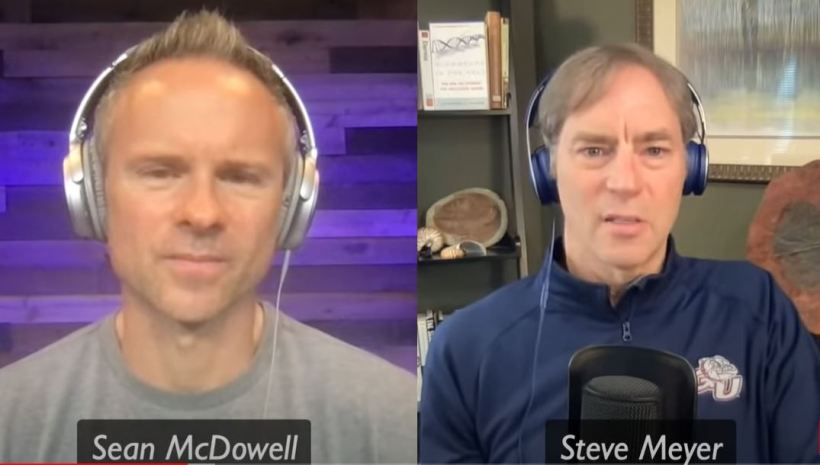
Meyer explained that he wanted to be popular and good at sports, like most teenager’s, but that wasn’t going well for him. A couple of nights before a planned ski trip with his father, some “weird questions” started “popping” into his mind, like: “What’s it going to matter in a hundred years?”

He was initially troubled by those questions, but anticipation for the ski trip distracted him for the time being. On the skiing trip, however, he broke his leg badly.

He woke up from an operation with a full leg cast. Several days in the hospital and limitations on his mobility stirred his active teenage brain to dwell on the questions that haunted him before the trip.

While he was in the hospital, his father brought him a book on the history of baseball. As he read the book, he began to notice the stories all ended the same way. The great prospects were scouted. They came up to the majors with budding promise. They had a fantastic career. They accumulated records, and they retired….

…. and, “Then what?”, He wondered.

In his 14-year old mind, baseball was the greatest thing a person could do. Now, he wondered, “In a hundred years, would anyone remember those accomplishments?”

The mundane routines of his life – getting up in the morning, taking the bus to school, coming home, doing his homework and chores, and getting up in the morning to do it all again – led him to fear “that nothing I was doing was going to amount to anything”.

The routine of hobbling to the mailbox each day to get the newspaper to read the baseball box scores added to the existential weight. As days went by, he became conscious of the dates on the newspapers. Each day a new date, one after the other, with each one passing into memory.

Snap your finger one moment, he realized, and the next moment you are remembering the moment you snapped your finger. Each moment is passing even as you dwell on the moment, and then it is gone. An endless reminder of his finitude.

He became aware of the ephemeral nature of time, and began to wonder, “What is it that is the same all the time and is the basis for binding all these passing sense impressions together?”

This question led to the conclusion, “Unless there is something that doesn’t change, everything that is constantly changing has no lasting reality, let alone meaning.”

He had no reason to believe there was an answer to this angst. There was no reason to believe there was anything that was always the same, that there was anything that was unchanging. There was nothing evident to him to anchor the ever changing world of his experience to anything solid.

This reminds me of an early realization in my own life. I was maybe around 5-7 years old, when we watched a reel of home movies of my father and grandparents and me as a younger child. This was, perhaps, my first self-conscious awareness of the passage of time.

I don’t know if I dreamt this, or imagined it, or whether it was a “vision”, but what I recall was real. I still remember it, though the immediacy of the feelings that went with it have faded. I experienced the sensation of floating in the unimaginably vast emptiness and expanse of space – alone – not connected to anyone or anything.

The feeling that accompanied the dream was utter and terrifying emptiness and disconnectedness. Words don’t do it justice. I imagine now that the Yawning, gnawing feeling utterly terrifying feeling I had is similar to what Meyer experienced as he wrestled with the questions whirling in his young mind.

Meyer realized one day, when he had a strong urge to ask his parents, that his parents could offer him no better solution. He realized there was no sense even asking. They were finite creatures like him. They could not provide salve for what bothered him.

Stephen Meyer remembers looking at his windowsill in his leg cast and staring at the pattern in the wood. He wondered, “How do I know that what I am seeing is really there and not just something that is going on in my brain?”

In his next thought he wondered, “Is this what it means to be insane?” Then arose the fear that led to a new fear that the questions meant there was something wrong with him. Meyer speculates that a psychologist might have diagnosed him with anxiety leading to a panic attack.
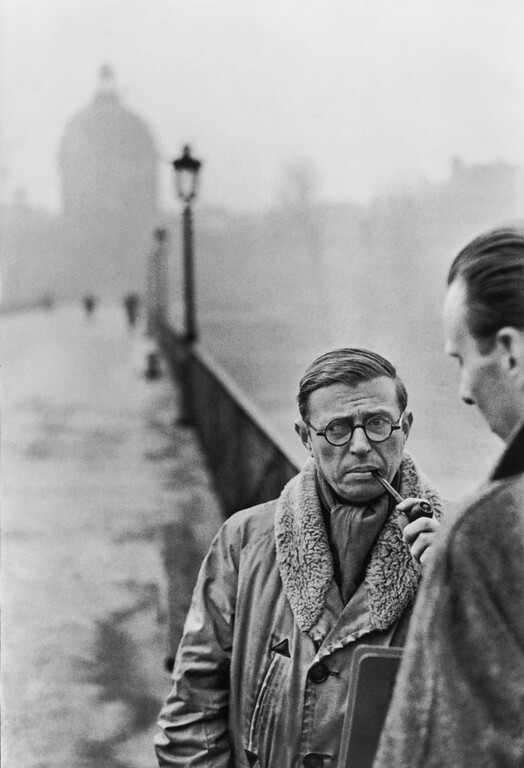
In college, though, Meyer was able to find some clarity and context for his experience in the study of existentialism: “Without an infinite reference point, nothing finite has any ultimate meaning or value.” (Paraphrasing John Paul Sartre). Meyer realized, “That was what was bothering me!”

Everything is in flux from our human vantage point. Everything is passing, passing, passing….. Nothing has any lasting meaning or value from the position of a finite being. The anxiety he felt was a “metaphysical anxiety”.


Stephen Meyer’s journey is somewhat similar to mine, except for the details. This journey is also common to human experience, and it has ancient roots. Anyone who has spent any time reading Ecclesiastes knows what I am talking about.

Continue reading “The Paths that Diverge at the Crossroads of Existential Angst”

The 2020 Census and the Breaking Down of the Dividing Walls of Hostility

Fundamentally, Christians should align with Christ, and nothing else.

The 2020 Census reveals a story of changing demographics in the United States. It should hardly come as a surprise that the story is diversity. “Over the past 10 years, people who identified as Hispanic, Asian or more than one race accounted for larger shares of the population….”[1]

I suspect we could say the same thing about many a decennial census over the history of the United States. During the history of this country, from one census to another, we can trace the movements of people, including the Spaniards and Portuguese, the English and French, the German, the Irish, the Italian, the African, the Chinese, the Poles, and on and on.

I grew up learning that the United Stated of America is a melting pot. The news of the 2020 Decennial Census is simply the continuation of the same story that is America. It is an uniquely American story, though rhetoric in the 21st Century might suggest otherwise.

The new census may reveal a plot twist of sorts, though: a “pivotal moment”. Whereas the American story of the past was primarily an European story, the plot is tending toward greater diversity. The population of “people of color” are increasingly “younger and growing more rapidly” then their traditional American counterparts with Eurocentric origins.

The population growth since 2010 “was made up entirely of people who identified as Hispanic, Asian, Black or more than one race”. We can speculate on the reasons for this major shift, but the fact remains that people of color are increasingly making up a larger percent of the population, and that trend will surely continue.

My thoughts, as always, turn to the impact on the Body of Christ and how the Church is responding… and should respond… to the times. These times are a changing, crooned Bob Dylan in my youth….. But then, they are always a changing.

Continue reading “The 2020 Census and the Breaking Down of the Dividing Walls of Hostility”

Can a Tiger Change Its Stripes? A Tale of Scorpions and Frogs

A scorpion stings. That’s what they do. That is their nature.

Joel Furches recently posted the following on social media:

“The Aesop’s Fable I have come to most appreciate over the years is ‘The Frog and the Scorpion’. If you’re not familiar, it’s about a scorpion who asks a frog to swim him across the water. The frog doesn’t want to, because he’s afraid of getting stung. The scorpion points out that if he stings the frog, they will both drown. So the frog swims him, the scorpion stings the frog, and they both drown. Why? Because it is the nature of scorpions to sting.

“The moral: things act out of their nature, even at the expense of their self-interest. Or as my dad used to say, ‘a person will never do something that person wouldn’t do.’ Which, I suppose, could be rephrased, ‘A person’s always going to do what that person does.’ (My dad would say ‘peoples are peoples’)” 

A more modern version of this idea is the tiger that can’t change its stripes or the leopard that can’t change its spots. The fable or adage stands for the proposition that people don’t change their essential nature or character.

We shouldn’t expect people to be anything other than who they really are. Despite what the scorpions tells you, the scorpion IS going to sting you. That’s what they do. That’s who they are.

Fables are meant to teach life lessons. They are meant to pass on wisdom to help us avoid having to learn it the hard way – from experience. (Though it seems most of us need firsthand experience to learn wisdom, and even then we don’t always get it.)

Still, these fables are helpful in allowing us to crystallize those hard learned lessons into memorable, graphic illustrations that we can hold onto and pass on – if only people would listen. Right?

But what is the lesson? Don’t trust people? Fool me once, shame on you, but fool me twice shame on me!

Fables teach us something about human nature, but fables don’t give us specific guidance tailored to our own dilemmas. We still need wisdom to apply the lessons we learn (however we learn them) in our particular circumstances. “A word to the wise” requires wisdom for its application in our own lives.

Aesop may have been a very wise man (if there really was an Aesop), and Aesop’s fables carry with them the ring of truth, but truth is often more complicated than we like to think it is. Just when you think you understand the laws of physics, quantum mechanics comes along and turns everything inside out.

The fable of the Frog and Scorpion is something we identify with, but Scripture provides a different angle. Scripture provides guidance to deal with the scorpions in our lives.

Continue reading “Can a Tiger Change Its Stripes? A Tale of Scorpions and Frogs”

Elijah: Closing the Curtain on Bitter Disappointment in the Gentle Presence of God

Most of us can’t relate to the boldness of Elijah’s faith, but I think we can all relate to the devastation of Elijah’s disappointment.

Elijah was the hero of the story that provided the backdrop for a sermon on faith and fear at Ginger Creek Community Church where I attend. The sermon series contrasts faith and fear, but I believe the Holy Spirit nudged me in a different direction. The message about faith and fear was a good one, but the disappointment of Elijah is what caught my attention.

For context, Israel was experiencing a 3-year drought and famine. Ahab, the notoriously corrupt and ungodly leader, was king. The entire nation was enthralled with worshiping foreign gods, and especially Baal, the Canaanite god of weather and fertility[1]

Baal was maybe a natural choice for them in the midst of a severe drought and famine. The popularity of Baal in Elijah’s culture was at an all-time high, but Elijah remained true to Israel’s covenant God, Yahweh.

Yahweh was Israel’s traditional God. The claim from ancient times was that He was the only true God, but it was no longer popular to worship Him. People still clung to a semblance of traditional, cultural practice, but other, foreign gods were much more popular, so, Elijah challenged them: 

“How long will you go limping between two different opinions? If the Lord is God, follow him; but if Baal, then follow him.” (1 Kings 18:21) 

The brashness of Elijah’s faith in God is hard for us to appreciate, perhaps. We get a clue from the fact that there were 450 prophets of Baal, and Elijah was the only prophet in the bunch who remained loyal to Yahweh. Elijah proposed a challenge that would put his life at stake. He said,

“’Let two bulls be given to us, and let them choose one bull for themselves and cut it in pieces and lay it on the wood, but put no fire to it. And I will prepare the other bull and lay it on the wood and put no fire to it. And you call upon the name of your god, and I will call upon the name of the Lord, and the God who answers by fire, he is God.’” (I Kings 18:23-24)

The loser(s) in this challenge would be put to death, which was the penalty for false prophets at the time. Elijah put everything on the line for God. 

If the gambling industry in Las Vegas existed in Israel at that time, the odds were stacked heavily against Elijah, but Elijah wasn’t intimidated in the least. Elijah even let the prophets of Baal choose the bull they wanted first and offered to let them go first. (1 Kings 18:25)

The other prophets set to work. They prepared the bull of their choice, and they called on Baal.

From morning to noon, they called on the god of popular culture, but there was no response. (1 Kings 18:26) When Elijah mocked them, they cried louder and cut themselves until they bled, but nothing happened. (1 Kings 18:27-29)

When it was Elijah’s turn, he invited the people to help him rebuild a small altar to Yahweh that had been torn down (a symbolic gesture no doubt). He prepared the remaining bull and stacked the wood.

Then he did the unthinkable: he upped the ante by having water poured over the offering – not once, but three times – until it was thoroughly soaked. (1 Kings 18:30-35) When Elijah was done, he prayed:

“O Lord, God of Abraham, Isaac, and Israel, let it be known this day that you are God in Israel, and that I am your servant, and that I have done all these things at your word. Answer me, O Lord, answer me, that this people may know that you, O Lord, are God, and that you have turned their hearts back.” (1 Kings 18:36-37)

Elijah’s wanted to demonstrate the power and authority of Yahweh, to vindicate himself, to renew the covenant between his people and God and turn their hearts back to Yahweh. He was so confident God could do these things, that he put his own reputation and his very life on the line.

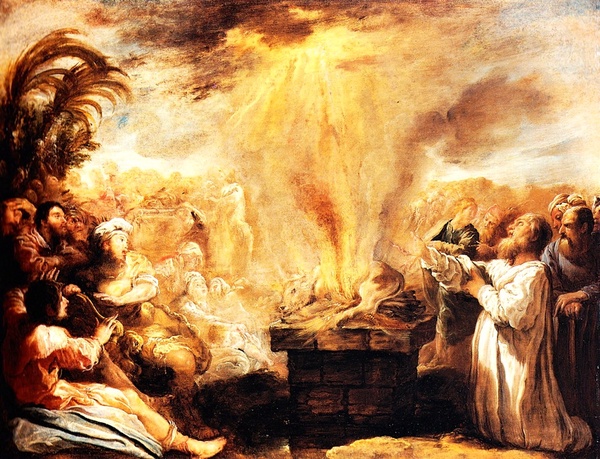
Of course, we know the story: God showed up. God’s fire didn’t just consume the offering; it consumed the bull, the wood, the stones on the altar and even the dust, and then the fire “licked up” the water left in the trench around the altar. (1 Kings 18:38)

There are few demonstrations of faith in the Old Testament as bold or powerful as this one. Elijah stood against all his contemporaries. He stood against the king, himself. He was the only prophet still faithful to Yahweh (as far as he knew). He put it all on the line, and God showed up in a powerful way!


The people fell on their faces and acknowledged God. (1 Kings 18:39) Elijah was vindicated, and his prayers were answered. His expectations were met. Or so it seemed.

This isn’t the end of story, though. The rest of the story is where I want to pick up.

Continue reading “Elijah: Closing the Curtain on Bitter Disappointment in the Gentle Presence of God”

The End of Stubborn Piety, and a New Beginning.

“[R]ising anxiety, suicide, and deaths of despair speak to a profound national disorder….”

Donald Trump with Jerry Falwell, Jr. at Liberty University in Virginia

I just read Three Decades Ago, America Lost Its Religion. Why? By staff writer for the Atlantic, Derek Thompson. I find The Atlantic to be full of insightful articles, even when I don’t wholeheartedly agree with them. This article is no exception.

Thompson recalls those enlightened 19th century pundits who predicted the death of God and advances in “scientific discovery and modernity” that would lead to widespread atheism. Thompson is a skeptic, himself. While Europe has largely gone the way the pundits predicted, The United States has resisted that prognostication – at least until recently.

Thompson blames “America’s unique synthesis of wealth and worship” and “stubbornly pious Americans” for the United States not going with the flow of the Enlightenment ascent of man from the superstitious dark ages into the light of science and reason.

While the rest of the western world has been drifting away from religious affiliation, and religion altogether, the United States seemed impervious to those forces working on the rest of the western world – until recently. Things began to change in the United States in the 1990’s, and that trend continues.

The article borrows heavily from Christian Smith, a sociology and religion professor at the University of Notre Dame, for figures and figurings of the reasons why. The shift is clear, though, and the statistics bear it out, that religious affiliation and interest in religion in the United States is waning and going the way of the rest of the western world.

“According to Smith, America’s nonreligious lurch has mostly been the result of three historical events: the association of the Republican Party with the Christian right, the end of the Cold War, and 9/11.” Smith goes on to provide some explanation for how these “events” have triggered the change. He says,

“The marriage between the religious and political right …. disgusted liberal Democrats, especially those with weak connections to the Church. It also shocked the conscience of moderates, who preferred a wide berth between their faith and their politics.”

Thompson’s article got me thinking. He is right about the trend away from religion in the United States. We don’t need data to tell us that. The “nones” are increasing while the committed believers are decreasing. That these observations come from “outside the camp” doesn’t make them false.

Thompson’s explanations for the reasons why this is may be more of a mixed bag. He (naturally) views the changes through a naturalistic lens. He may be right about some of the cause and effect, but he (naturally) isn’t likely to see the more spiritual side of those things.

I “grew up” spiritually during the mid to late 80’s when the marriage between religion and the political right was consummated. I fell out of step with it, and lost track of it, when I went to law school in 1988. Apparently the honeymoon went well.

I count myself (even today) as an evangelical (though I search for a different label). My spiritual upbringing included the experience of the courting of the religious right of the Republican Party. (Or was it the other way around?)   

Law school, however, challenged even my most sacrosanct connections, and the cares and concerns of fatherhood and providing for a growing family distracted me from other relationships. It was all I could do to hold onto God during this time, and the truth is that He mostly held onto me.

Perhaps, that was a blessing in disguise, as I didn’t grow into the religio-politico affiliation that seems to characterize a large segment of the evangelical church today. I am a more distant observer of that relationship today, so I think I have some objectivity left.

I agree (partially) with Thompson’s assessment that the congruence of the religious right and the political right changed the political landscape. It also changed the religious landscape. Perhaps, more than we might care to acknowledge.

Continue reading “The End of Stubborn Piety, and a New Beginning.”