Can Christians Be Patriotic?

Christians should view themselves fundamentally as citizens of a kingdom that is not of this earth


Concerns about “Christian nationalism” have been raised in recent years from the political left. Some people in Christian circles, and specifically conservative Christian circles, have pushed back on those concerns and criticisms. At the same time, however, concerns about Christian nationalism have been voiced from within Christian circles, even from within conservative Christian circles.

The conversation has arisen, perhaps, because of the way that Donald Trump has courted Christians in his campaign to “Make America Great Again”. Many Christian voters have embraced Trump and his campaign slogan.

I am thinking about this in the context of a question raised about Christians being patriotic to John Dickson on a recent episode of the Undeceptions Podcast. (See Question Answer XIII at abut the 42 minute mark.) The person who raised the subject referenced the Bonhoeffer movie, observing that the issues for the church seemed to come when the church stopped thinking what it means to be a Christian and started thinking about what it means to be a German Christian.  

The question is, “Should Christians be patriotic?”

Putting the question in terms of patriotism, rather than nationalism, presents a slightly different twist on this conversation. “Christian nationalism” has become a pejorative term, but patriotism is seemingly more neutral and non-pejorative. At the same time, many people accused of Christian nationalism would likely say they are only being patriotic.

So, is patriotism ok for a Christian?

I like the fact that this question was put to John Dickson, an Australian who has no dog in the American political fight. Though he currently teaches at Wheaton College in Illinois, he approaches the issue from outside the roiling turmoil of American politics.

The question was also posed by a non-American listener to the podcast who was concerned about the way patriotism “potentially dehumanizes others and makes them seem lesser because they are not of our race”. He expressed concern about the mistreatment of refugees and others of different background to our own.

The “glaringly obvious” theological view proclaimed by Jesus and the New Testament writers, responds Dickson, is that Christians should view themselves fundamentally as citizens of a kingdom that is not of this earth. (Jesus said, “My kingdom is not of this world.” (Jn. 18:36); Paul said, “[O]ur citizenship is in heaven.” (Ph. 3:20); and Peter called Christians “sojourners and exiles” in this world. (1 Pet. 2:11) In my view, that means that none of us have a dog in the earthly political fight – ultimately.

Thus, we should “be shaped by the values of God and not the values of any particular nation”, according to Dickson. He observes that this admonition is everywhere in the teaching of Jesus, beginning with the first public words spoken by Jesus in the Gospel of Matthew, which we call the Sermon on the Mount. He summarizes,

“Everything in the Beatitudes [in the Sermon on the Mount] seems to stand against the nationalistic mindset of dominating others…. Blessed are the poor in spirit, for theirs is the kingdom of heaven. Blessed are those who mourn, blessed are the meek, for they will inherit the earth. Blessed are the merciful; blessed are the peacemakers; blessed are those who are persecuted because of righteousness for theirs is the kingdom of heaven [paraphrasing the Beatitudes]. The contrast with the nationalistic spirit of the day couldn’t be more striking.”

JOhn Dickson in Episode 146 of the Undeceptions podcast

Dickson urges us to consider the Beatitudes in light of the Roman domination of the world at the time and the Jewish expectations at that time. These are some song lyrics written in the 2nd Century BC by a Jewish author:

“See, O Lord, and raise up for them their king, the son of David,
At the time known only to you, O God, that he may reign over Israel your servant.
Gird him with strength, to shatter unrighteous rulers;
To purge Jerusalem of the nations that trample her down in destruction;
To expel, in wisdom and righteousness, sinners from the inheritance;
To smash the sinner’s pride like a potter’s vessel….”

Psalms of Solomon 17:21-23

This Jewish author’s sentiment is full of what we might call nationalistic pride. Contrast that sentiment with the words of Jesus. The meek inheriting the earth seems like a far cry from shattering unrighteous rulers. As John Dickson explains,

“Jesus is demanding that his followers live by the values of the future kingdom over the values of any particular present nation.”

JOhn Dickson in Episode 146 of the Undeceptions podcast

Everywhere Jesus went, he proclaimed the coming of the kingdom of God. (Luke 8:12) The kingdom of God (and being ready for it) is the subject of most of the parables Jesus told. He also announced that the kingdom of God is here now (in our midst), but he sad it is like a mustard seed, the yeast in bread, or a treasure buried in a field.

The kingdom of God now is not (yet) the ruling authority. It is here, but it has not taken over. It is emerging, but it is not yet what it will be. When that time comes, however, everyone will know it; and people need to be ready for it, or they will miss it and be left out.

The message of the kingdom of God – that it has come, but is yet to come fully – is consistent with the instruction of Jesus that the meek will inherit the earth. We do not rule in the kingdom of God presently with might and power; we “rule” by denying ourselves, but taking up our crosses, and by allowing God to rule and work in our hearts to conform us to Himself.

The Jews who expected their Messiah to come at the time of Jesus did not recognize Jesus because they thought he would be their champion, empowering them to shatter the nations that oppressed them and smash the pride of (more) sinful nations. They failed to recognize their own sinfulness and the promise to Abraham, which was to bless all the nations through Abraham’s descendants. (Genesis 12:3, 18:18, 22:18)

They were too full of nationalistic pride to see what God was doing, consistent with the very promise God made to the them – to bless all nations. As we will see, this is a key issue, and it is something we need to contend with, lest we enter into the error of the First Century Jews

Continue reading “Can Christians Be Patriotic?”

Perspective, The Universe, and God

Perspective is critically important for finite creatures such as ourselves because we view everything from “where we sit”.


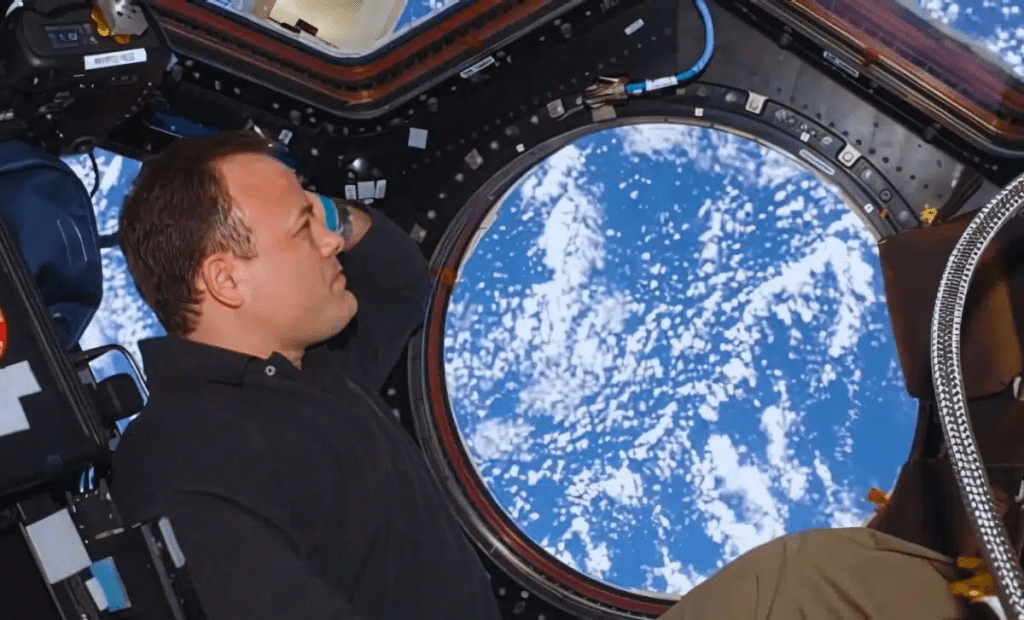
My thoughts are inspired by a Daily Galaxy article today, Astronaut’s ‘Lightbulb Moment’ in Space Reveals Humanity’s Biggest ‘Lie’s. Ignoring the obvious clickbait character of the title, I read the article, which is about the importance of perspective. A less sexy summary of the article might go like this: “Seeing the Earth from the vantage point of space provides a different perspective that should lead to a change in priorities.”

Astronaut’s ‘Lightbulb Moment’ in Space Reveals Humanity’s Biggest ‘Lie’ – © The Daily Galaxy –Great Discoveries Channel

The photo associated with the article illustrates the idea of perspective: that an astronaut viewing the earth from space, seeing the earth from the perspective of distance, hits home in a way that few of us have experienced. This is a perspective few of us have the privilege of attaining. We can imagine what it is like to view the earth from this perspective, but actually viewing the earth from this perspective is more impactful than imagining it.

I can only speculate on this, as I have not experienced it. Even viewing the astronaut’s perspective in a photo, though, hits home in a different way than simply imagining it. This is because our perspective (where we sit in relation to a thing) matters.

Perspective is critically important for finite creatures such as ourselves because we view everything from “where we sit”. We necessarily have a limited perspective. Our perspectives are limited by our location in space/time, geography, and position.

Our perspectives are also limited by our sociology, culture, education, worldview, personal experiences and a host of other physical and metaphysical factors. Many of these factors are external to us (like sociology, culture, and education). Many of these factors are more internal to us, like worldview, experience, and individual psyches (for lack of a better descriptor).

Our perspective can “shift”, as the article states, as we change “location”, experience new things, and view things from a different “angle”. Thus, a change in vantage point provides a potential change in perspective – a change in how we view the world and prioritize things.

“Walking a mile in another’s shoes” speaks to the kind of shift we experience when we gain a different vantage point. Walking a mile in another’s shoes speaks to the impact of experiencing a difference of perspective, and not just considering it abstractly.

Ronald Garan, the astronaut identified in the article, “was struck by the stunning beauty and fragility of Earth’s thin atmosphere” as he viewed the Earth from the distance of space. The reality of the earth’s beauty and fragility is nothing new, but the actual experience of viewing the earth from such a distance hit him in a more visceral way than simply knowing these things intellectually.

Tethered to the small oasis of a space station on the edge of the infinitely vast regions of a dark, cold, and apparently lifeless universe, Garan was struck by the thinness of the Earth’s atmosphere that harbors all the living beings on its surface. Experiencing the small and vulnerable bubble we call Earth from the yawning chasm of space, Garan gained new appreciation of the need for humans to prioritize care and stewardship of this highly privileged planet.

Perspective and its impact on us is not just a matter of physical location. Another person sitting immediately next to Garan with the same view of Earth might have “missed” what Garan “saw” because perspective is more than just physical location.

Continue reading “Perspective, The Universe, and God”

Myth, Seasons, and the Resurrection of Jesus

Should the claim that Christianity is similar to prior, pagan mythology concern us?

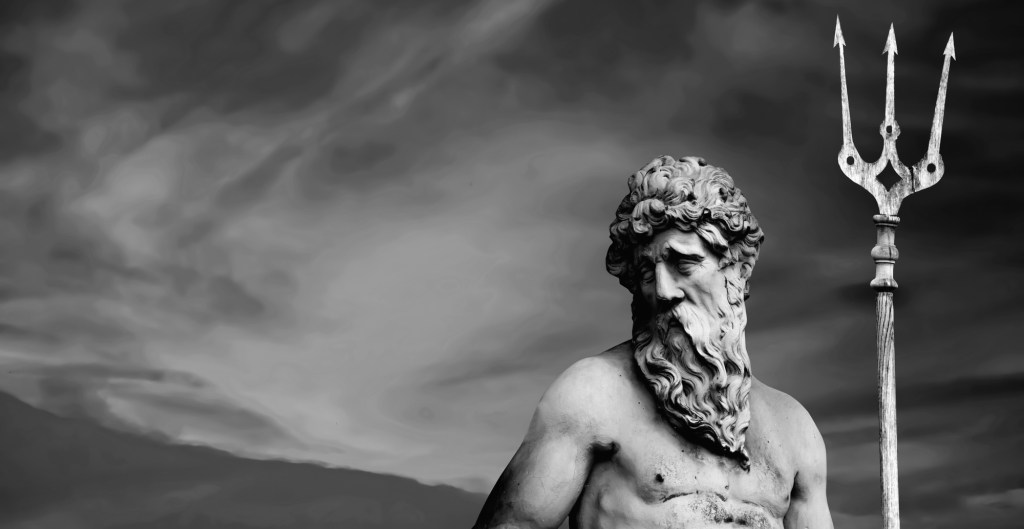
The god of the sea and oceans Neptune (Poseidon).

Popular trends arise in culturally contingent ways, and those trends often dominate the public mind for a season. Thus, the idea that Christianity borrowed from prior pagan mythology gained notoriety with the rise of New Atheism. The Zeitgeist: The Movie (2007) is a poster child for this popular trend in thinking.

The Zeitgeist movie forces the narrative, ignoring glaring dissimilarities, and manufacturing similarities that don’t really exist. It ignores (or isn’t familiar with) the relevant academic scholarship, but it has been watched well over one million times. We might say that the Zeitgeist movie has become legendary in a truly mythic sense itself.

I will go out on a limb, nevertheless, to say that Christians have shown far too much angst over this trend of claiming that Christianity is similar to prior pagan mythology. There are critical differences, and they are significant, but there are some similarities also. Do the similarities pose a problem for Christianity?

The short answer is, no. In fact, if truth is truth and reality is reality, ancient, pagan attempts at explaining that reality are likely to hit on some metaphysical truth. If they didn’t, I might begin wonder about the nature of reality and our ability to recognize and understand it.

Mythic literature as a genre is an attempt to provide some explanation and understanding of basic realities and the ebb and flow of life. I am reminded of these things as I sit outside on an unseasonably warm day in November with a view of trees bared of their multicolored leaves that have been collected by my earnest neighbors in piles lining the suburban streets for pickup.

Fall is ebbing into the dark night of winter. The subtle coolness in the breeze portends (what seems to me now) a distant spring. I am braced for what comes next as I enjoy what is likely to be the lest vestige of warmer days for longer than I care to think about.

My hope for the spring, however far off it seems in my present mood, is rooted in my experience of the certainty of the seasons. I know my hope is not fanciful, even as I brace (all too knowingly) for the cold, bleak trudge ahead.

It seems completely natural that ancient mythology captures this duality in stories that have religious significance. These experiences are common to man. We remind ourselves of the hope of spring as we gaze in wonderment at fall trees in the throes of seasonal death and the chill onset of winter. It reminds us of our own life and death sagas, even now in all our modern comforts.

Our modern comforts allow us to be a bit more disconnected and circumspect, perhaps, than our ancient forbearers. Those comforts and great advances in scientific knowledge allow us to be intellectual about these things. Ancient pagans lived literally at the mercy of the seasons, and all the things they didn’t know played like gods on the stage of their fraught imagination.

Modern people chalk seasonal changes up to natural cycles that just happen. We believe humans chased all the gods off long ago. The ownership we have asserted in our knowledge of the way the world works gives us an illusion of control that I surmise is not all that much different than the ancients, who sought some ownership and control of this world through the mediators of gods they thought they could appease.

Pagans found solace in the seasons as we do. Myth is rooted in collective experience, and it is driven by an impulse to understand and import control into our experience. We also have a natural inclination to seek meaning. We might call this impulse a “religious” one.

Though we have the chased the gods off, we still have a religious impulse. Though we no longer believe in many gods, and we no longer venerate ancient myths with more than a curious read, the idea of one, Creator God God persists, and it is not explained away by modern science and knowledge. The Bible, though it has ancient origins, stands up to our modern scrutiny in ways that pagan myth does not.

Continue reading “Myth, Seasons, and the Resurrection of Jesus”

Divine Christmas Gifts

As another Christmas begins to fade in the rear view mirror, let us reflect on the One who we celebrate this time of year and pray that His light grows ever stronger as we fix our gaze on Him. These words from a writer I follow are apt today:

“I hope everyone was pleased with the gifts they may have received during their Christmas celebrations. As grandparents, my wife and I delighted in the presence of our children and grandchildren as we celebrated together Jesus’ Nativity. Which raises the subject of the proverbial ‘reason for the season.’ My hope is that Mere Inkling’s friends […]

Divine Christmas Gifts

The Top 10 Most Read Articles in 2024

This blog has picked up some steam in the last year, and COVID era articles lead the way


I have been blogging since 2012. I began in simple obedience to what I believed God was prompting me to do. I didn’t initially set out to write for anyone in particular. I endeavored only to be obedient to use the gifts God has given me. This blog began as a journey of faith for me, not just as a way to be obedient, but as a way of listening, seeking to understand, and working out what God was working in me.

This blog still is those things, but I soon realized that I wasn’t just writing for me, that I had an audience, albeit a very small one. The audience to whom I found myself writing in those early days was the seeker, the unbeliever, the curious, and the doubter.

Over the years I find have found myself writing often for a different audience. I still have a heart for the seeker, but I find myself writing more to the American church, the people who call themselves Christians, whether their claim is predominantly political, cultural, or spiritual.

I see a large segment of the church identifying uncritically with a political and cultural form of Christianity, as I once did, and missing the ever counter-cultural nature of the kingdom of God. My heart is to urge people to be faithful to Christ alone – not to a nation, a culture, a political party, or even a denomination.

These concerns prompted the article that had the highest views in 2024. With 6241 views, Who Were the Sons of Issachar? And What Might They Mean for Us Today? was the most read article on Navigating By Faith this year. Fitting it is, given the shift in my writing.

This article was a “Covid baby”, written in 2020, as I wrestled with the way some Christians, including some of my friends, embraced a mixture of unabashed support for Donald Trump and an appetite to follow crazy conspiracy trails down rabbit holes as we neared a presidential election in the throes of a worldwide pandemic.

Our nation was greatly polarized, and voices in American church were just as polarized as the world around us. Those tensions over politics, how we should respond to COVID, and how we should faithfully reflect God to the world around us drove me to reflect on the days when nation of Israel was torn between King Saul and David, the man after God’s heart.

These tensions continue today. We all want (or should want) to be people after God’s heart. We still need to know how to understand the times and how God would have us live in them, being faithful to His purpose in harmony with the kingdom of God, which is not a kingdom of this world. These concerns have not abated, which may be why this article has been the most read article each year since I wrote it.

Another, more personal and timeless reflection was the subject of the second most read article in 2024: The Redemption of Korah: the Sons of Korah. Also written during COVID in 2020, this article was viewed 3580 times this year. It has been the second most read article on this blog each year since I wrote it in 2020.

The Redemption of the Sons of Korah speaks to the redemptive work of God despite our worst tendencies. The article followed some research I did about the sons of Korah. Korah led his tribe in rebellion against God’s man, Moses, and they were all swallowed up by the earth.

That seemed to be the end of the story, but something in the text caught me attention, and began to search the rest of Scripture to find out whether any descendants of Korah survived and what became of them. What I found is one of the most poignant, but beautiful, redemption stories in the Bible.

One other article topped 3000 views in 2024, but before I get to it, I pause to reflect on the fact that I previously measured the most read articles of each year in the hundreds. In some years, I could not find ten articles with even 100 views. By 2019, the total viewership had risen to just over 10,000.  It jumped to 20,000 in 2020, the year of COVID. The next three years topped out around 30,000, but this year viewership has jumped above 61,000!

I have no idea what accounts for the change. It isn’t that I have written more articles. I have written double the number and triple the number of articles in previous years. I don’t know what the explanation is for the increase. I don’t monetize this sight, and I only post the articles on my Facebook group, typically. Sometimes, I post to my public Facebook feed, and I post to LinkedIn even more rarely.

I don’t spend much effort to be found, but people seem to find me. In fact, 114,190 people found Navigating By Faith on search engines this year according to WordPress. This compares to 5272 people finding the blog on Facebook where I post all of the articles. Go figure.

Any way, rounding out the top 3 articles is God Meets Us Where We Are, with well over 3000 views. The three most read articles in 2024, including this one, were all written in 2020, during the “COVID era”. During that time, we were all home more, reading more, and reflecting more on the state of the world and our lives.

Continue reading “The Top 10 Most Read Articles in 2024”