Should We Hate the Sin, and Love the Sinner?

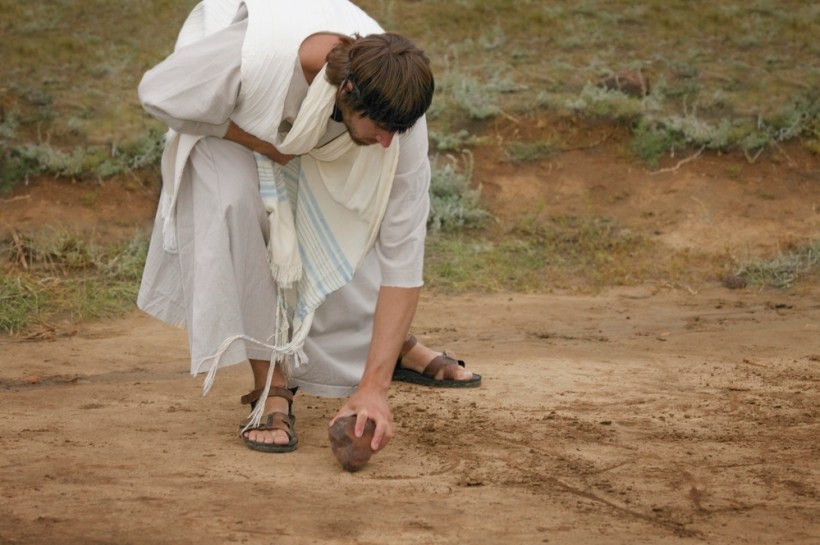
The focus on hating the sin, but loving the sinner is a distortion of what Jesus instructs us to do.


The phrase, “Hate the sin, but love the sinner”, sounds biblical. The phrase, itself, isn’t found anywhere in Scripture, but it sounds kind of right, right?

God certainly does hate sin. No punches are pulled on the subject. For instance, we read the following in Proverbs 6:16-19:

There are six things the Lord hates,
    seven that are detestable to him:
        haughty eyes,
        a lying tongue,
        hands that shed innocent blood,
        a heart that devises wicked schemes,
        feet that are quick to rush into evil,
        a false witness who pours out lies
        and a person who stirs up conflict in the community.

And there is no doubt that God loves sinners. Paul made that perfectly clear when he said:

“But God demonstrates his own love for us in this: While we were still sinners, Christ died for us.” (Rom. 5:8)

To that extent, we can say that God hates sin, but He loves sinners. The phrase, however, is usually stated as a way that we should orientate ourselves toward other people. More specifically, the phrase is usually suggested as a way of orientating ourselves (Christians) toward “certain” people.

We say it because we hate the sin, especially their sin, and we are reminding ourselves to love the sinner.

It’s a phase that Christians generally seem to like, but non-Christians don’t seem to like it nearly as much as we do. We could chalk it up to them not understanding, not believing in the Bible and not appreciating what Jesus did on the cross for us. But is it really biblical?

While it’s biblical to say that God hates sin, but loves sinners, is it biblical instruction for us to say, “Hate sin but love sinners”? Jeff Frazier at the Chaplestreet Church in Batavia, IL (who preached on this subject August 2, 2020, and who’s sermon inspires this post) suggests that it isn’t biblical, at least not in the way we usually apply it.

Continue reading “Should We Hate the Sin, and Love the Sinner?”

Who Are the Righteous and the Wicked? Part I


I am on a year-long plan to read through the Bible chronologically (which is not exactly the way the Bible reads if you start in Genesis and read straight through to Revelations). I also read a “verse of the day” in the Bible app (YouVersion) that I use. I begin most mornings with reading the passages of the day in the year-long plan I am following and the Scripture of the day.

Today’s chronological reading begins with Psalm 1[i]. The verse of the day is Psalm 1:1-2:

Blessed is the one
who does not walk in step with the wicked
or stand in the way that sinners take
or sit in the company of mockers,
but whose delight is in the law of the Lord,
and who meditates on his law day and night.

I almost glossed over the fact that the chronological reading of the day and the verse of the day converged on the same text – Psalm 1. I kept reading out of force of habit, but that still, small voice was whispering in my ear.

“Maybe”, I thought, “God wants me to focus on Psalm 1 today. Maybe He has something to say to me.”

It would take too long for me to explain where I am in my journey of praying, reading and meditating on Scripture and what God has been laying on my heart or how I got here. Suffice it to say that my attention was drawn to the contrast of the righteous and the wicked in Psalm 1.

I realized as I read Psalm 1 a second time, more carefully, that I have some assumptions about those two categories of people – the wicked and the righteous – that I have carried a long time and which may not be completely accurate.

As I have been reading chronologically through the Bible, I have been focusing on the theme of righteousness and justice. I realized this morning that what I have been learning about righteousness and justice reveals that my assumptions about righteousness and wickedness may be a bit shallow and, therefore, a bit off center.

Who are the righteous and the wicked?

That is the question that I believe God prompted in my heart.

Continue reading “Who Are the Righteous and the Wicked? Part I”

God and the Impossibility of Goodness

It’s easier for a camel to go through the eye of a needle than for us to be good enough for God.

The story of the rich young ruler resonates with me today in the seeming impossibility of living without sin. I suspect that I am not alone in the experience of certain sinful inclinations that I just can’t seem to shake. Try as I might, I fall into the same traps of temptation over and over again. I get angry at myself. I ask for forgiveness. I renew my resolve, but I inevitably trip and fall. And sometimes I despair.

God cannot be mocked. Whatever a man sows, he will reap in return. The one who sows to please his flesh, from the flesh will reap destruction; but the one who sows to please the Spirit, from the Spirit will reap eternal life….” (Gal. 6:7-8)

I know this, but it doesn’t seem to help. My sinful flesh often overcomes the spirit within me. While the spirit is often willing, the flesh is weak; and sometimes, let’s be honest, my spirit isn’t as willing as it should be.

I think, “If I could just resist more and try harder and find just the right combination of thoughts and habits and resolve, I could lick this thing.” But, days come and go. Things change: busyness, or worry, or distraction, or boredom, or some dryness in my spiritual life, or difficulty, or disappointment or any number of things (or a combination of them) sets in, and when my guard is down, temptation comes and catches me off guard in a moment of weakness.

I truly believe it is possible to overcome the sin within me. Scripture seems to require it of me. What I reap I will sow. Yet I fail. I fully identify with Paul, who said:

“I do not understand what I do. For what I want to do I do not do, but what I hate I do. And if I do what I do not want to do, I agree that the law is good. As it is, it is no longer I myself who do it, but it is sin living in me. For I know that good itself does not dwell in me, that is, in my sinful nature. For I have the desire to do what is good, but I cannot carry it out. For I do not do the good I want to do, but the evil I do not want to do—this I keep on doing.” (Rom 7:15-19)

Continue reading “God and the Impossibility of Goodness”

God’s Work Within Us

CS Lewis wrote the following bit in a letter written approximately one year before the end of his life:

“The whole problem of our life was neatly expressed by John the Baptist when he said (John, chap 3, v. 30) ‘He must increase, but I must decrease.’ This you [may] have realised. But you [may be]  expecting it to happen suddenly: and also expecting that you should be clearly aware when it does. But neither of these is usual. We are doing well enough if the slow process of being more in Christ and less in ourselves has made a decent beginning in a long life (it will be completed only in the next world). Nor can we observe it happening. All our reports on ourselves are unbelievable, even in worldly matters (no one really hears his own voice as others do, or sees his own face). Much more in spiritual matters. God sees us, and we don’t see ourselves. And by trying too hard to do so, we only get the fidgets and become either too complacent or too much the other way.
“Your question what to do is already answered. Go on (as you apparently are going on) doing all your duties. And, in all lawful ways, go on enjoying all that can be enjoyed—your friends, your music, your books. Remember we are told to ‘rejoice’ [Philippians 4:4]. Sometimes when you are wondering what God wants you to do, He really wants to give you something.
“As to your spiritual state, try my plan. I pray ‘Lord, show me just so much (neither more nor less) about myself as I need for doing thy will now.’”[1]

I cite CS Lewis often in what I write. He seems to capture so much of what it means to be human in God’s world, illuminating God’s grace in us and in the world as God works out our salvation, the author and perfecter of our faith.

These words Lewis wrote are so much more poignant that they were written toward the end of his life. Gone is the impetuous, tottering confidence of youth in working salvation out, replaced by the steady, trusting confidence of old age that God is working within.

As I survey a thousand times I have failed God in working out my salvation, I find solace in the hope and faith that God is working within me. I don’t always see it. Sometimes my sin overshadows any light I see in me, but God’s gentle light always shines through that darkness… when I turn to Him.

Often my inclination is to turn away. I fear His wrath. I am disappointed in myself. I think I should be better than that. I don’t want to bow at His feet. Yet again. How many times? How many times!

And I recall that nothing is hidden from God. Nothing. We stand, sit, lie, walk at all times under the gaze of an infinite God. Nowhere I can go, even into the deep recesses of my own heart, away from God. Even if I block myself from the inner chambers of my own heart, yet God is there.

God, save me from myself! I can only hope and trust that You will, as You have said, because I am utterly unable.

~~~~~~~~~~~~~~~~~~

[1] CS Lewis in a letter to Keith Manship from The Collected Letters of C.S. Lewis, Volume III (September 13, 1962)

Determinism and Free Will: Or Is It Free Won’t?

Science suggests that the decisions we make are actually prompted by brain activity before we are conscious of making the decision.


Do we have free will? Modern science seems to suggest that we do not have free will. This is what I learned watching an episode in a series on science that was hosted by Stephen Hawking on Public Broadcast Television.

In one experiment designed to test question whether humans have free will, the subjects were told to choose to push a button and to note the time on the clock at which the decision was made. At the same time, the subject’s brain waves were being monitored for activity. Over and over again, the brain waves registered activity before the subject was conscious of the decision being made to take the action.

The experiment demonstrated the following sequence: (1) a brain signal occurs about 550 milliseconds prior to the person’s finger moving; (2) the person is aware of his decision to move his finger about 200 milliseconds prior to his finger moving; and (3) the person’s finger moves.

This was interpreted as evidence by Hawking that we don’t have free will. The decisions we make are actually prompted by brain activity before we are conscious of making a decision. The conclusion is that we are responding to some prior stimuli and only think that we are making independent decisions.

This experiment was only one experiment in a series of experiments that demonstrate such things as the cosmological constants that that we learn in physics and the apparent indeterminism that we appear to see in quantum mechanics. Each experiment, however, that to the conclusion that our world and even we are determined by natural laws in an endless stream of cause and effect.

Ancient Greeks might have called it fate. Modern science calls it determinism. We have even have a religious term for this apparent phenomenon: predestination.

I think that skepticism of what we think we know is a good thing. The Apostle Paul seems to agree when he encourages people to “test everything”. Therefore, I dug a little deeper and found that the scientist who first conceived and conducted these experiments, Benjamin Libet, actually came to the opposite conclusion.

Scientific experiments like this often seem hyper-theoretical, but they can have some practical application. As I dug deeper and sought greater understanding of what is going on in these experiments and what it means for you and I, I find some interesting applications to our struggles with sin.

Continue reading “Determinism and Free Will: Or Is It Free Won’t?”