
Why Doesn’t God Reveal Himself to Me?

Have you prayed, and God didn’t respond?


I have heard many people say that they would believe in God if God revealed Himself to them in clear, undeniable ways. Richard Dawkins, the New Atheist, said that God would have to write a direct message in the sky before he would believe (and then, he added, he would still assume that he was hallucinating or something else before believing it).

Young children tend to believe in God innately. This is true whether children are raised in religious homes or non-religious ones and in countries that are predominantly religious and in countries that are not. Even atheist sociologists have observed this phenomenon that some people have called “universal design intuition.” (See Universal Design Intuition & Darwin’s Blind Spot)

Since the Enlightenment, the general assumption in scientific and academic circles is that children outgrow naïve faith and civilizations do too as they advance in knowledge and sophistication. Thus, the modern assumption is that we outgrow faith in God as people and societies mature.

There is some truth to that assumption as we can see anecdotally (maybe in your own life or in the lives of people you know) and from the history of Western Civilization, with evidence of declining religious belief. Still, 81% of people in the United States in 2022 believed in God (or a higher power) (as reported in a Gallup poll), and the number increased to 82% in 2023 (according to a Pew Research poll).

We have all heard about the “Great Dechurching” – the 40 million Americans who used to go to church, but no longer do. We have also heard about “the rise of the nones“, the increase in the number of Americans who are atheist, agnostic or religiously unaffiliated, which increased precipitously from 16% in 2007 to 30% by 2022!

The nones include people of every age, but the highest percentage of nones are Gen Z and millennials. These age groups have largely grown up not going to church, yet, Bible sales surged in 2024 by 22% (after years of declining sales), and that surge is attributable to first time purchasers among Gen Z and Millennials. (See Bible boom: Why are people buying so many Bibles?; and US Bible Sales Jump 22% in 2024, Driven by First-Time Buyers and New Versions: Circana BookScan)

The hint of a spiritual renewal in the West isn’t limited to young Americans. Justin Brierley has reported on and written a book about the Surprising Rebirth of Belief in God in the UK. (See The Surprising Rebirth of Belief in God: Why New Atheism Grew Old and Secular Thinkers Are Considering Christianity Again) Agnositics and atheists, at least in the UK, are rethinking their positions on Christianity in noticeable numbers.

While Brierley’s thesis is largely based on anecdotal evidence, the volume of his anecdotal evidence is impressive. He has been hosting dialogues between atheists and Christians regularly since the mid-2000’s, and his data comes from a combination of atheists who have recently cozied up to the idea of God and religion and former atheists who unabashedly believe in God now.

My writing today is inspired by one such former atheist, a bio-chemist with a robust career in science, who became a believer in his middle age. Sy Garte wrote a book about his journey from atheism to faith, The Works of His Hands: A Scientist’s Journey from Atheism to Faith, in which he explains how a combination of science and his experience led him to believe.

The science opened his mind to the possibility of God. His study of religions, philosophy, and theology led him to an intellectual acknowledgement of the likelihood of God, but his experience and willingness to embrace it brought him in the door to faith in God.
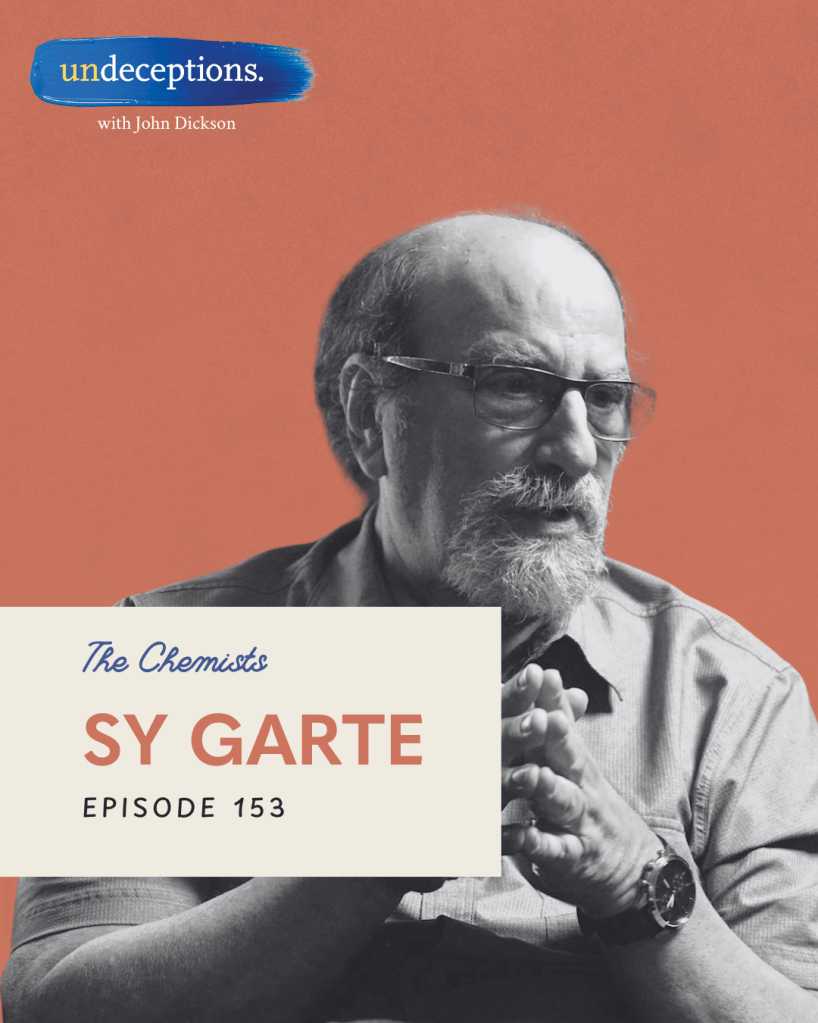

In a recent interview with John Dickson on the Undeceptions podcast, Sy Garte provides some advice to listeners who believe science holds all the answers to reality and truth by insisting that nothing in science contradicts the Bible.


If you read his whole story, he explains how science suggested the possibility of God to him, but he also emphasizes the importance of experience in belief. His acknowledgement of the role of experience, I think, is important, and it is underappreciated.

Skeptics and believers, alike, discount experience. A skeptic might chalk experience up to fantasy, a desire to believe, a disconnection with reality, or similar thinking. A believer might question the experiences of people who arrive at unorthodox beliefs based on their experiences.

Clearly, experience must be tempered by facts, science, and sound reasoning, but Sy Garte maintains that experience is good evidence, nevertheless, primarily for the one who has the experience. In doing so, he acknowledges the objection by the person who hasn’t had such an experience, and his response to the person who hasn’t had an experience with God is what I want to focus on today.

Continue reading “Why Doesn’t God Reveal Himself to Me?”
“Don’t Worry, Be Happy” Should Be Replaced with Don’t Worry, Be Thankful!

Verse 5 of Paul’s letter to the Philippians ends with the statement, “The Lord is near.” Then, it continues with, “Be anxious for nothing….” The Greek word translated “anxious” means literally to be drawn in opposite directions. It conveys the idea of being divided, pulled apart and distracted.

This is what worry does. It distracts us, dividing our attention, drawing us in opposite directions, pulling us from the tasks at hand. Worry distracts us and draws us from faith and trust in God and His promises.

Paul goes on to say: “Be anxious[1] for nothing[2], but in everything by prayer[3] and supplication[4] with thanksgiving[5] let your requests be made known to God. And the peace[6] of God, which surpasses all comprehension, will guard your hearts and your minds in Christ Jesus.” Phil. 4:6-7

The word translated, “anxious,” is in the present imperative, meaning to stop (right now!) being anxious. Stop being divided in your affections. Stop being distracted and pulled in different directions. Stop it, right now! Stop, being distracted by worry and fear.

The passage is predicated on the statement that the Lord is near! The Creator of the Universe is near us; He is with us. Implied is the question: What shall we fear if God is with us?

Paul’s statements echo the words of Jesus. Does not our heavenly Father clothe the lilies in the field? Does He not care for the birds? How much more does He care for you and me? (Matt. 6:25-30)

Because God is near, Paul says we should be anxious for nothing: no thing, not even one thing. Elsewhere, he said nothing can separate us from the love of God.

“[N]either death nor life, nor angels nor rulers, nor things present nor things to come, nor powers,  nor height nor depth, nor anything else in all creation, will be able to separate us from the love of God in Christ Jesus our Lord.”

Romans 8:38-39

We have no reason to be anxious when we fix our eyes on the author and perfecter of our faith (Heb. 12:2) who is near us.

In everything, every single thing that we face, we are instructed to make our requests known to God by prayer and supplication. God expects, and He desires us to bring our concerns to Him. Paul’s words echo Jesus again in this. (Luke 11:13: Matt. 7:11)

But God is not a Candy Man; He is our Father. He wants a relationship with us. He wants to come to Him when we are anxious. He wants us to come to Him when we have needs. He wants us to come to Him when we are thankful. He wants us to come to Him.

When we are going through difficulty, when we are anxious, when we have sinned, when we have been hurt, when we are happy, God wants us to come to him.

Continue reading ““Don’t Worry, Be Happy” Should Be Replaced with Don’t Worry, Be Thankful!”

The Boldness that Comes from Being Filled with the Holy Spirit … and Refilled


I wrote in the blog post before this one about fear and how God’s perfect love casts out all fear. The followers of Jesus feared when he was taken away by the Romans in the garden. They continued to fear while he was being mocked and beaten and hung on the cross. After he was dead and buried, they hunkered down behind locked doors for fear of the Jews. (John 20:19)

Even after Jesus appeared to them, risen from the dead in the flesh, the apostles continued to live in fear. It was not until they were filled with the Holy Spirit on the day of Pentecost that they emerged out of their funk from behind locked, closed doors to preach the Gospel boldly in the crowded streets of Jerusalem.

As I continue to read through the Bible, now in the book of Acts, I see something else that I hadn’t seen before. In Acts 3 & 4, we see Peter and John healing a lame man, being hauled in front of the Sanhedrin and being instructed to stop preaching in the name of Jesus. Afterward, Peter and John met with the other followers of Jesus in Jerusalem and prayed for boldness to keep speaking the gospel in the name of Jesus!

I previously observed that this change from fearful believers hiding behind closed doors to bold proclaimers of the Gospel on the crowded city streets happened only after they were filled with the Holy Spirit. It wasn’t Jesus appearing to them, risen from the dead, that overcame their fear; it was the Holy Spirit who filled them!

But there is more. They prayed for boldness while remembering the words of David in the Psalms (Psalm 2:1-2):

‘Why did the Gentiles [nations] rage,
And the peoples devise futile things?
‘The kings of the earth took their stand,
And the rulers were gathered together
Against the Lord and against His Christ [Anointed One/Messiah].’

Acts 4:25-26

There will be opposition when we preach in the name of Jesus. That’s why we need the boldness. We need to be able to overcome our fear of rejection and our unhealthy desire for favor from people to be able to preach the gospel. We can’t do it on our own; we need the help of the Holy Spirit.

I suffer greatly from this defect, myself, which I recognize as I read through these passages. I need that boldness that comes from God’s Holy Spirit, or I will continue hide “behind closed” doors – or maybe the keyboards of this computer on which I type!

And, there is one more thing before I get to the point. I think this is an area in which we could all use a little bit of dying to self. I certainly speak for myself when I say that I stand in my own way of being able to preach the Gospel boldly as Peter and John did. My self, my flesh, is in the way of me being who God wants me to be in Him. That flesh, that self that is in the way, needs to die. It needs to yield to God. It needs to be sacrificed to the purposes of God.

Not that I have overcome this self. I confess and admit to you as I write this that I have not. But, that brings me to the final point.

Continue reading “The Boldness that Comes from Being Filled with the Holy Spirit … and Refilled”

Tales of Afghan Christians: Amazing, but Heartbreaking,

I am listening to the Quick to Listen Podcast, Episode 277: ‘My Heart Is Broken’: An Afghan Pastor Grapples with the US Withdrawal (America’s departure and the Taliban’s ascent is forcing Christians out of the country) I haven’t finished it yet. I stopped in my tracks at about 18 minutes and 40 seconds into the discussion with an Afghan pastor, and have paused to sift through it.

At the beginning of the interview, the unidentified pastor described himself as a Muslim in 2001, where the discussion started with the US invading Afghanistan. Even then, he said he welcomed the US interference. The country was in upheaval and chaos, and Western troops brought some hope for stability.

I do not want to get into my thoughts on the initial invasion or the US presence since that date. They are not relevant to my purpose for writing. I don’t want to be distracted by political assessment or judgment, of which I am deeply ambivalent.

The recent video footage from Afghanistan of people so desperate to leave before the Taliban takes over that they are clinging to airplanes as they take off, is heartbreaking to watch. The desperation in the faces of the people crowding unto Afghan runways still today (while there is still a sliver of hope to escape) is something I have never known. I can only watch in stunning silence.

Thus, I listened to the interview of the anonymous Afghan pastor with interest as he described from his personal experience the reality of life in Afghanistan for a Christian today.

About 18 minutes into the discussion, one of the interviewers recalled that the gentleman described himself as a Muslim when the US first stepped on Afghan soil and asked, “How did you come to faith? How did Jesus find you?”

Without hesitation, in his broken English, he said, “I don’t want to come to faith. I … hate Christians. I don’t like to become Christian because I [come] from a very religious Muslim background. My father was Imam. They taught me to be good Muslim. Six time I have been to Mecca. I practiced my religion very well.”

This man was not looking for a Christian savior when the US troops arrived in 2001. He just wanted peace and stability in his life and in his country, something most people in the western world take for granted. The idea of becoming Christian was abhorrent to him.

His personal story needs to be heard. It is the story of many Afghans who seek asylum today. They look to the US, and other countries, not as a savior, but as a refuge against evil that is hard to imagine for most of us. These people are not battle-hardened jihadists, as some people seem to fear.

Many of them are even Christians, despite the great risk personal risk involved. This is just one such story of a real person who has experienced a life most of us can’t even imagine and have a hard time appreciating. I will give him a name, Abdul, for personal affect, though he remains anonymous for obvious reasons.

Continue reading “Tales of Afghan Christians: Amazing, but Heartbreaking,”

God Is Always Doing a “New Thing”

We need to be open to hear God’s voice and the direction He wants us to go in these present times


I think many Christians, most of them, look a bit skeptically at the charismatic element of the Church universal. We conjure up images of the prosperity Gospel and “holy rollers”. The New Testament, though, reads like a charismatic diary.

 The dispensationalists will say that God worked like that only for a time, only until the New Testament was “codified” into a cannon. Now we don’t need God to speak to people directly through prophetic words and such. We don’t need signs and wonders because we have the Bible now.

They might be right, but maybe not. God doesn’t fit into the boxes we prepare for Him.

I have come to view all the movements in the history of the Church as various times in which God emphasized specific things to His people for specific purposes. The move to get the Bible in print in plain language for the masses enabled worldwide, grassroots growth of the Gospel. The move to emphasize that salvation is by God’s grace that we receive through faith was necessary to counter error in the notion of how salvation works.

In my view, denominations formed around these movements as people put down tent stakes and tried to camp on those things God was emphasizing at particular times, but God is always doing a new thing.

Not that God changes, or that the truth changes. We change, and the flow of history changes. God is always working through it all to accomplish the ends that He has planned from the beginning.

I think we can never go wrong asking the question: What is God doing now? What does God intend for a time such as this? What is God saying in these times?

So, I am open to the possibility, which I think is a probability, that God is still “speaking” in these times through people to whom God is willing to entrust His voice. There are disparate voices, of course, even in the Church, but it’s always been like that.

I don’t believe God will say anything that contradicts what He has said in the past, but He might be saying things that contradict what we believed in the past. God might be calling us to new ways of doing things.

When God became flesh and lived among the people to whom He had intimately and directly revealed Himself, they didn’t recognize Him. The disciples on the road to Emmaus were amazed as Jesus opened the Scripture to them to reveal all the ways it spoke of Him. They didn’t see it until He opened it up to them.

In the same way, we need to have the humility to recognize that we might have wrong ideas about things. Maybe they aren’t “wrong”, but they just aren’t effective any longer in this time. The last thing that I want is to remain standing still when God is moving.

We need to be open to God showing us “new things” that we didn’t previously understand or appreciate. We have to consider the possibility that we might not recognize God when He is speaking today in the same way that God became flesh, came to His own people, and His own people didn’t recognize Him.

I say these things only as a preface to talk about an article, Continue reading “God Is Always Doing a “New Thing””