Sizing Up God

Depositphotos Image ID: 147545805 Copyright: kamchatka

In ancient times people saw gods in the rocks and trees, idols they made and volcanoes and lightning and thunder. These were gods that were larger than they, but they were accessible. Their gods lived in their environment. Their gods were arbitrary, but they tried to appease them anyway.

Roman and Greek gods were larger than the material world, and they manipulated the material world for their own ends. They controlled volcanoes and earthquakes and lightning and thunder, but they were human-like, even in their imperfections. People could approach them. People could reason with and try to appease them.

Buddhist, Hindu and Eastern gods are not defined by the rocks, trees, lightning and thunder. They do not simply manipulate the material world. They are intimately and intricately part of the material world, and the material world is an extension of them, and the entirety of the material world is all ultimately one and the same in its essence.

Many scientists, like Einstein, who stood in awe of the universe, saw “god” in this way. People can fathom these gods/this god and understand them/it and seek to become one with them/it because these gods are made of the same stuff as people and all of the universe ultimately. These gods cannot be appeased. We can only hope to understand them.

But these gods are too small.

Continue reading “Sizing Up God” →

Integrity and Authenticity in Belief

If we are influenced by the social influences around us, how authentic are anyone’s beliefs?

Depositphotos Image ID: 13127659 Copyright: creatista

I’ve been listening to a lot of Tim Keller lately. Today I listened to an old interview in which he said something that got me thinking. He asserted that, for many or most people, whether they are religious or secular often depends on their social influences. I suppose this would mean parents and family as well as peers. Richard Dawkins, the famously vocal atheist has said similar things: what religion we are depends to a large extent on the society in which we grew up.

Keller supported his thesis with anecdotal evidence from his own experience. He says, for him, he was religious initially because he wanted to gain the favor of people closes to him. What does that say about the power of social interactions? What does it say about our beliefs? If Richard Dawkins and Keller are right, how authentic are anyone’s beliefs?

Continue reading “Integrity and Authenticity in Belief” →

Inspiration or Artifice? Faith and Reason

From a presentation by Francis Collins at the Veritas Forum at the California Institute of Technology

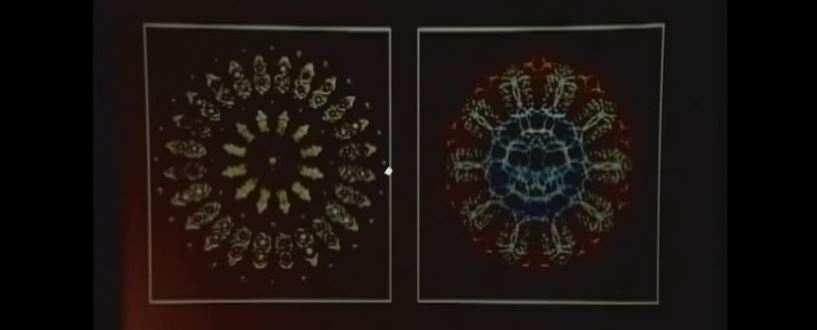
Take a close look at the two images. What do they represent? We might say that one image represents science and the other represents religion (or faith). But which is which?

The images are similar, but one of them is manmade, and the other is something we find in nature. Do you know which is which? Is the manmade image the scientific one or the spiritual one?

I will answer these questions; at least I will answer them as they were described in a presentation given by Francis Collins, the manager of the Human Genome Project, at a Veritas Forum at Caltech University in 2009. In the process, we will explore the chief question examined by this eminent scientist: whether science and faith are compatible.

Continue reading “Inspiration or Artifice? Faith and Reason” →

A Remedy for the Utter Loneliness of the Human Condition

Even our closest friends do not really, really know us in our innermost being.

Depositphotos Image ID: 5949233 Copyright: olly18

Have you ever felt like nobody gets you? Have you ever felt that no one understands who you really are? Not even your family or your closest friends?

First of all, congratulations, because you are being honest. It’s uncomfortable to be that honest.

I could be wrong. Maybe it’s only me, but I think many of us would rather pretend people know us better than they really do. We connect on the surface. We connect the best we can, but there are parts of us few people know or understand… if we are honest.

I sometimes feel as if everyone else “gets it” (this thing we philosophically call life) but me. Perhaps, everyone else is connected in a way that I am not. Nothing feels more isolating or lonely than feeling disconnected and alone.

I don’t think I am alone in feeling this way, though. This is the human condition. If we are being brutally honest about it. This is reality.

If this is the reality, what do we do with it? How do we live with the brutal honesty of it? We yearn for connection deep down, but many of us feel utterly disconnected and isolated from others at the core of our being.

Continue reading “A Remedy for the Utter Loneliness of the Human Condition” →

Can Laws Like Gravity Create Something from Nothing?

If gravity created the universe, the universe wasn’t created out of nothing.

Photo by Tyler Drendel at the Garden of the Gods

I’m not a scientist, and I am not even “a science person”, though I have become much more interested in science as an adult than I was as a child. I am more of a philosophical and theological person. My background is English literature, world religions, and American jurisprudence (law).

We give scientists quite a bit of deference in our modern society, and so we should. They are peeling back the layers of this universal onion in which we live. Scientific discoveries are fascinating, life-changing and significantly valuable.

I would be quickly lost in the weeds in a discussion of science among scientists, but scientists are human. They have flaws, and they usually are not schooled in philosophy or theology.

For instance, Stephen Hawking is one of the most brilliant scientists of our age. In his book, The Grand Design, he says, “In a world in which a law like gravity exists, the universe can and will create itself out of nothing.”

This isn’t a statement of science; it’s a philosophical statement with theological impact. The question is: does it make sense?

Continue reading “Can Laws Like Gravity Create Something from Nothing?” →