Is God a Hard Taskmaster?

Do we believe and trust God’s promise that He wants to bless us?

Depositphotos Image ID: 10941070 Copyright: magann

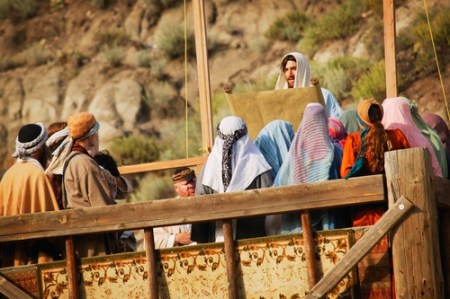
In the parable of the talents[1], Jesus says a master gave his servants different amounts of funding before he left on a long trip. The master gave one servant 10 talents and another servant 5 talents. Both of them invested their talents and made more talents. The master gave a third servant only one talent, and that servant buried his one talent in the ground.

When the master came back and asked for an accounting, the servant who buried his only talent in the ground told the master that he knew his master was a “hard taskmaster”, reaping where he did not sow and gathering where he scattered no seed. So, the servant said he was afraid and hid the talent in the ground.

The master got angry at the servant’s response, calling him wicked and slothful. Then the master took the one talent away from the servant, leaving him with nothing.

Stop and think about this parable for a bit. The servant who only received one talent was afraid the master was a hard taskmaster, and it seems he was! Is this supposed to be a parable of what God is like?

Is that what God is really like?

At other places in the Bible we see statements of God honoring the industrious and treating the slothful as wicked. It seems God desires us to be industrious, but is God really the hard taskmaster in the parable?

This parable is an allegory. A parable is meant to convey some truth to us, often about our relationship with God, so gaining understanding of what Jesus is saying here is important.

The parable of the talents seems to affirm that God gives people natural abilities in different measures. Such a thought is antithetical to post-modern sensibilities. In our post modern world, we aren’t just content with equal opportunities; we want strict equality across the board.

Though we often gloss over the reality that people are not all created equal in talent in polite and politically correct ways, we know that people have different talents of different types and different measures.  Some people are born with musical talent like Beethoven, and some people are born without limbs. But the difference in talents isn’t the focus of the parable.

Continue reading “Is God a Hard Taskmaster?”

Daily Prompt: Brassy

Jazz concert
       depositphotos Image ID: 38371383 Copyright: wangsong

via Daily Prompt: Brassy

  • sounding like a brass musical instrument; harsh and loud.
  • tastelessly showy or loud in appearance or manner.

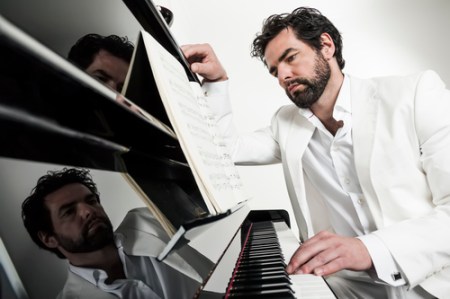
When a brass section plays along in harmony with a band, it can be a magical, musical experience. Those bold, brassy tones blending together in tight harmonies, complimenting the melodies and, sometimes, doing the solo thing – at the right time of course – are beauty in sound.

Everything is beautiful in its place, and its time. (Ecclesiastes 3:11)

Musicians will affirm that “chemistry” is important in a musical group. Each person must be attuned to the other and to the whole and, at the same time, be focused on his or her own contribution. This is multitasking at its finest! When the chemistry is there, it is a wonder to behold. When it isn’t, it just falls flat.

Continue reading “Daily Prompt: Brassy”

Fear, Love and the Spirit of God

Image ID: 86629260 Copyright: photoholic

The apostle, John, wrote, “Perfect love casts out fear.” (1 John 4:18) This was written by a man who, when the chips were down for Jesus, scattered in fear with the rest of the apostles. As Jesus tried to tell them of the need for him to die and be raised from the dead, something the apostles did not understand, he predicted they would all forsake him.

“You will all [i]fall away because of Me this night…. (Matthew 26:31)

Peter might have pumped his chest with bravado as he protested that others might leave Jesus, but he would never leave. (Matthew 26:32-33) But, Jesus knew better than Peter knew himself. He predicted that Peter, though swearing allegiance at that very moment, would deny him not once, but three separate times. (Matthew 26:34)

So great was the fear that overtook the disciples that they scattered after Jesus was taken by the Roman soldiers. Even Peter, who didn’t scatter, but stayed back to witness the interrogation, beatings, mocking and humiliation to which Jesus was subjected, denied that he knew him… three times.

Fear is a powerful emotion. It can overwhelm us and cause us to stumble from the path that we know is right. How do we overcome fear?

Continue reading “Fear, Love and the Spirit of God”

God Chooses US

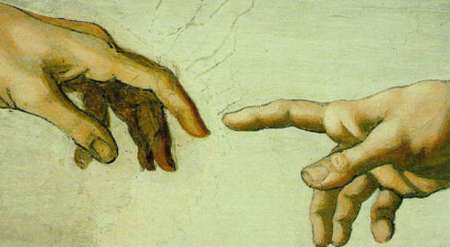
The Scripture presents to us a tension between the necessity of free will and the certainty of God’s sovereignty.

Creative Commons photo from Flicker

God lets us choose Him: “But to all who did receive Him, to those who believed in His name, He gave the right to become children of God.” But that isn’t the beginning of the story – or the end of it.

God chooses us. He gives us the right to become children of God[i], and He made that choice before the foundation[ii] of the world. We become the children of God not by blood descent, not by the will of parents or anyone else – maybe not even by our own will – but by God’s choice.[iii]

I do not have a systematic theology. I am not a theologian, and my understanding of systematic theology is limited, but free will has always seemed self-evident to me. It also seems eminently biblical. God created us in his own image[iv], and a primary characteristic of God is agency. We see in the story of Adam and Eve that God gave us agency too, by giving them dominion over the animals of the earth and in the choice to eat of the fruit of the tree of the knowledge of good and evil.

The freedom to choose is also a necessary condition of love. God is love[v], and he created us in His image to reflect Him, to glorify Him and to love Him.

The point of an image is to image. Images are erected to display the original. Point to the original. Glorify the original. God made humans in his image so that the world would be filled with reflectors of God. Images of God. Seven billion statues of God. So that nobody would miss the point of creation. Nobody (unless they were stone blind) could miss the point of humanity, namely, God. Knowing, loving, showing God.[vi]

God created us to love him. Therefore, we must have agency/free will in order to be able to reflect back His love as He intended.

But there is another side to this. There is not only what we call faith; there is grace. There is God’s unmerited favor. God chooses us. We call this predestination and attribute it to God’s sovereignty

Continue reading “God Chooses US”

God Lets Us Choose Him

If we encountered God “face to face” in our daily lives and if God was so evident in creation that we could not deny him, we would not have free will.

Depositphotos Image ID: 31693997 Copyright: DesignPicsInc

In back-to-back chapters in the Gospel of John (8, 9 and 10), Jesus has conversations with Jewish crowds who question who he is. Jesus never tells them in direct words, “I am God,” but the crowd clearly knows what he is talking about. This is similar to what we experience in life.

The world is made in such a way that it is governed by natural laws that have existed since the beginning of time. The cosmological constants were set from the beginning and are so finely tuned that they could not be changed this way or that way, even the slightest bit, without negating the possibility of life on Earth. Many scientists look at these laws and draw the conclusion that either they have always existed or they are simply all there is.

But where did the laws come from? Where did the universe come from? There is plenty of other evidence that God, the Creator, exists. The cosmological constants do not eliminate the possibility of a God. In fact, if those constants had a beginning, they must have had a beginner. But, there is room to question and to dismiss the idea.

Many of the Jewish people at the time of Jesus, especially the influential leaders, questioned who Jesus claimed to be.  Jesus did not get in their face about it. Just like God does not reveal himself in the created Universe in a way that we could not ignore him, Jesus was subtle, but clear.

I find this to be fascinating. It reveals a deep thread that has been coming into focus for me going way back in time.

God created us with free will. If he was in our face, we would have no free will. He would overwhelm and overcome us if we could not ignore Him.

Continue reading “God Lets Us Choose Him”