The Face of Love


“Love is patient and kind; love does not envy or boast; it is not arrogant or rude. It does not insist on its own way; it is not irritable or resentful; it does not rejoice at wrongdoing, but rejoices with the truth. Love bears all things, believes all things, hopes all things, endures all things.”[1]

This is an iconic, timeless description of what love is from the Bible. This passage has been quoted at countless weddings. Most people are familiar with the “love passage”, even if they have no familiarity with the Bible itself.

We know there are different kinds of love. There is the intimate love between couples, erotic love, the love between parent and child and brotherly love among friends. These kinds of love sometimes overlap. For instance, the love between married couples, at its best, incorporates something of all of these types of love.

Perhaps, the most popular notion of love today is the love between two people – the Disney type of love at first sight and love ever after. A mix of erotic thrill and passionate commitment.

Google “love”, and images of young, good-looking men and women goggling each other is what you will find. This love is almost mythical in its ubiquitous celebration in popular culture, and it’s, perhaps, just as mythical in reality. Few, if any of us, really experience the love that we collectively aspire to (as demonstrated by the money we spend on love-themed entertainment ).  And, those of us who have “felt” this kind of love all know how fleeting it is.

This kind of love involves commonality of interest and affection. It’s a two-way street. When the commonality ceases and the affection is lost, the one-way street can only operate so long – especially in a society that emphasizes the emotional value of love. We build in a qualifier to the age-old phase, “til death do us part”: when the affections die, I am outta here!

Other kinds of love include the love of parent and child and brotherly love – the love between friends who have common bonds of experience, interests and friendship. Though the entertainment value is much less than the former, we all instinctively know that this kid of love is good. It is very good.

Friendships, still, can be fragile. Rare is the friendship that survives indefinitely. Even familial love, including the love between parents and children, can die on the rocky shores of turmoil and circumstances that tear it apart and undo it. I see this constantly in my practice of law, representing people in the administration of their estates.

The biblical definition of love is something different altogether.

“Love is patient and kind; love does not envy or boast; it is not arrogant or rude. It does not insist on its own way; it is not irritable or resentful; it does not rejoice at wrongdoing, but rejoices with the truth. Love bears all things, believes all things, hopes all things, endures all things.”[2]

None of these descriptors of love depend on affections. They are timeless in that respect. They describe a love that is not qualified. The very next statement in this passage is that “love never fails” (or never ends).[3] In other words, this kind of love never dies.

Do you know this kind of love?

Continue reading “The Face of Love”

How Our Wounds Help Us Understand God

How we deal with our wounds is a model for how we relate to God.


Jesus taught his disciples to pray, “Forgive our sins as we forgive those who sin against us.” (Luke 11:4) Jesus illuminated that prayer with the parable of the unforgiving servant (Matthew 18:21-35) after Peter asked him how often we must forgive those who sin against us.

In the parable, the master forgave the great debt the servant owed him, but the servant demanded payment of the small debt someone else owed the servant. At the end of the parable, the master says to the unforgiving servant, “Should not you have had mercy on your fellow servant, as I had mercy on you?”

I have been listening to Tim Keller a lot lately. Keller says, “How we deal with our wounds is a model for how we relate to God.” He adds that “’the mercy rule’ demonstrates that God distributes His forgiveness through people. He forgives us as we forgive others” – a simple but profound statement.

It isn’t that we earn forgiveness from God metes by notching sufficient forgiveness of others on our belts. We don’t earn forgiveness from God anymore than someone who has wronged us earns our forgiveness. The whole point of forgiveness is unmerited favor. Forgiveness is never earned; forgiveness is being released from consequences we deserve.

But, forgiveness is still a two-way street. God, apparently, has built into the fabric of His universe the principle that we are forgiven to the extent we forgive. It’s like a law of physics in the moral and spiritual world.

In addition, Keller says, “The way we distribute mercy says a lot about how we relate to God.”

When Peter asked how many times we must forgive?” He offered what he undoubtedly thought was a generous amount: Seven times. You have undoubtedly heard the statement: Fool me once, shame on you; fool me twice, shame on me. This sentiment is not a new one. Sometimes we say, “three strikes, and you’re out!” Peter upped the ante generously to seven times, thinking that seven times must surely be good enough!

But Jesus said, “No, seventy times seven!” We should forgive people exponentially more than we think! In fact, the real point of what Jesus was saying is that we shouldn’t keep tabs. We should always forgive… if we want to be forgiven.

Like a law of physics, forgiveness cannot flow to us unless we let it flow through us.

As Peter demonstrates in his question to Jesus, this is very hard for us to understand. Surely, there must be a limit to forgiveness! Surely, there is a line that can be crossed, across which forgiveness is not allowed and not required! So it seems to us, but in so thinking, we fail to understand the nature and character of God.

Continue reading “How Our Wounds Help Us Understand God”

A Life Transformed


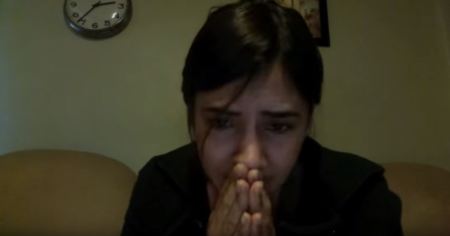
I stumbled on the video a few years ago that was posted in March of 2015 by Maz, a woman who was raised in a radical, abusive home. She had just become a Christian, against her families’ wishes, and she feared for her life. Though she filmed the video alone, she spoke in hushed tones. The weight of her plight was evident in her demeanor, yet she was willing to face the consequences for her commitment to Christ. You can watch it for yourself below.

The video was hauntingly beautiful in its testament to the life changing reality of an encounter with God in Christ. Her own father sought to have her beheaded. The emotion of the moment was raw and real. She was leaving a testament to her love for God, knowing that her life might not end well.

I wondered about her and prayed for her years after she posted the video. She posted another video about a year later, and she was still doing well. She had matured some in her faith, but the darkness of her past and the threat that hung in the air seemed still present.

I searched a few times for a follow up video after that, wondering what became of her. Did she survive? Was she ok? Was her faith as vibrant after time had passed as the day she posted that first video?

Today, I don’t have to wonder anymore. I had subscribed to her channel. Today as I was going through my YouTube subscriptions her video that she did in March of 2019 was there on my computer. I watched it, and what a gloriously different demeanor she has now! She radiates the love of Christ.

See and listen for yourself her story in the first video. Her original story is amazing and compelling. She had trouble putting her encounter in words, but the love of Christ she experienced was overwhelming. She knew little about Christianity, but she knew the risen Lord.


Continue reading “A Life Transformed”

Another Look at God In Light of the Evil in the World (Postscript)

The sufferings of this present time are not worth comparing with the glory that is to be revealed to us.

Self Portrait by Joni Eareckson Tada

This is a postscript to a series of blog posts that, frankly, could go on. It follows what was to be the conclusion of a series on the problem of evil – Another Look at God in Light of the Evil in the World (Part 4). Why does evil occur and God doesn’t prevent it? If God is God, and He is all-powerful and all-loving, why does He allow evil, pain and suffering?

I do need to bring this to a conclusion, but I have some “final” thoughts. I also have some experiences to relate: not mine, but of someone who knows pain and suffering better than I.

But first, we have to admit that, if God is God, and if He cares, and assuming He could prevent the pain and suffering in the world, why doesn’t He? It’s a legitimate question!

If Jesus didn’t rise from the dead, I believe we would not be talking about him still in the 21st Century. There would be no point in Christianity whatsoever. He would have fallen into obscurity as just another idealistic dreamer whose fate, like all the other ill-fated dreamers who ever lived, seals our doom as a people, as a species on this planet.

But if Jesus did rise from the dead, no over feat in the history of mankind is more important or more significant. We can’t just dismiss it.

Continue reading “Another Look at God In Light of the Evil in the World (Postscript)”

Another Look at God In Light of the Evil in the World (Part 4)

God is intimately acquainted with the pain and suffering we experience. The God of the cross who knows and understands our suffering can be trusted.


I have tackled the problem of evil – why is there pain and suffering in the world if God is good and all-powerful? – in a series blog posts, beginning with an introduction, followed by Part 1, Part 2 and Part 3. The impetus for the blog posts comes from the explore God discussion that was happening at over 800 churches in the Chicago area over the winter of 2019. The series of blog posts was more specifically inspired by the discussion of The Problem of Evil and Suffering on Veracity Hill between Kurt Jaros, the host, and John Peckham from Andrews University

The problem is easy enough to state, but it’s difficult to resolve, if, indeed, there is a resolution. Although not every religion maintains that God is personal, volitional, all-powerful and all-good, the problem of evil. Not every world religion faces the problem head on. Buddhism, for instance, posits that evil doesn’t really exist; it’s an illusion.

I have been exploring a Christian response to the problem, but it’s all pretty academic unless and until we are overwhelmed by evil, pain and suffering in our own lives. At the point of real evil, pain and suffering, an academic response doesn’t seem to satisfy.

Just last week, in the midst of thinking through the issues and writing the blog series, a tragedy of overwhelming proportions happened right in the city where all my kids went to school. An apparently disgruntled employee on the cusp of being fired from his 15-year position at a local manufacturing plant in Aurora, IL, opened fire on employees in the plant, killing five of them and wounding six other people, including six police officers responding to the alarm that went out. The youngest victim was a 21-year old college intern who started his internship in the HR department that day.

When a person is reeling from pain and suffering that hits close to home, especially from such a senseless, intentional and indiscriminate act of violence, the academic answers ring hollow and fall flat.

Without letting go of any of the attributes of God that are revealed in the Bible, we can work through the problem intellectually and logically to a solution, as I have tried to do in the summary that is contained in the previous blog posts. In some ways this solution is like the theory of gravity for Christianity. We can understand it, but knowing the cold, “scientific” facts are no consolation after falling off a cliff.

What remains, after we have worked through an intellectual solution to the problem, is the emotional, existential weight of the problem of evil. This is where we live. The weight of the problem of evil is hard to shake, quite frankly, when the pain and suffering becomes personal. When we come face to face with evil, pain and suffering in the world in our personal lives, an intellectual response isn’t enough.

This is exactly when people turn to religion and to God for comfort and answers…, or turn away. If all that Christianity has to offer is an academic response, what is the use?

Continue reading “Another Look at God In Light of the Evil in the World (Part 4)”