Thinking Outside the Circle and Focusing on the Center: What Direction are You Moving?

If we are not challenged to rethink what we think we know from time to time, we are not likely coming into close enough contact with Jesus.

I watched the Chapelstreet church service today and listened to the sermon by Jeff Frazier in Batavia, IL. It was just what I needed to hear. Not that it tills new ground; it covers familiar ground from a new angle. It avoids the ruts of old, tired ways of thinking and finds fresh new ground (for me) from which to approach how we see Jesus.

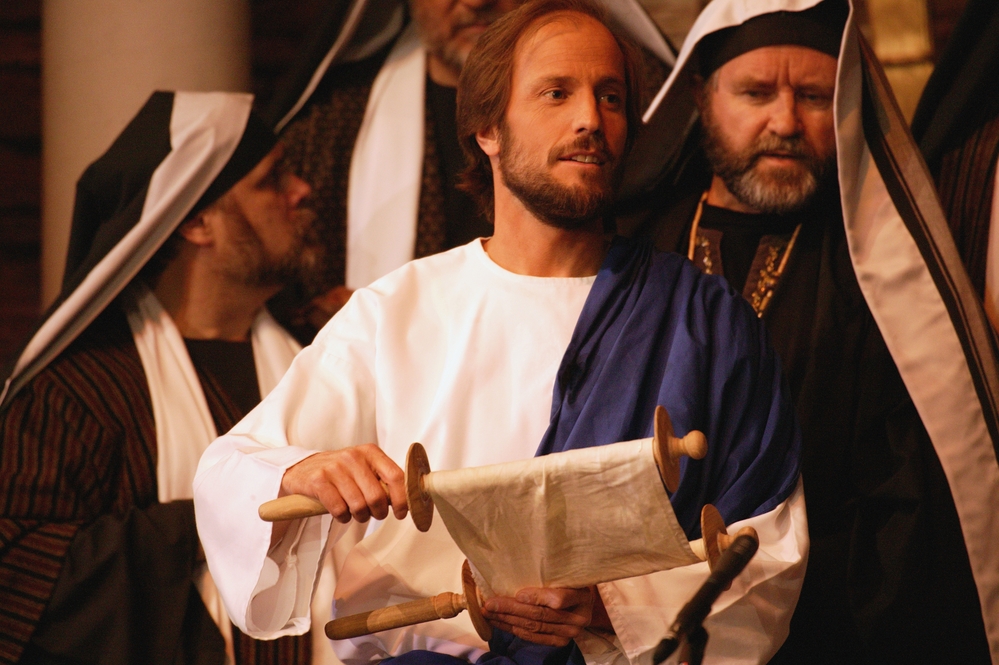
The sermon today was inspired by Matthew 9:9-13.[i] You can read it in full at the endnote below. In summary, Jesus called Matthew from the tax booth where he was sitting to follow him, and Matthew responded by following him. That was the extent of the initial story

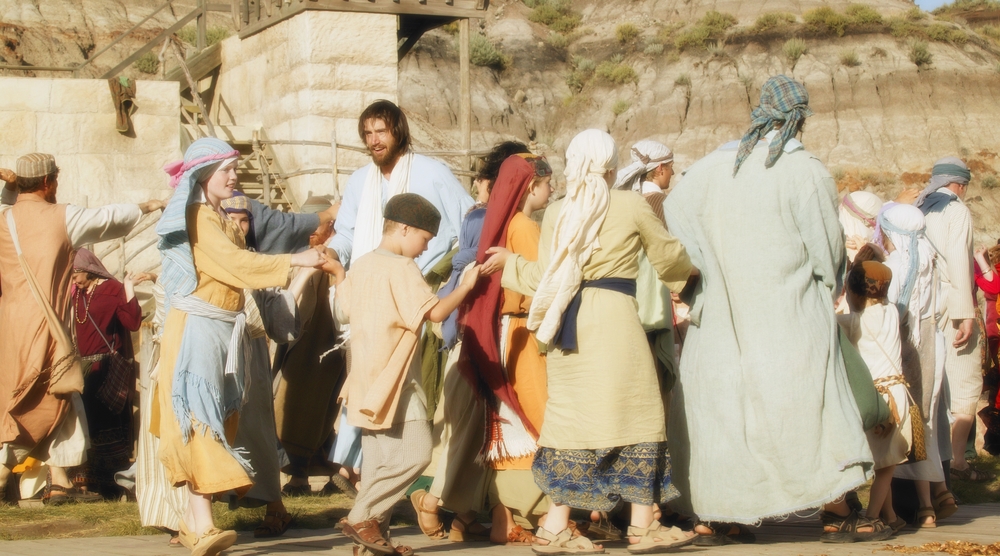
Then Scripture jumps to another scene: Jesus reclining at a table with “many tax collectors and sinners”. We are left to draw our own conclusions about what happened in the interim. It could be that Matthew invited all his friends, who were naturally other tax collectors and “sinners”, to met Jesus who had just connected with him.

The focus of the new scene, though, isn’t on Matthew anymore. The focus shifts to the Pharisees who ask the disciples why Jesus eats with “tax collectors and sinners”.

Before I describe how Jesus responded to them, I want to focus on the fact that the people who had a problem with Jesus were the religious people. Jesus was hanging around with all the wrong people according to the religious insiders of his day.

This is nothing new. I have written often about the Pharisees, Jesus and tax collectors and sinners. In fact, I wrote on the same subject just two weeks ago. (The Danger that Good, Upstanding, Religious People Face Today)

It isn’t a new thing to realize Jesus defied categorization; he shattered expectations and common ways of thinking. He challenged everyone he met to see the world differently, but we sometimes forget the radicalness of Jesus in our routine orthodoxy.

I dare say, if we are not challenged to rethink what we think we know from time to time, we are not likely coming into close enough contact with Jesus!

Back to the story: in First Century Judea, tax collectors were traitors and sell-outs. They were Hebrews who collected taxes for the Romans and used the authority of the Roman occupiers of the Hebrew Promised Land to accumulate wealth for themselves. They were hated by good Jews. They were outsiders in their own community.

As outsiders, they naturally associated with other outsiders (“sinners”). Thus, for Jesus to establish a relationship with Matthew – and worse than that: to “hang out” with other tax collectors and “sinners” – was scandalous. It was unthinkable!

When Jesus heard the Pharisees challenge the disciples to explain why Jesus was associating with “such people”, Jesus famously responded:

“Those who are well have no need of a physician, but those who are sick. Go and learn what this means: ‘I desire mercy, and not sacrifice.’ For I came not to call the righteous, but sinners.”

Matthew 9:12-13

This is a familiar passage to us, but I think the application of the message is sometimes lost on us today. I think we can fall into the trap of the Pharisees in our thinking without even realizing it. Thus, we need to be challenged to see things from a different angle, just as Jesus challenged the Pharisees in the first century.

Again, these are not new thoughts, but the the change of perspective (for me) comes courtesy of Paul G. Hiebert. Born to missionary parents in India, he became “arguably, the world’s leading missiological anthropologist”.[ii]

When he moved back to the west, he wrestled with questions like these: What does it mean for an illiterate, Hindu peasant to know Jesus? How much of their old life and traditions must be left behind?

Having observed missionaries in India, he concluded that the western mission movement was importing too many western traditions and thoughts. He saw the need for thinking outside the western box – like Jesus encouraged the followers of his day to think outside the box…. or rather, outside the circle, as we will see.

Continue reading “Thinking Outside the Circle and Focusing on the Center: What Direction are You Moving?”

Ten Reflections on 2020 and Three Things to do in 2021

If God isn’t our first love, we are putting other things first.

The writer of Ecclesiastes asserted boldly many thousands of years ago that “there is nothing new under the sun”. The ancient date of that statement has always been a poignant reminder to me that we aren’t as wise as we think we are for all our modern sensibilities. We struggle with the same basic issues that are common to humanity, despite our scientific and technological advances.

God stands enthroned over all of His creation. From His vantage point outside of space/time, He watches as His purposes unfold, including the groaning of creation as some of His crowning creation “seek Him, feel their way toward Him and find him”. (Acts 17:27)

We fit into His purposes by doing just that – to know God and to grow in the knowledge of God is the ultimate fulfillment of God’s purpose for us.

We easily get mired in the mundane concerns of daily life. Our future planning is often limited to the benefits we can obtain in our years in these jars of clay we call our bodies. We often fail to give full room for the eternity God set in our hearts. (Ecc. 3:11) We fail to allow the Holy spirit to have full sway in our hearts and our lives.

We are easily distracted and easily preoccupied by lesser things than our relationship with God the Father and His purposes.

I am forever grateful for the grace He has shown to us in the sacrifice He made for us that He has made a way for us to come to Him despite our frailties and sinful tendencies, and to continue coming to Him who receives us in Christ. I am more indebted to His mercy and grace now than ever before. His lovingkindness is truly new every morning.

As we watch the time closing out on 2020, looking backward, and straining forward, I am borrowing from another writer for my own ten reflections on 2020:

Continue reading “Ten Reflections on 2020 and Three Things to do in 2021”

The Story of the Magi Demonstrates the Universality of the Offer of the Gospel to the World

The significance of the story of the Magi at the beginning of the Gospel of Matthew

The Adoration of the Magi; Border with the Queen of Sheba before King Solomon, from a prayer book of Cardinal Albrecht of Brandenburg (text in German), Bruges, Belgium, about 1525-30, Simon Bening. The J. Paul Getty Museum.

Matthew provides us the story of the Magi priests (not kings) visiting Jesus with gifts “from afar”. Magi is a Zoroastrian term referring to “dream interpreting astrologers-astronomers from Persia or Mesopotamia who possessed secret knowledge”.[i] We don’t know the actual number, though three is the popular legend.

The number was postulated by Origen in the Third Century based on the number of gifts they brought: gold, frankincense, and myrrh. The Feast of the Epiphany, which was first celebrated in Alexandria, Egypt, at the end of the Second Century or beginning of the Third Century (the home of Origen), celebrates the appearance of God to the world who became flesh in the person of the Christ child.

The arrival of the Magi is acknowledgement of the worldwide, universal significance of the event.

“Matthew’s story about travelers following the trail of a mysterious star was all about including ‘foreigners’ in the Christmas story. Matthew showed Gentiles—in other words non-Jews, people who worshipped so-called pagan gods—acknowledging Jesus as king and, presumably, savior.”

The universal availability of Jesus beyond the Jewish community into which Jesus was born to the world is built right into the beginning of the narrative in Matthew. It resonates with Paul’s letters in which he maintains, to his own detriment among his fellow Jews, that Christ came for Jew and Gentile, alike.

That the offering of God in the flesh to the world which is built into the very beginning of the story was first celebrated in the Feast of the Epiphany in Northern Africa is intriguing to me. Though the Magi would have come from a different area of the world, the point of the story is the universality of Christ.

We also forget how prominent in early Christian history was the African church. This intrigues me as well.

The story in Matthew is only 12 verses long (Matt. 2:1-12). A longer version of the story exists in one other manuscript, the “Revelation of the Magi”.[ii] This Syriac text that was translated into English only recently is apocryphal and likely dates to the Second or Third Century.[iii] It depicts the wise men coming from Shir, which is in China today.

Like many apocryphal texts, it smacks of myth and legend (the star they follow comes down and transforms into the baby Jesus). It is a whimsical story, perhaps, like the Chronicles of Narnia.

While the Revelation of the Magi is apocryphal and fantastical in its details, the idea that men came from the Far East is not. The Spice Route that comes into Jerusalem connects all the way to China and can be observed still today.

I have meditated before on the thought that Jesus came at just the right time in history when much of the known world was unified by a system of Roman roads and order opening the world to the west and north (to the British isles) for the spread of the Gospel. So also, we see that the Spice Route opened the world for the spread of the Gospel to the east, just as other trade routes allowed the Gospel to spread south into Africa, with Alexandria being one of the three pillars of early Christian authority.

While I am very familiar with Paul’s ministry to the Gentiles and faithful devotion to the promise God made to Abraham to bless all the nations through his seed, I had not noticed the significance of the Magi in the Gospel of Matthew (a more Jewish-orientated Gospel).

Continue reading “The Story of the Magi Demonstrates the Universality of the Offer of the Gospel to the World”

On the Delusion of Plausible Arguments, I Hold to Christ in Me

As I read through Scripture, I am always looking to understand it better. At the same time, I am listening for God to speak to me. In the process, I notice things. Like today. I noticed Paul’s statement to the Colossians:

I say this in order that no one may delude you with plausible arguments.

Colossians 2:4 ESV

Hmmm… the delusion of plausible arguments. That’s an interesting phrase… (So it seems to me, anyway!) I want to explore that a bit further.

Context is always important. the context for this statement is Paul’s letter to the people in Colossae, a very Greek city. He had already been to Athens where the Athenians spent significant time telling and listening to the latest ideas. (Acts 17:21)

In our modern view, we might imagine an ancient think tank in which new ideas are explored and developed toward some greater ends. We might be tempted to see Athens as an incubator of ideas for the benefit of mankind.

Luke, the writer of Acts, was not being complimentary, however, when he made this observation. The context suggests a contrast between a desire for novel ideas and a desire for truth. Ideas for the sake of ideas and novelty for the sake of novelty may be an erudite pastime for the bored elite who enjoy comfort and privilege, but they are not noble pursuits in themselves.

Unless one has a desire to know truth (and put it into practice), entertaining new ideas is only an exercise in futility, diversion and delusion. The ancient writer of Ecclesiastes, writing about a millennia before Paul set foot in Athens, recognized “there is nothing new under the sun”. (Ecc. 1:9)

Even way back then! Chasing after ideas that are new for the sake of novelty is just a distraction from the truth. It is meaningless!

Paul views the sharing of ideas for the novelty of them in the same way modern people might play video games or read a book – entertainment to pass time. He obviously thought little of such things and had no time for it.  

Truth had been revealed to Paul in the form of the risen Jesus, whom his people had crucified and Paul had persecuted. Paul’s whole life was interrupted one day as he traveled with the intention of arresting and imprisoning Christ followers in Damascus, and the course and trajectory of Paul’s life was forever changed.

Paul’s life would never be the same. By the time Paul wrote the letter to the Colossians, his motto had become “to live is Christ and to die is gain”. (Phil. 1:21) Other things, including a preoccupation with novel ideas, has become mere distractions not worth his time.

If we can tell anything about the biographical and autobiographical sketches of Paul in Acts and his letters, we can see that Paul was fiercely and uncompromisingly concerned about truth. That attitude led him to persecute the followers of Christ with zeal when he thought the truth lay in that direction.

It was Paul’s commitment to truth that prompted him to turn in the opposite direction and accept the same Jesus Paul had persecuted as his Lord and Savior. Paul gave himself completely as a servant of the risen Lord to the point of sharing in his own body the sufferings of Christ (as described in Colossians 1:24).

Paul’s turn of phrase, perhaps, is what caught my eye as I read through Colossians this morning: the delusion of plausible arguments. It deserves some additional contemplation.

Continue reading “On the Delusion of Plausible Arguments, I Hold to Christ in Me”

The Case for Jesus Christ Rests on the Evidence of Eyewitnesses

As a lawyer, I am keenly aware of the central importance of eyewitnesses to getting at the truth of any matter. There is no better proof in the law than eyewitness testimony. The rules of law allow hearsay testimony (the testimony of what someone else said) only in extreme and limited circumstances because eyewitness testimony is considered inherently much more reliable.

Eyewitness testimony is light years more reliable than secondhand testimony, but even eyewitness testimony needs to be carefully considered along with the credibility of the eyewitnesses. People aren’t always good at observing details accurately. People sometimes fill in the gaps in understanding of what happened with details that are assumed, but which aren’t accurate. People do this consciously and unconsciously.

Eyewitnesses can also be influenced by subconscious biases and influences. Sometimes eyewitnesses even lie about what they have seen.

Because eyewitness testimony isn’t foolproof, we always compare eye witness testimony with other evidence, including other eye witness testimony. Judges and juries weigh the credibility of the witnesses, and they look for evidence that corroborates or contradicts the eyewitness testimony. At the end, weigh the totality of the evidence to reach a verdict.

Still, most cases are built on eyewitness testimony. A case can be built on the testimony of a single, good eyewitness, but multiple eyewitnesses are always better. The more eyewitnesses that agree with each other on key facts, and the more evidence that corroborates that testimony, the stronger a case is.

The narrative accounts contained in the Bible that we call the Gospels keys in on eye witness testimony. The the biblical writings are expressly self-conscious of the eyewitness sources of the accounts. Following is a summary of the eyewitness testimony that runs throughout the New Testament.

Continue reading “The Case for Jesus Christ Rests on the Evidence of Eyewitnesses”