Why Did Jesus Pick on the Pharisees so Much?

Perhaps, we malign the Pharisees more than we should.


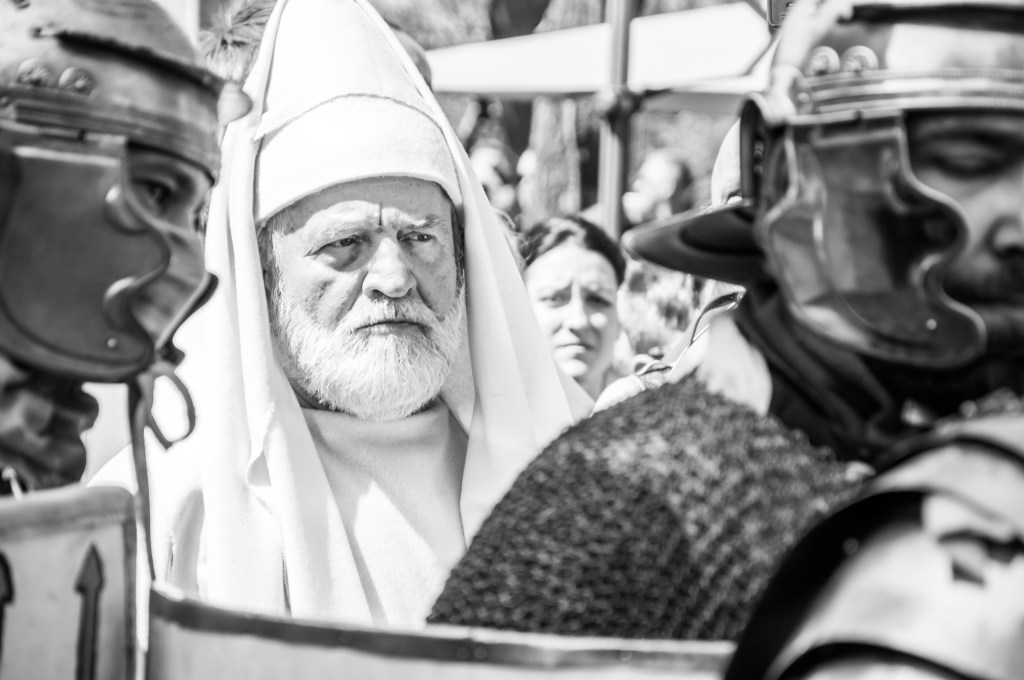
Have you ever noticed that Jesus engaged more with certain groups of people than with others? In the 1st century Judea, there were at least five distinct Jewish groups: the Herodians, the Sadducees, the Pharisees, the Zealots, and the Essenes. The record we have in the Gospels shows that Jesus engaged one of these groups far more than the others.

My interest in this question goes back to the very first time I read the Gospels in a college world religion class. The way Jesus focused on the Pharisees virtually leapt off the pages at me! He was brutal to them! And, that is putting it politely.

Jesus called the Pharisees hypocrites (Matt. 23:13, 15, 23, 25, 27, 29), blind guides (Matt. 23:16, 19, 24, 26), blind fools (Matt. 23:17), “white-washed tombs” that “appear outwardly righteous”, “but inwardly … full of hypocrisy and wickedness” (Matt. 23:27), and a “brood of vipers”! (Matt. 23:33)

I am not saying that Jesus didn’t engage the other groups. It’s just that he engaged one group far more than the others. The Pharisees are mentioned ninety eight (98) times in the New Testament, mainly in the Gospels.

The Pharisees were not friendly with Rome. They hoped in the restoration of the throne of David. Unlike the Zealots, who violently opposed Roman rule, the Pharisees more or less ignored Rome. They devoted themselves to God and following the Law.

Unlike the Essenes, who retreated to the desert and removed themselves from Judean community and life, the Pharisees remained in the community. Like Jesus, they remained engaged.

The religious views of the Pharisees were in opposition to the Sadducees on resurrection, the reality of supernatural and demonic activity and the authority of the Prophets. While the Sadducees were officially recognized as religious leaders by Rome, the Pharisees were religious leaders for the common people.

Though they were popularly influential, the Pharisees wielded no political influence or position. Though some Pharisees were wealthy, they were elite primarily in their religious study and devotion.

In many ways, the Pharisees were most like Jesus, and Jesus was most aligned with them in their social orientation and religious views. “They were the holy men who kept the law; they pursued purity with a passion and wanted nothing more than to live lives that pleased God. They were sincere, albeit sincerely misguided.”

So, that brings me to the question: Why did Jesus pick on the Pharisees so much? In the remainder of this article, I will give you my current answer, though I reserve the right to change it (again).

Continue reading “Why Did Jesus Pick on the Pharisees so Much?”

Abraham, Isaac, the Blood Path, Christ and Him Crucified

I started on a journey exploring the story of Abraham and Isaac deeper and with more nuance in my previous article, The Story of Abraham and Isaac Revisited: Introduction. The story of God’s seeming demand to Abraham to sacrifice his son, and Abraham being seemingly willing to do it, is quite misunderstood, especially without reference to the Ancient Near East context.

Child sacrifice was ubiquitous among the religions with which Abraham was familiar. Abraham would have thought the demand for the sacrifice of Isaac unsurprising among the arbitrary and capricious gods in the Ancient Near East world he knew.

The story is of the first 11 chapters of Genesis and of Abraham is a revelation that the God of Abraham is different than all the other Ancient Near Eastern gods. In the subsequent article, The Story of Abraham and Isaac Revisited: Here I am!, we explore the interpersonal dynamics of Abraham and Isaac that set the stage for much greater revelation of which God is.

Through Abraham’s dutiful and faithful obedience to the demand he feared would be required of him, God demonstrated His character in a way that was indelibly etched into the experience and psyche of Abraham and Isaac. They would learn that God does not make the same kinds of demands as the other gods: God would provide the sacrifice Abraham feared that God required of him.

In Abraham, Faith and a Hope Deferred, I may seem to take a sideways turn off the path of revelation of God’s character to Abraham, but I will finish the story in this article and get to that point.

The ground we covered in that last article included a blessing by God to Abraham, but the experience of God’s momentary blessing was dampened by the cold reality of God’s yet unfulfilled promise.

In Genesis 15, Abraham sought more assurance from God that the land he lived as a stranger would really become the land of his descendants and, more fundamentally, that he would actually have descendants. Many years had passed, and Abraham was still childless.

In response, God asked Abraham to set up a covenant with five animals of specific types to be slaughtered, cut in half and placed opposite each other on either side of a depression. The blood of those animals drained into the depression creating a blood path. This, Abraham knew, was the stage for entering a covenant with God.

These types of covenants were familiar to ancient Middle Easterners. I understand that similar covenant rituals are practiced today by Bedouins.

Abraham would have known the drill. As the lesser party to the covenant, he would go first, signifying that God should do to him (stomp on a pool of his blood) if Abraham didn’t keep his part of the bargain. With the lesser party committed to the covenant, the greater party would seal the deal, and go last, walking through the blood path.

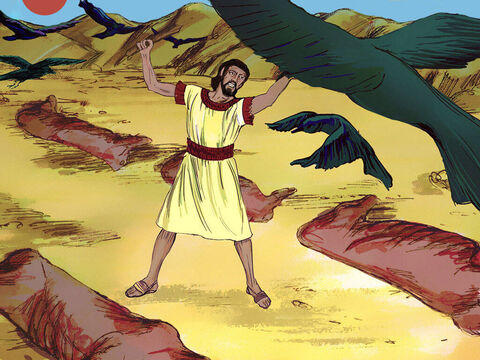
Only Abraham doesn’t initiate the covenant by walking through the blood path. He waits so long that he must drive the birds of prey away from the rotting carcasses. Then Abraham falls into a fitful and dark sleep.

Why did Abraham hesitate? Maybe he realized the significance of what God was setting up – a covenant between a fallible person and the Almighty God! Abraham was not likely worried so much about the commitment God would be making to him, but about the commitment Abraham would be making to God!

So, Abraham, perhaps, feared to enter in to the covenant. He falls into a restless sleep, and God comes to Abraham in his sleep. The “assurance” Abraham receives in his dreams is far from satisfying: God says the promise to Abraham’s descendants would not be finalized for 400 years!

Abraham would be long dead and gone.

This is where we pick up the story. This is where we get the next revelation of the kind of God the God of Abraham is. If we aren’t tracking with the story, we won’t appreciate what happens next:

Continue reading “Abraham, Isaac, the Blood Path, Christ and Him Crucified”

The Temptation of a Kingdom in this World

The kingdoms of this earth cannot be conflated with the Kingdom of God.

Photo Credit to Tim Butterfield

I see so many things in my daily reading of Scripture that are relevant to what is going on in my life, the things that I am talking to people about, and wrestling with myself. Today, is no different, including the following passage from Matthew from a friend who sends daily versus to people on a text list:

“The devil took [Jesus] to the peak of a very high mountain and showed him all the kingdoms of the world and their glory. ‘I will give it all to you,’ he said, ‘if you will kneel down and worship me.’ ‘Get out of here, Satan,’ Jesus told him. ‘For the Scriptures say, ‘You must worship the Lord your God and serve only him.””

Matthew 4:8-10

The relevance of this passage today relates to conversations I have had with people and articles I have written that touch on the popular infamy of so-called “Christian nationalism”. I put the phrase in quotation marks because people mean different things by it. The definition of Christian nationalism aside, I believe that the preoccupation with nationalism by some people who identify as Christians in America is unhealthy and askew.

The American Church has traditionally been very patriotic. Not that patriotism is necessarily wrong, but we have to be careful, as with all things that might compete for our allegiance and devotion to God. I have seen an unhealthy focus on the United States as a new Israel. I also believe we focus too much, sometimes, on protecting our comfortable status quo, when God may be trying to shake things up.

I won’t rehash the many times I have written about the admonition from Jesus to welcome strangers, which would seems like it should be a no-brainer for a Christian nation. The issue of abortion should also have more consensus as well. In truth, we are more a Christian nation in name in the 21st Century, than in practice.

For that reason, I understand the desire and effort to take over the political landscape for Christ.

I was once very much behind that effort. Not that I am necessarily against it now, but my understanding of Scripture and how we should operate in the world has shifted my view.

Ultimately, it doesn’t matter how relatively righteous or just the United States of America is compared to other nations of the world. We can debate whether the United States is the new Israel, but the United States of America is not the Kingdom of God.

The United States is not even like Israel, which God established in the land of His promise for His purpose. His purpose was to grow out of its soil a people and a culture through which, at the right time, He could enter into the world as God incarnate. We should not forget that God “came to His own, and His own did not receive Him”. (John 1:11)

Not even the nation of Israel is the Kingdom of God. The Zealots of the time realized to their chagrin that Jesus did not come to establish God’s kingdom as the nation of Israel. In fact, the Kingdom of God won’t be established on earth (as it is in heaven) in our lifetime, or the lifetime of anyone until the day Christ returns.

The Kingdom of God is present, but the Kingdom of God is growing organically like a mustard seed, affecting the world like leaven, buried like treasure hidden in a field or a pearl hidden in an oyster beneath the sea. The kingdom of God is expressed through the salt and light of believers who are intimate contact with the world, if, indeed, we retain our saltiness and our light can be distinguished from the darkness of the world.

When the time comes for the Kingdom of God to be established as Jesus spoke, God will establish it, and it will be established as a new heavens and a new earth. A new Jerusalem will come down and be established on earth. (Revelation 21:1-5)

Meanwhile, the kingdoms of this earth cannot be conflated with the Kingdom of God, no matter how righteous or just we feel a particular Kingdom might be.

I am reminded of these things in this passage from Matthew where Satan tempted Jesus with all the kingdoms of this world if Jesus would just bow down to him. Jesus flatly refused him, saying that he would only worship God alone. If we had the same mindset in our lives today, I doubt anyone what accuse a Christian of nationalism.

Ultimately, “the kingdom[s] of the world [will] become the kingdom of our Lord and of his Christ, and he shall reign forever and ever.” (Revelation 11:15) That day has not yet come, however. When that day comes, God is the one who will establish it.

Meanwhile, We should not be tempted to conflate any kingdom in this world with the Kingdom to come. A passage from my own daily Bible reading is right on point. Jesus said in the context of the end times:

“Heaven and earth will pass away, but my words will not pass away.”

Matthew 24:35

The Government Will Be on His Shoulder, But What Does it Mean that the Kingdom of God Is Now

How should Christians orientate themselves to the world in which we live and conduct ourselves in the political and governmental spheres of present life?

The following passage from the Prophet, Isaiah, isn’t just a platitude to recite at Christmas:

For to us a child is born,
    to us a son is given;
and the government shall be upon his shoulder,
    and his name shall be called
Wonderful Counselor, Mighty God,
    Everlasting Father, Prince of Peace.

Isaiah 9:6

Jesus has many names, but the one used (perhaps) the most is Lord. All authority on heaven and earth has been given to Jesus. (Matt. 28:18) Christians revel in that statement. In the next breath, after Jesus said this, he said:

“Therefore go and make disciples of all nations….”

Matthew 28:19

When we think of the authority and lordship of Jesus, we might jump immediately to the ultimate conclusion – of Jesus ruling and reigning at the right hand of the Father. When Jesus told the disciples that all authority had been given him, however, his instruction to follow does not take us where our minds might be tempted to go. He did command us to take over the government or set up a new government.

His charge to the disciples was to go to all nations and make disciples.

That is still his instruction at this time.

Perhaps, we can be excused for forgetting the last instructions he gave after almost 2000 years. Or maybe not…. He was pretty clear about it. We also have the following reminder from the Apostle, Peter:

“But do not forget this one thing, dear friends: With the Lord a day is like a thousand years, and a thousand years are like a day. The Lord is not slow in keeping his promise, as some understand slowness. Instead he is patient with you, not wanting anyone to perish, but everyone to come to repentance.”

2 Peter 3:8-9)

Of course, the government will ultimately be committed into His hands. (Is. 22:21) He will ultimately make a footstool of all his enemies. (Ps. 110:1) Jesus will ultimately sit on the throne with throngs of people proclaiming, “Holy, holy, holy. Lord God Almighty!” (Rev. 4:2)

Jesus will be seen as the Lion of Judah and the Root of King David (Rev. 5:5) at that time with a sharp sword coming out of his mouth, striking down the the nations, ruling them with an iron scepter, and treading “the winepress with the fury of the wrath of God the Almighty!” (Rev. 19:15)

But, that time is yet to come. We aren’t there yet.

Even in John’s vision of this future time, the most common description of Jesus is as a Lamb (28 times). Jesus is first the Lamb who was slain, and that is the most prominent name he is given, even in the Book of Revelation.


We have yet to experience Jesus, the Lion of Judah, with sword in his mouth, a scepter in his hand, and a winepress at his feet. That time has not yet come.

Meanwhile, Jesus came not to Judge the world, but to save the world. (John 12:47) Jesus came not for the healthy, but the sick; and Jesus presently desires mercy. (Matt. 9:12-13)

Jesus is not yet the Judge, treading a winepress with the fury of the wrath of God Almighty; He is the Good Shepherd searching for the lost sheep. He is not presently in the business of condemning the world; he is currently in the business of seeking and saving the lost. (Luke 9:10)

So, we should be.

The charge that Jesus gave us – to go and make disciples of all the nations – is still our marching orders. It hasn’t changed.

No matter how close we think we are to the end, God is still currently in the mode of being patient, not wanting anyone to perish, but wanting everyone to come to repentance.

We are easily distracted by many things. We can be so obsessed about the past and we can be so forward-thinking that we forget about the present. We can be so focused on the end times that we do not understand the times in which we live.

We may be close to the end times, but we may yet be far off, by human reckoning. To God, a day is like a thousand years, and a thousand years is like a day. (2 Pet. 3:8) Jesus said we would not know the day or the hour. Most importantly, we are still in the times in which Jesus told us to make disciples of all nations.

He didn’t tell us to make enemies of the nations. He didn’t tell us to set up new nations. He didn’t tell us to take over nations. He said, “Go and make disciples of all nations.”

This, so far, is just a preface for talking about politics and government in the 21st Century. Yes, the government will be on the shoulders of Jesus, but what of the Kingdom of God now? How should Christians orientate themselves to the world in which we live and conduct ourselves in the political and governmental spheres of present life?

Continue reading “The Government Will Be on His Shoulder, But What Does it Mean that the Kingdom of God Is Now”

When It Gets Hard, to Whom Shall We Go?

I had gone back to medicating myself and chasing weekends. I was lost in a spiritual wilderness.

The passage from the Gospel of John reproduced below was the subject of a sermon recently where I attend church. It is also the catalyst for one of the most important turning points in my life.

Jesus had just finished telling the crowd, “I am the bread of life….” (John 6:48); “And the bread that I will give for the life of the world is my flesh” (John 6:51); and, “Whoever feeds on my flesh and drinks my blood has eternal life.” (John 6: 54)

The Romans called the early Christians cannibals because of words like these and “the Lord’s Supper” that Christians observed ritually when they met. The crowd didn’t understand what he was saying either. The apostles also didn’t understand, as is evident by the following interchange in John 6:

60 On hearing it, many of his disciples said, “This is a hard teaching. Who can accept it?”

61 Aware that his disciples were grumbling about this, Jesus said to them, “Does this offend you? 62 Then what if you see the Son of Man ascend to where he was before! 63 The Spirit gives life; the flesh counts for nothing. The words I have spoken to you—they are full of the Spirit[e] and life. 64 Yet there are some of you who do not believe.” For Jesus had known from the beginning which of them did not believe and who would betray him. 65 He went on to say, “This is why I told you that no one can come to me unless the Father has enabled them.”

66 From this time many of his disciples turned back and no longer followed him.

67 “You do not want to leave too, do you?” Jesus asked the Twelve.

68 Simon Peter answered him, Lord, to whom shall we go? You have the words of eternal life. 69 We have come to believe and to know that you are the Holy One of God.” (Emphasis added)

These words Jesus spoke were allegorical of course. In the sermon on this passage the pastor developed the principal that we feed on what we follow.

Paul says, “Bad company corrupts good character.” (1 Corinthians 15:33) “Garbage in, garbage out”, as “they” say. It’s biblical, and it’s common wisdom, but this passage is about much more than an adage for life.

Continue reading “When It Gets Hard, to Whom Shall We Go?”