Pulling at the Threads of the Christian Paradigm that Uniquely Influenced the Western World

Down at the bedrock of modern, western values remains a Christian foundation.

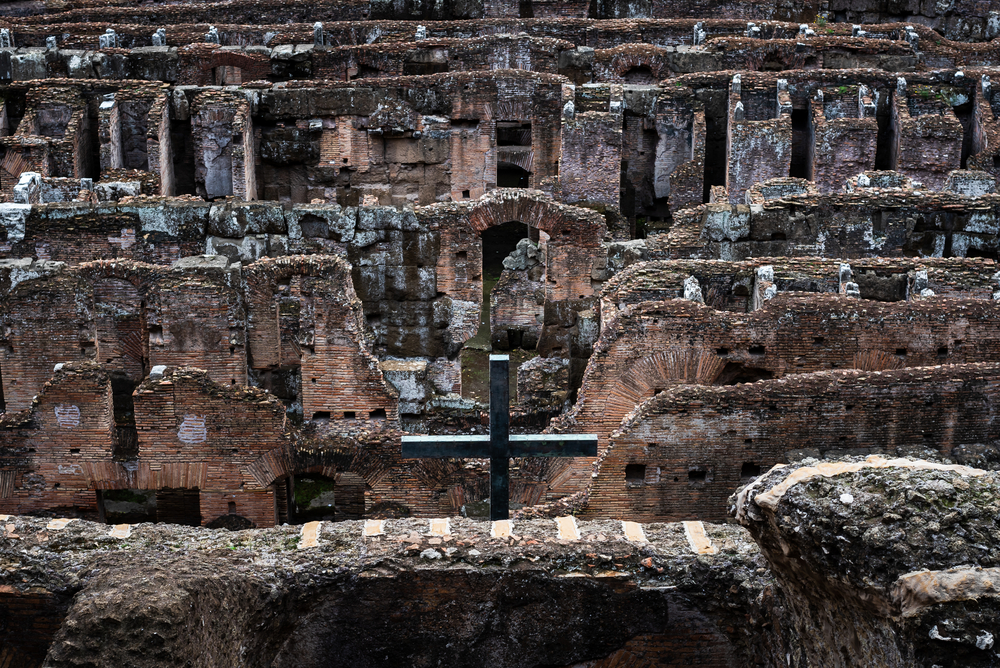
Galleries under the central arena of the Colosseum in Rome, Italy

I read Tom Holland’s new book, Dominion, about a year ago, and I have written about it a few times. Many Christians would not think to read a history about Western Civilization by a self-described secular humanist (once atheist, perhaps now agnostic) historian.

Most non-Christians are likely to be uncomfortable with the chronicle Holland describes of the radically influential role that Christianity played in the development of Western Civilization, providing the foundation, in fact, for secular humanist ideals. When Holland dug down to the bedrock of modern, western values, he was surprised himself to find them anchored on a Christian foundation.

Holland did not set out to write a Christian apologetic, and he seems to remain somewhat uncertain how to process what he “discovered”. What he found, though, changed his mind about Christianity. He gives a brief explanation in the following clip:

Though Holland has had a turnabout on his view of Christianity, he finds himself caught in an odd position wrought by the unexpected discovery that his lifelong, secular humanist values flow from the radical catalyst of Christian influence and remain embedded ubiquitously in its very fabric. The awkwardness of his current position is evident in his interviews and discussions about the book.

Christians and secular thinkers, alike, wrestle with his book. Holland doesn’t hide any warts, and he doesn’t pull any punches. Neither does he obfuscate the thoroughly paradigmatic shift in Western thinking that Christianity worked into a society that once proudly and unashamedly championed strength and privilege over the poor, the weak, and the lowly.

Holland exposes the metanarrative developed during the Enlightenment and thereafter that belies the foundation on which the Enlightenment structure was built. Far from advancing the progression of human values, the Enlightenment threatened to undo the distinctly Christian concern for the poor, weak, and lowly while attempting to wrest western civilization from the hold of the Divine. Humanism saved the Christian ethic, albeit divorced from Christ.

Consider the full title of Darwin’s great tome which staked out the ground of a scientific (and social) revolution free from God’s interference:

“The Origin of Species by means of Natural Selection or the Preservation of Favoured Races in the Struggle for Life”

The title of Darwin’s book championing the evolutionary paradigm, harkens back to the Greco-Roman value system that despised the poor, the weak and the lowly. That value system did not just turn a callous eye at wanton and discriminate cruelty, it cheered on the strong while they snuffed out the weak. It was national sport!

The very reason the full title never “stuck” (I now believe) is due to a fundamental, pervasive, and thoroughly entrenched counter-value of the intrinsic worth of human life that is uniquely Christian in its source.

The intrinsic value of all human life, from the greatest to the least, from the wisest and strongest to the weakest and most imbecilic, from the fittest to the most infirm, is traceable to the Christian belief that all human beings are made in the image of God. That the survival of the fittest did not take hold as a western social or ethical value is attributable to the deeply ingrained Christian ethic that survived yet, despite the efforts to eradicate its God from modern equations.

Modern humanists may attempt to recast Darwin into a humanistic mold, but the idea of “social Darwinism” bears his name through no model of random, unguided selection. According to John G. West, Charles Darwin, himself, set in motion the inertia for eugenics, among other things, that were associated with social Darwinism:

Darwin himself in The Descent of Man provided the rationale for what became the eugenics movement, and how the vast majority of evolutionary biologists early in the twentieth century were right to see negative eugenics as a logical application of Darwin’s theory.

While the defense of Darwin against the charge of social Darwinism has largely succeeded in popular and polite company, the very title of the Origin of Species (by means of Natural Selection or the Preservation of Favoured Races in the Struggle for Life) belies the success of that effort. The fact that the full title is merely a parenthetical today is evidence only of a concerted rescue campaign.

Christian values survived despite the Enlightenment coupe, not because of it. Humanism today assumes the evolutionary paradigm for its science alongside the uniquely Christian paradigm of intrinsic human value. That the two assumptions do not fit well together seems to be lost on modern minds.

Continue reading “Pulling at the Threads of the Christian Paradigm that Uniquely Influenced the Western World”

God’s Plans Are Bigger than We Often Perceive, and He is Working Them Out Sometimes Despite Us

God promised Abraham, “In you all the families of the earth shall be blessed”.

In the service this morning, the message was about Joseph. As often happens, I saw something I hadn’t seen before. The depth and nuance and intricate tapestry that is Scripture often works that way.

I will get to the point, but first, I need to build the backstory. Most readers know of Joseph, so I will be brief. Joseph was the youngest of the 12 sons of Jacob. Jacob was the son of Isaac, the famous son of Abraham. Abraham was the man of faith to whom God gave the following promise:

Go from your country [land] and your kindred and your father’s house to the land that I will show you. And I will make of you a great nation, and I will bless you and make your name great, so that you will be a blessing. I will bless those who bless you, and him who dishonors you I will curse, and in you all the families of the earth shall be blessed.” (Gen. 12:1-3 ESV)

I added the emphasis and will come back to it. In the meantime, we need to recall that Joseph was betrayed by his brothers, who were jealous of him. They plotted to kill him and left him for dead in the bottom of a well.  He was “rescued” by a passing caravan that sold him into slavery in Egypt.

We could say much about the story of Joseph, but I want to fast forward. Joseph’s life teetered on the edge of utter desperation. He experienced a series of very high highs and very low lows. God ultimately blessed Joseph and elevated him to the second most powerful position in Egypt because of Joseph’s faithful use of the gifts and wisdom God gave him.

Many years after his brothers left him for dead, Joseph superintended a massive grain storage plan for Egypt that positioned his “adoptive” country to weather a long, severe famine and provide food for all its people and other nations besides. That same famine prompted his brothers to travel to Egypt when they were on the verge starvation and desperation.

When they arrived and got inline to buy grain, they had no idea they were appearing before their brother, Joseph, but Joseph recognized them and asked them to go back to Canaan and bring his father, Jacob, back down to Egypt with them.

Joseph’s brothers, his father and the whole tribe returned to Egypt. When they returned and finally realized the powerful man who sent them for their father was Joseph, they were ashamed. They also feared retribution against them for their betrayal, but Joseph was gracious and gave them favorable living conditions until Jacob died.

This is the point of the story that was addressed in the service today. Joseph’s brothers were fearful, still, that he held a grudge after Jacob died and would pay them back for their betrayal. (Gen. 50: 15) They didn’t immediately go to Joseph. Instead, they sent a message to Joseph containing instructions their father, Jacob, gave them to say to Joseph: “’I ask you to forgive your brothers the sins and the wrongs they committed in treating you so badly.’” (Gen. 50: 17)

Much could be said about the fact that they sent their father’s instructions to them, rather than their own, delivering own, heartfelt message to their brother, Joseph, but this story isn’t about them. It’s about Joseph.

“Don’t be afraid. Am I in the place of God? You intended to harm me, but God intended it for good to accomplish what is now being done, the saving of many lives. So then, don’t be afraid. I will provide for you and your children.” (Gen. 50:19-21 ESV) (Emphasis added)

Continue reading “God’s Plans Are Bigger than We Often Perceive, and He is Working Them Out Sometimes Despite Us”

Immigration History and Confusion in the Church

Polls suggest that just 12% of evangelical Christians say that they think of immigration primarily through the lens of the Bible.

We have a somewhat romanticized view of immigration in the US. All of us in the United States reading this article are the benefactors of immigration, unless your ancestors were all Native American. Thus, the vast majority of us have benefitted from the various waves of immigration to the US in the past.

My ancestors immigrated at various times from England, Wales, Germany, Switzerland and France. It’s no wonder, then, that I view our history of immigration with some appreciation and sentimentality, and I believe most people with European ancestry feel like I do in that respect unless.

If you have much Native American or African ancestry, then, your view might be a bit different. If you have Chinese ancestry, you might feel differently. If you had German ancestry in 1750’s, you also might feel differently, but I will get to that.

We also tend to view our immigrant ancestors as hard-working, honest, and lawful people checking off the right boxes, jumping through the right hoops and diligently observing the protocols demanded of them to enter the country. We have earned the right to be citizens through their noble and respectful efforts.

Most of us, me included in years past, don’t really know the history of immigration to the United States other than the generalized and romanticized notions we carry from the US history we learned s children.

I am not a big fan of the new approach to American history that downplays the great positives that characterize the birth of our nation and its unique place in the world as a leader in many facets of human existence from governance to industry, science, and technology, medicine and human rights and in many other ways. At the same time, I think we should be honest about our history.

Immigration in the New World was relatively open, with exceptions, before 1882. Benjamin Franklin advocated in 1751 to exclude Germans and Africans from settling in the New World because he was “partial to the complexion of my country”.[1] Alexander Hamilton “warned of the dangers of absorbing and especially naturalizing too many foreigners”.[2] In fact, it seems that fear of immigrants is (at least) as old as the New World itself.[3]

People like Thomas Jefferson and George Washington opposed those views at the time, though Jefferson’s opinion may have been motived by a perception that German immigrants were more apt to support him politically. Some things don’t change!

I am not going to recount all the history of immigration in the United States. I am sure I don’t know the half of it, but a few noteworthy historical markers might be instructive in these times.

My interest here is the evangelical church in the United States, of which I am a member. How should we as a church orient ourselves to the immigration issues in our time in light of Scripture?

Continue reading “Immigration History and Confusion in the Church”

American History through the Eyes of Four Female, African American Banjo Players: Our Native Daughters

Songs from Our Native Daughters is American history told with dignity, grace and tenderness.

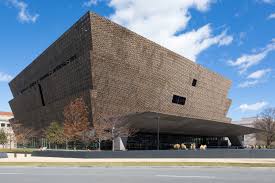
National Museum of African American History and Culture photo by Frank Schulenburg Copyright: CC BY-SA 4.0

For Black History Month 2021, I was more intentional than I normally am to listen to the voices of black people in America and to learn a little black history.


Rhiannon Giddens photo at flickr.com cropped

I have appreciated the voices of many people, including Rhiannon Giddens, formerly of the musical group, Carolina Chocolate Drop. Throughout Black History Month, she posted many biographies, and I followed her daily posts during the month.


So it was that I came across a project she created with a group of female, African American banjo players that was just released to the public. Yes, all banjo players, all female and all African American.

She set out to do an album of Americana music from the perspective of black history for Smithsonian Folkways. She put out a call for banjo players, like her, but she didn’t originally intend to gather together a group of four African American female banjo players: Allison Russell, Leyla McCalla, Amythyst Kiah and Rhiannon Giddens.

Four black female banjo players?!

It turns out she couldn’t have scripted a better group. The result of this collaboration is captured in song by the album, Songs of Our Native Daughters, and in the form of a documentary, Reclaiming History: Our Native Daughters. Their story, which is the story of their ancestors, and a story of overcoming through struggle, is a poignant one.

They met at Cypress House Studio in Breaux Bridge, LA, an old Creole cabin with “stories in the walls”. Dirk Powell, a longtime collaborator with Giddens, owns the cabin that houses the studio, and he produced the album.

They set out to reinterpret an existing canon of Americana music as part of the black narrative in the Americas, but they found their own voices and creativity in the process. The creative force of their shared history and experience led them to produce mostly original music for the album in the genre of Americana.

Part of that shared experience is the history of the minstrel banjo and slave narratives that are common to their collective ancestry. Giddens discovered her own history through her love for the banjo, which was an instrument brought to the Americas by the African slaves. Giddens commented:

“African American history is American history. It is important to know who the founding fathers were, and it’s also important to know who built the White House…. [I]it’s important to know who built the railroads; and it’s important to know the nameless people….”

Thus, Giddens found her own voice in the process of collaborating, writing and playing music for this project. In telling the African American story through Americana music, the group says the hope to prompt people to ask, “What can we do to be better as a society and as humans?”   

Continue reading “American History through the Eyes of Four Female, African American Banjo Players: Our Native Daughters”

How Does a Living God Relate to a Pagan World?

We have our gods, though we don’t give them names or ascribe human personalities to them.

My thoughts today are based on the story of Paul and Barnabas while they were in Lystra, a city in central Anatolia, part of present-day Turkey. While Paul was speaking, his gaze came to rest on a man listening to him speak who was “crippled at birth”.

Paul saw the man had faith, so he loudly told the man to stand up. (Acts 14:8-10) The man sprang up, and the crowd was awed, saying, “The gods have come down to us in the likeness of men!” (Acts 14:11)

The people in Lystra were pagans. They worshiped Roman gods and, perhaps, other gods as well. They started calling Barnabas Zeus and Paul Hermes and began making preparations to worship them.

When Paul and Barnabas realized what was happening, they were appalled! They rushed into crowd, saying, “Don’t do that! We are just men like you!” (Acts 14:14-15 (paraphrasing)). Then, Paul addressed his pagan audience like this:

“[W]e bring you good news, that you should turn from these vain things[i] to a living God, who made the heaven and the earth and the sea and all that is in them. In past generations he allowed all the nations to walk in their own ways. Yet he did not leave himself without witness, for he did good by giving you rains from heaven and fruitful seasons, satisfying your hearts with food and gladness.”

Acts 14:15-18

This is, perhaps, the first sermon preached in the early church to people who are not Jews. The pagans did not believe one God. They didn’t understand Mosaic Law, the concept of sin or the prohibition against worshiping idols considered to be false gods.

Thus, Paul didn’t address them as he did his Jewish audiences. He didn’t appeal to Mosaic Law, or accuse them of sin, or call them to repent.

Just as the Gospel is good news to the Jews, it is good news to the pagan Gentiles. The message, however, is different. Paul urged them merely to “turn from vain things to a living God”!

By “vain things” Paul meant their gods, the idols that the pagans worshiped. Instead of calling them idols, as he would have done to a Jewish audience, he referred to them descriptively by their character – their worthlessness, emptiness and utter inability to accomplish anything.

We have a hard time relating to idol worship in the 21st Century. Idol worship is so Bronze Age! Our ancestors long ago stopped believing in gods and sacrificing to them, right?

Tim Keller, in his sermon, The Gospel for the Pagan, paints a different story. These pagans were not so different from us.

In a polytheistic society, of course, people worshiped and sacrificed to a variety of gods. There was no supreme god. People had to decide what gods to worship. Thus, people chose gods to worship based on how those gods could help them.


A a merchant might sacrifice to the god of commerce. A farmer might sacrifice to the god of agriculture. Other people might sacrifice to the god of art and music, or love and beauty, or a combination of gods, depending on what was most important to them.

Keller says that sacrificing to the god(s) of choice was, in effect, worshiping the things people valued most. By sacrificing to the gods of commerce, agriculture, art and music, love and beauty, etc., they were worshiping whatever it was the god represented.  Whatever a person sought help for was the thing from which they sought meaning in life, hope and fulfillment.

Thus, says Keller, “vain things” (idols) are things that “promise fulfillment, but leave you empty”.

We may think of ancient pagans as a brutish and unsophisticated lot, but we are no different than they in the sense that we sacrifice for the things we think will fulfill and satisfy us. The only difference is that we have dispensed with the representative gods.

The person who values career, or accomplishment or being respected by peers as a matter of first priority will sacrifice for those things. The person who thinks that love, romance and family are the highest forms of meaning will devout primary attention to those things. The person who loves art and music will sacrifice for those things and from them seek meaning and fulfillment.

We aren’t that different, really from our pagan ancestors, though we might scoff at the idea of gods, as in idols. We have our gods, though. We just don’t call them names or ascribe human personalities to them.

Paul’s message to the pagans in Lystra was, “These are worthless things!” They can’t fulfill you. Only the Living God can do that. His message has more application to us in the 21st Century than we might think at first glance.

Continue reading “How Does a Living God Relate to a Pagan World?”