What Is the Place of Christians in the World?

“By faith [Abraham] made his home in the promised land like a stranger in a foreign country; he lived in tents, as did Isaac and Jacob, who were heirs with him of the same promise.”

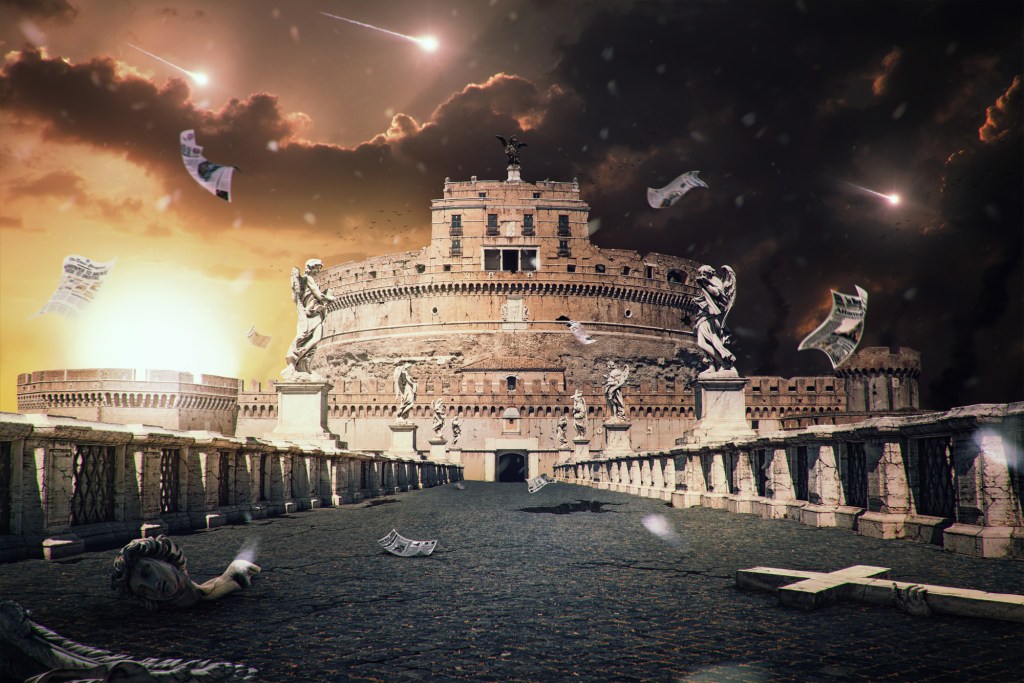
Apocaliptical scene to the Rome cityscape matte painting

I go back from time to time to the early “church fathers” for perspective. Most recently, I have focused on what we call The Epistle of Mathetes to Diognetus (the “Letter”). Even when translated from the Greek language in which it was written, the words and thoughts ring foreign to our American ears.

As I read this early Letter, I am impressed that Christians in the 21st Century have much to learn from 2nd Century Christians. They lived into the message of Jesus in ways that we seem to have long since forgotten

We don’t know who the author was. The Greek word, “mathetes“, merely means “student”. The person or ruling family to which the letter was written is also uncertain. We only know it was written in the early to mid 2nd Century.

The Church had grown slowly but steadily into the 2nd Century. Persecution ebbed and flowed around those early Christians, but they were more generally ignored and almost universally despised. In many ways, Christians were a complete oddity. They didn’t fit into the pagan (Greco/Roman) culture or the Jewish culture.

Christianity was centered in Jerusalem until the Roman war against the Jews and the destruction of the Temple in 70 AD. Christians scattered at that point, though Jerusalem remained one of many hubs of Christian life. The 2nd Century was a time of decentralization and spreading out throughout the Roman Empire and beyond – into areas of Africa and Asia, some of which were controlled by the Roman Empire, and some not.

According to the Letter, Christians were not physically, culturally, or linguistically distinguishable from the people in the many places in which they lived. They were distinguishable in other ways:

“But, inhabiting Greek as well as barbarian cities, according as the lot of each of them has determined, and following the customs of the natives in respect to clothing, food, and the rest of their ordinary conduct, they display to us their wonderful and confessedly striking method of life. They dwell in their own countries, but simply as sojourners. As citizens, they share in all things with others, and yet endure all things as if foreigners. Every foreign land is to them as their native country, and every land of their birth as a land of strangers.”

The Epistle of Mathetes to Diognetus
chapter 5

The most distinguishing feature of those Christians, according to the author of the Letter, was their “striking method of life”: they lived as strangers in their own countries. Though they were citizens in those countries, they “endure all things as if foreigners”.

We might be tempted to think that the “uprootedness” of early Christians was merely a product of rejection and persecution by non-Christians, but the Apostle Peter suggests otherwise: Christians are a “royal priesthood” and a “holy nation” who live as “foreigners and exiles” in this world. (1 Peter 2:9,11) This echoes the writer of Hebrews, who described all great people of faith as “foreigners and strangers on earth”. (Hebrews 11:13)

These passages in the New Testament epistles highlight a fundamental trait of Christians in the world at that time. But not just at that time; Jesus spoke to all his followers (including us) when he said, “[Y]ou are not of the world” (John 15:19), and, “My kingdom is not of this world.” (John 18:36)

How strange are these words and concepts to modern Americans! From the earliest days of our youth, we are taught about our freedoms and rights as American citizens. In contrast, 1st and 2nd Century Christians enjoyed some rights as citizens of the various countries in which they lived (maybe not as robust as the rights we enjoy), but they lived as if they had none. And, this was their “distinguishing “striking” feature as a people! It is what made them stand out.

They marry, as do all [others]; they beget children; but they do not destroy their offspring. They have a common table, but not a common bed. They are in the flesh, but they do not live after the flesh. 2 Corinthians 10:3 They pass their days on earth, but they are citizens of heaven.

the Epistle of Mathetes to Diognetus
chapter 5

Second Century Christians lived as if they were really not of this world. And, this “feature “striking method” of living was noticeable. They adapted and fit into their surroundings and culture wherever they lived, except for this one thing: they lived like they were not citizens of the countries in which they lived – even if they were actually citizens.

They were outsiders wherever they lived because they lived like citizens of heaven. They fit in wherever they went, but they stood out by their allegiance to loving God and loving others. How strange and foreign that may seem to us!

Continue reading “What Is the Place of Christians in the World?”

The Bible, Christ and Culture: Biblical Critical Theory as a Framework for Critiquing Culture

Letting the Bible frame and critique culture requires us to be aware of our cultural milieu


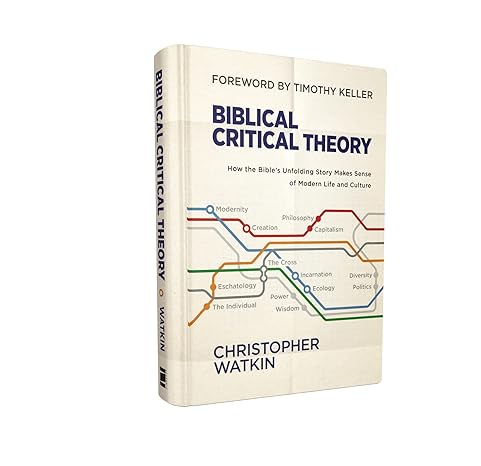
I am listening to a discussion of a new book by Christopher Watkin, Biblical Critical Theory: How the Bible’s Unfolding Story Makes Sense of Modern Life and Culture, dealing with culture on the Truth over Tribe podcast. Watkin’s premise for the book is that we should use the Bible to frame our critique of culture, but the reality often is that we frame and interpret the Bible through our cultural lens.

As an aside, I love the title of the book. “Critical theory” is part of our modern cultural vocabulary and milieu. Though many Christians recoil from the invocation of that term, it is the language of our times Watkins uses it to capture the attention, and he uses it as a springboard to take us back to the Bible, which I think is brilliant.


The discussion on the podcast focuses on the definition and meaning of culture, starting with the reality that culture pervades most of our lives and our thinking. Watkin notes that we see God working in and through cultural environments in the Bible, yet the thrust and message of Scripture is multicultural (and countercultural).

What appears to be exclusive is revealed to be inclusive. God works in the cultural milieu, but the message is not bound by it nor bound to it.

A multicultural theme is baked right into the fabric of Scripture, including the influence of three different languages that make up the biblical writings. This theme is borne out by the glimpse God gave John of the end of the Story. If we lift our eyes to see the horizon for all Christians off in the distance, this is what we see:

I looked, and there before me was a great multitude that no one could count, from every nation, tribe, people and language, standing before the throne and before the Lamb. They were wearing white robes and were holding palm branches in their hands.

Revelations 7:9

Our destination, the mansion with many rooms that Jesus spoke about, is filled with multicultural people worshipping God from every nation tribe and tongue crying out in unison, “Holy, Holy, Holy is the lamb!” From this we see that God does not negate culture or ethnic differences. (He confused our languages and scattered us after all.)

But, we also have to recognize that the trajectory of Scripture and God’s plan revealed in Scripture brings us to unity in Christ. Jesus broke down the walls of division (Eph. 2:14), and the thing that unites us is Jesus.

Watkin cautions that Scripture is not entombed in culture, but it takes root in culture. It spreads out to all cultures: Jesus told the disciples to spread the message in Jerusalem, Judea, Samaria, and to the ends of the earth. Thus, the Gospel speaks to all cultures, calls people out of all cultures, and provides the promise of redemption to all cultures.

Indeed, Christianity began as a near, middle eastern movement which spread into the Roman Empire: north, south, east, and west. It spread into the culture of northern Africa and southern, central, and northern Europe, It spread to Asia minor and further east. This spread happened extremely quickly, within a generation of the death of Jesus, and it continues to spread today. The center of Christian growth today is predominantly in the southern Hemisphere.

The roots of Christianity go back to Abram, whose family heritage and land was rooted in the area known today as Iraq. Abram traveled west to Asia Minor, and then south into the Levant at God’s calling and this promise:

“I will make you into a great nation,
    and I will bless you;
I will make your name great,
    and you will be a blessing.
I will bless those who bless you,
    and whoever curses you I will curse;
and all peoples on earth
    will be blessed through you
.”

Genesis 12:2-3

The emphasis added is mine. From the beginning, God called Abraham to be a blessing to all peoples on the earth! Paul picked up on this theme when he said:

Understand, then, that those who have faith are children of Abraham. Scripture foresaw that God would justify the Gentiles by faith, and announced the gospel in advance to Abraham: “All nations will be blessed through you.” So those who rely on faith are blessed along with Abraham, the man of faith.

Galatians 3:7-9

and

 So in Christ Jesus you are all children of God through faith, for all of you who were baptized into Christ have clothed yourselves with Christ . There is neither Jew nor Gentile, neither slave nor free, nor is there male and female, for you are all one in Christ Jesus. If you belong to Christ, then you are Abraham’s seed, and heirs according to the promise.

galatians 3:26-29

Jesus is the seed (descendant) of Abraham through whom this promise is spread to all peoples of the earth. The center of Christianity began in the Middle East, but it quickly found cultural centers in northern Africa, Asia Minor, and southern and eastern Europe. For much of the history of the church, Europe became the center of western Christianity, but Christianity flourished in in all parts of the world.

Christianity and its roots grew up embedded in culture. Christianity was born at the crossroads of culture where east, west, north, and south met with overlays of Hebrew, Babylonian, Persian, Greek, Roman, and Egyptian influences (to identify the major ones). Thus, culture is part of the story

Watkin cautions, though, that people who are immersed in their own culture don’t realize how influenced they are by it. Like a fish in water compared to a bird in the air, we don’t recognize how different our cultural environment is compared to people in other cultural environments.


This is the challenge for us today, just as it was a challenge for all generations, in all times, and in all places before us. We need to be absorbed in Scripture and allow the Holy Spirit to critique and frame our culture through Scripture, and not the other way around.

Continue reading “The Bible, Christ and Culture: Biblical Critical Theory as a Framework for Critiquing Culture”

Do We Have Any Evidence of the Resurrection? A Critique of Skepticism and Proof

People confuse proof, as in a mathematical proof, and proof, as in an offer of evidence that tends to support a proposition.


Some people say that we have absolutely no evidence for the resurrection (and no evidence that God exists in the first place). Nothing could be further from the truth. We have evidence. The issue isn’t a lack of evidence; the issue is how we approach the evidence and weigh it it.

A person who approaches “supernatural” phenomenon with purely materialistic assumptions will weigh the evidence differently than one who is open to nonmaterialistic possibilities. Jesus, though, lived in time and space in history. Many people in the first century who saw him die claim to have seen Jesus and interacted with him in the flesh after he died, and those people were willing to die for what they saw.

That is evidence. Full stop. People may be skeptical of it. People may assume Jesus couldn’t have risen from the dead, despite what people think they saw, because miracles don’t happen. But, now I am talking about how people approach and weigh the evidence.

People confuse proof, as in a mathematical proof, and proof, as in an offer of evidence that tends to support a proposition. Fallible, finite human beings deal almost exclusively in the latter realm of evidence, even in science, because we don’t know what we don’t know.

Mathematical proofs are an achievable goal in mathematics (though sometimes not even then). Such proof is impossible outside of mathematics.

Science does not provide us that kind of certainty, either. Science changes all the time on the basis of new evidence, and things we thought we knew in the past are constantly being adjusted, or even discarded, on the basis of additional evidence.

Finite beings such as ourselves are limited in our knowledge, our access to knowledge, and our understanding of how the knowledge we have fits together. We have to be humble as we cautiously put our confidence in the things we think we know because we are limited in our ability to know and understand our world, and we will always lack absolute proof for most, if not all, things.

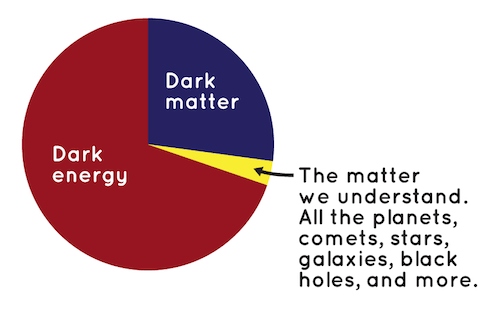
The extent of our limitations can even be quantified. For instance, 95% of the physical universe is invisible to us! The vast, unseen reaches of the universe are comprised of things like dark matter and dark energy that we cannot see and know little about, except for what we can infer about them. We aren’t sure what these things are, but we know they exist by the affects we see on the matter we see and know.


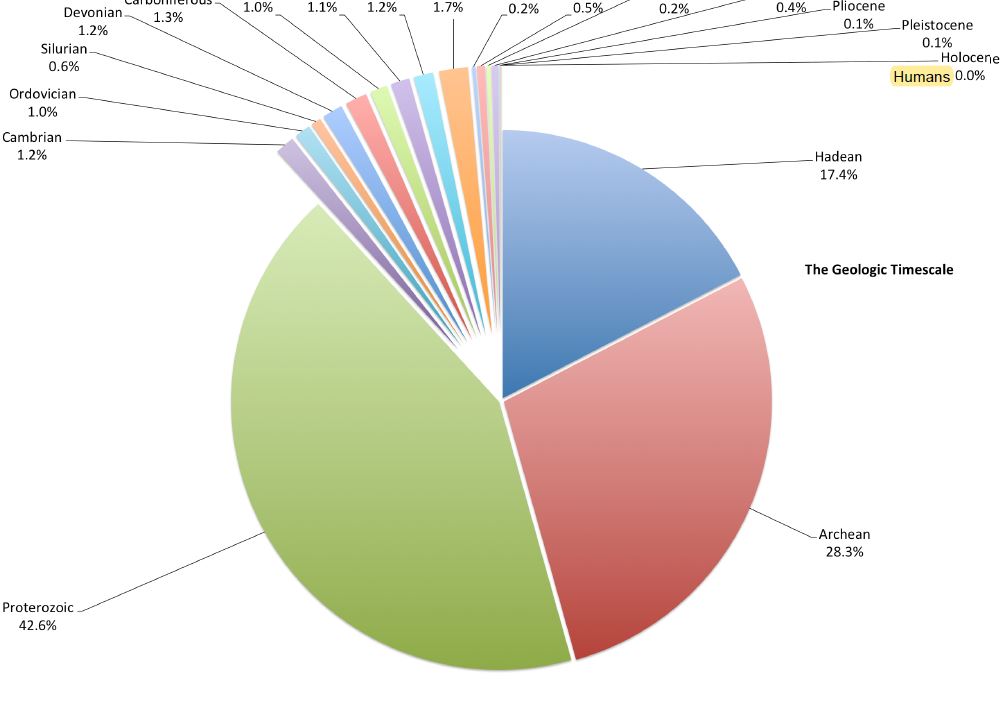
According to scientific consensus, the universe is about about 13.7 billions years old, and the earth is about 4.543 billion years old (give or take about 50 millions years), and homo sapiens appeared only 300,000 years ago (and maybe even only190,000 years ago). Assuming those calculations to be true, human-like beings have existed for only 0.0066% of the time the earth has existed and only 0.002% of the time the universe has existed. (If my math is correct.)

If we view the existence of the earth (not even the universe) on a 24-hour scale from the beginning to the present time, life began at 5:00 AM, the first vertebrates appeared at 8:00 AM, and human beings appeared just a fraction of a second before midnight.

Homo sapiens have only developed knowledge and the ability to communicate and preserve a record of it for about 5,500 years. We have been developing and recording our knowledge for only 0.00022% of the time the earth has existed, which is only 0.00007% of the time the universe has existed.


During that relatively short, 5500-year time period we have developed the capability to see only about five percent (5%) of the universe, though we have actually examined very little of it – and then only at very great distances. We hnave only explored more than five percent (5%) of the oceans on this earth – a very small planet orbiting a very small sun in a very small solar system in the inconceivably large expanse of what we we call the universe.

The body of our scientific knowledge has grown tremendously, even exponentially, especially in the last 200 years, but we have only just begun to know and understand the universe we live in. If humans live another 5,500 years, we will not have explored all of the universe, and we will not know all that there is to know.

Our world is grand and almost inconceivably complex. The DNA of a single human cell contains so much information that if it were represented in printed words, simply listing the first letter of each base would require over 1.5 million pages of text! Imagine how much information exists in the universe and how much we don’t know.

We will likely never know all there is to know about the expanse of the universe and everything in it, large and small, in all the years mankind is on the earth. Thus, we are in no position to write off the possibility of God creating the universe and Jesus rising from the dead.

The title to this piece is (admittedly) a bit misleading, so I need to provide the following disclaimer. Some people will read the title and assume that I am attempting to prove the resurrection. I am not doing that. I am offering only the beginning of proof (as in offering evidence) in this article, but it is evidence. You can weigh it how you will.

We should at least be open to consider what evidence there is for the existence of God and not write off the possibility that God exists. If God exists and made the universe out of nothing, which is what the Bible claims in Genesis 1, John 1, and Hebrews 11, then He could certainly raise Jesus from the dead.

How arrogant it would be for us to determine for ourselves (categorically) that there is no God, that He did not create the universe, and that Jesus did not raise from the dead. We don’t know what we don’t know, and we don’t understand perfectly what we think we know.

With that said, I want to provide some minimal facts that provide some evidence that tends to support the resurrection. These things are not proof; they are an offer of proof. We cannot achieve definitive proof, but there is evidence for the credibility of the claims made that Jesus rose from dead.


Continue reading “Do We Have Any Evidence of the Resurrection? A Critique of Skepticism and Proof”

Should Christians Be Like Elijah and Call Down Fire on People Who Reject Them?

God has been working out His plans and unfolding His purposes – the redemption of mankind and of His creation – throughout history


I am reading through Kings and Chronicles right now in my annual trek through the Bible, and the Prophet, Elijah, has been the “star” these last few days. Elijah means “Yahweh is my God” in Hebrew. He is known for his great faith and is one of the most prominent and revered prophets in the Old Testament.

Elijah is known for his fierce faith in the face of difficult circumstances when Ahab, the King of Israel, and his domineering, foreign wife, Jezebel killed off most of the faithful Hebrew prophets and instituted the worship of Baal and Asherah for the nation of Israel.

Elijah stood defiantly against Ahab and Jezebel who sought to kill him for his defiance Elijah is, perhaps, most known for his public challenge to the prophets of Baal and Asherah that culminated in a powerful demonstration of Yahweh’s superiority to those foreign gods.

This story and another story in a similar vein to it are the backdrop for this article. If Elijah is an exemplary man of faith, to what extent should we follow his example today in the expression of our faith in the face of governmental and cultural opposition?

Continue reading “Should Christians Be Like Elijah and Call Down Fire on People Who Reject Them?”

A New (Old?) Take on Inerrancy

The Bible is the book God wanted us to have, and He wanted us to have it the way it is.


I did the research and wrote a thesis in college in support of the concept that Scripture is inerrant. I have mentioned this before. I was not a religion major in college only because I did not turn in my thesis.

I didn’t turn it in because I was having a hard time getting to where I wanted to go using Scripture and the scholarly work that was done up to the early 1980’s. I could not support my thesis with integrity, so I shelved it and did not return to the subject for almost 40 years!

I had a high view of Scripture then, and I have a high view of Scripture now. I read the Bible daily for personal guidance and edification. I believe the Bible is the inspired Word of God (which I can support from Scripture itself. (2 Timothy 3:16-17))

I believe, like the Moody Bible Institute, that the Old and New Testaments are divine revelation from God. The original autographs were verbally inspired by the Holy Spirit. The revelation is God’s self-disclosure recorded in human language. God is the source of it.

I stop, though, in going further to say that every word is true, and the Bible is free from error. The very statement begs the questions: which version? Written in which language? And other questions.

I agree with the Moody statement that the Bible is the supreme source of our knowledge of God and of salvation through Jesus Christ. I agree that it is “our indispensable resource for daily living”. I agree, also, that humans are left to interpret the Bible, and our interpretation is guided by “our reception and understanding of that which God revealed”.

I stop short of saying that God “recorded” Scripture, because we all know that it was written down by men. This difference distinguishes the Bible from the Quran and the Book of Mormon, both of which are claimed to have been dictated to men in a trance-like state.

I agree that “revelation is a divine act”, and “interpretation is a human responsibility”. I agree that our interpretation is fallible, but I must admit the possibility that the writing down of the Bible may, also, be fallible.

I say these things not to argue with anyone about the reliability of Scripture, and I do not desire to make a mountain out of a molehill. I go far down the road on my confidence in the reliability and trustworthiness of Scripture. I have written on the subject many times, and I have even given presentations on the topic.

I also recognize that I am fallible and must remain humble in my approach, so take what I say with a grain of salt and make your own determinations. I share my thoughts for what they are worth.

When I was in college sitting in a World Religion class, reading the Bible for the first time in my life, I was struck by a thought that I believe to this day came from the Holy Spirit (along with others). My professor was liberal and progressive, so I can’t “blame” it on him.

It occurred to me that, if God is real, and the God of the Bible is the creator of the universe, then He could orchestrate His communications to humans in a way that they could understand them and preserve the important points for posterity. If God is sovereign, He can do that.

I believe the Bible is the book God wanted us to have.

NT Wright

I still believe that, but I also like the way NT Wright puts it: “I believe the Bible is the book God wanted us to have.” I can buy that! Other things NT Wright says about the character of Scripture also make sense to me, so I will mix his words with mine in the remainder of this piece.

Continue reading “A New (Old?) Take on Inerrancy”