Questions on Morality and the Materialist

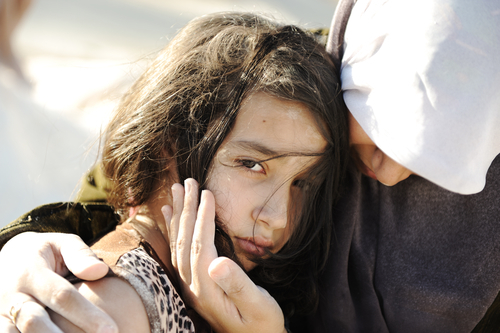
if God is not the supreme moral law giver, on what basis do we have morality, and how do we judge something like genocide?

Depositphotos Image ID: 129286826 Copyright: Olivier26

In a naturalistic world in which there is nothing supernatural, nothing other than the material world, and everything there is can be summed up by what we can touch, see, hear, feel and measure, survival of the fittest reigns. In a world like that, what is wrong with genocide?

Genocide is like the ultimate survival of the fittest. The superior people group dominates, overcomes and wipes out the inferior people group. What could be more Darwinian? What could be more natural in a naturalistic world?

This, in fact, is largely the history of the world. Why, then, is this expression of survival of the fittest wrong?

Thankfully most people today recoil from such a notion, but on what basis?

Continue reading “Questions on Morality and the Materialist”

Whose Side Are We on?

Where will Christians stand in history as we look back? Some would say we were on the wrong side of slavery, the Holocaust and Apartheid, but Christians were most definitely on the right side of each of those evils – at least, some might say, the real followers of Christ.…

Source: Whose Side Are We on?

Christmas Thoughts: What Do the Dead Sea Scrolls Have to Do With Christmas?

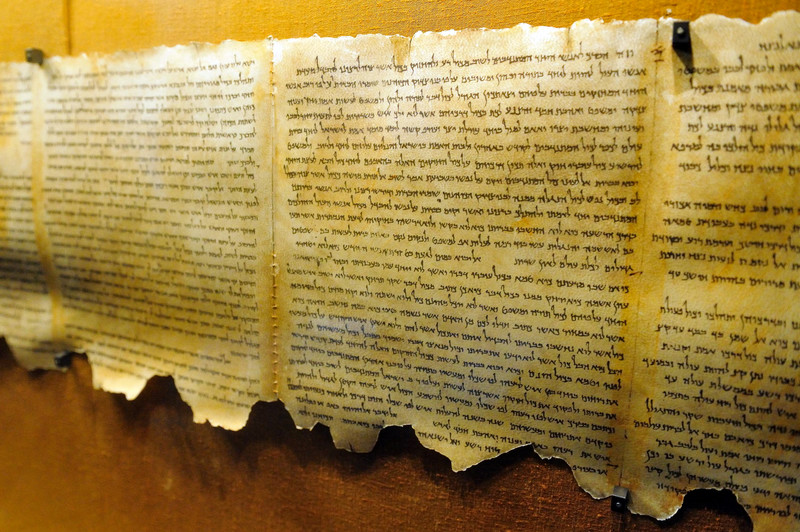
When that young Jewish man found a Tanakh, located the Book of Isaiah in it and compared the passage in the Tanahk to the same passage in the “Christian” Old Testament, he was shocked to find that it was virtually identical.

 (c) Can Stock Photo / lucidwaters
(c) Can Stock Photo / lucidwaters

In the first installment of Christmas Thoughts, I left us hanging with a long passage from the Bible. I didn’t give the reference. I wanted the reader to think about it.

If it isn’t familiar to the reader, I wanted the reader to wonder where it might be found.

I have to admit that my inspiration came from a true story. A young Jewish man was presented the same passage and asked to identify where it was found in the Scripture. Like many of us, myself included as a young man, he wasn’t overly familiar with the Scriptures. His knee jerk reaction was that it is from the New Testament somewhere (which he hadn’t read either … but he was Jewish after all).

When he was told where the passage is located in the Bible, he was skeptical – Isaiah 53 … in the Old Testament. His next thought was, “That’s your Bible! I bet it’s not in the Tanuhk!” Continue reading “Christmas Thoughts: What Do the Dead Sea Scrolls Have to Do With Christmas?”

Ramblings on Faith and Unbelief

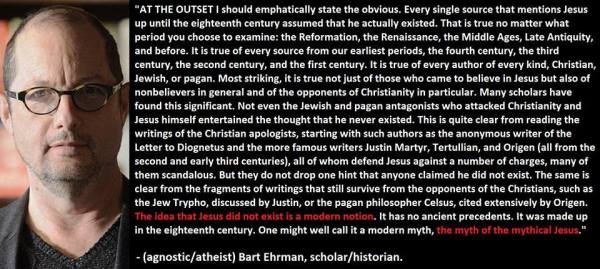
Bart Eherman Quotation


I became a believer, and then a follower, of Jesus Christ in college. It wasn’t just academic for me, though the beginning of my life as a believer and follower of Jesus began in an academic environment and was shaped and influenced by academics. I think that’s why I like the academic pursuit of faith even now, over 30 years later.

It’s important for me to be mindful that faith is not purely an intellectual affair. I think I may differ from many people in that respect, but I need to constantly be reminded of it. Faith is a relationship with the Living God; faith is a life and heart commitment; faith triggers action and change or it isn’t real faith.

I know that the words intellectual and faith probably don’t fit together in the minds of some people. Some people see those terms as opposites. They aren’t, but they can chaff with each other at times. Intellectualism, for instance, really does get in the way of faith (more so in fact than the other way around). Faith and intellectual pursuit can be perfectly compatible unless we compartmentalize them and pit them against each other.

Faith, or the lack thereof, depends on something other than intellectual coinage.  Continue reading “Ramblings on Faith and Unbelief”

How the New Testament Canon Arose

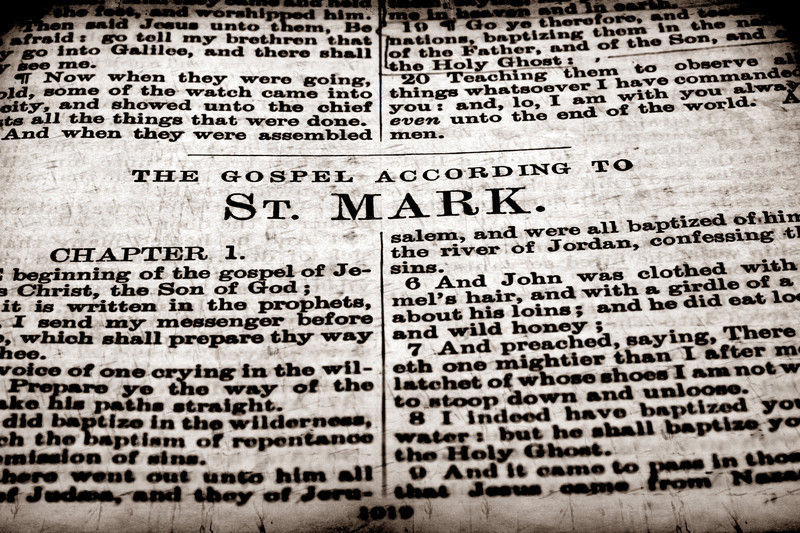
How the Gospels and other documents that have come to comprise the New Testament became recognized as scripture and other documents did did not, is the subject of this piece.

© Can Stock Photo Inc. / janaka

In this piece, I largely follow a presentation given by Dr. Danial Wallace*, but I add in some additional information about the early church to round out the information. Dr. Wallace underscores the fact that the early church was particularly concerned about the authorship of the writings they relied upon. They only trusted the writings of the apostles and associates of the apostles. We see this concern reflected in the writings of the earliest church fathers.

The original gospels, however, were anonymous, notes Wallce; that is they did not have internal references to who wrote them. They were only given names to distinguish them from each other externally, and this tradition went all the way back as far as we can trace them. The fact that the early church was so concerned with authorship, but universally accepted and used the four canonical gospels, suggests that the authorship of the Gospels was never in doubt.

This point will become more important below. How the Gospels and other documents that have come to comprise the New Testament became recognized as scripture and other documents did not, is the subject of this piece.

Continue reading “How the New Testament Canon Arose”