Christmas Thoughts: What Do the Dead Sea Scrolls Have to Do With Christmas?

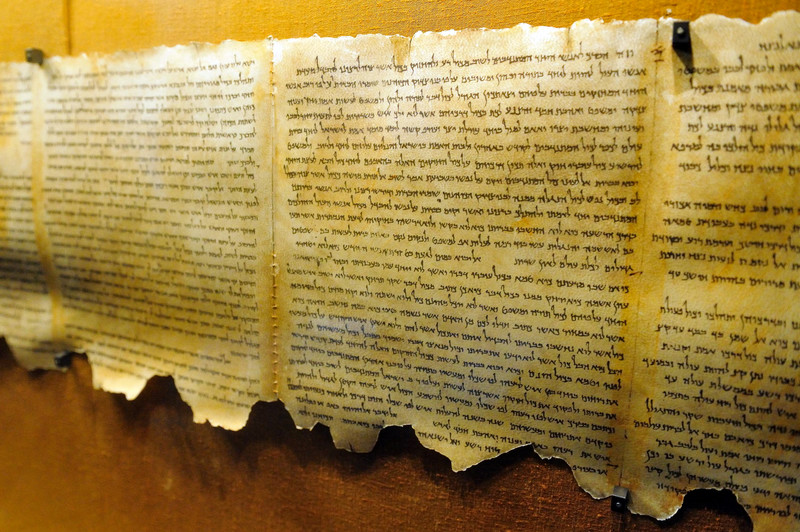
When that young Jewish man found a Tanakh, located the Book of Isaiah in it and compared the passage in the Tanahk to the same passage in the “Christian” Old Testament, he was shocked to find that it was virtually identical.

 (c) Can Stock Photo / lucidwaters
(c) Can Stock Photo / lucidwaters

In the first installment of Christmas Thoughts, I left us hanging with a long passage from the Bible. I didn’t give the reference. I wanted the reader to think about it.

If it isn’t familiar to the reader, I wanted the reader to wonder where it might be found.

I have to admit that my inspiration came from a true story. A young Jewish man was presented the same passage and asked to identify where it was found in the Scripture. Like many of us, myself included as a young man, he wasn’t overly familiar with the Scriptures. His knee jerk reaction was that it is from the New Testament somewhere (which he hadn’t read either … but he was Jewish after all).

When he was told where the passage is located in the Bible, he was skeptical – Isaiah 53 … in the Old Testament. His next thought was, “That’s your Bible! I bet it’s not in the Tanuhk!” Continue reading “Christmas Thoughts: What Do the Dead Sea Scrolls Have to Do With Christmas?”

Ramblings on Faith and Unbelief

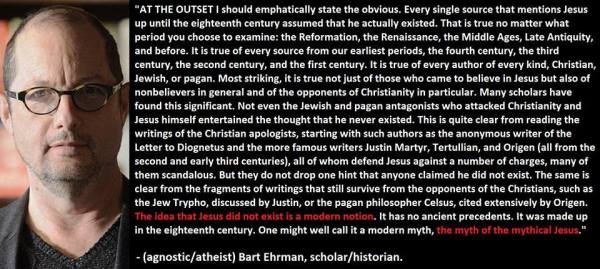
Bart Eherman Quotation


I became a believer, and then a follower, of Jesus Christ in college. It wasn’t just academic for me, though the beginning of my life as a believer and follower of Jesus began in an academic environment and was shaped and influenced by academics. I think that’s why I like the academic pursuit of faith even now, over 30 years later.

It’s important for me to be mindful that faith is not purely an intellectual affair. I think I may differ from many people in that respect, but I need to constantly be reminded of it. Faith is a relationship with the Living God; faith is a life and heart commitment; faith triggers action and change or it isn’t real faith.

I know that the words intellectual and faith probably don’t fit together in the minds of some people. Some people see those terms as opposites. They aren’t, but they can chaff with each other at times. Intellectualism, for instance, really does get in the way of faith (more so in fact than the other way around). Faith and intellectual pursuit can be perfectly compatible unless we compartmentalize them and pit them against each other.

Faith, or the lack thereof, depends on something other than intellectual coinage.  Continue reading “Ramblings on Faith and Unbelief”

How the New Testament Canon Arose

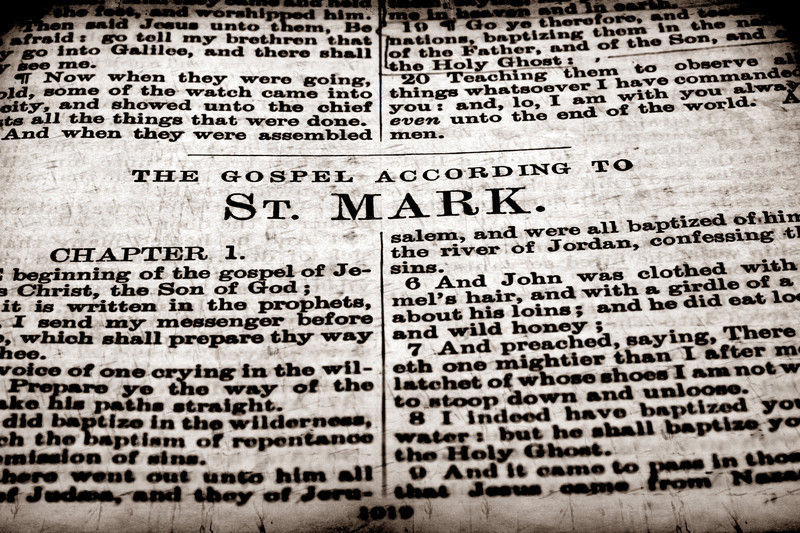
How the Gospels and other documents that have come to comprise the New Testament became recognized as scripture and other documents did did not, is the subject of this piece.

© Can Stock Photo Inc. / janaka

In this piece, I largely follow a presentation given by Dr. Danial Wallace*, but I add in some additional information about the early church to round out the information. Dr. Wallace underscores the fact that the early church was particularly concerned about the authorship of the writings they relied upon. They only trusted the writings of the apostles and associates of the apostles. We see this concern reflected in the writings of the earliest church fathers.

The original gospels, however, were anonymous, notes Wallce; that is they did not have internal references to who wrote them. They were only given names to distinguish them from each other externally, and this tradition went all the way back as far as we can trace them. The fact that the early church was so concerned with authorship, but universally accepted and used the four canonical gospels, suggests that the authorship of the Gospels was never in doubt.

This point will become more important below. How the Gospels and other documents that have come to comprise the New Testament became recognized as scripture and other documents did not, is the subject of this piece.

Continue reading “How the New Testament Canon Arose”

Islam & Christianity Through a Former Muslim’s Eyes


I am going to do something a little different in this blog. I often weave other people’s presentations and thinking into my articles, but, in this one, I am going to lay out another’s person’s presentation in its entirety.

No one topic, perhaps, in all the world today has demanded more of the world’s attention than the happenings involving radical Islamic terrorists.  This article is not going to attack Muslims; neither is it going to defend them. Rather, if you will listen to each of the segments, it will help you to understand Islam and Christianity in comparison to each other from the viewpoint of a man raised a devout Muslim of Islamic missionary parents.

Continue reading “Islam & Christianity Through a Former Muslim’s Eyes”

Dating the Gospels and the Resurrection Story

© Can Stock Photo Inc. / CWMGary

When were the Gospels written? This is an important question.

Most scholars date the Gospels between 40 and 65 years from the death of Christ as follows: Mark 70 AD, Matthew 80 AD, Luke 85 AD and John 95 AD. The scholarly position is stated concisely in the narrative on Dating the Gospels linked here.  Other scholars date them much earlier than that, but Gary Habermas, adopts the majority scholarly view in making his argument for the historical resurrection. (Gary Habermas Explains The Earliest Source Of Resurrection Facts.)

Virtually no one disagrees that Paul’s letters (the ones scholars concede) were written in the 50’s AD. James, Peter and Paul all died in the 60’s AD during the persecution of Christians by Rome. Another key date is the destruction of the Temple in Jerusalem in 70 AD. The scholarly consensus is that “the deaths of these important figures likely encouraged the writing down of the narratives about Jesus”.

Some scholars maintain the narratives were written down well before that time, the reasons for which I will explore in this article. Incidentally, that was the the common view until about the 19th Century, when scholars from the Tubingen school in Germany began to posit the idea that the Gospels were written much later, even as late as the 2nd Century. They also began to question that the Gospels were written by the people attributed to them.

That view of the Gospels is what I learned in college in the late 1970’s, but modern scholars have backed off that view and concede that the Gospels were written within a generation of the death of Jesus. Most scholars agree that Mark was the first Gospel to be written, and that Mark was written around the year 70 AD. Most scholars believe the Gospels of Matthew and Luke were composed in the 80’s, using Mark as source material and a “collection of Jesus’s sayings” (oral tradition). The Gospel of John was believed to derive from different sources (like the Apostle John, himself) and was written toward the end of the 1st Century..

While there is some disagreement on how early the Gospels were written, the work of Gary Habermas has convinced many (most?) scholars, even skeptical ones, that the message of the Gospel – that Jesus, lived, died and rose from the dead, appearing to his followers – goes back many years before the Gospels are believed to have been written. 

In fact, it seems fairly clear that this message (of the resurrection) goes back virtually to the beginning. It goes back, at least, to the time when Paul says he “received” the message at his conversion, but it goes back further than that because he corroborated the message he received with the apostles in Jerusalem who were sharing the same message before Paul did. That message was also at the heart of all the creeds found in Paul’s writings, which were arguably before the Gospels were written.

Continue reading “Dating the Gospels and the Resurrection Story”