The Ebla Tablets Confirm Biblical Accounts

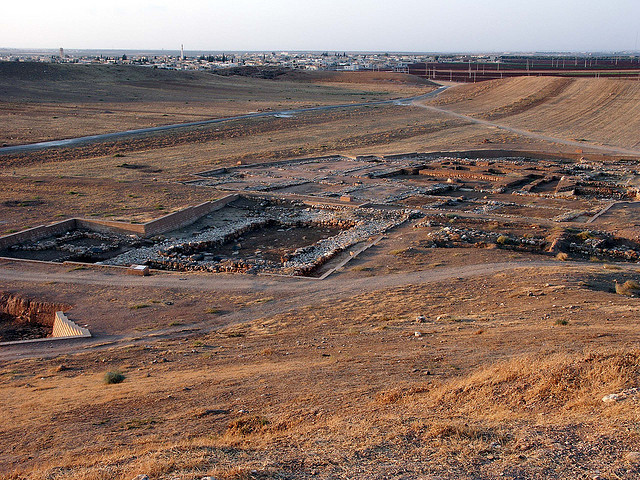
Ebla (Syria) by Klaus Wagensonner

Bible skeptics often talk as if there is a dearth of evidence that any of the events in the Bible took place. Skeptics consider the Bible, and especially the Old Testament, as fictional, a fanciful product of the imagination trumped up many, many years after the actual events took place, and full of places and characters that never actually existed. The Ebla Tablets found in Northern Syria tell a different story.

The Ebla Tablets predate the Biblical record that is ascribed to Moses and confirm many of the names, locations and other assertions found in the Mosaic text of the Old Testament.  Continue reading “The Ebla Tablets Confirm Biblical Accounts”

Exploring the Gospels from Different Angles: Location, Names and Nuance

Dr. Peter J. Williams looks at the Gospels from the angle of location, names and nuances that confirm the authenticity of the Gospels.

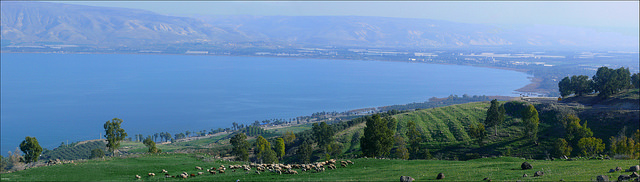
Kinnereth (Sea of Galilee), Israel - panorama of the southern end, February 5th, 2014

I am continually interested in the latest evidence for God and the authenticity of the Bible. Not that I am doubting and looking for evidence to bolster my faith. for me, it’s more like opening presents on Christmas.

I searched, and I found the path that I am on long ago. Not that I was a great discoverer; far from it. God saw me coming. Not that I have arrived, but there is no other path for me. I was meant to be on this one. When Jesus said, “I am the way, and the truth, and the life, and no one comes to the Father but through me”, I believed, and I have not been disappointed in that belief.

I still believe. Not that this belief is unsubstantiated faith. Far from it! God made Himself known to me years ago. He met me where I was then, and He continues to be true, trustworthy, faithful and present today. The older I get and more I learn, the more true it rings. 

At the same time, I have never been more open to entertaining truth than at any other time in my life, except (perhaps) for those years of searching before I became a believer. If God is true, then He stands up to truth wherever we can find it!

Continue reading “Exploring the Gospels from Different Angles: Location, Names and Nuance”

Previewing the Minimal Facts Critique of the Resurrection

canstockphoto18553034


If Jesus Christ was not raised from the dead, Christians are to be pitied above all people. These are not my words, or even the words of a famous pastor or teacher. These are the words of Paul right out of his first letter to the Corinthians:

“[I]f Christ has not been raised, then our preaching is vain, your faith also is vain. Moreover we are even found to be false witnesses of God, because we testified [concerning] God that He raised Christ, whom He did not raise…. and if Christ has not been raised, your faith is worthless; you are still in your sins. Then those also who have fallen asleep in Christ have perished.  If we have hoped in Christ in this life only, we are of all men most to be pitied.” (1 Cor. 15:14-15, 17-19)

Christianity, far from being closed to reason, invites investigation. The importance of reason is built into the greatest commandment: love God with all your heart, soul and mind.

The earliest adherents to Christianity did not hide the fact that the resurrection of Christ is the central tenet of Christianity. They put it out there, front and center, and they were not shy to state the importance of the resurrection.

If the resurrection really happened, it is the single most important event in human history. If it is false, it is the single most influential hoax of all time. Christianity is built on the foundation of the resurrection, and without it, the entire structure of Christianity crumbles.

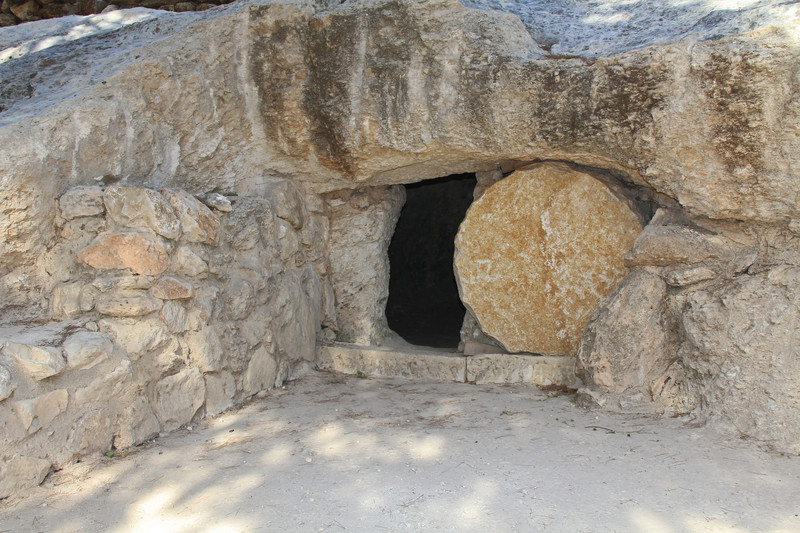
Dr Gary Habermas knew this when he was struggling with his faith, doubting the veracity of the Bible and Christianity. He knew that the resurrection was the central and crucial component of Christianity. If the resurrection did not happen, not only is the tomb not empty, Christianity is a complete and utter sham.

That was over 30 years ago when Dr. Habermas began exploring the claim that Jesus rose from the dead to confirm or deny his own doubts. That personal exploration led to a career of scholarship on the subject of the resurrection.

Continue reading “Previewing the Minimal Facts Critique of the Resurrection”

Women and the Resurrection Story

The centrality of women in the resurrection story is unmistakable, and at least two very significant points flow from that point.

lightstock_79956_xsmall_user_7997290


Women have suffered under the dominion and control of men since the beginning of recorded history (and before, no doubt). The culture in the US today, though, is much different than at any other time in history. Women have gained status they have never before had. As an example, about 65% of all college students in the US are women. The political, cultural and societal winds have shifted.

Most of the world, however, is not even close to that benchmark yet. In Muslim countries, in particular, women continue to be treated in ways that more “western” sensibilities consider backward and even barbarian. But, the historical subjugation of women is not just a Muslim thing; it has been widespread and pervasive going far back in time.

This may seem like an odd backdrop to the resurrection story, but women and the resurrection story are forever intertwined in one of the most progressive and remarkably dignified ways in ancient literature.

Continue reading “Women and the Resurrection Story”

The Historical Christ

Perhaps, the most significant of the New Testament statements of the resurrection comes from Paul’s recollection of the events that occurred after the death of Jesus on the cross (1 Cor. 15:1-8).

lightstock_55703_xsmall_user_7997290


Once a year people remember the death of Jesus Christ on Good Friday. Few historical facts are as well-documented as the death of a man referred to as Jesus of Nazareth, the Messiah (Hebrew) or Christ (Greek) around 33 A.D. The claim that he was resurrected from the dead is a different matter. The modern mind, influenced by many centuries of science and discovery and the relatively recent (200 hundred years) of ascension of materialist thought, is highly skeptical.

Looking back at the Gospel accounts with a modern, skeptical filter, the implausibility of the story colors our view. Some modern thinkers conclude that the story was manufactured by the followers of Jesus.

For what end, one might ask. What did it gain those early followers? If they knew it was a lie, why would they die for that lie?  Continue reading “The Historical Christ”