I want to focus on the following statements Paul made in his letter to the Romans:
“[T]he mind set on the flesh is hostile toward God; for it does not subject[i]itself to the law of God, for it is not even able to do so….
Romans 8:7
“[C]reation was subjected[ii]to futility[iii], not willingly, but because of Him who subjected it, in hope that the creation itself also will be set free ….”
Romans 8: 20-21
Life and death, the universe and all the “stuff” that is, ever was, and ever will be are “in God’s hands.” That is another way of saying that God created everything. God is timeless and immaterial and has created all that is material out of nothing, including us.
But the material world, the world as we know it, is passing away (1 John 2:17), even from the moment it was created! That’s what science (the second law of thermodynamics) tells us also. The world has been “winding down” since the “Big Bang” initiated the universe into being.
Paul’s statement about the “futility” to which the world has been subjected suggests that futility is part of God’s ultimate plan, because it was done “in hope.” Hope and futility are not often, if ever, paired together outside of Scripture.
If that doesn’t add up for you, I don’t think you are alone. I have been puzzling on it for awhile. What possibly could be the plan?
The trite response that “God’s ways are not our ways” falls short. We want to know, though perhaps it’s true that we may never completely understand. Still, I have some ideas that are informed by Scripture that I will try to lay out in this article.
Verse 5 of Paul’s letter to the Philippians ends with the statement, “The Lord is near.” Then, it continues with, “Be anxious for nothing….” The Greek word translated “anxious” means literally to be drawn in opposite directions. It conveys the idea of being divided, pulled apart and distracted.
This is what worry does. It distracts us, dividing our attention, drawing us in opposite directions, pulling us from the tasks at hand. Worry distracts us and draws us from faith and trust in God and His promises.
Paul goes on to say: “Be anxious[1] for nothing[2], but in everything by prayer[3] and supplication[4] with thanksgiving[5] let your requests be made known to God. And the peace[6] of God, which surpasses all comprehension, will guard your hearts and your minds in Christ Jesus.” Phil. 4:6-7
The word translated, “anxious,” is in the present imperative, meaning to stop (right now!) being anxious. Stop being divided in your affections. Stop being distracted and pulled in different directions. Stop it, right now! Stop, being distracted by worry and fear.
The passage is predicated on the statement that the Lord is near! The Creator of the Universe is near us; He is with us. Implied is the question: What shall we fear if God is with us?
Paul’s statements echo the words of Jesus. Does not our heavenly Father clothe the lilies in the field? Does He not care for the birds? How much more does He care for you and me? (Matt. 6:25-30)
Because God is near, Paul says we should be anxious for nothing: no thing, not even one thing. Elsewhere, he said nothing can separate us from the love of God.
“[N]either death nor life, nor angels nor rulers, nor things present nor things to come, nor powers, nor height nor depth, nor anything else in all creation, will be able to separate us from the love of God in Christ Jesus our Lord.”
Romans 8:38-39
We have no reason to be anxious when we fix our eyes on the author and perfecter of our faith (Heb. 12:2) who is near us.
In everything, every single thing that we face, we are instructed to make our requests known to God by prayer and supplication. God expects, and He desires us to bring our concerns to Him. Paul’s words echo Jesus again in this. (Luke 11:13: Matt. 7:11)
But God is not a Candy Man; He is our Father. He wants a relationship with us. He wants to come to Him when we are anxious. He wants us to come to Him when we have needs. He wants us to come to Him when we are thankful. He wants us to come to Him.
When we are going through difficulty, when we are anxious, when we have sinned, when we have been hurt, when we are happy, God wants us to come to him.
I started on a journey exploring the story of Abraham and Isaac deeper and with more nuance in my previous article, The Story of Abraham and Isaac Revisited: Introduction. The story of God’s seeming demand to Abraham to sacrifice his son, and Abraham being seemingly willing to do it, is quite misunderstood, especially without reference to the Ancient Near East context.
Child sacrifice was ubiquitous among the religions with which Abraham was familiar. Abraham would have thought the demand for the sacrifice of Isaac unsurprising among the arbitrary and capricious gods in the Ancient Near East world he knew.
The story is of the first 11 chapters of Genesis and of Abraham is a revelation that the God of Abraham is different than all the other Ancient Near Eastern gods. In the subsequent article, The Story of Abraham and Isaac Revisited: Here I am!, we explore the interpersonal dynamics of Abraham and Isaac that set the stage for much greater revelation of which God is.
Through Abraham’s dutiful and faithful obedience to the demand he feared would be required of him, God demonstrated His character in a way that was indelibly etched into the experience and psyche of Abraham and Isaac. They would learn that God does not make the same kinds of demands as the other gods: God would provide the sacrifice Abraham feared that God required of him.
In Abraham, Faith and a Hope Deferred, I may seem to take a sideways turn off the path of revelation of God’s character to Abraham, but I will finish the story in this article and get to that point.
The ground we covered in that last article included a blessing by God to Abraham, but the experience of God’s momentary blessing was dampened by the cold reality of God’s yet unfulfilled promise.
In Genesis 15, Abraham sought more assurance from God that the land he lived as a stranger would really become the land of his descendants and, more fundamentally, that he would actually have descendants. Many years had passed, and Abraham was still childless.
In response, God asked Abraham to set up a covenant with five animals of specific types to be slaughtered, cut in half and placed opposite each other on either side of a depression. The blood of those animals drained into the depression creating a blood path. This, Abraham knew, was the stage for entering a covenant with God.
These types of covenants were familiar to ancient Middle Easterners. I understand that similar covenant rituals are practiced today by Bedouins.
Abraham would have known the drill. As the lesser party to the covenant, he would go first, signifying that God should do to him (stomp on a pool of his blood) if Abraham didn’t keep his part of the bargain. With the lesser party committed to the covenant, the greater party would seal the deal, and go last, walking through the blood path.
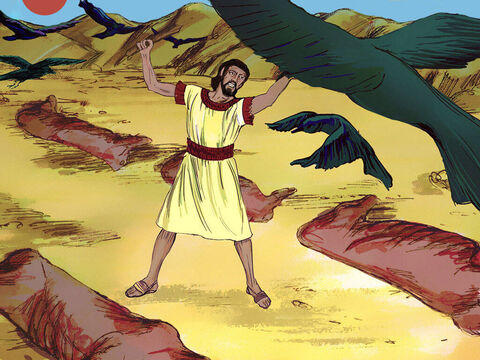
Only Abraham doesn’t initiate the covenant by walking through the blood path. He waits so long that he must drive the birds of prey away from the rotting carcasses. Then Abraham falls into a fitful and dark sleep.
Why did Abraham hesitate? Maybe he realized the significance of what God was setting up – a covenant between a fallible person and the Almighty God! Abraham was not likely worried so much about the commitment God would be making to him, but about the commitment Abraham would be making to God!
So, Abraham, perhaps, feared to enter in to the covenant. He falls into a restless sleep, and God comes to Abraham in his sleep. The “assurance” Abraham receives in his dreams is far from satisfying: God says the promise to Abraham’s descendants would not be finalized for 400 years!
Abraham would be long dead and gone.
This is where we pick up the story. This is where we get the next revelation of the kind of God the God of Abraham is. If we aren’t tracking with the story, we won’t appreciate what happens next:
I ended the article, The Story of Abraham and Isaac Revisited: Here I Am, with a promise to come back to the story of Abraham and Isaac one more time. Recall that Abraham had the intuition to tell Isaac “God would provide” when Isaac asked him where the lamb was for the sacrifice.
We do not know whether Abraham really believed what he told Isaac, whether he was simply being hopeful, or whether he was merely dodging Isaac’s question. We learn in Sunday school that Abraham truly believed it. Perhaps, that is the right answer.
I say that, not because of a Sunday lesson, but because of Abraham’s experience and particularly his experience with God in moments of great doubt and angst. One such moment was described in Genesis Chapter 15. The set up is interesting.
Four kings conspired together to attack Sodom and Gomorrah. They attacked and routed the inhabitants, seizing their goods and carrying off Abraham’s nephew, Lot, and his possessions. (Genesis 14:5-12) Abram (as he was still known at the time) responded immediately with “318 trained men in his household”. He pursued them, routed them, pushing them all the way to Damascus, and recovered Lot and all the goods. (Genesis 14:13-16
Melchizedek, “priest of the God Most High”, pronounced Abraham blessed by “God Most High”, and Abram tithed a tenth to him. (Genesis 14:18-20) After this great victory and blessing from Melchizedek, we read that the word of the Lord came to Abram in a vision:
“Do not be afraid, Abram. I am your shield [sovereign], your very great reward.”
Genesis 15:1
We might expect Abram to be exalting in the afterglow of his decisive routing of the four kings and blessing by Melchizedek, but he wasn’t. Abram appears to be struggling with the lack of fulfillment of the promises God gave him so many years before.
Abram is human. He has held onto the promise, but his faith is waning. The doubts are rising. Though God had just given him an encouraging word, Abram is focused on the unfulfilled promise:
“But Abram said, ‘Sovereign Lord, what can you give me since I remain childless and the one who will inherit my estate is Eliezer of Damascus?'”
Genesis 15:2
The text continues with Abram still talking. That means God hasn’t responded, and so Abram continues:
“And Abram said, ‘You have given me no children; so a servant in my household will be my heir.'”
Genesis 15:3
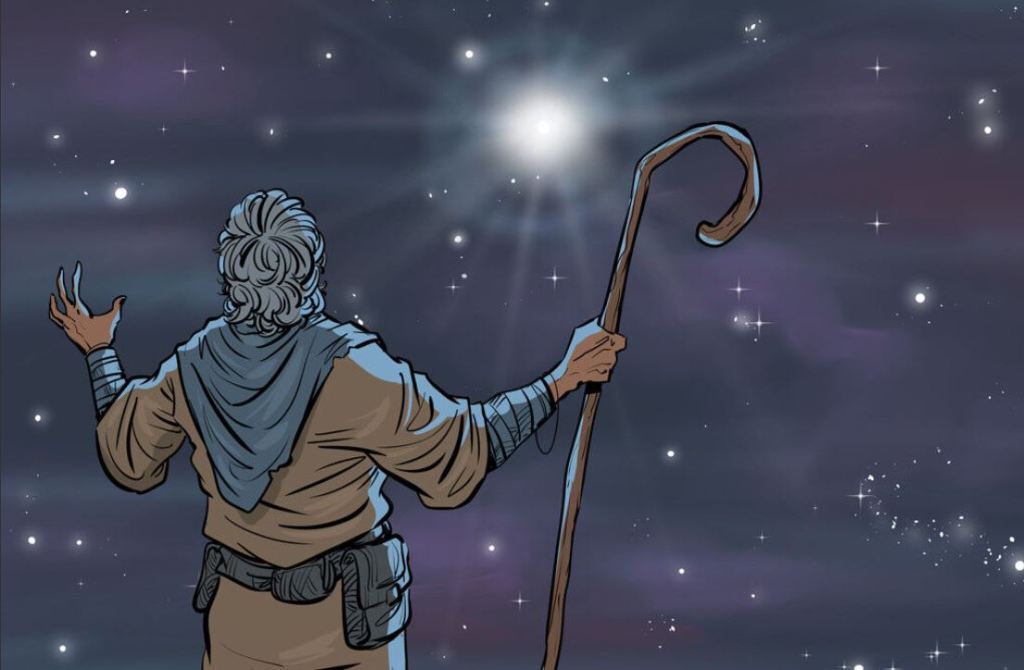
Finally, God breaks in, telling Abraham that his legacy would come from his own flesh and blood, taking Abram outside to look at the sky and telling him his offspring would be like the stars. (Genesis 15:4-5)
We are told that Abram believed in that moment, and God, who sees the hearts of men and knows the thoughts and the intents of mean’s hearts, credited that belief to Abram as righteousness. (Genesis 15:6) God also reminded Abram that He brought Abram out of Ur to the land Abram stood on to give it to him. (Genesis 15:7)
Though Abram believed, and though God had just given him more assurance, Abram kept pressing:
“But Abram said, ‘Sovereign Lord, how can I know that I will gain possession of it?’”
Genesis 15:8
It wasn’t for lack of belief that Abram kept pressing God. We were just told Abram believed. In fact, this was the very moment that God credited Abram with righteousness for his faith!
At the same time, Abram was pressing God for something more than a bare promise. Doubt is not the absence of faith, and pressing God for assurance is not a lack of faith. I hear echoes here of another father who cried out for his son when Jesus promised deliverance, “I believe; help my unbelief!” (Mark 9:24)
God doesn’t rebuke Abram, and he doesn’t take away the righteousness God had just credited to Abram. In the same vein, Jesus didn’t rebuke the father who asked for help in his believing unbelief. Jesus commended him, and God tells Abram,
“Bring me a heifer, a goat and a ram, each three years old, along with a dove and a young pigeon.”
Genesis 15:9
If you are scratching your head right now, that is good! God’s response begs for some understanding and insight. Just as Abram pressed God, we should be pressing right now for understanding.
How should Christians orientate themselves to the world in which we live and conduct ourselves in the political and governmental spheres of present life?
The following passage from the Prophet, Isaiah, isn’t just a platitude to recite at Christmas:
For to us a child is born, to us a son is given; and the government shall be upon his shoulder, and his name shall be called Wonderful Counselor, Mighty God, Everlasting Father, Prince of Peace.
Isaiah 9:6
Jesus has many names, but the one used (perhaps) the most is Lord. All authority on heaven and earth has been given to Jesus. (Matt. 28:18) Christians revel in that statement. In the next breath, after Jesus said this, he said:
“Therefore go and make disciples of all nations….”
Matthew 28:19
When we think of the authority and lordship of Jesus, we might jump immediately to the ultimate conclusion – of Jesus ruling and reigning at the right hand of the Father. When Jesus told the disciples that all authority had been given him, however, his instruction to follow does not take us where our minds might be tempted to go. He did command us to take over the government or set up a new government.
His charge to the disciples was to go to all nations and make disciples.
That is still his instruction at this time.
Perhaps, we can be excused for forgetting the last instructions he gave after almost 2000 years. Or maybe not…. He was pretty clear about it. We also have the following reminder from the Apostle, Peter:
“But do not forget this one thing, dear friends: With the Lord a day is like a thousand years, and a thousand years are like a day.The Lord is not slow in keeping his promise, as some understand slowness. Instead he is patient with you, not wanting anyone to perish, but everyone to come to repentance.”
2 Peter 3:8-9)
Of course, the government will ultimately be committed into His hands. (Is. 22:21) He will ultimately make a footstool of all his enemies. (Ps. 110:1) Jesus will ultimately sit on the throne with throngs of people proclaiming, “Holy, holy, holy. Lord God Almighty!” (Rev. 4:2)
Jesus will be seen as the Lion of Judah and the Root of King David (Rev. 5:5) at that time with a sharp sword coming out of his mouth, striking down the the nations, ruling them with an iron scepter, and treading “the winepress with the fury of the wrath of God the Almighty!” (Rev. 19:15)
But, that time is yet to come. We aren’t there yet.
Even in John’s vision of this future time, the most common description of Jesus is as a Lamb (28 times). Jesus is first the Lamb who was slain, and that is the most prominent name he is given, even in the Book of Revelation.
We have yet to experience Jesus, the Lion of Judah, with sword in his mouth, a scepter in his hand, and a winepress at his feet. That time has not yet come.
Meanwhile, Jesus came not to Judge the world, but to save the world. (John 12:47) Jesus came not for the healthy, but the sick; and Jesus presently desires mercy. (Matt. 9:12-13)
Jesus is not yet the Judge, treading a winepress with the fury of the wrath of God Almighty; He is the Good Shepherd searching for the lost sheep. He is not presently in the business of condemning the world; he is currently in the business of seeking and saving the lost. (Luke 9:10)
So, we should be.
The charge that Jesus gave us – to go and make disciples of all the nations – is still our marching orders. It hasn’t changed.
No matter how close we think we are to the end, God is still currently in the mode of being patient, not wanting anyone to perish, but wanting everyone to come to repentance.
We are easily distracted by many things. We can be so obsessed about the past and we can be so forward-thinking that we forget about the present. We can be so focused on the end times that we do not understand the times in which we live.
We may be close to the end times, but we may yet be far off, by human reckoning. To God, a day is like a thousand years, and a thousand years is like a day. (2 Pet. 3:8) Jesus said we would not know the day or the hour. Most importantly, we are still in the times in which Jesus told us to make disciples of all nations.
He didn’t tell us to make enemies of the nations. He didn’t tell us to set up new nations. He didn’t tell us to take over nations. He said, “Go and make disciples of all nations.”
This, so far, is just a preface for talking about politics and government in the 21st Century. Yes, the government will be on the shoulders of Jesus, but what of the Kingdom of God now? How should Christians orientate themselves to the world in which we live and conduct ourselves in the political and governmental spheres of present life?