“Don’t Worry, Be Happy” Should Be Replaced with Don’t Worry, Be Thankful!

Verse 5 of Paul’s letter to the Philippians ends with the statement, “The Lord is near.” Then, it continues with, “Be anxious for nothing….” The Greek word translated “anxious” means literally to be drawn in opposite directions. It conveys the idea of being divided, pulled apart and distracted.

This is what worry does. It distracts us, dividing our attention, drawing us in opposite directions, pulling us from the tasks at hand. Worry distracts us and draws us from faith and trust in God and His promises.

Paul goes on to say: “Be anxious[1] for nothing[2], but in everything by prayer[3] and supplication[4] with thanksgiving[5] let your requests be made known to God. And the peace[6] of God, which surpasses all comprehension, will guard your hearts and your minds in Christ Jesus.” Phil. 4:6-7

The word translated, “anxious,” is in the present imperative, meaning to stop (right now!) being anxious. Stop being divided in your affections. Stop being distracted and pulled in different directions. Stop it, right now! Stop, being distracted by worry and fear.

The passage is predicated on the statement that the Lord is near! The Creator of the Universe is near us; He is with us. Implied is the question: What shall we fear if God is with us?

Paul’s statements echo the words of Jesus. Does not our heavenly Father clothe the lilies in the field? Does He not care for the birds? How much more does He care for you and me? (Matt. 6:25-30)

Because God is near, Paul says we should be anxious for nothing: no thing, not even one thing. Elsewhere, he said nothing can separate us from the love of God.

“[N]either death nor life, nor angels nor rulers, nor things present nor things to come, nor powers,  nor height nor depth, nor anything else in all creation, will be able to separate us from the love of God in Christ Jesus our Lord.”

Romans 8:38-39

We have no reason to be anxious when we fix our eyes on the author and perfecter of our faith (Heb. 12:2) who is near us.

In everything, every single thing that we face, we are instructed to make our requests known to God by prayer and supplication. God expects, and He desires us to bring our concerns to Him. Paul’s words echo Jesus again in this. (Luke 11:13: Matt. 7:11)

But God is not a Candy Man; He is our Father. He wants a relationship with us. He wants to come to Him when we are anxious. He wants us to come to Him when we have needs. He wants us to come to Him when we are thankful. He wants us to come to Him.

When we are going through difficulty, when we are anxious, when we have sinned, when we have been hurt, when we are happy, God wants us to come to him.

Continue reading ““Don’t Worry, Be Happy” Should Be Replaced with Don’t Worry, Be Thankful!” →
How We Miss Jesus in the Dust of Our Own Hopes and Expectations

Reading from Luke 24:13-21.

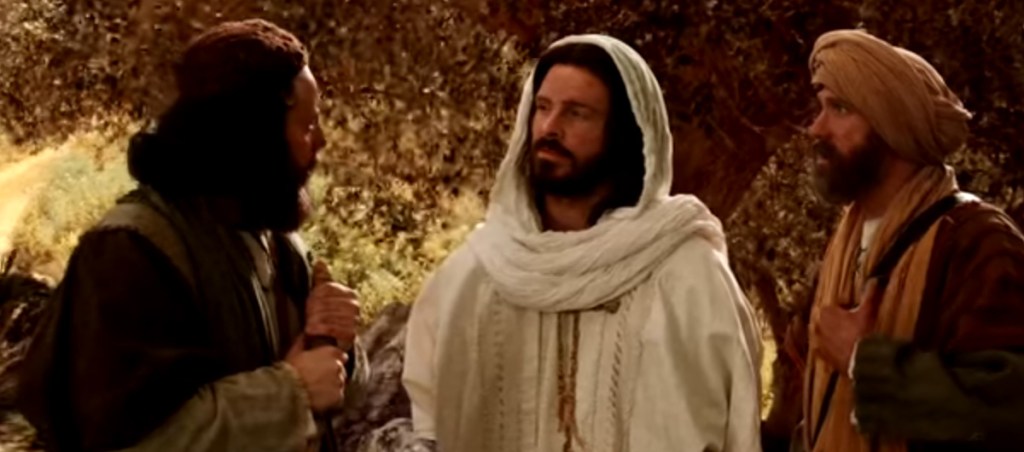
"That very day two [men] were going to a village named Emmaus, about seven miles from Jerusalem, and they were talking with each other about all these things that had happened. While they were talking and discussing together, Jesus himself drew near and went with them. But their eyes were kept from recognizing him. And he said to them, “What is this conversation that you are holding with each other as you walk?” And they stood still, looking sad. Then one of them, named Cleopas, answered him, “Are you the only visitor to Jerusalem who does not know the things that have happened there in these days?” And he said to them, “What things?” And they said to him, “Concerning Jesus of Nazareth, a man who was a prophet mighty in deed and word before God and all the people, and how our chief priests and rulers delivered him up to be condemned to death, and crucified him. But we had hoped that he was the one to redeem Israel."

This encounter took place after Jesus was publicly seized, tried and crucified. These men were discussing those events. Everyone was talking about it. Jesus had stirred up the hopes and dreams of the people, including these two men, but those hopes and dreams ended shockingly and abruptly just few couple of days ago.

Everything changed. Expectations deflated Hopes crashed. The shameful and humiliating death of Jesus, the man in whom so much hope had been placed, was overwhelming. It’s all they could talk about.

When Jesus, himself, came and joined them, walked with them, and and spoke with them, they didn’t recognize him. It wasn’t the first time Jesus wasn’t recognized by his people.

Jesus was born into a world that was ripe for his coming. The last of the Hebrew scriptures was written about 300 years prior, and the thrust of those writings, the prophets, anticipated the coming of a Messiah.

The first century Jews believed this Messiah would be a king that would rescue them from Roman rule and reestablish God’s Kingdom in their promised land, rekindling the glory of their heritage. The air was virtually electric with that hope and expectation.

Jesus didn’t deliver what they expected and hoped for. He was a controversial figure from the start. He offered them hints of the promise they hoped for, but he didn’t deliver on their expectations.

Jesus was controversial because he seemed to stand in opposition to the existing Jewish leadership. He seemed to be more critical of the contemporary religious leaders than the secular Roman imposters that governed their homeland.

The orientation of Jesus in opposition to the contemporary religious leaders was not lost on them. They saw Jesus as a threat. Jesus seemed to provoke them with violations of the laws they handed down. He appeared to say blasphemous things like, “Before Abraham was I am”, and claiming to have the authority to forgive sins.

The Jewish leaders were aware of the miracles Jesus performed and the following Jesus had with the poor, the weak, the vulnerable and the downtrodden people. They loved him and who flocked to him, but he gained no trust or respect from the leaders and learned men.

The men with the religious credentials characterized his miracles as magic, sorcery. They called him a hypocrite for hanging out with prostitutes, tax collectors and sinners. That their protestations failed to detract from his popularity was worrisome.

The Zealot movement that predated the birth of Jesus was driven by people had gotten tired of waiting for a Messianic figure to come. They determined to take the course of history into their own hands, to overthrow the Roman government by their own force and to reestablish the Kingdom of Israel in the present time.

Many zealous leaders rose promisingly in in opposition to Roman rule. They quickly generated a following. Just as quickly their followings fell away as those leaders were caught, tried and executed. Jesus seemed no different than they.

This was the atmosphere of First Century Judea. It was a tumultuous time, but a time filled with an air of expectation. Jesus was the closest thing to the promised Messiah that had come along. He had just been welcomed by throngs of adoring people as he entered Jerusalem. They public spectacle they caused stood, now, in contrast to disappointing end to their hopeful Messiah.

Continue reading “How We Miss Jesus in the Dust of Our Own Hopes and Expectations” →

Simply Simon

https://navigatingbyfaith.com/wp-content/uploads/2022/04/cross_in_sunset.jpg?w=1024

Simply Simon is you and he is me. Today, the anonymous day in between, we can identify with being simply Simon. He didn’t know there would be a resurrection. Sometimes, we doubt it.

thebookofworks's avatarThe Book of Works

I have posted this before.

Today is simply Saturday,  the day between. We know very little about what happened on this day, but we can imagine.  We can imagine a man, much like us. A man defeated, alone, miserable and afraid. This man, who was once called a rock, today thinks of himself as simply – Simon. Imagine him sitting in a strange house in a city not his own, staring out the window, seeing nothing but his own failure, and the loss of all of his hopes and dreams. I have felt this way at times, and perhaps you have also.

He thinks of the glorious promise that he has witnessed the past months, the miraculous and wonderful things he has seen and heard. He thinks of the Man who showed so much faith in him, the Man who has now gone, died, left them all alone, without hope…

View original post 504 more words

Why Did Jesus Pick on the Pharisees so Much?

Perhaps, we malign the Pharisees more than we should.


Have you ever noticed that Jesus engaged more with certain groups of people than with others? In the 1st century Judea, there were at least five distinct Jewish groups: the Herodians, the Sadducees, the Pharisees, the Zealots, and the Essenes. The record we have in the Gospels shows that Jesus engaged one of these groups far more than the others.

My interest in this question goes back to the very first time I read the Gospels in a college world religion class. The way Jesus focused on the Pharisees virtually leapt off the pages at me! He was brutal to them! And, that is putting it politely.

Jesus called the Pharisees hypocrites (Matt. 23:13, 15, 23, 25, 27, 29), blind guides (Matt. 23:16, 19, 24, 26), blind fools (Matt. 23:17), “white-washed tombs” that “appear outwardly righteous”, “but inwardly … full of hypocrisy and wickedness” (Matt. 23:27), and a “brood of vipers”! (Matt. 23:33)

I am not saying that Jesus didn’t engage the other groups. It’s just that he engaged one group far more than the others. The Pharisees are mentioned ninety eight (98) times in the New Testament, mainly in the Gospels.

The Pharisees were not friendly with Rome. They hoped in the restoration of the throne of David. Unlike the Zealots, who violently opposed Roman rule, the Pharisees more or less ignored Rome. They devoted themselves to God and following the Law.

Unlike the Essenes, who retreated to the desert and removed themselves from Judean community and life, the Pharisees remained in the community. Like Jesus, they remained engaged.

The religious views of the Pharisees were in opposition to the Sadducees on resurrection, the reality of supernatural and demonic activity and the authority of the Prophets. While the Sadducees were officially recognized as religious leaders by Rome, the Pharisees were religious leaders for the common people.

Though they were popularly influential, the Pharisees wielded no political influence or position. Though some Pharisees were wealthy, they were elite primarily in their religious study and devotion.

In many ways, the Pharisees were most like Jesus, and Jesus was most aligned with them in their social orientation and religious views. “They were the holy men who kept the law; they pursued purity with a passion and wanted nothing more than to live lives that pleased God. They were sincere, albeit sincerely misguided.”

So, that brings me to the question: Why did Jesus pick on the Pharisees so much? In the remainder of this article, I will give you my current answer, though I reserve the right to change it (again).

Continue reading “Why Did Jesus Pick on the Pharisees so Much?” →

Abraham, Isaac, the Blood Path, Christ and Him Crucified

I started on a journey exploring the story of Abraham and Isaac deeper and with more nuance in my previous article, The Story of Abraham and Isaac Revisited: Introduction. The story of God’s seeming demand to Abraham to sacrifice his son, and Abraham being seemingly willing to do it, is quite misunderstood, especially without reference to the Ancient Near East context.

Child sacrifice was ubiquitous among the religions with which Abraham was familiar. Abraham would have thought the demand for the sacrifice of Isaac unsurprising among the arbitrary and capricious gods in the Ancient Near East world he knew.

The story is of the first 11 chapters of Genesis and of Abraham is a revelation that the God of Abraham is different than all the other Ancient Near Eastern gods. In the subsequent article, The Story of Abraham and Isaac Revisited: Here I am!, we explore the interpersonal dynamics of Abraham and Isaac that set the stage for much greater revelation of which God is.

Through Abraham’s dutiful and faithful obedience to the demand he feared would be required of him, God demonstrated His character in a way that was indelibly etched into the experience and psyche of Abraham and Isaac. They would learn that God does not make the same kinds of demands as the other gods: God would provide the sacrifice Abraham feared that God required of him.

In Abraham, Faith and a Hope Deferred, I may seem to take a sideways turn off the path of revelation of God’s character to Abraham, but I will finish the story in this article and get to that point.

The ground we covered in that last article included a blessing by God to Abraham, but the experience of God’s momentary blessing was dampened by the cold reality of God’s yet unfulfilled promise.

In Genesis 15, Abraham sought more assurance from God that the land he lived as a stranger would really become the land of his descendants and, more fundamentally, that he would actually have descendants. Many years had passed, and Abraham was still childless.

In response, God asked Abraham to set up a covenant with five animals of specific types to be slaughtered, cut in half and placed opposite each other on either side of a depression. The blood of those animals drained into the depression creating a blood path. This, Abraham knew, was the stage for entering a covenant with God.

These types of covenants were familiar to ancient Middle Easterners. I understand that similar covenant rituals are practiced today by Bedouins.

Abraham would have known the drill. As the lesser party to the covenant, he would go first, signifying that God should do to him (stomp on a pool of his blood) if Abraham didn’t keep his part of the bargain. With the lesser party committed to the covenant, the greater party would seal the deal, and go last, walking through the blood path.

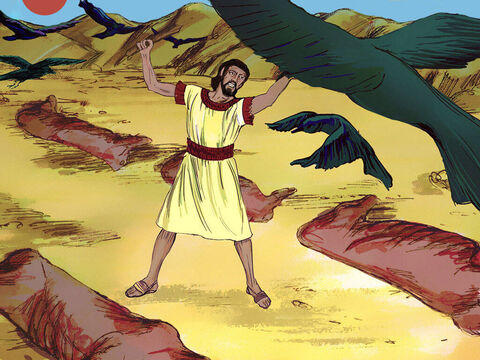
Only Abraham doesn’t initiate the covenant by walking through the blood path. He waits so long that he must drive the birds of prey away from the rotting carcasses. Then Abraham falls into a fitful and dark sleep.

Why did Abraham hesitate? Maybe he realized the significance of what God was setting up – a covenant between a fallible person and the Almighty God! Abraham was not likely worried so much about the commitment God would be making to him, but about the commitment Abraham would be making to God!

So, Abraham, perhaps, feared to enter in to the covenant. He falls into a restless sleep, and God comes to Abraham in his sleep. The “assurance” Abraham receives in his dreams is far from satisfying: God says the promise to Abraham’s descendants would not be finalized for 400 years!

Abraham would be long dead and gone.

This is where we pick up the story. This is where we get the next revelation of the kind of God the God of Abraham is. If we aren’t tracking with the story, we won’t appreciate what happens next:

Continue reading “Abraham, Isaac, the Blood Path, Christ and Him Crucified” →