Why Should We Not Want to Make a Deal With God?

If you are bargaining with God for some immediate relief in your life, your view of God is too small.

Photo by Peter Avildsen

I have been reading through parts of Exodus. Today, I continued reading about Moses and Pharaoh. Pharaoh hardened his heart to the plea of Moses to let the Israelites travel three days into the wilderness to meet with God, and Pharaoh did not take the signs Moses performed to heart.

Up to this point, Pharaoh’s magicians matched all the signs Moses and Aaron performed, so apparently didn’t take those signs seriously. Aaron threw his staff to the ground, and the magicians did the same. It didn’t matter that Aaron’s staff swallowed up the magicians’ staffs. The magicians matched Moses and Aaron sign for sign, and Pharaoh paid no heed to them.

Moses turned the water of the Nile to blood. Pharaoh’s magicians did the same, “and Pharaoh’s heart became hard”, it says. (Ex. 7:22) He turned and walked away into his palace, and he didn’t take it to heart.

Aaron stretched out his arm with his staff and caused frogs to emerge all over the land. The magicians did the same, and Pharaoh was not moved, at least not right away.

Later, Pharaoh asked Moses and Aaron to “Pray to the Lord to take the frogs away…, and I will let your people go….” (Ex 8:8) Moses did it, “But when Pharaoh saw that there was relief, he hardened his heart and would not listen….” (Ex. 8:15)

Moses responded by having Aaron summon a plague of gnats. This time the magicians could not duplicate what Moses did, and they said to Pharaoh, “This is the finger of God.” But, “Pharaoh’s heart was hard….” (Ex. 19)

Notably, the Pharaoh’s heart became hard, or he hardened his heart, after the previous displays. After the plague of flies, however, the Pharaoh’s heart was hard.

Pharaoh’s heart was already hard at this point. He had been hardening his heart all along, but Pharaoh’s heart was already hard by the time Moses and Aaron summoned the plague of flies and the plague of flies “ruined the land”.
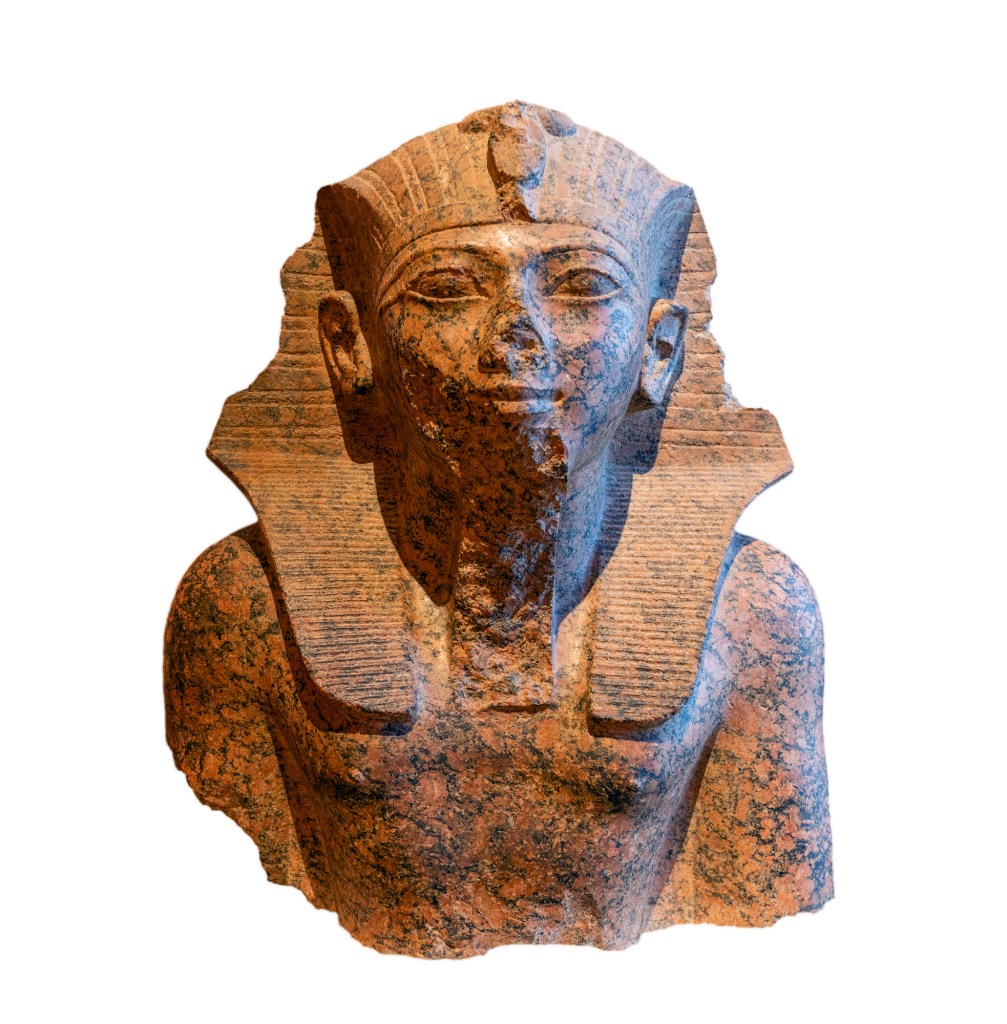

Even though Pharaoh’s heart was hard at that point, “Pharaoh summoned Moses and Aaron and said, ‘Go, sacrifice to your God here in the land.'” (Ex. 8:25)

Sometimes even people with hard hearts toward God will have moments in which they seem to believe, or seem to repent, but there is no heart change. They desire to be delivered from their dire circumstances, but nothing more. It isn’t really a true change of heart, and it doesn’t last.

Moses insisted that the people be allowed to leave the land and go into the wilderness, but “Pharaoh said, ‘I will let you go to offer sacrifices to the Lord your God in the wilderness, but you must not go very far. Now pray for me.”’ (Ex. 8:28)

People often make deals with God. People bargain for relief from the pain or difficulty that brings them finally to God as a last resort, but they turn to God out of desperation, and they don’t really mean to keep their part of the bargain. When people are “forced” to the point of praying to God as a last resort, they may not come willingly, and their hearts many not be changed if relief is all they want.

This was the case with Pharaoh:

“Then Moses left Pharaoh and prayed to the Lord, and the Lord did what Moses asked. The flies left Pharaoh and his officials and his people; not a fly remained. But this time also Pharaoh hardened his heart and would not let the people go.” (Ex. 8:‬30‭-‬32)

Pharaoh didn’t understand that the God of Moses and Aaron is the God who gives all people life and breath. He saw “their” God as a means to an end: a possible solution to the immediate relief he desired. Pharaoh didn’t perceive God as his God too!

We are often tempted in the same way to view the Bible, church, and God Himself as a means to our owns temporary ends. We aren’t looking down the road. We don’t appreciate that the universe, this earth, our world and our very beings are wholly dependent on God!

Once we get the relief we want from the immediate difficulty we are facing, it’s easy for us to harden our hearts again. Once we are out of trouble, we resort back to a hard heart and a stiff neck. There is no lasting change.

This is a human tendency we all have. All people can be “religious” at times. Many people go to church on Sunday, or once in a while, maybe on special holidays, but they live in Egypt the rest of the time.

We can be religious in the same way that we might carry a lucky rabbit’s foot or consult a medium. We want something. We want good fortune and good health, but we don’t want to change.

God should not have to make a deal with you. If you are bargaining with God for some immediate relief in your life, your view of God is too small, and you are missing the mark!

Continue reading “Why Should We Not Want to Make a Deal With God?”

Narnia, and the Danger of Becoming an Accidental Christian

“I don’t think I ever really feel in danger of accidentally believing… or stumbling into it.” Laura Miller


I’m listening to the Unbelievable? podcast replay of the discussion with Holly Ordway & Laura Miller: A convert and skeptic in Narnia. As always, I find the conversation on the Unbelievable! podcast intriguing and thought provoking, engaging people on opposite ends of the thought spectrum.

Holly Ordway and Laura Miller had similar experiences in reading the Chronicles of Narnia by CS Lewis. They read them as young children and loved the books purely for the fantasy. When they were older and discovered that the books had Christian themes and symbolism, they felt betrayed.

Laura Miller explained her sense of betrayal. The fantasy world she imagined and loved turned out to be something different than she thought. The discovery left her feeling like she was on the outside looking in.

As I think about it, the allure of the Chronicles of Narnia is exactly the sense of being on the inside, of discovering a world through the back of an ordinary wardrobe that is unknown and unseen by adults. As a child, perhaps nothing is as intriguing as a secret adventure unknown by your parents.

The experience of finding a whole new world quite by accident through an ordinary wardrobe that is unknown to the greater world, is a fantastical and intimate experience for a child. That intimacy, perhaps, is what gave way to Laura Miller’s feeling of betrayal.

The discovery of “hidden” Christian symbolism, allegory, and themes “planted” in the Chronicles of Narnia betrayed her sense of intimacy with the story. The unveiling of the “secret” behind the secret world she loved for its own sake, destroyed the world of her imagination. The secret that lured her in was a facade.

Holly Ordway felt the same betrayal at first. The secret behind the secret turned the story on its head. The secret, the real secret, was initially hidden from them. When the secret was exposed, they found a world they didn’t expect or know they had encountered.

For Miller, the experience was like losing innocence. In a moment, her childlike fantasy world was forever undone. The story wasn’t the same.  The magic was lost.

For Holly Ordway the sense of betrayal gave way to curiosity – like the curiosity with which a young child might explore a hidden world found inside a wardrobe. It led her eventually out of atheism and into the world of faith in God. The secret behind the secret opened up a better, larger world to her.

The discussion was a good one. I am reminded of a series of dreams I had as a child. The first night found I could fly as I clutched Silly Putty in my hand. It was the most exhilarating dream I ever had. It seemed real, and the realness of it lingered after I woke.

I had the same dream the next night, but I became but I self-conscious. I didn’t know how it worked. I was afraid I couldn’t repeat the feat. I was still able to fly but not as long. My self-consciousness seemed to dispel the magic, leaving me with a dreaded sense of not knowing how the magic worked.

The next night I had the Silly Putty in my hand, but my wishful thinking didn’t work. Try as I might, to make myself fly. I could not recreate the magic, and I never had another dream of flying.

In the initial dream I had tapped into magic quite by accident, like wandering into a wardrobe that opened into an unknown world. But, I could not reproduce the magic because I didn’t have the knowledge of the magic. In Laura Miller’s case, the discovery of the secret behind the secret, the knowledge of the magic, undid the magic for her.

She says that the world of Narnia was no longer as she imagined it when she first read the Chronicles. That knowledge was the undoing of her own understanding of that world. Faced with the reality of it, it was no longer magic to her. Some adult turned the lights on, and the magic was gone.


I am putting some words into what she said, but I can feel her sense of loss. It was the same sense of loss I felt when I could no longer fly in my dreams and never dreamed of flying again.

While I feel her sense of loss, the similarities in our experiences end there. In my case, a lack knowledge about the magic flying was my undoing, or so I felt. In Laura Miller’s case, the knowledge of the Christianity behind the Chronicles of Narnia was her undoing, or so she felt.

She developed her own image of that fantasy world of Narnia, and discovering Christian themes in the Narnian fabric betrayed her own imagination. I read the Chronicles of Narnia in college as a very new Christian. The way those Christian themes played out for me in the pages of those books was entering the wardrobe inside the wardrobe. It was like black and white giving way to technicolor. The nuance and subtlety in which Lewis wove those themes into a beautiful story was inspiring. Images from those books live in my imagination still today and color my theology.

Laura Miller had a distasteful experience of religion as a child. She didn’t get into much detail, though she says she grew up Catholic. I grew up Catholic also. I don’t want to be unfair to Catholics or Catholicism, but I can relate to her negative feelings. (Holly Ordway, on the other hand, found the wardrobe inside the wardrobe, so to speak, and became a believer, and a Catholic.)

Laura Miller went on to claim that “believers” live in a reality that “operates on another plane that, if I am lucky, I can fall in a hole and be in the reality they live in.” She assumes that Christian faith is just another fantasy world – one that is foreign to her.

She says, “I just don’t experience it that way,” meaning life, I suppose, though I don’t want to put words in her mouth. I encourage you to go back and listen to the conversation yourself. The following statement, however, sets the stage for my thinking today, which is this:

“I don’t think I ever really feel in danger of accidentally believing… or stumbling into it.”

She goes onto to explain her interpretation of Lewis’s past: that “he found himself wanting to believe…. and then he was able to find the pathway… towards the thing that he wanted.” She goes on to say, “I don’t really feel that desire…, and it’s kind of impossible to accidentally, or sort of inadvertently, to come into a state of a desire to believe.” She concluded, “I have emerged from all kinds of literature from all kinds of faith without feeling [such a desire].”

Her comments about “accidentally believing,” and “stumbling into” faith,” and “a desire to believe,” as she puts it, is what inspires me to write today. It begs for comment.

Continue reading “Narnia, and the Danger of Becoming an Accidental Christian”

Asbury University and the Manifest Presence of God

I am cautioned, at the same time, by the words of Jesus to the woman at the well that we need to worship God in spirit and truth.

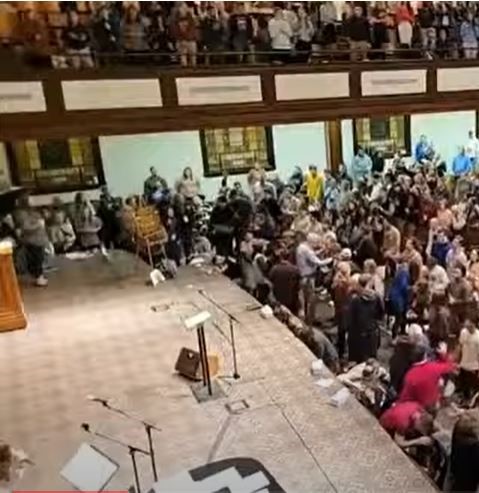
I don’t recall where I obtained this capture, but I am grateful for it.

I woke up thinking about the phrase, “manifest presence of God”. I am not sure where I even heard that phrase. I had not thought of it in ages, but the phrase popped into my head when I slipped from my dreams last night into a brief state of consciousness.

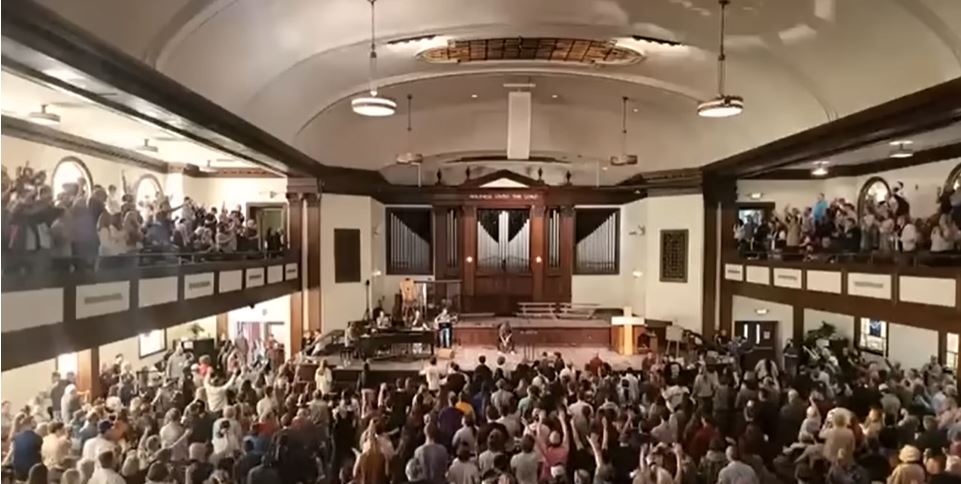
I would say that the so-called “Asbury revival” is an example of the manifest presence of God. What happened there was completely organic. It began after Chapel ended. it began after a very ordinary sermon on a very normal Wednesday morning.

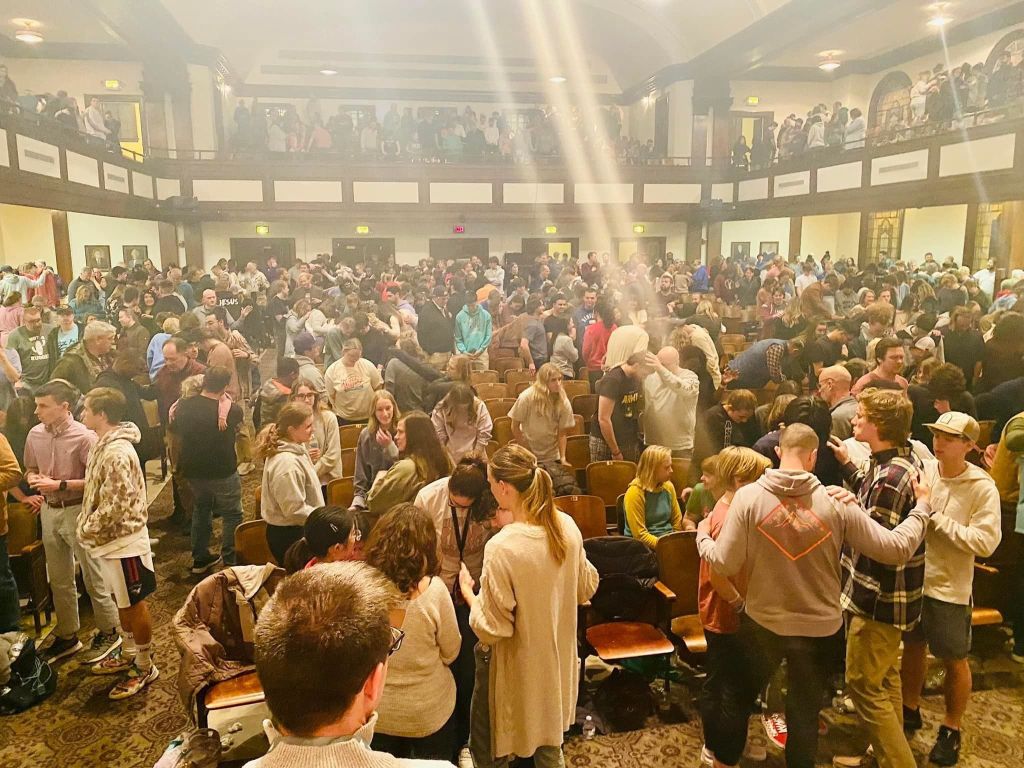
It wasn’t planned or orchestrated. There was no leader. Some students simply lingered. They did not want to stop worshipping. They began praying for each other. Then someone felt the need to repent openly for sin. Others did the same.

One thing led to another. At the same time, students who left the chapel began to make their way back to the Chapel for reasons they could not express. Other students heard that Chapel hadn’t ended and began coming to see what was going on.

Administrators found out something was going on, and they investigated. They recognized that something special was happening, and they had the wisdom to give their blessing to it, not to take over leadership of it, but to let what God was doing simply unfold.

The ongoing Chapel was student led from the beginning. Most of the time, the students leading worship were off to the side. People playing instruments came and went. No one was the center of attention – only Jesus who was lifted up in reverent, tender worship one moment and exuberant praise in the next.


Administrators stayed in the background and supported the students. They protected them when outsiders came flooding in, and they prayed with them. They kept Christian celebrities from taking over the stage and they kept news media out. The University President described it this way:

“What we have experienced since that Wednesday morning has been a current of immeasurable goodness flooding our community and quickly moving into other regions of the world. Words fail any effort to communicate the abundance of experiences and stories that will leave us forever changed.”

The routine chapel service that started on February 8, 2023, was officially ended on February 23, 2023, fittingly on the National Day of Prayer.

God’s manifest present was demonstrated in the repentance of sin, the deep and abiding sense of God’s peace, love, forgiveness, and healing. People spoke of physical healing and deliverance, but it wasn’t front and center. There was little to no spectacle.

The atmosphere in the Chapel was reverent and convicting, but uplifting at the same time, and Jesus was at the center of it. God God was exalted, and Jesus was lifted up as people confessed their sins to one another and to God, repented with tears and weeping, found forgiveness and new joy, prayed for each other and worshipped God. All without a program, or a plan, or a person directing what happened.

Many people would say this was a revival. I don’t know, but it was an example of the manifest presence of God. God simply “showed up”. Not that He was not already present; rather His presence was manifest. To individuals and to all who worshipped corporately.

As I think about the idea of the manifest presence of God, I am reminded of Psalm 139. We can go nowhere that God is not present. We cannot escape him. If we ascended into the heavens, or even to hell, He is there!

He is intimate with us. He knows our innermost thoughts and the intents of our heart. He can even number the hairs on our head, and He knows the words we speak before we even say them.

God is present with us, but his presence is not always manifest. We do not always feel the presence of God. Sometimes, we go long (weeks, months or years) with no sense of the presence of God in our lives. Sometimes, we have trouble even giving mental assent, if we are being honest, to the fact that God is present with us.


When we do feel or sense or see evidence of the presence of God in our lives, we are encouraged, inspired, comforted, and renewed by it. Those times when we are aware of God’s presence can sustain us through the longer, wilderness times. We need to know God in this way.

Jesus is the Bread of Life and the Living Water! What bread that we eat does not satisfy our hunger, and what water that we drink does not quench our thirst? How much more should the Bread of Life and Living Water fill us up and sustain us?!

Continue reading “Asbury University and the Manifest Presence of God”

What Is a Revival? And What Does It Matter?

The spark in the beginning seemed to be a small group of students who didn’t want to leave. They didn’t want to stop worshiping.

I did not take this photo, but I am grateful to the person who captured the scene.

I pay only casual attention to the news. Maybe that is why I didn’t know much about what is going on at Asbury University in Wilmore, KY until about 10 days into the 1-hour chapel service that turned into a two-week long, around the clock gathering of young people worshiping Jesus.

Or maybe I hadn’t noticed because most media outlets weren’t reporting on it. Not that they would know what to do with it if they had!

When I began scrolling through Instagram that Friday evening, I found one video after another from the chapel at Asbury University. It seemed like these videos were all I had in my feed, and I started following it.

Along with the live feeds, video, and people self-reporting on the Asbury phenomenon, I began seeing many cautionary pundits who were concerned about whether what was happening is a revival, and these people were convinced it wasn’t.

Notably, the Asbury school administrators and staff seemed uniformly hesitant to categorize what was happening as a revival. They were in agreement with the critics, but criticism rang hollow to me.

I have watched a lot of live video. I have listened to interviews with students, staff, professors and visitors. I have listened to people who are skeptical. I have listened to the cautions and warnings.

I “grew up” in my faith in charismatic churches in the 1980’s. Since the 1990’s, however, I have gravitated away from charismatic churches to more traditional evangelical churches. I have focused on daily Scripture reading, weekly church attendance, and getting involved in leading and participating in small groups, apologetics, and regular fellowship – and writing.

I have been disillusioned by the emotionalism and thrill-seeking that can characterize the charismatic movement. I have seen the dangers of idolizing charismatic leaders and the charismatic movement, itself.  

It’s all too easy to want what God can do for us more than we want God.

Some people I looked up to in those charismatic churches walked away from God. The church that I practically idolized in my early Christian walk, splintered and fragmented and fell apart in a very short time. The pastor who married my wife and I got divorced a few years later. It didn’t last.

I am an attorney. I am trained to be analytical, even skeptical. I am naturally more comfortable exercising my brain than my heart. I can easily settle into an intellectual faith that is thin on experience and authenticity.

I didn’t immediately pay attention to the Asbury University “revival”. We live in a sensationalized world of clickbait, and I have learned to look away.

Revival isn’t a biblical term, as far as I know. I can’t think of a verse or passage that uses that terminology (other than a plea for God to revive).

Anyway, I began scrolling through Instagram on this Friday night. I know better than to scroll through Instagram late at night like that, but it was a long week. I was looking for some mindless entertainment before I shut my eyes and went to sleep.

I scrolled to one video after another from Asbury University. Mild interest began to pique. Something was going on there. It was then that I realized that 10 days is a long time for a routine school chapel to last!

One video showed the last few minutes of the message that ended the chapel. It was ok, but anything but spectacular. It was far from a passionate call to the altar. It was an ordinary message by any measure.

Now, I was even more interested.

Continue reading “What Is a Revival? And What Does It Matter?”

Be Careful Lest You Fail to Take What God Is Doing to Heart

Pharaoh did not take to heart a movement of God in his time.


In Exodus 7, we read that God moved in visible and compelling ways to convince Pharaoh to listen to the request by Moses to let the people go into the wilderness and be with God. Pharaoh was given demonstrative signs that God was behind the request, but Pharaoh was not swayed.

“Instead, he turned and went into his palace, and did not take even this to heart.”

Exodus 7:23 NIV

Pharaoh’s magicians answered Moses and Aaron with their own divination, and Pharaoh did not take the demonstration of the movement of God to heart. This is the character of hardness of heart. We see God move, but we have an answer to explain it away, and we do not take it to heart.

Pharaoh and Egypt are considered to be analogous to the world that does not know God, a world that has set itself against God. We don’t consider ourselves to be like Pharaoh or like Egypt.

When we do the same thing, however, we are no different. When we see God move, and we explain it away and do not take it to heart, we are no different.

The Pharisees, the religious leaders of God’s people, did the same thing. When Jesus performed miracles right in front of them, they explained it away. They said it was of the devil, and they did not take it to heart.

Be careful that you are not quick with an answer to explain away what God is doing and fail to take it to heart.

Do not be quick to explain away what is happening at Asbury University (and reportedly at other universities now, too). Do not be quick to dismiss it and miss what God is doing.

Take it to heart. Ponder it like Mary pondered what the angel told her: that she would give birth to Jesus. Be open to what God is doing, and what God wants to do in you.

The Pharaoh that didn’t take to heart what God was doing in his time lies entombed today like a stone. The God of Israel lives! Jesus, who was also entombed, rose from the dead and lives! The grave could not hold him, and he offers that same life to you!