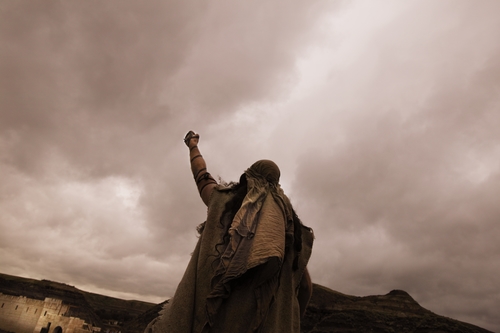
The Problem of Evil and Mystery of Will

Why did God allow us a choice that would lead to our own corruption?

depositphotos Image ID: 135430388 Copyright: KrisCole

I am reading a book by Clay Jones called Why Does God Allow Evil? I highly recommend it. The “problem of evil” is one of the more challenging questions that we face in life, and difficulties struggling with that question have led many people to abandon or refuse to embrace faith in God.

Why does God allow pain and suffering? If God is good, how can He allow people to suffer? Why doesn’t God stop evil? If God exists, why does He allow evil to exist? These are just some of the variations of the problem of evil.

The problem of evil is a challenge for every worldview. Responses include that there is no God, and that’s just the way it is (a naturalistic world view); evil is just an illusion of unenlightened souls (a Buddhist or eastern view); evil is result of bad karma (Hindu); or evil is the result of rebellsion against God – sin (Christian). We all struggle with the conviction that things simply aren’t the way they ought to be. That Utopian disconnect urges us to ask, “Why not?”

I think, personally, that the Christian worldview makes the most sense of this question. It begins with the story of God and Adam and Eve. Whether the story is allegorical or historical, the answer involves God’s purpose in creating man, man’s finite, corruptible character (compared to God’s infinite, pure character) and a plan to develop this corruptible creature (man) who is created in God’s own image into a pure, loving relationship with God that is defined by God’s pure character, and not the corruptible nature of man.

Continue reading “The Problem of Evil and Mystery of Will”

The World is Passing Away

We live in a world in which our greatest desires can never be realized

“the present form of this world is passing away.”

(1 Corinthians 7:31)

Perspective makes all the difference in how we see the world and live our lives. The perspective of faith is wholly different than the perspective of skepticism. The person who has been born again, born from above, born of the spirit[1], is a new creature; the new has come and the old has passed away.[2] We are no longer of this world, though we continue to live in it.[3]

Do we really grasp the meaning of these things? Sometimes I wonder. I wonder about myself as I look back at the things that have captured my attention at times, the anxiety and worries I have had about temporal things, and all the time I have wasted doing trivial things.

Continue reading “The World is Passing Away”

What Is Man That God Should Take Notice?

Depositphotos Image ID: 31610845 Copyright: DesignPicsInc

We all know the story of Job. Job was considered a righteous man, as far as men go. He was a God-fearing man, and He was also blessed with wealth, a good family and many friends.

Then, according to the story, God allows Satan to destroy Job’s wealth, family, and health. He lost everything, and he can’t understand why God would allow such a righteous man as himself to fall on such hard times.

Job became the poster child of bad things happening to good people!

Job put on sackcloth and sat in ashes demanding to know of God why he was suffering such injustice. He counted all the ways he had been righteous and just and challenged God to explain why he was suffering while men not as righteous or just as he were living in relative comfort and abundance.

Job’s friends tried to counsel him, but they didn’t believe that he was as just and good as he claimed to be. They, like Job, believed that God wouldn’t allow a righteous man to suffer as Job was suffering. Thus, they concluded that Job wasn’t as good as he claimed.

This is a common paradigm. Job’s dilemma is our dilemma as well. We think that good people should have good lives and bad people should pay the price of their badness.

Only, it doesn’t seem to work out that way. It obviously isn’t that simple. We have a keen sense of justice (especially when we feel the sting of injustice close to home). We can see that injustice exists in the world, and we it bothers us.

The Bible doesn’t shy away from the issue, as some suppose. It doesn’t soft peddle the problem. It tackles “the problem of pain” head on.

Continue reading “What Is Man That God Should Take Notice?”

Wealth, God and Zacchaeus the Tax Collector


In the first installment of this three part series on wealth and relationship with God, we looked at the rich young ruler who was self-reliant and reacted with sadness at the prospect of being asked to sell all he had to give to the poor and to follow Jesus. We aren’t told what the rich young ruler does in response to Jesus’ challenge. What would you do?

I’m afraid I don’t truly know the answer to that question, if I am being honest with myself. It’s not as if Jesus has confronted me with that question in person. If Jesus is talking to me and telling me to do the same, I am not hearing His voice. Has He challenged me to do that same thing and I have ignored Him or refused to listen?

These are questions we can’t just brush aside or take lightly if we want to follow Jesus. A servant cannot serve two masters; we cannot serve both God and money at the same time.[1] One must yield to one or the other. In this second part in the series on wealth and relationship with God, we will look at the more heart-warming story of Zacchaeus the tax collector.[2]

Continue reading “Wealth, God and Zacchaeus the Tax Collector”

Wealth, God and the Rich Young Ruler

How difficult it is for those who have wealth to enter the kingdom of God! For it is easier for a camel to go through the eye of a needle than for a rich person to enter the kingdom of God.

Despositphotos Image ID: 1254235 Copyright:hsfelix
Depositphotos Image ID: 1254235 Copyright: hsfelix

In reading through the Gospel of Luke, the doctor, historian and traveling companion of Paul, two dialogues appear in chapters 18 and 19 about men of wealth. They are the stories of the Rich Young Ruler and Zacchaeus, the tax collector.

Both men are rich and are tied into the local power structure. They both seek out Jesus and encounter Him, but one turns away, saddened because of his wealth, while the other receives Jesus joyfully. And, then there is the story of Ananias and Sapphira. They had become part of the early church, but wealth became their undoing.

All three stories deal with wealth and possessions and relationships with God. And more importantly, they deal with the heart. We will review each story in this three part series on wealth and relationship to God.

Continue reading “Wealth, God and the Rich Young Ruler”