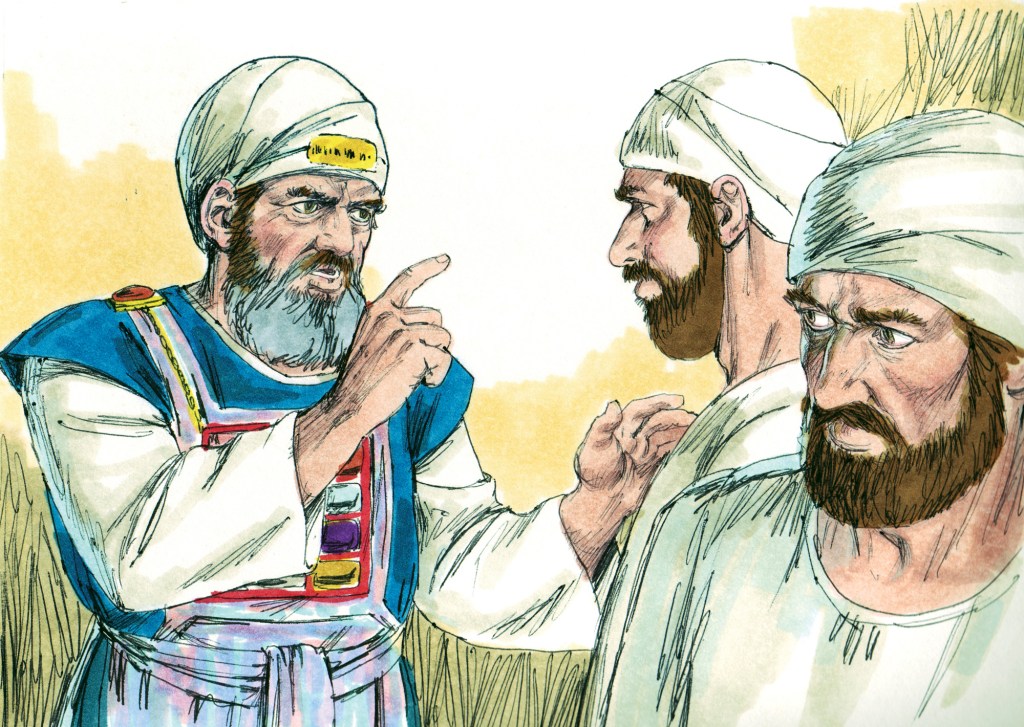
Training in Godliness

Training in godliness may be a bit different than what you suppose.


Life is a journey, and each day is a leg in that journey. Proverbs says that a man makes his plans, but God directs his steps. Basically, God is ultimately in control, but we have something to say in the process. Where we end up depends on whether and how we align ourselves with God and HIs purposes.

The weekly reading for the small group I am in (and the subject of the sermon this coming Sunday) is 1 Timothy 4:7-10. That passage inspires my writing today as part of the leg of my journey that I call today. My focus will be the following two verses:

Have nothing to do with godless myths and old wives’ tales; rather, train yourself to be godly. For physical training is of some value, but godliness has value for all things, holding promise for both the present life and the life to come.

1 timothy 4:7-8 (niv)

I was fortunate today that I didn’t just set out to check off this reading for Wednesday night. I came at this reading with a more intentional and devoted mindset, which I suppose is appropriate for the topic. I can’t say that I always have the mindfulness to do that, but today I did.

I might otherwise have assumed I knew what “godless myths” are and what “godly” training is. I might have glossed over those phrases without really understanding what Paul is saying, but I realized as read them that I didn’t really know what he meant by “godless myths” and training to be “godly.”

Acknowledging this, I took one step back to read these verses in context. I read verse 6, which says:

If you point these things out to the brothers and sisters, you will be a good minister of Christ Jesus, nourished on the truths of the faith and of the good teaching that you have followed.

1 Timothy 4:6 (emphasis added)

Of course, then I had to step further back to see what Paul meant when he said, “If you point these things….” What things? The previously verses contain those “things”:

The Spirit clearly says that in later times some will abandon the faith and follow deceiving spirits and things taught by demons. Such teachings come through hypocritical liars, whose consciences have been seared as with a hot iron. They forbid people to marry and order them to abstain from certain foods, which God created to be received with thanksgiving by those who believe and who know the truth. For everything God created is good, and nothing is to be rejected if it is received with thanksgiving, because it is consecrated by the word of God and prayer.

1 Timothy 4:1-5

I am still not sure what “deceiving spirits” these people followed or what “teachings” Paul references here, but the fact that Paul calls these teachers “hypocritical liars” who taught ascetic religious practices (forbidding marriage and ordering abstinence from certain foods) is a clue. Affirming that God created everything good and receiving those good things with thanksgiving and prayer is another clue.


it seems that another clue lies in the use of the word, hypocritical,” which I learned recently was not meant in exactly the same way modern people think of it. We think of hypocrisy as saying one thing and doing another. The Greek word, ὑπόκρισις (hupokrisis), that we translate as hypocrisy literally means “to act under a feigned part.”


In other words, a hypocrite is an actor. A hypocrite according to the Greek meaning is someone playing a part, a person pretending to be someone or to know something than who or what they are.

As I considered these things, I realized that the Greek words translated into English as “godless myths” and training to “godly” might also give me a better understanding of what Paul is saying. When I dove into the Greek, the meaning became clearer, and it isn’t necessarily what I might have thought.

I might have answered, if someone pressed me, that godliness is how a person behaves. I might have said that godliness means doing right, living according to God’s rules, and conforming to biblical morality, but that isn’t what Paul is saying here. To be sure, godliness does bear the fruits of the Holy Spirit, but we should not confuse the fruit for the root.

Continue reading “Training in Godliness”

Is the American Church a House Divided Against Itself?

Whether God for us or against us is the wrong question.


I have yet to find my equilibrium after the Charlie Kirk killing. I didn’t know Charlie Kirk. I didn’t follow him. I heard him speak one time at an event in which Ravi Zacharias was the keynote speaker, but I never watched, or listened, or read anything from Charlie Kirk online. I didn’t agree with his Republican apologetic, though I couldn’t have identified anything Charlie Kirk specifically said before his death.

Since his death, I have heard and read testimony of his love for Jesus. His wife, Erika, publicly forgave his killer in an ultimate act of sacrificial obedience to Jesus.

Charlie Kirk’s legacy will always be that of a follower of Jesus and a staunch Republican, friend and defender of Donald Trump, who maintained political views opposed to mine.

I am a born again Christian. I believe in the death of Jesus Christ for the forgiveness of my sins and his resurrection from the dead. I believe the Bible is the word of God and His revelation to mankind. I read the Bible daily. I believe there is only one path to God, and that is through Jesus Christ. I go to church every Sunday, and I am involved in Wednesday evening and Saturday morning Bible studies.

I have been a Christian for 45 years. The fundamentals of my faith have not changed in that time, but I have gone down some side roads from which I had to retreat back to a more orthodox faith. I was tempted by the prosperity gospel, and I once embraced an Americanized Christianity verging on idolatry.

Jesus is the same yesterday, today, and forever. God has not changed during my life (or at any time since the foundation of the earth), but I have changed often, as I have had to adjust my thinking, confess my sin, and allow my mind to be transformed by God’s Word and the influence of the Holy Spirit in my life.

I am a work in progress, of course. I have yet to arrive at any final destination, but I look forward with yearning for the day when I see Him face to face, and I will know as I am fully known!

I used to believe that all true Christians should (and therefore must) believe all of the same things about everything. That makes sense in a rationalistic way because we all have the same Holy Spirit, and we all read the same Bible, so we all should believe exactly the same things about everything. Right?

Continue reading “Is the American Church a House Divided Against Itself?”

The Importance of Separating from the Culture, Politics, and Spirit of Our Age

We are called to be in the world but not of the world or influenced by the world


I have become hyper vigilant about the influence of our current times, culture, politics, etc. on my theology. We can’t help ourselves but to struggle with the currents of our times as they threaten to push us along in their path.

We might find ourselves swept along without even noticing it. Or we might take the opposite course and fight against those currents in the opposite direction. Both responses are problematic for the Christian who desires to follow Christ and to live according to his kingdom that is not of this world.

Whether we are being carried along by the currents of this present world, or fighting in opposition to them, we can find ourselves being wholly defined by the world – what we are for and what are against – instead of the purpose and commission Christ Jesus gave to us. Both types of responses to the world lead us off the path of following Jesus.

My views on this come from a sermon I heard in my early twenties 40 some years ago. I forget the biblical texts that laid the foundation, but the foundation remains with me: whether we allow the currents of our world to sweep us along or we fight in opposition to those currents, we are constantly in danger of defining ourselves and our theology in relation to the world – rather than in relation to God and His kingdom.

If we are followers of Jesus Christ, we might look at times as if we are going in the direction of the world. At other times, we might look as if we are going in direct opposition to the world. In reality, the Christian who follows Christ is walking a straight path. His path will take us at times in the same direction the world around us seems to be going and at other times in the opposite direction.

Christopher Watkin calls this Christian phenomenon “diagonalization” because it often looks like we are working at cross purposes to the world in both directions. As the world is pushes left, we appear to be pulling right; and as the world pushes right, we appear to be pulling to the left.

The key is that we should not allow ourselves to be defined by the world around us. We should be influenced and defined by God alone and His revelation to us found in the Bible.


I made one statement above that is not exactly true. I do remember one verse on which the sermon that influenced me so many years ago hung: “It is good that you grasp one thing, and also not let go of the other; for the one who fears God comes forth with both of them.” (Ecclesiastes 7:18) I call this holding things in tension.


We do this with the Bible itself. We learn to hold things in tension. Our fear (respect) for God and His word compels us to grasp one thing we know to be true while not letting go of other things we know to be true – even when it is difficult holding onto both things.

We fear (respect, trust) that God has greater perspective than we do. When He tells us to hate sin as He hates sin and to love people (who are all sinners), we need to grasp and hold onto both things as true, even though they may seem (to us) to be in tension with each other.

When we do that, we find that we come forward with both truths and a better understanding of Truth (capital T). We understand, for instance, that God hates sin because of what it does to us and to the rest of His creation, among other things.

As finite beings, we always have an understanding gap. Even when we think we know something, we are ignorant of what we don’t know. The Bible describes that reality by saying that God’s ways are not our ways, and His thoughts are not our thoughts.

We all know “religious” people who are hard, self-righteous, and unloving. They find it easier to hold onto the idea that God hates sin and more difficult to grasp the love God has for people who sin. We also know people who tolerate, accept, and even embrace sin in everyone (including themselves) because they feel that the tension between love for people and hating sin is too difficult to navigate.

People tend to want to gravitate to one end or the other of a spectrum of thoughts that seem to be in tension with each other because it might seem simpler and make more sense to us. For instance, some people reject the idea that human beings can even know truth because of our finitude, while others (in rejecting this post modern skepticism) double down arrogantly on the things we think we know. If we hold these things in tension, we reject the idea that human beings cannot know truth while we remain humble in what we think we know.

The person who fears God, grasps the one thing without letting go of the other. We may not do this perfectly well, but we understand that both of these things are true, and we strive to hold them in tension.

I have taken longer to get to the point than I expected, so I am going to finish this train of thought now by tying it back into the opening paragraph. What does this have to do with influence of the currents of the culture, politics, and spirit of our times on our theology?

Continue reading “The Importance of Separating from the Culture, Politics, and Spirit of Our Age”

Did Jesus So Judge the World that He Came into the World to Condemn It?

When Jesus called us to follow him, he called us to adopt his posture toward the world.


I am writing today about something I have written before, but I think it bears repeating. I have not stopped thinking about it since these words from Paul virtually leapt off the page when I read them a few years ago:

What business is it of mine to judge those outside the church? Are you not to judge those inside? God will judge those outside.”

1 Corinthians 5:12-13 (emphasis added)

How many times had I glossed over those words without really seeing them? Did he really mean that? We are not to judge people outside the church? Isn’t that exactly what we do?

I have kept going back to Paul’s admonition often since that day. I didn’t see it right away, but I eventually noticed that Paul echoed the very words of Jesus in that statement: Jesus said,

“If anyone hears my words but does not keep them, I do not judge that person. For I did not come to judge the world, but to save the world. There is a judge for the one who rejects me and does not accept my words; the very words I have spoken will condemn them at the last day.”

JOhn 12:47-48 (emphasis added)

Elsewhere, Jesus said, “God did not send his Son into the world to condemn the world, but to save the world through him.” (John 3:17)

If Jesus bids us to follow him, should we not adopt the same posture toward the world? It is the same posture Paul admonished the Corinthians to model toward those outside the Church: Do not judge them because they have a judge! (And it isn’t us!)

Paul

1 Corinthians 5:12-13

What business is it of mine to judge those outside the church?

God will judge those outside

Jesus

John 12:47-48

I have not come to judge the world.

There is a judge for the one who rejects me.

When adopt the posture Jesus had toward the world and the posture Paul tells the church to adopt, we are freed up from the responsibility to judge so that we can love. Even if the world goes its own way, which it will, we can love the world. Even if the world hates us, we can still love the world.

We are free to preach good news to the poor, to give sight to the blind, to set the oppressed free, and to proclaim the favor of God to all who will receive Him. This was how Jesus characterized what he came to do when he read from the Isaiah scroll in his hometown synagogue, sat down, and said, “Today this scripture is fulfilled in your hearing.” (Luke 4: 21) This is our ministry also, if we will follow him.

We don’t have to be in the business of judging the world because the world has a Judge. We can leave that to God. In fact, it isn’t an option. It is God’s rightful place to judge, and it isn’t our place.

That means it isn’t up to us to make the world conform to the law of God. We are not responsible to require godly behavior and biblical morality from the world, and it isn’t our business to do that.

Rather, we are to love the world, though people in the world are yet sinners. We can do that because Jesus loved us and died for us while we were yet sinners.

“Are you not to judge those inside?” says Paul. The world has not subscribed to Jesus, but we have. Judgment begins in the house of God because Jesus counts on us to be the light and salt of the world. If we lose our flavor, we cannot be who God calls us to be.

Who among us were able to conform to the Law before Jesus? None of us! Which is why we needed him. We are saved by grace through faith, and not by anything we could do. The world, likewise, cannot conform to God’s law apart from Jesus. This is why the world needs a Savior: because it has a Judge.

Why, then, would we try to impose godly behavior and biblical morality on the world through human, legal means when the world is incapable of conforming to God’s law apart from Jesus?

Jesus sends us into the world as his ambassadors just as he came into the world: not to judge the world, because the world already has a judge. He sends us out as ambassadors not to condemn the world, but but to save it.

If we can adopt this posture toward the world that Jesus adopted and that Paul admonished, we can be unified in that purpose and calling of Jesus even in our own differences about how the world ought to operate. We can love each other as fellow ambassadors of Christ and give each other grace in the areas in which we disagree.

Our primary focus should be the purpose and focus of Jesus – not to condemn the world, but to save it by proclaiming good news to the poor, sight for the blind, freedom for the oppressed, and the favor of God’s love toward all who will receive Him. Everything else fades in light of that purpose and calling.

Jesus said, the world will know us by our love for each other. (John 13:35) Let us so live, then, that the world knows us for our love for one another and our love for the world that Jesus loved!

The Lesson of Peter’s Net

From a net that began to break to a net that was not torn


I am always excited to find new things in the Bible, which is a regular occurrence still, by the way, after 45 years of reading the Bible. I should add that many of new insights I find in my own reading (if not all of them), have been found before by others before me. I am always a bit surprised, but also amazed, that nothing is new under the sun.

The insight I want to share today is not one that I discovered on my own, but I have some thoughts to add as I meditate on it. This is the story of two nets in two boats piloted by Peter three years apart. We began with Peter’s introduction to Jesus in Luke:

“[1] One day as Jesus was standing by the Lake of Gennesaret, the people were crowding around him and listening to the word of God. [2] He saw at the water’s edge two boats, left there by the fishermen, who were washing their net. [3] He got into one of the boats, the one belonging to Simon, and asked him to put out a little from shore. Then he sat down and taught the people from the boat. [4] When he had finished speaking, he said to Simon, ‘Put out into deep water, and let down the nets for a catch.’ [5] Simon answered, ‘Master, we’ve worked hard all night and haven’t caught anything. But because you say so, I will let down the nets.’ [6] When they had done so, they caught such a large number of fish that their nets began to break. [7] So they signaled their partners in the other boat to come and help them, and they came and filled both boats so full that they began to sink. [8] When Simon Peter saw this, he fell at Jesus’ knees and said, ‘Go away from me, Lord; I am a sinful man!’ [9] For he and all his companions were astonished at the catch of fish they had taken, [10] and so were James and John, the sons of Zebedee, Simon’s partners
Then Jesus said to Simon, ‘Don’t be afraid; from now on you will fish for people.” [11]So they pulled their boats up on shore, left everything and followed him.”

Luke 5:1-2, 4-9 NIV

This, of course, is the story of Jesus calling Peter, James, and John to follow him and become fishers of men. The bolded language, “their nets began to break,” is the key to the insight.

The emphasis we often see in this story is the willingness of Peter to do as Jesus says and of these men to leave everything and follow Jesus, and that is a good emphasis indeed. This is best way to respond to God in the flesh (or in the spirit) when we come to realize His presence in our lives. Nothing we pursue in this is more important than giving ourselves, our careers, and our time to God!

Jesus called them to follow him and become fishers of men. He called them from their own pursuits and living for themselves to pursuing God living for God – to do His will and to accomplish God’s purposes, rather than their own careers and purposes.

The emphasis I see today, however, is something that might be noticed only in retrospect. The point is not readily noticeable at first, and that is part of the point of the lesson of Peter’s nets.

Continue reading “The Lesson of Peter’s Net”