God Chooses US

The Scripture presents to us a tension between the necessity of free will and the certainty of God’s sovereignty.

Creative Commons photo from Flicker

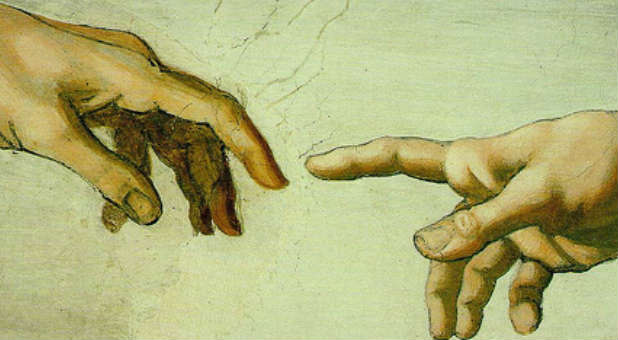
God lets us choose Him: “But to all who did receive Him, to those who believed in His name, He gave the right to become children of God.” But that isn’t the beginning of the story – or the end of it.

God chooses us. He gives us the right to become children of God[i], and He made that choice before the foundation[ii] of the world. We become the children of God not by blood descent, not by the will of parents or anyone else – maybe not even by our own will – but by God’s choice.[iii]

I do not have a systematic theology. I am not a theologian, and my understanding of systematic theology is limited, but free will has always seemed self-evident to me. It also seems eminently biblical. God created us in his own image[iv], and a primary characteristic of God is agency. We see in the story of Adam and Eve that God gave us agency too, by giving them dominion over the animals of the earth and in the choice to eat of the fruit of the tree of the knowledge of good and evil.

The freedom to choose is also a necessary condition of love. God is love[v], and he created us in His image to reflect Him, to glorify Him and to love Him.

The point of an image is to image. Images are erected to display the original. Point to the original. Glorify the original. God made humans in his image so that the world would be filled with reflectors of God. Images of God. Seven billion statues of God. So that nobody would miss the point of creation. Nobody (unless they were stone blind) could miss the point of humanity, namely, God. Knowing, loving, showing God.[vi]

God created us to love him. Therefore, we must have agency/free will in order to be able to reflect back His love as He intended.

But there is another side to this. There is not only what we call faith; there is grace. There is God’s unmerited favor. God chooses us. We call this predestination and attribute it to God’s sovereignty

Continue reading “God Chooses US”

The Rose and the Thistle

We live with the duality of being born of the flesh and born of the spirit

Depositphotos Image ID: 4468140 Copyright: Estea-Estea

“Two things cannot be in one place. Where you tend a rose, my lad, a thistle cannot grow.”[i]

This quotation by Frances Hodgson Burnett is pretty profound when you think about it. A person cannot feed love and feed hate at the same time. One displaces the other, like light displaces the darkness.

Except, we know from our own experience that we can love and hate at the same time. It’s just that we cannot love and hate the same thing at the same time. This is what the quotation is saying: a rose and a thistle cannot occupy the same space, though roses and thistles can certainly stand side-by-side. We can love one person and hate another.

Jesus puts a twist on these thoughts when he says that a person cannot serve two masters. When two priorities are vying for position in our hearts, they cannot both occupy the top position: “Either you will hate the one and love the other, or you will be devoted to the one and despise the other.”  And Jesus provides us a ready example: “You cannot serve both God and money.”[1]

Continue reading “The Rose and the Thistle”

God Lets Us Choose Him

If we encountered God “face to face” in our daily lives and if God was so evident in creation that we could not deny him, we would not have free will.

Depositphotos Image ID: 31693997 Copyright: DesignPicsInc

In back-to-back chapters in the Gospel of John (8, 9 and 10), Jesus has conversations with Jewish crowds who question who he is. Jesus never tells them in direct words, “I am God,” but the crowd clearly knows what he is talking about. This is similar to what we experience in life.

The world is made in such a way that it is governed by natural laws that have existed since the beginning of time. The cosmological constants were set from the beginning and are so finely tuned that they could not be changed this way or that way, even the slightest bit, without negating the possibility of life on Earth. Many scientists look at these laws and draw the conclusion that either they have always existed or they are simply all there is.

But where did the laws come from? Where did the universe come from? There is plenty of other evidence that God, the Creator, exists. The cosmological constants do not eliminate the possibility of a God. In fact, if those constants had a beginning, they must have had a beginner. But, there is room to question and to dismiss the idea.

Many of the Jewish people at the time of Jesus, especially the influential leaders, questioned who Jesus claimed to be.  Jesus did not get in their face about it. Just like God does not reveal himself in the created Universe in a way that we could not ignore him, Jesus was subtle, but clear.

I find this to be fascinating. It reveals a deep thread that has been coming into focus for me going way back in time.

God created us with free will. If he was in our face, we would have no free will. He would overwhelm and overcome us if we could not ignore Him.

Continue reading “God Lets Us Choose Him”

Appearances and Realities

God judges the heart, and God alone. He weighs our motives

Depositphoto Image ID: 141475556 Copyright: SIphotography

My son posted an article written by a young woman who was chastised by an older woman for wearing holy jeans in church. She was accused of being disrespectful to God. I am reminded of the charge Jesus made against the Pharisees about being whitewashed tombs.[1] They looked good and clean on the outside, but they were empty on the inside.

We are good at making ourselves look good on the outside, but that isn’t what counts.

Jesus was pretty clear when he told us that we should stop judging by appearances.[2] How did this elderly woman know that the young church attendee was disrespecting God? God judges the heart,[3] and God alone.[4] He weighs our motives.[5] The people who look good to us, may be anything but good[6], and the opposite is certainly true as well.

It’s no wonder that millennials are leaving the church in big numbers. If this older woman represents what is important to the average churchgoer today, the Pharisees are still leading the way in religious circles.

The thing is that human nature in the 1st Century is the same as human nature in the 21st Century.

We live with an illusion that we are somehow more enlightened, less barbaric and more advanced than our ancient counterparts. We want to believe that we have made progress over time and are getting better. We don’t stone people to death for moral crimes anymore (at least in many countries). Activists parade in the public square today to support human rights rather than gathering in the public square to watch executions (in many countries anyway). But we shouldn’t ignore the signs that suggest a different narrative.

More people were killed by genocidal rulers in the 20th Century than in all the previous centuries combined. Look at the awful number of people killed in Chicago alone by handguns every week, month and year. We don’t burn babies on the outstretched arms of Molech anymore; we tear them limb from limb in the womb. In many countries around the world, we still stone people to death, cut off their limbs, burn their faces and even through homosexuals off of roofs with the sanction of social and governmental blessing.

Appearances are deceiving.

Continue reading “Appearances and Realities”

Emptied of Glory and Obedient to Death

Depositphotos: 31617591 Copyright: DesignPicsInc

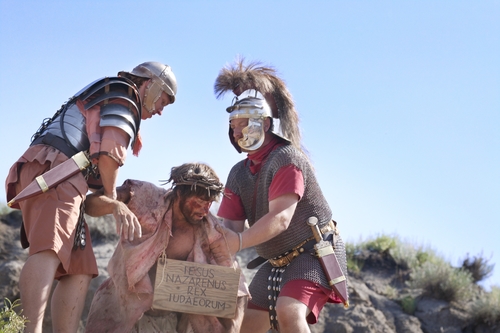
On Good Friday we remember the ultimate sacrifice God made for us. Not only did He empty Himself of His glory to become like us, taking on human flesh, but He was obedient to the law that He established for us – obedient to death – even death on the cross. We shudder at the thought of hanging on a cross, but it’s hard for us to imagine how utterly shameful crucifixion was in the 1st Century.[1]

This was not just a person, though, this was God who had already shed his glory to become like us and walked in humble obedience to all that He required of us – something that we do not even do ourselves. This man who hung tortuously and shamefully on the cross was also fully God who certainly suffered all the pain and shame that a man and God could possibly feel at the hands of His own creation.

In the article linked at the end of this blog piece, Trevin Wax makes three observations that have stuck with me since I read them: Continue reading “Emptied of Glory and Obedient to Death”