Praise the LORD! Sing to the LORD a new song, and His praise in the congregation of the godly ones. Let Israel be glad[1] in his Maker; let the sons of Zion rejoice[2] in their King. Let them praise His name with dancing; Let them sing praises to Him with timbrel and lyre. For the LORD takes pleasure in His people; He will beautify the afflicted ones with salvation. Let the godly ones exult[3] in glory; let them sing for joy[4] on their beds. (Psalm 149:1-5)
I have been thinking about an article I read recently: Is Your Church Worship More Pagan Than Christian? by Todd Pruitt. He questions the popular Christian music and worship culture on the basis that it exalts music to a sacramental position and musicians to priestly status without biblical foundation for the emphasis. He claims it promotes feelings over doctrinal soundness and experience over preaching the Word of God. These are valid concerns.
In the Sermon on the Mount (where Jesus spoke to His disciples, not the crowds that also followed Him) a couple of the subjects that Jesus addressed seem contradictory at first blush. They both relate on the surface to the way we act in public, before other people. He said, on the one hand:
You are the light[1]of the world…. Let your light shine before men in such a way that they may see[2]your good[3]works, and glorify your Father who is in heaven. (Matthew 5:14, 16)
Jesus, on the other hand, gave the following negative instruction:
Beware of practicing your righteousness before men to be noticed by them; otherwise you have no reward with your Father who is in heaven. (Matthew 6:1)
Jesus went on to provide the following examples:
“So when you give to the poor, do not sound a trumpet before you, as the hypocrites do in the synagogues and in the streets, so that they may be honored by men. Truly I say to you, they have their reward in full. But when you give to the poor, do not let your left hand know what your right hand is doing, so that your giving will be in secret; and your Father who sees what is done in secret will reward you. When you pray, you are not to be like the hypocrites; for they love to stand and pray in the synagogues and on the street corners so that they may be seen by men. Truly I say to you, they have their reward in full. But you, when you pray, go into your inner room, close your door and pray to your Father who is in secret, and your Father who sees what is done in secret will reward you.” (Matthew 6:2-6)
How do we let our light shine before men without practicing our righteousness before men?
When Jesus saw the crowds, he went up on a mountain. The disciples followed and gathered around Him when He sat down. So began the Sermon on the Mount.
Though the text does not clearly say, I believe it was just Jesus and the disciples on the mountain. Jesus was sitting, and the disciples were around Him. there was no room for the crowds to gather, and they could not hear Him as He sat with the disciples around Him.
The Sermon on the Mount, therefore, was not for the crowds, but for the followers of Jesus.
[B]y His word the present heavens[1] and earth are being reserved for fire, kept for the day of judgment and destruction of ungodly men. 2 Peter 3:7
But the day of the Lord will come like a thief, in which the heavens will pass away with a roar and the elements will be destroyed with intense heat, and the earth and its works[2] will be burned up. 2 Peter 3:10
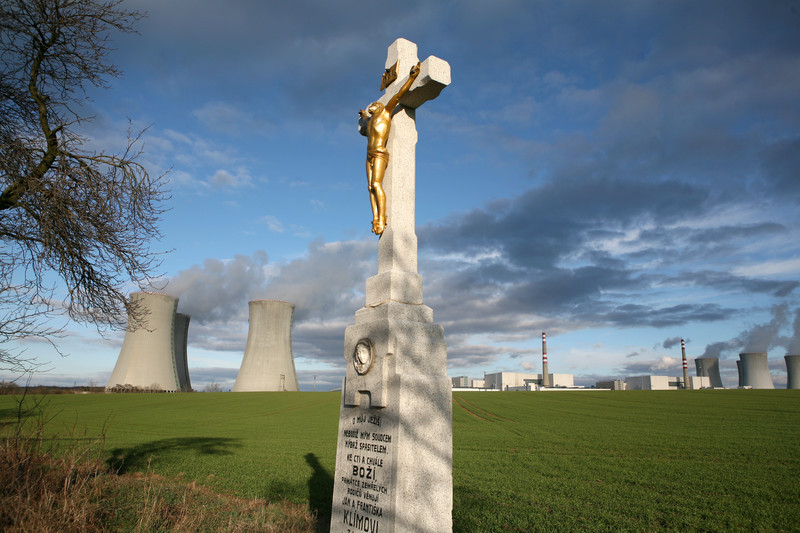
I had a poster in my room of a nuclear explosion with a classic mushroom cloud when I was a teenager. I am not sure why I had that poster, other than it was my reality. I lived in the days of the cold war. I was a teenager in the ‘70’s, and the possibility of a nuclear strike or nuclear holocaust was real to me.
Those days seem like long ago now. I had forgotten about that poster until reading this passage recently. It strikes me that the possibility of nuclear catastrophe is even more “real” now than ever before. The Soviet Union has splintered into disparate countries, and who knows where all the nuclear bombs have ended up. Many of those countries have unstable governments, with people who have cowboy mentalities and segments of radical Muslim populations. The exposure to capitalism and destabilization after the Soviet demise have produced black markets for many things that may include nuclear weapons
Those black market weapons may find ready buyers in the various radical Muslim groups like the Taliban, ISIS and others who would certainly not hesitate to use them on the West. The Middle East has been a hornet’s nest of for more than a generation, and the fighting seems to be escalating. Israel, with nuclear capability, is in the middle of that hornet’s nest. Add in North Korea and Iran which may have nuclear capability.
Yet, people no longer talk about nuclear annihilation like they did when I was young. I no longer think much about it.
I am reminded of the frog in the boiling pot. If the frog is tossed cold into the pot of boiling water, it will immediately be alarmed and leap to safety. But, if the frog is put into a pot of cold water that is slowly heated up to boiling temperature, it will not be alarmed; it will remain until it is boiled to death.
The threat of nuclear holocaust is not something we can escape like a frog in a pot of boiling water, but we have gotten used to it. At least, we have learned to ignore it.
The passage in 2 Peter 3 referenced above is a reminder that, not only is nuclear holocaust a possibility, the end of the earth as we know it is inevitable. Whether by nuclear holocaust, or a large asteroid, or global warming, or simply by long, steady degeneration, this world will not last forever.
We may not die in a nuclear holocaust, but we will surely die.
The dichotomous uses of the Greek word for heaven (or heavens) remind us that there is more to reality and existence than this physical world. The present heavens (and earth) that will pass away mean the universe that we live in and know. In verse 13 of the same chapter, Peter says “But, according to His promise, we are waiting for new heavens and a new earth….” The reference to “heavens” in verse 13 is figurative, corresponding to something that is more than this physical space, time and matter existence that we know.
This is nothing new. Peter actually alludes to the prophet Isaiah who speaks of new heavens and a new earth. (Is. 65:17; 66:23) “Heavens” (plural) for both the Jew and the Greek meant possibilities that we cannot imagine, spiritual reality in which God dwells outside of this space, time continuum that we know. John also describes the new heavens and a new earth that he saw in his encounter with God described in Revelation 21.
We may be closer than ever to this new heavens and a new earth. When Peter spoke the following prophetic verse, he had no idea about the power of nuclear energy or the destructive possibility of nuclear holocaust:
The heavens will be set on fire and dissolved, and the heavenly bodies will melt as they burn! 1 Peter 3:12
The “heavens” here is the literal, physical universe that we see. How could Peter have even imagined the sky, the planets and the stars burning and melting? We might not even imagine nuclear capability that could do that; Peter certainly could not imagine the nuclear capability that could ow destroy our earth.
The point of all this is not that we should live in fear of nuclear holocaust, like living under a nuclear cloud. But, we should not be unmindful of the fact that we are temporal, and this life we live is passing. What do with this life, however, has eternal significance. When that Day of Judgment comes, will the work we have done in this world survive? Or will it all burn off like impurities in the fire?
According to the grace of God given to me, like a skilled master builder I laid a foundation, and someone else is building upon it. Let each one take care how he builds upon it. For no one can lay foundation other than that which is laid, which is Jesus Christ. Now if anyone builds on the foundation with gold, silver, precious stones, wood, hay, straw— each one’s work will become manifest, for the Day will disclose it, because it will be revealed by fire, and the fire will test what sort of work each one has done. If the work that anyone has built on the foundation survives, he will receive a reward. If anyone’s work is burned up, he will suffer loss, though he himself will be saved, but only as through fire. (1 Cor. 3:10-15)
~~~~~~~~~~~~~~~~~~~~~~
[1]Ouranós – heaven (singular), and used as a plural (heavens) nearly as often. The OT backdrop for creation indicates the plural (“heavens”) refers to the sky, atmosphere, stars, planets, outer space, etc. (See also 2 Peter 3:10); whereas 2 Peter 3:13 conveys the typical meaning of ouranós (plural) in the NT – corresponding to the infinite levels of the Lord manifesting His presence (glory).
I use The Discovery Bible to gain a deeper, richer and more complete understanding of the Scripture. If you want ready understanding of the original Greek, the original word emphasis and Greek tenses that do not exist in English, definitions of Greek words and more to make your reading of the New Testament deeper and richer, check out The Discovery Bible. The Discovery Bible opens up knowledge of the original New Testament text in Greek to you in your everyday Bible reading. It shows the words emphasized in the Greek text, the tenses and the meanings that do not always translate well into English or English sentence structure. If you are ready to dig deeper in your Bible reading, try a free 30-day trial download of The Discovery Bible.







 Navigating by Faith